Events
Training courses
Low Temperature Techniques Course
|
In London
10:30 Â Registration and refreshments
 11:00  An Introduction to Cryogenics
Dr Jan Nyéki, (Royal Holloway, University of London, UK)
 11:50  Low Temperature Experimental Measurement Techniques
Dr Chris Mellor, (University of Nottingham, UK)
 12:40  Lunch
 13:30  Cryogenics Below 1 kelvin
Dr Viktor Tsepelin, (Lancaster University, UK)
 14:20  A Career in the Commercial Cryogenic Industry
Graham Batey, (Oxford Instruments Nanoscience, UK)
 14:50  Refreshments
 15:20  Temperature Measurement and Control
Dr Andrew Casey, (Royal Holloway, University of London, UK)
 16:10  Concluding remarks, close of meeting

Quantitative Imaging: From Cells to Molecules
| - |
In Cold Spring Harbor Laboratory, NY

Expression, Purification & Analysis of Proteins and Protein Complexes
| - |
In Cold Spring Harbor Laboratory, NY
HERCULES European School
| - |
In Grenoble
This one month course, coordinated by the Université Grenoble Alpes, is designed to provide training for students, postdoctoral and senior scientists from European and non-European universities and laboratories, in the field of Neutron and Synchrotron Radiation for condensed matter studies (Biology, Chemistry, Physics, Materials Science, Geosciences, Industrial applications). It includes lectures, practicals and tutorials, visits of Large Facilities and a poster session (each participant puts up a poster about her/his thesis or research topic for a day).
- PART I: BASIC METHODS AND INSTRUMENTS :
(This part is common for all the participants - 1.5 weeks) - PART II is divided into two parallel specialized sessions (3.5 weeks) :
- Session A: PHYSICS AND CHEMISTRY OF CONDENSED MATTER
- Session B: BIOMOLECULAR STRUCTURE AND DYNAMICS
The course is held in Grenoble at the Polygone Scientifique Louis Néel. This is close to partner institutions where practicals and tutorials will take place:
- European Molecular Biology Laboratory (EMBL)
- European Synchrotron Radiation Facility (ESRF)
- Institut de Biologie Structurale (IBS)
- Institut Laue-Langevin (ILL)
- Institut Nanosciences & Cryogénie (CEA)
- Institut Néel (CNRS)
A special seven days programme is included , in a partner institution among European Large instruments, either at:
- DESY and European XFEL in Hambourg, Germany
- Elettra and FERMI in Trieste, Italy
- Swiss Light Source / Paul Scherrer Institute in Villigen, Switzerland
- SOLEIL (St Aubin, France) and Laboratoire Léon Brillouin (CEA Saclay, France)
The language of the course is English.

MXIS 2016: Practical course on in-plate crystallography, with special focus on ligand screening. Part 2
| - |
In Grenoble
crystallography, with a special emphasis on ligand screening. This
workshop is organized in two parts, each one lasting for 3 days. It
includes:
 * Part 1 (Montpellier 7-9 Nov 2016): full lectures at the “Centre de Biochimie
   Structurale†followed by practicals. Topics: plate pre-coating
   for “Dry†co-crystallization [1], in situ screening on a lab source).
 * Part 2 (Grenoble): full lectures at the “Institut de Biologie
   Structurale†and practical sessions at the ESRF, on beamlines
   FIP-BM30A and ID30B. Full classes will be done in day 1 while
   practical sessions will be organized in subgroups, from day 2 to day
   3. Topics: in situ diffraction for crystal screening and structure
   resolution, in situ data processing.
Possibility will be given to participants to practice on their own samples.
The workshop is limited to 6 and 8 participants for Part 1 and 2
respectively.
No fees are required.
The application period will close on the 30th September. Applicants will
be required to submit a short CV and a motivation letter to
[email protected]

MXIS 2016: Practical course on in-plate crystallography, with special focus on ligand screening. Part 1
| - |
In Montpellier
Part 1 (Montpellier): full lectures at the “Centre de Biochimie
   Structurale†followed by practicals. Topics: plate pre-coating
   for “Dry†co-crystallization [1], in situ screening on a lab source).
Â
 Part 2 (Grenoble - 30 Nov-2 Dec 2016): full lectures at the “Institut de Biologie
   Structurale†and practical sessions at the ESRF, on beamlines
   FIP-BM30A and ID30B. Full classes will be done in day 1 while
   practical sessions will be organized in subgroups, from day 2 to day
   3. Topics: in situ diffraction for crystal screening and structure
   resolution, in situ data processing.
The workshop is limited to 6 and 8 participants for Part 1 and 2,
respectively.
No fees are required.
The application period will close on the 30th September. Applicants will
be required to submit a short CV and a motivation letter to
[email protected]
Â
BioCAT Advanced SAXS Training Course 2016
| - |
In Chicago, IL
Small-angle X-ray Scattering (SAXS) is an increasingly important tool for the structural biology and biochemistry community but many are unfamiliar with the technique. In this workshop, participants will be given, through a series of lectures and hands-on practical tutorials, a comprehensive training on how to use collect, analyze and model SAXS data using the BioCAT Beamline 18ID at the Advanced Photon Source, Argonne National Laboratory. Lectures will cover both the basics of SAXS and the specialized techniques supported by BioCAT including size-exclusion chromatography SAXS and time-resolved approaches. This will be followed by a hands-on session where participants are encouraged to bring their own samples for SAXS measurements as well as using samples provided by BioCAT. Finally, participants will be given hands-on training in use of the ATSAS software suite covering almost all aspects of SAXS data reduction, data analysis and modeling. This will provide a basic knowledge on the principles of the various methods underlying the individual ATSAS programs. Participants will be expected to leave the course with a good understanding of the strengths and limitations of the SAXS technique and be able to model and interpret SAXS data properly.
Application deadline: September 30, 2016
How to apply: please send a cover letter and CV to Weifeng Shang (
[email protected])
How to pay: A nominal fee ($200) to cover coffee and lunch will be charged. After the selection process, the participants will be notified with payment information.
MX beamline training session
| - |
In Diamond Light Source, Didcot
Organized by the Diamond Light Source Macromolecular Crystallography group.
The aim is to provide MX users with sufficient training to be able to operate any of the Diamond MX beamlines efficiently and to get the most benefit from their beam-time. The training will involve hands-on sessions on the suite of five operational MX beamlines (http://www.diamond.ac.uk/mx-home/) as well as optional offline software sessions.
20th July afternoon optional session "Hands on software":
- CCP4
- DIALS
21st July, MX beamlines and data room sessions:
- MX software: automation in data analysis
- Mini-Kappa goniometry / Anomalous data collection
- Introduction to VMX-i
- I24 new end station/ In-situ diffraction
- Fragment screening â€" I04-1/Lab36
- Experiment database: new ISPyB
Registration is free-of-charge with lunch provided on the 20th and 21st July, and accommodation and dinner for the night of July 20th.
X-ray Methods in Structural Biology Course at Cold Spring Harbor Laboratory
| - |
In Cold Spring Harbor, NY
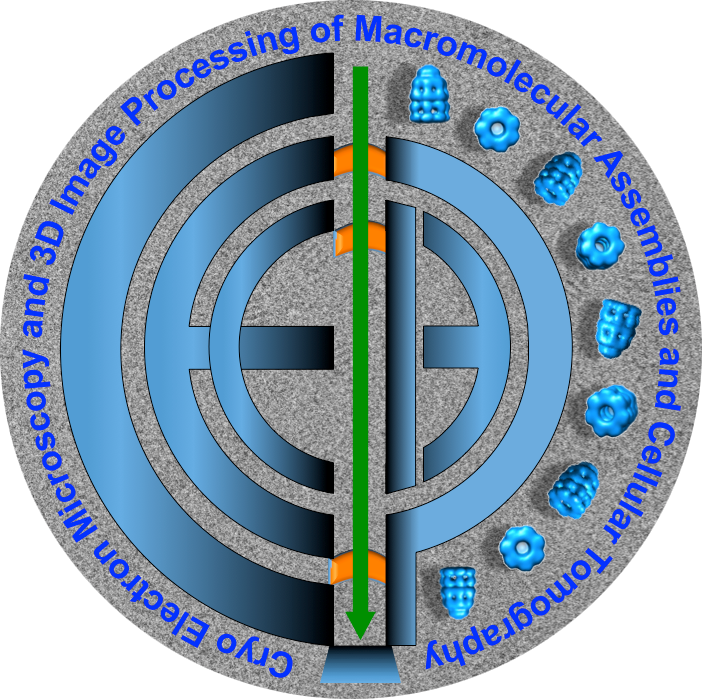
Cryo Electron Microscopy and 3D Image Processing of Macromolecular Assemblies and Cellular Tomography (CEM3DIP)
| - |
In Thiruvananthapuram
The GIAN-CEM3DIP practical course will cover :
- 3D Electron Microscopy: History and Basic Principles
- Biological sample and specimen preparation methods for TEM
- TEM- principles, image formation , particle detection, Fourier Transform, Convolution, CTF, PSF, Resolution and FSC
- Image processing, Point group symmetries, Classification, Orientation and Heterogenity of particles
- Getting the first model using Conical Tilt and Projection Matching
- Single particle CryoEM and 3D reconstruction
- Challenges of in-situ structural biology
- Principles and applications of Cryo Tomography. Cellular Tomography and Subtomogram averaging.
- Refinement of atomic models against CryoEM maps, Flexible fitting, Validation, Assessment and Data deposition.
- Hybrid methods: Protein Crystallography, Computational methods and CryoEM
De-Mystifying X-ray Data Processing in Macromolecular Crystallography
| - |
In London
Organized by the Biochemical Society (UK) and to be held at Charles Darwin House, London.
This training event offers a hands-on workshop to help with the understanding and optimization of diffraction data in order to enable structure determination.
This training is especially useful for early-stage PhD students, but anyone interested in understanding better the key step of 'data reduction' to consider this introductory-level course is welcome to attend.
Discussion topics covered will include:
- Crystals, lattices, point and space groups
- Diffraction and the Ewald sphere
- Indexing and space group determination
- Scaling, mosaicity, anisotropy, twinning
- XDS, MOSFLM and DIALS packages
The training event will be delivered by leading software developers and experts in the field who will mentor participants, including Karine Sparta (Helmholtz Zentrum Berlin, Germany), Phil Evans (MRC Laboratory of Molecular Biology, Cambridge, UK), Bill Shepard (SOLEIL synchrotron, France), Harry Powell (MRC Laboratory of Molecular Biology, Cambridge, UK), Kay Diederichs (University of Konstanz, Germany) and Graeme Winter (Diamond Light Source, UK).
There are a limited number of Student Bursaries available
Â

Protein Modelling and Structure-Based Function Prediction
| - |
In Liverpool
The two-day event will cover three topics, using interspersed lectures and hands-on sessions. Each day terminates with a one-hour slot in which participants can work on their own data supported by facilitators
- Homology Modelling
- Structure-Based Function Prediction
- Advanced Modelling Methods
This training event is largely a hands-on workshop familiarising participants with protein modelling methods and tools for inferring (dys)function, based on protein structure. Conventional homology modelling will be the major focus but advanced ab initio and covariance-based methods will also be mentioned.
Aimed at participants from graduate level onwards with no prior experience of modelling but a good understanding of protein structure principles and terminology, this event offers training in both modelling and structure-based functional inference.
Cryo Techniques in Electron Microscopy Course
| - |
In Harpenden
This intensive five day residential course will cover sample preparation and cryo-microscopy techniques for both scanning and transmission electron microscopy, and will comprise tutorials, demonstrations and hands on practical sessions.
The course is aimed at life sciences however the techniques can be applied to other fields so participants from any area of academia or industry who are interested in learning cryo-microscopy skills or updating their knowledge are invited to attend.
The course will be taught by professionals from both academia and industry on a range of equipment and will allow time for one-to-one queries and demonstrations if needed: as such, numbers for the course are limited so secure your space by registering early!
Delegates are invited to bring samples with them to try on the equipment for themselves.
 This course is hosted by Rothamsted Research Centre and the Royal Microscopical Society.
First Pasteur Course on Integrative Structural Biology
| - |
In Paris
Structural Biology. Problems in structural biology today can very often
not be solved by one technique alone, but need to be solved by a
combination of methods, including NMR, X-ray crystallography, electron
microscopy, structural mass spectrometry, and SAXS. The heterogeneous
data coming from these methods need to be combined with advanced
molecular modeling techniques. The goal of the course is to provide
young scientists that have more specialized knowledge in one of the
techniques an overview over the broad range of modern structural methods
available. Special emphasis will be given to computational approaches to
integrate data (such as IMP, ARIA or HADDOCK).
The course is principally aimed at the mature graduate student /
postdoctoral level, but applications from scientists at all levels are
encouraged. The course will consist of lectures, which will give
introductions into the principles and limitations of the different
techniques, and practical work on data analysis with the major structure
refinement / modeling programs.
The course fee of € 250 (students) covers lodging and most meals.
Program and details on registration procedures will be available before
the end of the week.
A poster abstract, a short CV, and a letter of motivation will be required.
Claudine Mayer, Michael Nilges and Nicolas Wolff, Organizers

First advanced training course on symmetry and group theory
| - |
In Tsukuba
Sponsors: The Crystallographic Society of Japan, Institute of Materials Structure Science of the High Energy Accelerator Organization
Co-sponsors: The Graduate University for Advanced Studies, Department of Materials Structure Science, School of High Energy Accelerator Science
Aim and target
The first advanced training course is open to the participants of the four basic training courses hold from August 2014 to March 2016 and proposes applications of the basic knowledge obtained during the previous courses.
Program
The training course will span five full days, from 1st to 5 August 2016. Exercises proposed during the whole course form an integral part of the course: participants are requested to actively take part in solving the proposed exercises. Evening sessions willl also be proposed for discussion, practicals, solution to the exercises, questions & answers.
Didactic material will be distributed during the lectures and also made available in electronic form.
- Refresher about the fundamental notions proposed during the basic courses
- Twinning and chromatic symmetry for the description of twins
- Bilbao Crystallographic Server
Coffee break will be served at about 10:30 a.m. and 4 p.m. Lunch break will be from 12:30 p.m. to 2 p.m.
Language
The official language of the training course is Japanese. No simultaneous interpretation will be provided.
Venue
The training course will be held at the seminar hall of the 3th building of KEK, Tsukuba campus.
Lecturer
Prof. Massimo Nespolo, Université de Lorraine, France (on behalf of MaThCryst)
Local Organizing Committee
- Dr Maki Okube, Tokyo Institute of Technology
- Prof. Takashi Kamiyama, KEK
- Prof. Noriyuki Igarashi, KEKÂ
EMBO practical course on Correlative Light Electron Microscopy
| - |
In Bristol
This EMBO Practical Course aims to train young scientists in the available techniques in the Correlative Light Electron Microscopy field of life science.
Students will be given a theoretical overview of available techniques and importantly the rationale why a particular method is applied to a specific scientific question will be discussed. Following the theoretical part students will get hands on experience of most of the techniques and they will be provided with practical tips and tricks by the experienced teaching staff.
This course aims at having a strong interaction / discussion between the students and the lecturers, where students are encouraged to challenge the techniques, propose alternatives, and discuss how CLEM can be applied to their own specific research questions. To this end a lot of the work will be performed in small groups with a high staff to student ratio (almost 1:1).
Solution scattering from biological macromolecules
| - |
In Hamburg
10th Central European Training School on Neutron Techniques (CETS2016)
| - |
In Budapest
Location: Budapest KFKI Campus of Hungarian Academy of Sciences
Application deadline: 20th March
We are welcoming PhD and master students, post-doc scientists as well as newcomers to the neutron research from the field of structural research in physics, chemistry, biology, material science etc.
The training consists of 5 days of lectures and experimental works.
Available instruments:- Small Angle Neutron Scattering (YS)Â
- Reflectometer (GINA)
- Triple Axis Spectrometer (TAS)
- Neutron Diffractometer (ND)Â
- Prompt Gamma Activation Analysis and Neutron Induced Prompt Gamma-ray Spectroscopy Station (PGAA/NIPS-NORMA)
Grants are available.

MX beamline training sessions
| - |
In Diamond Light Source, Didcot
Sessions include:
24th February afternoon optional session Hands on software:
 *  MX pipelines and XIA2 at Diamond
 *  Tutorial sessions:
    *  CCP4i2: scaling with Aimless, phasing and refinement (CCP4 team)
    *  Data processing with DIALS
25th February session on MX beamlines:
 *  Mini-Kappa goniometry / Anomalous data collection
 *  Sample humidity control (HC1)
 *  I24 new end station/ In situ diffraction
 *  Fragment screening in crystals - I04-1/Lab36
 *  Experiment database: ISPyB
Registration is free-of-charge with lunch provided on the 24th and 25th February, and accommodation and dinner for the night of the 24th February. Travelling expenses within the UK will also be provided. The training is targeted at all users, and is not limited to students and post docs. It is essential that each BAG sends at least one representative per calendar year.
Places are limited to twenty five participants. The registration deadline is on the 4th February.
Â
Integrating X-ray crystallography and scattering with electron microscopy
| - |
In Oeiras (NOVA ITQB)
The course covers a multidisciplinary approach to study the structure of
challenging proteins, focusing on membrane proteins and large complexes.
The basic principles will be provided for each addressed technique
(Macromolecular Crystallography, Mass Spectrometry and Electron
Microscopy); their applications in biological systems, major benefits
and limitations will also be discussed.
The Workshop is organized with lectures in the mornings followed by
hands-on training. The course is aimed primarily at PhD students and
young Post-Doctoral researchers interested in Structural Biology.
Confirmed speakers are Jose Maria Carazo, Dmitri Svergun and Isabel de
Moraes.
 Participants will be limited to 20. Candidate selection will be based on
a short CV, a motivation letter from the applicant, and a recommendation
letter from the supervisor.
Registration deadline is February 23. Please send your application to
[email protected]. Registration fee is 180Eur including
accommodation.
Â