Natalia Dubrovinskaia
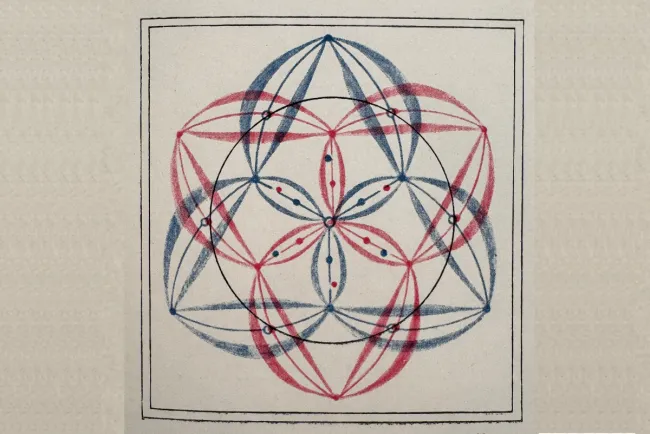
ollections, as well as at mineral and diamond markets. On 10 August 1910, he wrote to Goldschmidt: “Yesterday and today I examined many thousands of diamond crystals. I purchased some exclusively for you for 24 marks. Among them are exceptionally fine specimens that nicely complement our collection. There are also some entirely new features to be seen in them. The address of the Diamond Administration is: Behrenstrasse 7, Diamond Administration of the D.D.S., West African Protectorate.” Ultimately, 289 crystals with a combined weight of 200 carats (40 grams), originating from various deposits, were investigated, characterised, and described in the monograph, which was illustrated with 168 original figures and accompanied by an atlas of morphological forms and light-reflection images.
In an undated letter, Fersman wrote: “The work on the diamond was truly colossal, and now at last the manuscript is finished… Perhaps it should be published as a separate book, since it has, in fact, become a complete monograph! I am only in favour of faster printing, without delays. Otherwise, in many respects, the work will become outdated; I feel this especially with regard to the historical aspects, as each month brings something new and important in various questions concerning the diamond.”
In the summary of the published book, the authors stated: “The description of crystals exists for its own sake, in the sense that through it observers and readers may delight in the richness, beauty, diversity, and inherent order of nature. At the same time, it is an element within the system of comprehension of the nature of crystals.” This sentiment proved entirely justified, as the book made substantial contributions across multiple areas of mineralogical science.
One of its most important achievements was the systematic investigation of diamond crystal morphology. Fersmann and Goldschmidt demonstrated that crystal forms are not accidental but reflect conditions of formation and subsequent geological history. They classified habits, twins, and surface features using extensive comparative material, arguing that morphology provides evidence for genetic interpretation. Equally significant was their insistence that diamond formation requires extraordinary pressure conditions. Although they could not yet quantify pressure–temperature fields, they rejected low-pressure surface-formation theories and framed diamond genesis as a problem governed by physical chemistry and thermodynamics. Their discussion of the diamond–graphite relationship introduced early concepts of metastability. The authors also emphasised the influence of geological environment on diamond characteristics, treating differences between diamonds from kimberlite pipes, placer deposits, and various geographic regions as meaningful indicators rather than incidental variations.
Interestingly, Der Diamant was never translated into languages other than Russian. In the Russian edition, Kristallografiya Almaza (Crystallography of Diamond) (1955), Fersman was listed as the sole author, while Goldschmidt’s name was omitted. This omission likely reflects the ideological climate of the Stalinist “struggle against cosmopolitanism”— a mass ideological campaign launched after the Second World War to suppress pro-Western sentiments, eradicate so-called “anti-patriotic” tendencies among the intelligentsia, and assert the primacy of Russian science and culture. Nevertheless, the Russian edition played an important role in transmitting and systematising the ideas of the original monograph for Soviet science.
Der Diamant became, in its time, a comprehensive study of the morphology of diamond crystals, which was considered in the context of diamond genesis – a progressive view that led to a new direction in mineralogical crystallography at the very beginning of the 20th century: the genetic morphology of crystals.
Epilogue
It is a well-known human weakness to be fascinated by curious numerical coincidences, and the story of Der Diamant offers a particularly tempting example. The author of this paper graduated from Moscow University in 1983—exactly one hundred years after the birth of Alexander Fersman. In 2007, following her habilitation on nanodiamond, she arrived in Heidelberg to take up a position as Privatdozent at the Mineralogical Institute of the University of Heidelberg, precisely one hundred years after Fersman himself had arrived at Goldschmidt’s institute. That same year, she began studying the relevant documents in the University Archive. Four years later, in 2011, she left Heidelberg—one hundred years after the publication of Der Diamant. Such alignments surely mean nothing at all, yet they are difficult to resist; or, as history occasionally reminds us, numbers sometimes seem to enjoy telling their own quiet jokes.
Natalia DubrovinskaiaUniversity ProfessorUniversity of Bayreuth, Germany
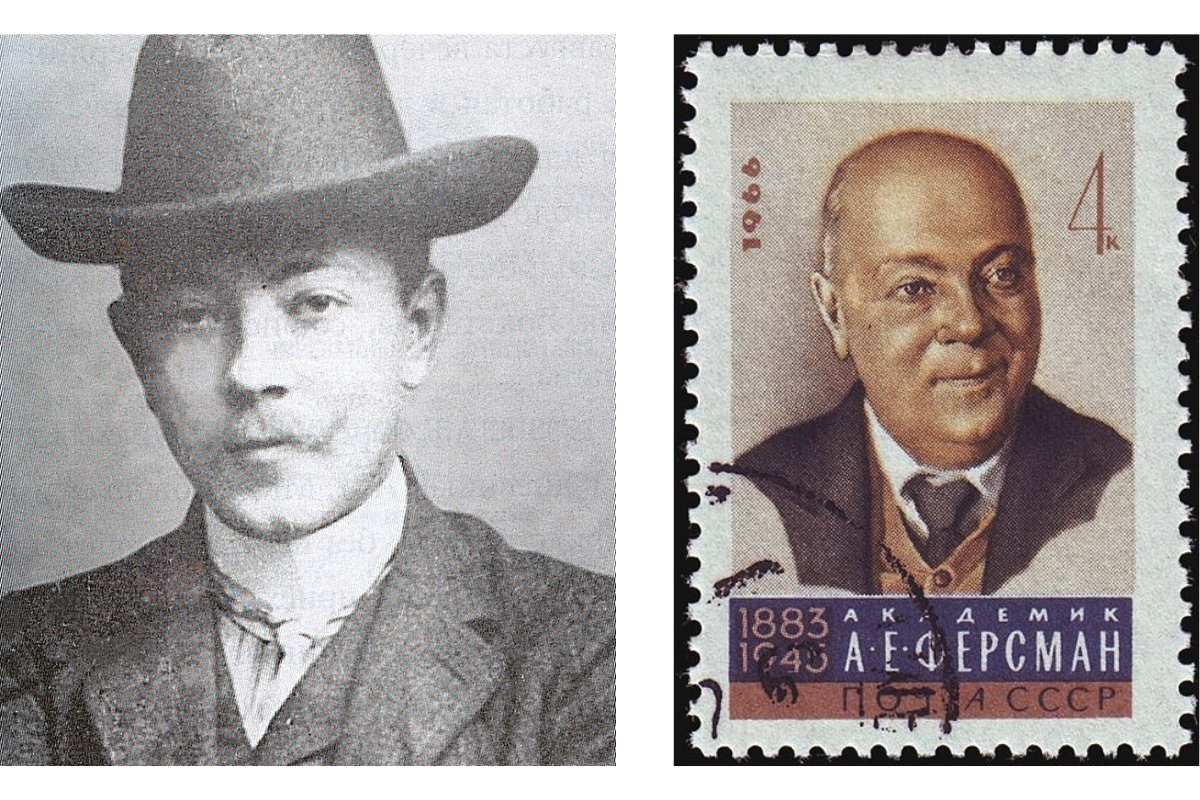
A. E. von Fersman in 1907 and on a Soviet stamp issued in 1966. Fersman became one of the most prominent mineralogists and geochemists in the USSR in the first half of the 20th century.
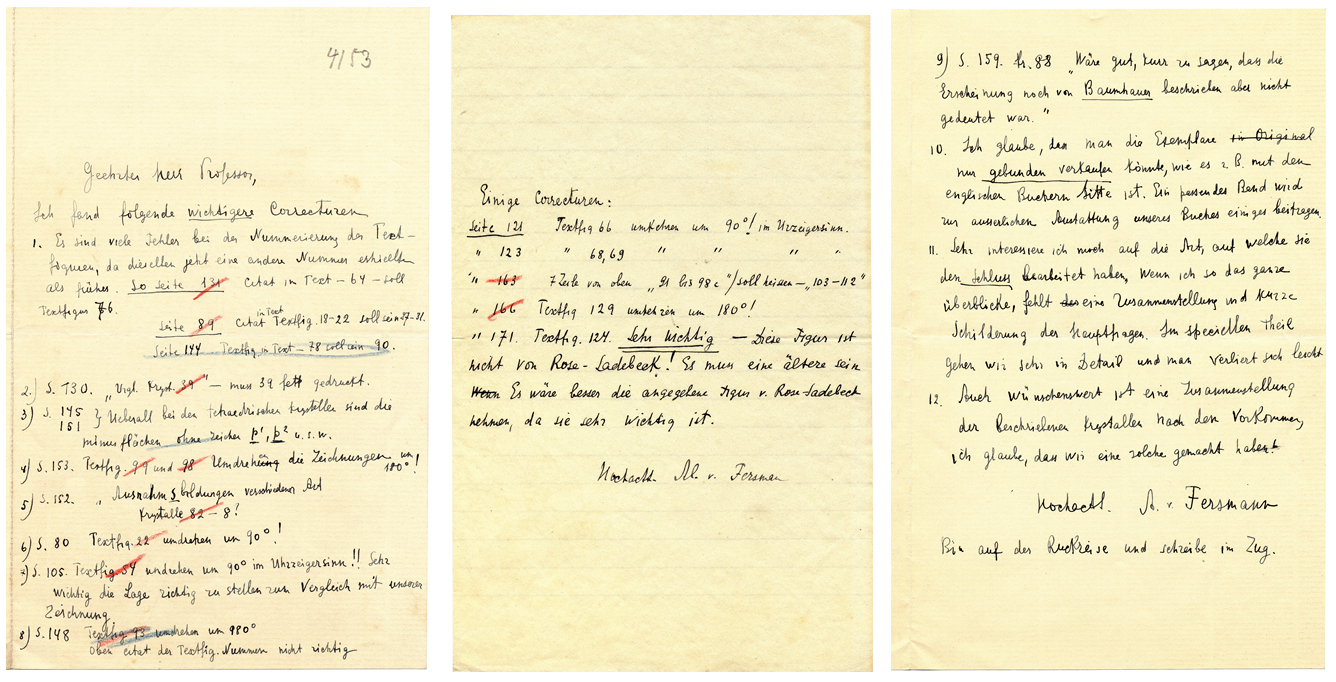
A copy of the correction of the manuscript Der Diamant.
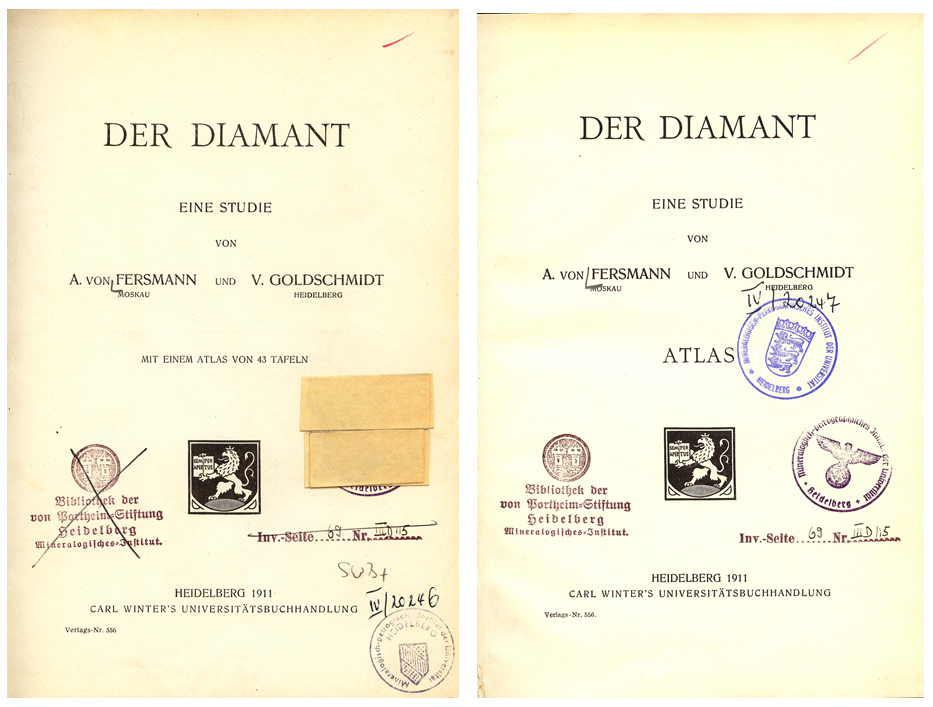
Title pages of the monograph Der Diamant and the Atlas from the original 1911 edition. The stamps reflect the complex history not only of these particular copies, but also of the society itself.
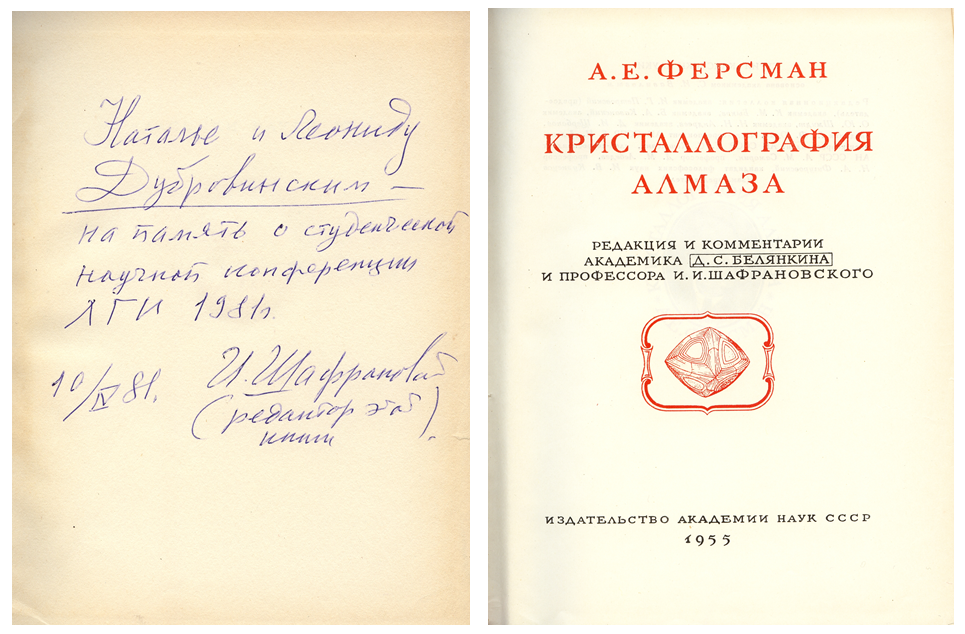
Title page of Kristallografiya Almaza (1955), presented to me in 1981 by its editor, I. I. Shafranovsky, who at that time was a professor at the Mining Institute in Leningrad. A dedicatory inscription on the front flyleaf (in Russian) reads: “To Natalia and Leonid Dubrovinsky, in memory of the student scientific conference at the Mining Institute, 1981. I. Shafranovsky, editor of this book.”
27 January 2026
Copyright © - Prior permission is not required to reproduce short quotations, tables and figures from this article, provided the original authors and source are cited.
The permanent URL for this article is https://www.iucr.org/news/newsletter/volume-34/number-1/before-x-ray-diffraction-celebrating-115-years-of-a-landmark-crystallographic-monograph
References