Events
IUCr sponsored meetings
25th European Crystallographic Meeting (ECM-25)
| - |
In Istanbul
Third K.H. Kuo Summer School of Electron Microscopy and Crystallography: International Workshop of 3D Molecular Imaging by Cryo-Electron Microscopy
| - |
In Beijing
Third K. H. Kuo Summer School of Electron Microscopy and Crystallography
International Workshop of 3D Molecular Imaging by Cryo-Electron Microscopy
Institute of Biophysics, Chinese Academy of Sciences, Beijing, China August 8 - 12, 2010In recent years, tremendous progress has been made in structural studies on biological macromolecules and assemblies using cryo-electron microscopy. As more and more genome projects for human and other organisms are completed, the focus of biological research is shifted to proteins, protein complexes, organelles and cells. Along with X-ray crystallography and NMR spectroscopy, cryo-electron microscopy technologies are playing increasingly important roles in structural biology research.
To train the next generation of scientists in this exciting field, a workshop on cryo-electron microscopy of macromolecular assemblies will be held at Institute of Biophysics, Chinese academy of Sciences, Beijing, China, August 8 - 12, 2010. The workshop will give the emphasis on single particle analysis and electron tomography by cryo-electron microscopy. Both basic principles of these techniques and their state-of-the-art applications to biological systems will be taught at the school, and practical sessions will also be organized to show hand-on experience in cryo-electron microscopy as well as image processing and analysis techniques. Graduate students and postdocs who currently work in or who are interested in joining the field are particularly encouraged to attend. Importantly, a number of leading scientists will be lecturing at the school; young scientists will have plenty of opportunities to directly interact with these leading scientists.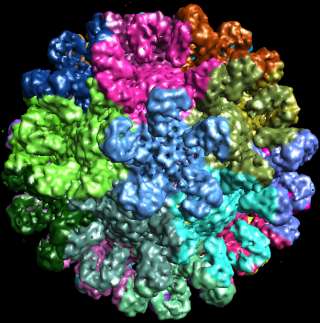
Sixteenth International Conference on Crystal Growth in conjunction with the Fourteenth International Summer School on Crystal Growth
| - |
In Dalian
During the week after the school, the 16th International Conference on Crystal Growth (http://iccg16.tipc.cn) will be held in Beijing, China.
ACA Annual Meeting
| - |
In Chicago, IL
The 2010 Annual Meeting: A Great Success
ACA would like to thank all those who have made this year's meeting in Chicago possible.  ACA is grateful to the 2010 Program Chair, Local Chair, Session Chairs and invited speakers for their diligent efforts to make this meeting a success.  The Association was honored to have  the 2009 Nobel Laureates in Chemistry  present lectures in Chicago.  Venkatraman Ramakrishnan gave a plenary lecture on Saturday, Thomas Steitz gave a plenary lecture on Wednesday and  Ada Yonath presented a plenary lecture during session 07.18 on Macromolecules, Complexes & Assemblies.
VII International School on Crystallography (Protein Crystallography)
| - |
In Havana
Advances in the Characterization of Industrial Minerals
| - |
In Chania
XX Jubilee International School on Physics and Chemistry of Condensed Matter
| - |
In Bialowieza
Summer Schools on Mathematical and Theoretical Crystallography
| - |
In Nancy
Summer Schools on Mathematical Crystallography
Nancy, France, 21 June - 2 July 2010On the occasion of the fifth anniversary of its foundation, the Commission on Mathematical and Theoretical Crystallography organised two summer schools devoted to the topology of crystal structures and to the irreducible representations of space groups
Topological Crystal Chemistry: Theory and Practice
The explosive growth in inorganic and organic materials chemistry has seen a great upsurge in the synthesis of crystalline materials with extended framework structures (zeolites, coordination polymers/coordination networks, Metal Organic Frameworks MOFs, supramolecular architectures formed by Hydrogen bonds and/or Halogen bonds etc.). There is a concomitant interest in simulating such materials and in designing new ones. However, it is a truism that before one can embark on systematic design of materials, one must know what the possibilities are. Indeed, in the last two decades there have been many parallel outcomes in the theoretical aspects of description and analysis of periodic structures (nets, tilings, surfaces, etc.), in the elaboration of databases, and in the development of software for analyzing and describing (illustrating) topological aspects of both real crystal structures and theoretical extended architectures. With these achievements, materials science and crystal chemistry comes up to a new level of their development that is characterized by deeper integration of mathematical methods, computer algorithms and programs into modeling and interpretation of periodic systems of chemical bonds in crystals.
The goal of this school is to give an introduction to this whole new area that we call Topological Crystal Chemistry. There will be large time dedicated to hands-on session on the use of the novel and still not widespread computer methods/software/databases so the student at the end of the course should be able to analyze any kind of extended structure through the eye of the topology and describe it in term of nets, entanglements, catenation etc.
The target audience is young scientists (graduate students and postdoctoral associates) actively engaged in materials research, (experimental and/or theoretical) but also crystallographers who want to look at familiar structure types with a different eye. Some basic knowledge in chemistry and crystallography will be assumed which will provided during the pre-school day, for those needing a basic introduction .
Irreducible representations of space groups
Group Theory is an indispensable mathematical tool in many branches of chemistry and physics. The school aims at giving the necessary background and practical skills for an efficient use of the group-theoretical methods in specific problems of solid-state physics, structural chemistry and material sciences. After a revision of the basic concepts of spatial symmetry and its description by crystallographic point and space groups according to International Tables of Crystallography, the principal results of the theory of group representations will be introduced with an emphasis on the practical aspects of the subject. Irreducible representations of crystallographic point and space groups and their derivation will be discussed in details. The abstract theory is limited to a reduced set of fundamental facts and statements. More attention is paid to different tools and techniques necessary for practical applications of the symmetry methods in solid-state problems as molecular dynamics, spectroscopy, electronic bands, phonon spectra, Landau theory of phase transitions.The applications of group-theoretical methods to molecular vibrations including the concept of normal modes of vibrations will be discussed in details. The students will learn how, starting from symmetry requirements, to determine the spectral-transition selection rules with special attention to infrared and Raman spectra. The important role of representations of crystallographic groups in the classification, labeling and the analysis of the degeneracies of the lattice vibrations and electronic energy bands of crystalline solids will be reviewed. The applications related to phase transition studies will include the introduction of efficient techniques allowing the determination of the principle characteristics of a system undergoing a phase transition. For example, the determination of the order parameter from the knowledge of the initial and final phases, or the enumeration of all symmetry allowed phases that can result from a continuous phase transition. The symmetry-mode analysis of structural phase transitions results in the decomposition of the symmetry-breaking distortion, present in the distorted structure into contributions from different symmetry modes. The exposition of the general theory and methods will be illustrated with number of examples of typical phase transitions of different nature so that the participant can learn to apply the group-theoretical procedures in practice for the analysis of phase-transition mechanisms and in the search for new functional materials.
A tutorial and practical guide to the Bilbao Crystallographic server (www.cryst.ehu.es) forms an essential part of the course. The server provides an excellent on-line tool for the study of crystallographic symmetry and its applications. It gives access to databases with symmetry information on crystallographic groups, their group-subgroup relations and irreducible representations. The school aims at giving the necessary background and practical skills for an efficient use of the computer databases and programs on the Bilbao Crystallographic Server focused on solid-state physics and chemistry applications.
The participants of the school will benefit from the practical training in the application of advanced symmetry methods in solid state physics and crystal chemistry problems. The minimal mathematical prerequisites for the school widen the participation audience to students and researchers from chemistry, physics, geological sciences and engineering.
Crystallography Online: International School on the Use and Applications of the Bilbao Crystallographic Server
| - |
In Zarauz
Crystallography online: International School on the use and application of the Bilbao Crystallographic Server
Lekeitio, Spain, 21-27 June 2009Supported by the:
- Spanish National Committee for Crystallography
- IUCr Commission on Teaching Crystallography
- ECA Special Interest Group No. 5 "Mineral and Inorganic Crystallography"
List of main topics
- Symmetry databases for point and space groups
- Applications of group-subgroup relations between space groups
- Crystal structure transformations and alternative descriptions
- Solid-state physics and chemistry applications of group theory
- Selection rules in spectroscopy; phonon selection rules
- Structural pseudosymmetry
- Symmetry-mode analysis of ferroic structures
- Domain-structure analysis
- Structural phase transitions
- Symmetry in ab-initio calculations
Lectures
- Mois I. Aroyo (Bilbao, Spain)
- J. Manuel Perez-Mato (Bilbao, Spain)
- Karen Friese (Bilbao, Spain)
- Massimo Nespolo (Nancy, France)
- Gervais Chapuis (Lausanne, Switzerland)
- Michele Catti (Milan, Italy)
- Yuri Kitaev (Saint-Petersburg, Russia)
- Juan Rodriguez-Carvajal (Grenoble, France)
- Harold Stokes (Utah, USA)
ICCOSS XIX (International Conference on the Chemistry of the Organic Solid State)
| - |
In Genoa
ICCOSS meetings have a well established tradition and a few of the past meetings have been held at Jerusalem (1993), Matsuyama (1995), Stony Brook (1997), Cambridge (1999), Mainz (2001), Sydney (2003), Los Angeles (2005), and Merida (2007).
Conference Topics
ICCOSS deals with various aspects of the crystalline state and reactivity of organic and hybrid materials from preparation to characterization. It includes the investigation of  crystal structures and supramolecular architectures, crystal growth and design, inclusion compounds, topochemical reactions, nanostructures, heterogeneous interfaces. Nanoporous materials useful in gas storage and separation for energetic and environmental reasons will be highlighted. Special focussed sessions will be dedicated to polymorphism of pharmaceutical solids and to molecular machines and rotors in the solid state.
2nd School and Workshop on X-ray Micro- and Nanoprobes
| - |
In Palinuro
Symposium R on X-ray Techniques for Advanced Materials, Nanostructures and Thin Films - From Laboratory Sources to Synchrotron Radiation
| - |
In Strasbourg
Scope:
X-ray techniques have increasing impact on the characterization of advanced materials, nanostructures, and thin films. In both laboratory-based instrumentation and synchrotron radiation, the sophistication and resolution of these methods has flourished. The sheer speed of progress and the present and future availability of advanced facilities make this an appropriate time to hold a workshop, the objective of which is to promote and encourage the interaction between scientists working on different aspects of X-ray characterisation and materials development, in order to address common challenges and to improve existing and novel techniques.The topics covered include the materials microstructure; a field in which x-ray diffraction and subsequent line profile analysis is the only non-destructive technique, giving estimates of crystallite size, size distribution function, defects and microstrains. All these factors have a large impact on materials functionality. Moreover, x-ray diffraction has become one of the most powerful tools to study the structural properties of nanocomposites, which nowadays receive a great interest for their numerous potential applications. Texture and residual stress both introduce a pronounced anisotropy in the properties of polycrystals. The physical causes for these phenomena are intensively under discussion in the community, and offer a pathway to improve our understanding of materials processing.
The availability of micron and sub-micron beams makes both micro-diffraction and nano-spectroscopy with unprecedented resolution possible, important in many industrial and environmental issues. Furthermore, such small beams allow one to probe very small sample volumes under extreme conditions of pressure and temperature. The coherence of synchrotron x-ray beams enables an easy use of phase sensitive techniques. Phase contrast imaging is providing new insight in structures which have limited, or similar, absorption contrast. The development of fast 3D imaging techniques allows real time experiments for example in the field of metal solidification. Diffraction based imaging gives access to 3D crystallographic arrangements of grains in undeformed materials opening vast avenues of research. Full control of photon beam polarization has allowed the development of dichroism techniques, which are providing new information on magnetic materials. Established techniques such as photoemission, absorption, and diffraction are taking advantage of the properties of third generation sources, by improving resolution and detection limits (e.g. in fluorescence X-ray absorption or trace element analysis applied to impurities, defects, dopants and surfaces).Â
The proceedings of the symposium will be published in a special issue of Nuclear Instruments and Methods in Physics Research Section B: Beam Interactions with Materials and Atoms.
Gordon Research Conference in Crystal Engineering
| - |
In Waterville Valley Resort, NH
Crystal Engineering
June 6-11, 2010Waterville Valley Resort
Waterville Valley, NH
- Chair: Â Gautam R. DesirajuÂ
- Vice Chair: Robin D. RogersÂ
The purpose and scope of the Gordon Research Conference is to provide a forum for the discussion of the current state of the art of this rapidly evolving, highly interdisciplinary field of crystal engineering, to identify and debate open questions, and to point out new promising research directions. The conference will bring together experts with a diverse background and will consist of the following sessions:
- Design strategies for molecular organic solids
- Co-ordination Polymers -- Structure
- Co-ordination Polymers -- Function
- Polymorphism and Crystal Structure Prediction
- Formation of Crystals
- Process Development and Scale-Up
- Organic Reactions in the Solid State
- Two-Dimensional Crystal Engineering
- The Future
High-Pressure Crystallography: From Novel Experimental Approaches to Applications in Cutting-Edge Technologies
| - |
In Erice
Purpose of the Course
As a thermodynamic parameter, pressure is remarkable in many ways. It spans in the visible universe over sixty orders of magnitude, from the non-equilibrium pressure of hydrogen in intergalactic space, to the kind of pressure encountered within neutron stars.Â
In the laboratory, it provides unique possibility to control structure and properties of materials, dramatically alter electronic properties, break existing, or form new chemical bonds by reaching compressions in excess of an order of magnitude for molecular materials.Â
This agenda naturally encompasses elements of physics (properties and structure), chemistry (chemical reactions, transport), materials science (new materials) and engineering (mechanical properties); in addition it has direct applications and implications for geology (minerals in their natural, deep earth environments), planetary sciences, biology and medicine (deep sea ecosystems, membranes, protein and nucleic acid folding, the role of high-pressure in the origin of prebiotic forms of matter and the origin of life, des-activation of viruses and toxins).Â
Beyond its specificity, high-pressure science finds direct or indirect (i.e. economic) application in several fields of modern European technology, such as mechanical engineering (strain/stress analysis), optoelectronics and spintronics, nanotechnology, pharmaceutical industry, food processing, petroleum industry, seismic data interpretation, etc.
Structure and Function from Macromolecular Crystallography: Organization in Space and Time
| - |
In Erice
Purpose of the Course
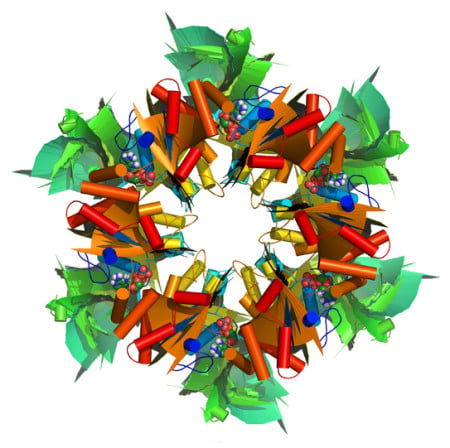
The objective of this meeting is to introduce students to the use of advanced techniques for the study of structures of macromolecular assemblies involving protein, DNA, RNA and polysaccharide. Such assemblies regulate spatial and temporal organisation in cells and organisms. The course will focus on the structures and dynamics of membrane channels and receptor systems, cell signalling, DNA replication, protein synthesis, motile systems and viruses. These systems mediate many of the processes that lead to human disease.
There will be discussion of multi-component complex assembly and disassembly, macromolecular systems that drive protein movement, adaptors and templates that lead to cellular co-localisation, allostery and conformational changes over time, and the macromolecular interactions that mediate these regulatory systems. The course will review the techniques used to study protein assemblies and their dynamics, including X-ray diffraction and scattering, electron cryo-electron microscopy, electro nanospray mass spectrometry, NMR, protein docking and molecular dynamics.
International Symposium of Diffraction Structural Biology (ISDSB 2010)
| - |
In Paris
Tuesday May 25: 2 PM opening and first session; 6.30 PM welcome reception at the nearby national synchrotron radiation facility SOLEIL (buses available).Â
Thursday 27: afternoon at Synchrotron SOLEIL. Commercial exhibition, poster session and visit of SOLEIL beamlines (buses available).Â
Proceedings papers: To be published in the Journal of Synchrotron Radiation. Speakers and all poster presenters are expected to submit manuscripts (4 pages JSR format), which will be submitted to referee. 


Second International School of Crystallization: Drugs, Foods, Agrochemicals, Minerals, New Materials
| - |
In Granada
Diffraction at the Nanoscale: Nanocrystals, Defective and Amorphous Materials
| - |
In Villigen
Diffraction at the Nanoscale: Nanocrystals, Defective & Amorphous Materials
A Hands-on Workshop on X-rays, Synchrotron Radiation and Neutron Diffraction Techniques including Experimental and Computational Aspects.Third Annual School on Advanced Neutron Diffraction Treatment using the FullProf Suite
| - |
In Tenerife
FullProf School-2010, 2-7 May, 2010
Chair:       Juan Rodriguez-Carvajal Co-chairs:   Marie-Hélène Lemée-Cailleau, Gabriel CuelloScientific scope:
Precise crystallography has significantly contributed to the success and recent developments in materials science, solid state physics and chemistry. Among the available programs for diffraction data analysis, the FULLPROF SUITE is one of the most widely used packages by the scientific community working in these fields. Â
By creating a regular school on the FULLPROF SUITE, our aim is to contribute directly to the training of the upcoming generation of scientists. These intensive, hands-on, schools are focus on the analysis of diffraction data with the FULLPROF SUITE.Â
After two successful issues, 2008 on "heterogeneous data coming from powders, single crystals, X-rays and time-of-flight neutron diffraction" and 2009 on "Magnetism", the third school, FPSchool 2010, took place in Grenoble from 2 to 7 May. It continued with the tradition of dedicating the first part to generalities and the second part of the school to a more specialized topic: complete diffraction-data treatment under constraints (powders and single crystals) using a symmetry mode approach for extended ionic/covalent materials and rigid body constraints for molecular materials.Lectures
The school lasted 5 days: three days dedicated to general applications plus two days dedicated to the specialised topic that will change each year. This year the school was mainly devoted to under constraint refinements.Theoretical introductory lectures (max. 1 hour/lecture) were followed by hands-on practical computing sessions. The afternoon was mostly dedicated to practical sessions.
Powder Diffraction and Rietveld Refinement School
| - |
In Durham
Topics to be covered will include:
- Data collection strategies for X-ray and neutron diffraction
- Constant wavelength and time of flight diffraction
- Modelling peak shapes
- Indexing powder patterns
- Rietveld, Le Bail and Pawley fitting methods
- X-ray and neutron combined Rietveld refinement
- Extended solids and molecular systems
- Restrained refinements
- Rigid body refinements