Events
Schools
23rd Laboratory Course on Neutron Scattering
| - |
In Jülich & Garching/Munich
The course will consist of one week of lectures and exercises and one week of practical training at the neutron scattering facilities at Heinz Maier-Leibnitz Zentrum MLZ. The course aims to give a realistic insight into the experimental technique and its scientific power.
Students of physics, chemistry, material science and biosciences are invited to apply for participation. There is no tuition fee. Accommodation and meals during the course will be provided by JCNS. Travel expenses will be reimbursed within reasonable limits. Deadline for application is 12th May 2019.
Structural Analysis by X-Ray Diffraction on Monocrystal and Applications
| - |
In Pont àMousson
The 7th Thematic School of Crystallography will focus on the following subjects:
- Determination of crystal structures
- Single crystal X-ray diffraction
- Refinement and analysis methods
- Use of symmetry elements
- Use of the Cambridge Crystallographic Structural Database
- Use of crystallographic software
For more information, including the range of registration costs and registration links which will be available soon, please visit:
http://crm2.univ-lorraine.fr/lab/fr/education/congres/nancy2019/
33rd Annual ResMed Course: The Residential School on Medicinal Chemistry and Biology in Drug Discovery
| - |
In Madison, NJ
ResMed is a week-long graduate/professional-level course providing an accelerated program for medicinal chemists, biologists and other industrial and academic scientists who choose to broaden their knowledge of the drug discovery and development process. The course concentrates on the fundamentals of drug discovery spanning initial target validation through clinical development. The course is taught by distinguished faculty from industry and academia and provides ample opportunity for discussion and networking.
Topics Covered:
Basic Principles of Medicinal Chemistry
Molecular Modeling
Principles of Lead Optimization
Drug Metabolism
Target Identification and Validation
Enzyme Inhibition
Cheminformatics
Preclinical Toxicology
Kinase Inhibitors
G-Protein Coupled Receptors
Fragment-Based Drug Design
Improving Drug Candidates by Design
Drugs Affecting Ion Channels
Epigenetic Targets
Drug-like Properties
Clinical Development
Bioisosteres
Hit-to-Lead Process in Drug Discovery
Protein Binding
Case History Presentations
Pharmacokinetics
Structure-Based Drug Design
Designing Around Toxicophores
Â
4th International Summer School of Crystallography
| - |
In Hamburg
21st National School on Neutron and X-Ray Scattering
| - |
In Oak Ridge, TN
The deadline for applications is March 11, 2019.
The school is designed to introduce students to the capabilities available at US neutron and x-ray user facilities. The school will consist of a range of lectures, seminars and short experiments to provide the principles of neutron and x-ray scattering theory, the characteristics of neutron and synchrotron sources, and hands-on experience using the appropriate instruments at Argonne's Advanced Photon Source and Oak Ridge's Spallation Neutron Source and High Flux Isotope Reactor facilities.Â
Travel, meal and lodging costs will be covered by the school. Â
12th annual CCP4/APS school in macromolecular crystallographyâ€Å"From data collection to structure refinement and beyondâ€Â
| - |
In Argonne (Near Chicago), Illinois
The school comprises two parts: data collection workshop and crystallographic computing workshop. Data collection workshop includes beamline training, data collection on GM/CA@APS beamlines 23ID-D and 23ID-B equipped with Pilatus3 6M and Eiger 16M detectors respectively, and data processing. For data collection, only the participants' crystals will be used. Crystallographic computation workshop will feature many modern crystallographic software packages taught by authors and other experts. The daily schedule will be organized in three sections â€" lectures, tutorials, and hands-on (interactive trouble-shooting of the technical difficulties the participants face in their projects). We have had considerable success resolving these problems in past years, attested by resulting publications (see http://www.ccp4.ac.uk/schools/APS-school/publications.php). A sample program, contact info and other details can be found at the School website.
Applicants: Graduate students, postdoctoral researchers and early-career faculty, along with commercial/industrial researchers are encouraged to apply. Only 20 applicants will be selected for participation. Participants of the workshop are strongly encouraged to bring their own problem data sets or crystals so the problems can be addressed during data collection and/or computation workshops.
 Application deadline is April 15th, 2019
ANSTO-HZB neutron school
| - |
In Sydney
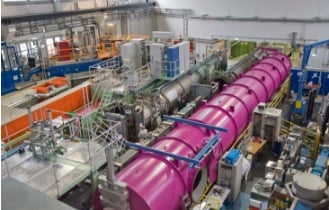
This school is primarily aimed at participants who have completed their Bachelor degree in physical, engineering and life sciences, and early stage researchers e.g. PhD students and postdocs. Â It aims to provide an introduction to neutron scattering techniques, hands-on experimental experience and inspiration for the application of neutrons to future research.

II School of the Latin American Crystallographic Association (LACA)
| - |
In Bucaramanga
MATRAC 2 School
| - |
In Garching (near Munich)
The MATRAC 2 School will provide a systematic overview of the application of neutrons and synchrotron radiation to the structural analysis of engineering materials and will focus on neutron scattering and imaging experiments. Therefore, the school consists of a two-day theoretical course in Herrsching and two days of experiments at the FRM II in Garching. The fifth day of the school offers further talks and a final discussion. All relevant experimental methods will be covered. Students and young scientists from research and industry from all of Europe interested in this field are welcome to participate.Â
Registration for the school is now open!Â
Extend registration deadline: 27th January 2019Â
Hot Topics in Contemporary Crystallography 4 Structural Biology
| - |
In Dubrovnik, Mlini
HTCC4 will entirely be dedicated to structural biology. Over four intense working days, we shall cover techniques which go beyond classical crystallography, yet which complement it so smoothly: XFEL â€" X-ray free electron laser, cryo electron microscopy NMR in macromolecular structural research biomolecular in silico simulations. The lecturers and tutors shall explain fundamentals of these methodologies, give examples on their practical applications, tutor the practical and interactive sessions, and moderate round table discussions on how to apply these methods to your own research. The examples of particular systems studied with the presented methods shall emphasize intertwist between the four chosen hot topics in contemporary research. The complementarity of each of the hot topics with classical crystallography shall be discussed.
The principal HTCC target audiences are, apparently, young(ish) crystallographers, electron microscopists, NMRists and researchers in in silico simulations dealing with biomacromolecular systems. Nonetheless, we count on researchers from the domains of (bio)chemistry, physics, biology and life sciences from both industry and academia, who appreciate and take advantage of the structural studies, want to spice up their research with an additional hint of interdisciplinarity, or, simply learn what’s new in the dynamic world of structural research.
17th European Powder Diffraction Conference - EPDIC17
| - |
In Ã... ibenik
The European Powder Diffraction Conference, EPDIC, is a biannual conference dedicated to all aspects of the analysis of polycrystalline materials by diffraction methods. Each EPDIC has the aim to highlight the latest developments in powder diffraction including methodology, data analysis and instrumental advances. EPDICs traditionally bring together scientists from institutes, universities and instrumentation companies to discuss the progress in academic and industrial research related to powder diffraction. The 17th edition of EPDIC (EPDIC17) will take place in the town of Šibenik, an emerging star of the Croatian Adriatic coast.

HREM Winter School
| - |
In Tempe, AZ
The purpose of the Winter School is to introduce the theory and practice of high resolution electron microscopy to scientists currently using transmission electron microscopes for materials science studies. People taking the course should have some familiarity with basic crystallography, diffraction contrast and routine microscope operation.
The Winter School course features extended practical sessions using a variety of FEI, JEOL and Nion transmission electron microscopes, where specific operating techniques will be taught.
There will be sessions on image processing and simulations using advanced digital image processing programs. Lectures and laboratory demonstrations will be given by ASU faculty and EMC/CHREM staff, as well as invited experts.
Â
- Fundamentals of HREM
- Imaging Theory
- Transfer Functions in HREM
- Electron Diffraction
- Small Probe Formation
- Fundamentals of STEM
- Practical HREM/STEM Operation
- Techniques for Image Calculation
- Image Processing Techniques
- Convergent Beam Microdiffraction
- Electron Energy-Loss Spectroscopy
- Energy Dispersive X-ray Spectroscopy
- Focused Ion Beam (FIB) Methods
- In-Situ Technique
Â

Second Shanghai International School
| - |
In Shanghai
Shanghai International School on Crystallographic Groups and Representations, and Their Application in Magnetic-structure Descriptions and Topological-insulator Studies
International Symposium & School on Crystal Growth Fundamentals
| - |
In Sendai
New Insights into Crystal Growth Fundamentals: A tribute to Profs. Ichiro Sunagawa and Pieter Bennema

School and Conference on Analysis of Diffraction Data in Real Space
| - |
In Grenoble
Real-space analysis of diffraction data deals with general structural concepts such as atomic distribution functions and structural correlation lengths, and now employs standard formulae common to neutron, X-ray and other diffraction techniques. Â It therefore facilitates a synergetic convergence of hitherto largely disjoint communities: liquids/glasses diffraction and crystalline powder diffraction.
To.Sca.Lat 1.0 (Total Scattering Analysis for NanoScience in Latin America)
| - |
In Florianópolis
The Latin America Summer School on Crystallography, Diffraction and Total Scattering Analysis for Advanced Materials and NanoScience.
Topics will cover ab initio structure solution by powder diffraction, quali- and quantitative phase analysis, microstructural analysis, total scattering techniques for nanomaterial characterization (structure, defects, size, morphology) by combining small- and wide-angle methods in reciprocal (Debye scattering equation) and real (Pair Distribution Function) space. Cases of applications to pharma and biomimetic materials, porous metal organic frameworks, nanosized metal, oxide, semi- and super-conductors will be presented.
Lectures on fundamentals, experimental, modelling and analytical aspects of the technique (2 days) will be combined with tutorial sessions (3 days) on data analysis, with the aid of the following programs: TOPAS, QUANTO, PDFGUI, DebUsSy,  PM2K e DIFFax+.
Advanced aspects of Synchrotron Radiation and its application to powder diffraction of functional materials will be introduced by Alexandre Gomes Carvalho, from the Brazilian Synchrotron in Campinas. Well renowned experts in the field of powder diffraction and programs, with high scientific reputation in the different topics and experience at European and Swiss Large Scale Faclities, will join the To.Sca.Lat, deliver lectures and take care of the tutorial sessions.
MAUD 2018
| - |
In Trento
The aim is to bring together participants from various fields of both the academic and non-academic world and give them the necessary information and tools to be able to characterize their own samples using the combined analysis method and the software MAUD.Â
XRD, XRF and electron microscopy equipment available at the Dipartimento Ingegneria Industriale (DII) and Fondazione Bruno Kessler (FBK) will be used to demonstrate technical aspects and to support the theoretical and practical issues of this course.
17th BCA/CCG Intensive Teaching School in X-ray Structure Analysis
| - |
In Durham
Integrative Structural Biology Autumn School
| - |
In Utrecht
Organized at Utrecht University together with Thermo Fisher Scientific
- The Integrative Structural Biology Autumn School aims to create an
opportunity to learn about the synergies between electron microscopy, mass
spectrometry and modelling in structural biology, next to hands-on
experience with cross-linking and integrative modelling. - Learn how screening of your samples by native mass spectrometry
can help accelerate the time to obtain 3D structures or how integrative
modelling can increase the fidelity of your structure. - Benefit from experts and take home the hands-on experience and
best practices for cross-linking and integrative modelling. - Take the chance to network with other structural biologists
across international borders. - Stay up-to-date on latest Thermo Scientific instrument
developments and methods.
Â

Voyage au cÃ...“ur du vivant avec les rayons X : la cristallographie
| - |
In MOOC on-line
- d’exploiter les structures tridimensionnelles avec un bon sens critique,
- de résoudre la structure tridimensionnelle d’une macromolécule par cristallographie.