Topics
Biological macromolecules
From Molecules to Medicine: How Structure Helps Cure Disease
|
American Chemical Society webinar
Thursday, October 9, 2014 @ 2-3pm ET
Learn about the quest to develop therapies for the major age-related neurodegenerative diseases such as Alzheimer's disease.
Presenter: Dr Greg Petsko is a member of the US National Academy of Sciences, the Institute of Medicine and the American Academy of Arts and Sciences and the American Philosophical Society. His research interests include protein structure and function and the development of methods to treat age-related neurodegenerative diseases, including ALS (Lou Gehrig's), Alzheimer's and Parkinson's diseases.
Moderator: Dr Martha Teeter is the current president of the American Crystallographic Association and demonstrated the first direct phasing of a protein structure with Wayne Hendrickson and the cooling of a protein with Håkon Hope, both techniques now routine in structural biology. She has promoted the International Year of Crystallography 2014 in the Americas.
What You Will Learn
How structural information can be used to identify and improve small-molecule therapeutics
The role of biological (large-molecule) drugs in the fight against neurologic disorders and how structure can help make better ones
What structural information cannot be expected to do and should not be expected to do
Download Slides: Available on the Day of Broadcast
The Fine Print ACS Webinars® does not endorse any products or services. The views expressed in this presentation are those of the presenters and do not necessarily reflect the views or policies of the American Chemical Society.
Fragment Screening by Crystallography
|
In Berlin
Fragment based drug discovery is a modern approach to identify small molecules, which bind with high ligand efficiency to biological targets. Such observations are more and more used by pharmaceutical industry to develop lead compounds within the frame of a drug discovery process. In contrast to traditional HTS-methods, fragment screening requires orders of magnitude smaller compound libraries to screen a comparable chemical space against the target protein.
In addition, fragments constitute powerful molecular probes which can be utilized to map the functional surface of proteins. This makes this method also very interesting for basic structural biology research.
The combination of fragment based drug discovery with synchrotron assisted X-ray crystallography opens the road for a very fast and efficient way to produce huge amounts of experimental data on protein/fragment complexes.
Within this one-day workshop we are aiming to create an up-to-date survey of the method of "Fragment Screening by Crystallography" as well as the presentation of results from its application in industry and academia.
- Date: December 03, 2014
- Time: 09:00-18:00
- Venue: Hörsaal WCRC, Albert-Einstein-Str. 15, 12489 Berlin-Adlershof
- Topics: Fragment Screening, Drug Discovery, Ligand Binding, X-ray Crystallography
-
Confirmed speakers:
- Pamela Williams (ASTEX Ltd.)
- Frank van Delft (Diamond Light Source)
- Gerhard Klebe (Uni Marburg)
- Martina Schäfer (Bayer)
- Alexei Soares (Brookhaven National Laboratory, USA)
- Xue Yafeng (Astra Zeneca)
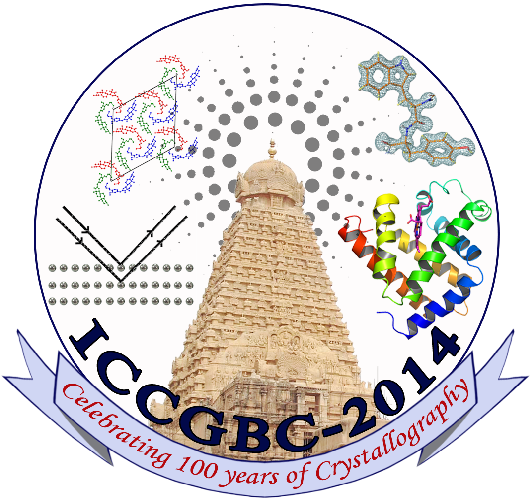
ICCGBC-2014. International Conference on Crystal Growth and Biomolecular Crystallography
| - |
In SASTRA University, Thanjavur, Tamil Nadu
This conference marks the celebration of the International year of Crystallography-2014, announced by UNESCO, in order to honor the occasion of 100 years since the first X-ray diffraction experiment carried out by Max von Laue, William and Lawrence Bragg. The discoveries made by them a century ago revolutionized fields from mineralogy to biology, to study the three dimensional structure of molecules at atomic resolution.
The technique Braggs developed and used for their pioneering work on the structures of minerals, small compounds and alloys, is also applied extensively to determine the structures of biological macromolecules such as virus, proteins and nucleic acids.
Modern X-ray crystallography is now almost completely automated due to sophisticated high energy synchrotron sources, ultra-sensitive X-ray detectors and associated powerful algorithms for data analysis of hundreds of thousands of diffraction intensities. Till date, nearly two dozen Nobel prizes have been awarded for the discoveries involving X-ray crystallography.
This International Conference on Crystal Growth and Biomolecular Crystallography will be addressed by the several renowned crystallographers and advanced material scientists. The lectures will present a historical perspective with recent advances in crystal growth and X-ray crystallography and their application in modern science.
Advances in Protein Crystallography
| - |
In Formulatrix Inc, Bedford, MA

Frontiers of Structural Biology: New Advances in X-ray Diffraction and Cryo-Electron Microscopy
| - |
In Indian National Science Academy, New Delhi
As part of the celebration of the International year of Crystallography (2014), Indian National Science Academy (INSA), New Delhi and Regional Centre for Biotechnology (RCB), Gurgaon are jointly organizing a Symposium-cum-Workshop entitled "Frontiers of Structural Biology: New Advances in X-ray Diffraction and Cryo-electron Microscopy" during December 15-17, 2014 at INSA premises witha view to bringing together leading scientists in the field to discuss the major new advances in Structural Biology. The meeting will focus primarily on progressive developments in macromolecular crystallography, Cryo-electron Microscopy and X-ray Free Electron Laser (XFEL) Sources for structure determination.
The three day event will feature keynote lectures, poster presentations and workshop tutorials by distinguished experts from India and overseas. The workshop is highly encouraging participation of young scientists from India as well as the South Asian and Asia-Pacific region.
CASP11 Meeting.
| - |
In Riviera Maya
Critical Assessment of Structure Prediction
The CASP meetings focus on assessing the state-of-the-art in protein structure modeling. Results of the 11th blind structure prediction experiment will be discussed at the upcoming meeting on December 7-10, 2014. In this round, the prediction assessment will pay increased attention to the usefulness of models in real life applications rather than only their numerical accuracy. New modeling categories include the use of sparse experimental data (NMR and cross-linking) in improving the reliability of models. Protein structure modelers and biologists interested in applying structural information in their research are encouraged to attend.

Structural and biophysical methods for biological macromolecules in solution
| - |
In Taipei
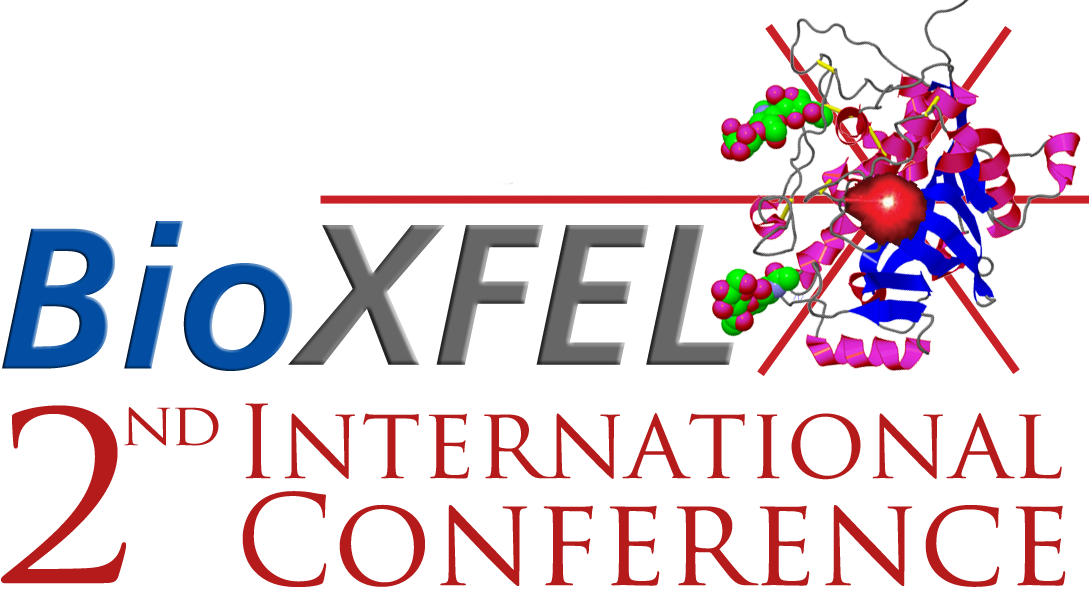
BioXFEL. 2nd International Conference
| - |
In Ponce
The BioXFEL National Science Foundation Science and Technology Center will be hosting its second annual international conference in Ponce, Puerto Rico. Primary areas of discovery will include femtosecond nanocrystallography; time-resolved imaging & spectroscopy; single particles; and instrumentation & algorithms.
Topics covered
Time-resolved Methods I: David Stuart
Nanocrystallography I: Henry Chapman + John Spence
Single Particle Imaging + Solution Scattering I: Michael Rossman
Nanocrystallography II: Ilme Schlichting + Elspeth Garman
Time Resolved Methods II: Keith Moffat
Spectroscopy + Solution Scattering II : Majed Chergui
Physics of Biopolymer Self-Assembly
|
In London
This meeting will bring together physicists, chemists and biologists to focus on the recent developments in experiment, modeling and theory of self-assembling biopolymeric systems. Such systems will range from proteins and peptides, to DNA, glycopolymers and carbohydrates.

87th Annual Meeting of the Japanese Biochemical Society
| - |
In Kyoto
Various methods for structural studies, such as X-ray crystallography (PX), X-ray small angle scattering (SAXS), cryoEM and molecular simulation, have been evolved very rapidly in the last decade. Combinations of these techniques reveal dynamic aspect of the molecular mechanism of biological macromolecular complexes based on the atomic structures. This symposium celebrates the International Year of Crystallography (IYCr) in 2014 and will highlight several recent results on structural studies on membrane proteins and huge protein complexes by X-ray crystallography together with recent advance of important techniques for structural life sciences.

28th Rhine-Knee Regional Meeting on Biocrystallography
| - |
In Mont St. Odile, Alsace

FGS-BioXtal 2014 - Bio-Crystallography Highlights in France, Germany and Switzerland
| - |
In Odile, Alsace
Six renowned structural biologists, two per country, have accepted to present their latest achievements and to give an overview of on-going developments in the field of biocrystallography.
AsCA2015. The 13th Conference of the Asian Crystallographic Association
| - |
In Science City, Kolkata
The meeting will cover diverse aspects of crystallographic research ranging from life sciences, drug development, crystal engineering to theory, instrumentation, synchrotron and neutron studies.
The International Program Committee is working very hard to bring together a stimulating program that covers all aspects of crystallography with research talks on progress at the forefront of our subject. 2015 marks a very special anniversary in our discipline marking 100 years since the Nobel Prize in Physics was awarded to Sir William Henry Bragg and his son William Lawrence Bragg.
BMTL â€" Bringing Maths to Life
| - |
In Naples
Analysing and interpreting rich biological datasets require more expertise than just knowledge of the biological system at hand. Extracting reliable insights from complex bodies of data calls for suitable mathematical solutions. This workshop lets biologists and mathematicians join forces to address key areas in biology that face demanding mathematical challenges. Discussing existing cases to identify gaps or to share existing solutions should help these disciplines in successfully linking up. BMTL Workshop will be hosted in the ancient city of Naples, and will provide a timely and pertinent occasion for international researchers that wish to engage in cutting edge science at the interface of mathematics and biology.
Topics
- Spectra analysis: peak identification pattern recognition
- Genetic variability and differential expression: sequence data analysis
- Molecular dynamics and modelling of protein structure and function via high performance computing simulations
- Deciphering complex relationships: networks and interactions
- Zoom inside the cell: microscopy images processing

NETTAB 2014: From high-throughput structural bioinformatics to integrative systems biology
| - |
In Turin
NETTAB 2014 is a joint event with the “2014: Crystal (cl)Year meetingâ€, a celebration in the occasion of the International Year of Crystallography 2014, it will be followed by the annual meeting of the Centre for Complex Systems in Molecular Biology and Medicine.
The workshop may then represent a virtual bridge between these two events, showing how to manage and elaborate structural and high-throughput proteomics data so that it may be integrated with information from other life sciences disciplines with the aim of reaching a richer description and a deeper understanding of mechanisms and interactions in the involved system: the human being and its physiological and pathological states.
The topics of the workshop will be centered around methods, tools, applications, and perspectives on structural bioinformatics, proteomics and integrative systems biology.
Contributions to the NETTAB 2014 workshop should be focused on, but not limited to, the following non exhaustive list of topics about bioinformatics methods, tools and applications for:
- Models, standards and management of high-throughput biological data
- Structural bioinformatics
- Functional proteomics
- Mass spectrometry
- Drug discovery
- Systems biology
Speakers: Ram Samudrala, Ada Yonath, Torsten Schwede, Wolfgang Marwan
Special guests: Lilia Alberghina, Guido Capitani

Particulate Processes in the Pharmaceutical Industry IV
| - |
In Potsdam
An ECI Conference Series
Over 80% of all pharmaceutical products are in the solid dosage form. Particulate processes therefore abound in the pharmaceutical industry. These include crystallization; high-shear granulation; fluidized bed drying, granulation, and coating; tablet compaction; fine powder transport, mixing, and blending. These and other particulate processes are used for the large-scale manufacture of tablets and capsules for public consumption. As such, efficient handling and processing of particulates is critical to meeting the stringent guidelines set by the FDA and profitable manufacture of pharmaceutical products. Failed batches can mean the loss of hundreds of thousands of dollars in revenue needed to payback the tremendous up-front investment that is inherent in drug development. A recent US-FDA report on the pharmaceutical industry estimated that worldwide cost savings from manufacturing improvements could be as high as US$ 90 billion per year.
Particulate-based manufacturing processes need to be better understood so that they can be properly controlled and scaled up. The last decade has seen a shift from empirical formulation efforts to an engineering approach based on a better understanding of particulate behaviours in the process, facilitated by technological advances in computer modelling, manufacture and measurement techniques.
Topics:
- Crystallization and Formulation Engineering
- Novel Drug Delivery Systems
- Manufacture Processes and Product Engineering
- Â Simulation and Modelling
- Predictive Modelling, Design Space and Process Analytic Technology

EMBO Workshop. Advances in proteinâ€"protein interaction analysis and modulation
| - |
In Hyères
Protein-Protein interactions (PPIs) play central role in the regulation of biological processes. After more than a decade spent struggling to discover what features of a protein are ‘druggable’, the modulation of proteinâ€"protein interactions (PPIs) has emerged from both academic and corporate research as a promising therapeutic strategy to treat human disease. As such, PPI modulators (PPIMs) are the next generation of highly innovative drugs that will reach the market in the next decade. The challenge now is to develop techniques, chemistry and knowhow required to rationally identify new targets and design potential PPI modifying compounds. This is very different from generating small molecules that target the catalytic sites of enzymes and will require different approaches in terms of chemistry, screening assays, in silico modeling and cellular techniques, not to mention the need of basic understanding of PPI biophysics. The EMBO Workshop aims to bring together experts from various fields who work on understanding and modulating PPIs and also to create a competitive European network.
Topics:
- PPI: New Targets / In Cells
- PPI: Technological Advances / Methods
- PPI analysis: Docking/Energetics/Prediction
- PPI modulation: Successful Examples
- PPI modulation: Chemical Biology / Chemoinformatics
ECCB'14. 13th Conference on Computational Biology
| - |
In Strasbourg
ECCB'14 is the key European computational biology event in 2014 gathering scientists working at the intersection of a broad range of disciplines including computer science, mathematics, biology, and medicine. New challenges are emerging today in these fields with the recent advances in low-cost ultra-fast sequencing, bio-imaging and big-data approaches. Databases and software are evolving especially rapidly. Nonetheless, new algorithms are still required to improve computing with massive biological or biomedical data. Indeed, multi-scale integrative analyses are struggling to deal with the enormous complexity of biological systems modeling and the "data deluge" that results from next-generation sequencing technologies.
Participation at ECCB'14 will be the prime opportunity to keep pace with cutting-edge research in such exciting topics, and to network with other members of our community.Â
Protein Folding Conference 2014
| - |
In Punta Cana

Viruses of microbes: structure and function, from molecules to communities. EMBO Conference
| - |
In Zurich
The conference will cover the following topics:
- Structure Biology
- Virus-host Interaction
- Metagenomics, Ecology and Evolution
- Viruses of Archea and Fungi
- Genetics and Molecular Mechanisms
- Biotechnology and Applications