Topics
Crystal growth
From Genes to Atomic Structures: an Introduction to Synchrotron-Based Structural Biology
| - |
In Trieste
Brief Description:
The last decade has seen an exponential growth in the results obtained by macromolecular crystallography, both in terms of number of structures and their complexity. This growth is having a significant impact on molecular and cellular biology, as more and more macromolecular structures have been instrumental in elucidating biological functions.Â
The objective of this introductory workshop is to expose the participants to the methodologies used to solve macromolecular structures, using single crystal X-ray diffraction techniques. Structural biology is an interdisciplinary research area, requiring expertises from both the life sciences and the physical sciences: the school aims to bridge the gap between physics and biology by providing a comprehensive overview of the field, starting from the gene to obtain the atomic structure. A short overview of other structural biology techniques will also be presented. The educational program will be based both on lectures and practical sessions.Â
The school is part of a joint initiative between Elettra, IAEA and SESAME, the Middle East synchrotron radiation facility in Jordan.Main Topics:
- Bioinformatics analysis to identify structural targets and optimise constructs design
- Molecular biology and cloning techniques
- Protein expression and purification
- Crystallisation
- Data collection & reduction
- Structure determination
- Model building, refinement and model validation
- Small Angle X-ray Scattering (SAXS)
- An overview of other structural biology techniques
3rd International School on Biological Crystallization
| - |
In Granada
ISBC 2011 - Overview
The Laboratory of Crystallographic Studies (CSIC-UGR) organised the 3rd International School on Biological Crystallization under the auspices of the International Union of Crystallography through the Commission of Crystal Growth. The event took place in the Centre of the beautiful City of Granada, an ideal place to promote close scientific and social interactions between the attendees.ISBC covered five days of lectures and practical demonstrations carried by 27 selected experts in the fields of crystallisation of biological macromolecules and biomineralisation.
The first day, Sunday, served as an introduction to the School and also provided the first lectures on the purification and preparation of protein solutions.
The second day, Monday, focused on explaining the fundamentals of crystallisation from solution to protein crystals; covering a wide range of topics from the physicochemical properties of solutions, through nucleation and light scattering techniques to finish with crystal growth methods and handling of protein crystals.
Tuesday was devoted to special hot topics that included talks on the crystallisation of large crystals, complexes and membrane proteins.
The fourth day of the School was dedicated to a 'Demonstration Fair', at which 22 specialists offered short (20-40 minutes) practical sessions periodically at scheduled times. Participants were able to choose what sessions they wanted to attend and in the order they wished, so that they selected their own learning programme "a la carte". The Demonstrations' Fair proved to be an excellent teaching tool as it provided students with plenty of opportunities to interact on a personal basis with the teachers and to watch closely how to perform crystallisation experiments.
Finally, the last day of the School focused on the subjects of biomineralisation and biomimetic materials.
International Summer School on Fundamentals and Basic Methods of Crystal Growth
| - |
In Brasov
Sixteenth International Conference on Crystal Growth in conjunction with the Fourteenth International Summer School on Crystal Growth
| - |
In Dalian
During the week after the school, the 16th International Conference on Crystal Growth (http://iccg16.tipc.cn) will be held in Beijing, China.
Second International School of Crystallization: Drugs, Foods, Agrochemicals, Minerals, New Materials
| - |
In Granada
Adsorption, Absorption and Crystal Growth
| - |
In Gargnano
The International School on Adsorption, Absorption and Crystal Growth will be held April 18-23, 2010 at the Palazzo Feltrinelli in Gargnano, Italy. Located on the Garda lake and close to the Alps, Palazzo Feltrinelli offers a magnificent and quiet location for meetings and schools. In fact, since many years Palazzo Feltrinelli (Università degli Studi di Milano) constantly hosts schools, workshops, and conferences spanning many different fields.Â
The School Adsorption, Absorption and Crystal Growth is aimed at introducing the interested people to the adsorption phenomena occurring at the interface between crystals and their surrounding mother phase (vapour, solution or melt). An important place will be given to the equilibria between an adsorbed phase on both “foreign†and “reactive†substrates. The modification of the growth modes of crystal faces will be related to the foreign adsorption (solvent and impurities effects). The crystal-chemical specificity of the 2D-epitaxy will be considered for the understanding of the habit change of crystals.  The kinetics of crystal nucleation and growth will be detailed according to whether the foreign adsorption remains at the crystal surface or is followed by the absorption into the crystal lattice where either usual or anomalous mixed crystals originate.ÂOwing to its methodological character, the School is open to the topics of the crystal growth research which concern the Materials Science, the Bio-crystallization and mineralization, the Earth Sciences and all other fields where crystallization is a key step (pharmaceuticals, scaling and water treatment, etc). The School is of interest to graduate and post-graduate students, PhD students, post-doctorate fellows, and senior researchers as well as researchers from industry.Â
The lectures presented at the School will be published in a textbook which will be given to each attendee at the School registration desk.
II Latin American Symposium on Polymorphism and Crystallization of Drug and Pharmaceutical Products (LAPOLC 2009)
| - |
In Estancio de Sao Pedro
Crystallization: Focus on Membrane Proteins
| - |
In Brookhaven, NY
Purpose and Scope of Workshop
The purpose of this course is to provide participants with hands-on experience of a variety of crystal growth methods for obtaining high quality crystals. The course will address both conventional and non-conventional methods in membrane protein crystal growth. Optimization methods will include application of oils, novel nucleating agents, detergents, crystallization in lipid cubic phase, crystallization with gels, and more... Introductory lectures will precede the eight practical sessions planned for the course. Time for discussions and informal meetings with the tutors is scheduled.A special session on cryogenic protection and crystal quality assessment will be conducted at the X6A beam line on the last day.
Intended Audience
Graduate students, post-doctoral fellows and research scientists interested in learning about different approaches to crystallization.Second International School on Biological Crystallization and International School on Crystallization: Drugs, Foods and Agrochemicals
| - |
In Granada
12th International Workshop on Protein Crystallization
| - |
In Quintano Roo
13th International Summer School on Crystal Growth
| - |
In Park City, UT
The 13th International Summer School for Crystal Growth
Organized by Lawrence Livermore National LaboratoryThe 13th International Summer School on Crystal Growth will be held August 5-11, 2007 at the Park City Marriott in Park City, Utah. Following tradition, the School will be held the week prior to the 15th International Conference on Crystal Growth in Salt Lake City, Utah.
The objective of the school is to provide a comprehensive series of lectures on theoretical and experimental aspects of growth and characterization of semiconducting, oxide, metallic, organic, and biological crystals. Lectures by leading researchers will encompass crystal growth and epitaxial processes, nanocrystallization, in-situ and ex-situ characterization, properties, and applications, with a focus on fundamental discussion of the chemical and physical processes that control the assembly of atoms and molecules from the melt, solution, or vapor. A textbook based on the lectures will be given to each attendee at the School. The level of the school is intended for post-graduate and post-doctoral students as well as researchers from industry and academia who are interested in fundamental knowledge of crystal growth and epitaxy. Researchers new to crystal growth as well as experts are encouraged to attend. The format of the School is designed to encourage interaction between lecturers and attendees. Informal discussion of student research through posters is planned during extended coffee breaks. In addition, several social activities will provide ample opportunity for discussions.
International School on Biological Crystallization
| - |
In Granada
ISBC 2006 - Overview
The International School on Biological Crystallization (ISBC) was held in Granada (Spain) May 22-26, 2006 under the auspices of the International Union of Crystallography through the Commission of Crystal Growth.Enrollment was 119 and participants came from 24 different countries from Asia, Africa, Europe and both Americas, North and South.
ISBC spanned five days of lectures and practical demonstrations performed by 22 selected experts in the field of crystallization of biological macromolecules, crystallisation of drugs, small-molecule biological compounds, polymorphic precipitations and biomineralization.
The first day of the School dealt with the fundamentals of crystallization from solutions. Starting with an overview of the history of protein crystallization, the lectures covered the physicochemical properties of solutions, nucleation and crystal growth theories and mass transport processes, finishing with a video selection of in situ observations of crystal growth.
The second day of the School focused on protein crystallization. The students and participants learned from a number of vivid and lively lectures covering all aspects of protein crystal growth from the handling of solutions to the handling of crystals, including high-throughput methods, additives, post-translational modifications, crystallization strategies and new windows on crystallizability. A highlight of the day was the "hands-on" demonstration put on by the ISBC "ensemble" (Alex McPherson, Madeleine Ries, Terese Bergfors, and myself) showing how to set up batch, vapor diffusion, dialysis or counter-diffusion experiments. After a busy day we walked to the Alhambra for a romantic night tour of the Moorish Palacios Nazaríes.
The third day of the ISBC was devoted to hands-on experiments and the way it was done was an experiment in its own right. Practical training during ISBC was organized in an innovative and lively format called a Demonstration Fair. During the whole day, 15 specialists offered short (5-20 minutes) practical sessions periodically at scheduled times. Participants were free to choose what sessions they wanted to attend and in the order they wished, so that they selected their own learning program "a la carte". There were sessions on polymorphism, chocolate crystallization, membrane protein crystallization, seeding of crystals, robotics, light scattering, and, of course, all sessions and techniques were repeated as many times as needed to satisfy the motivated students. The Demonstrations' Fair proved to be an excellent teaching tool: it provided students opportunities to interact personally with the teachers, to watch at finger distance how to perform experiment and do them themselves, to plan their teaching schedules on the fly, to devote more time and attention to a particular demonstration, even to attend a session a second time if desired. The Demonstration Fair was very demanding for organizers, of course, and special thanks go to the Laboratorio de Estudios Cristalograficos team led by Dr. José Gavira, Dr. Fermin Otálora and Luis Gonzalez-Ramirez, whose experience in setting up microgravity flight experiments at Cape Canaveral and Baikonur made the installation and removal of lab benches on the Hotel premises within few hours seem like child's play.
The blending of the protein crystallization, small molecule crystallization and biomineralisation communities over common issues and shared challenges was another initiative tested at ISBC for the first time. The risk, of course, was a possible phase separation or "demixing" of the two or three traditional communities. However, to the surprise of many, the lecture hall on the fourth day, which was devoted to small molecule crystallization, was as full of participants as it was on previous days. According to the comments of students and teachers, the cross-interaction was very intense and it was agreed to be a major achievement of the ISBC. The day started with protein crystallization on industrial scales and moved to crystallization of pharmaceuticals, polymorphism, high-throughput screening with pharmaceutical compounds, crystallization of lipids and computational methods, ending with a tasteful flourish, talks on the crystallization processes of ice cream and chocolate. That night, dinner time in Spain, the participants visited the famous gypsy district of Sacromonte, renowned for its flamenco music. There, in the cave of Venta del Gallo, participants enjoyed a tapas' dinner followed by a Flamenco Fiesta until we decided to walk back to the Hotel, meandering the streets close to the river Darro and the Alhambra.
The last day started with a talk on functioning crystallization databases, a crucial tool for understanding crystallization in the future, and then moved to the field of biomineralization and biomimetic materials. Models for the formation of biominerals were reviewed as well as tools for studying textural characterization, the precipitation of calcium carbonate, calcium oxalates and phosphates in living organisms, and as a study case, the wonderful mineralization process of eggshell formation. Next were lectures on the synthesis and production of materials inspired by biomineral structures and on self-assembly of hierarchical mineral structures. The School closed with the presentation of prizes offered by the International Union of Crystallography (International Tables Volume A, F, and the Teaching Guide to Volume A) and Triana Science & Technology (GCBs and Crystallization mushrooms) to the presenters of the six posters judged to be the best at the school. Winners from Italy, Japan, Spain, France, Chile and Belgium were selected for award by an international panel chaired by Howard Einspahr. Responding to strong demand from teachers and students, a CD containing all the lectures and demonstrations has been prepared that includes posters and pictures provided by the participants.
Crystallization: Focus on Membrane Proteins
| - |
In Brookhaven, NY
Crystallization: Focus on Membrane Proteins
June 19-23, 2007Four day practical course in crystallization and characterization of macromolecules.
Location: Brookhaven National LaboratoryPurpose & Scope of Workshop:
The purpose of this course is to provide participants with hands-on experience of a variety of crystal growth methods for obtaining high quality crystals. The course will address both conventional and non-conventional methods in membrane protein crystal growth. Optimization methods will include application of oils, novel nucleating agents, detergents, crystallization in lipid cubic phase, crystallization with gels, and more... Introductory lectures will precede the eight practical sessions planned for the course. Time for discussions and informal meetings with the tutors is scheduled.A special session on cryogenic protection and crystal quality assessment will be conducted at the X6A beam line on the last day.
Intended Audience
Graduate students, post-doctoral fellows and research scientists interested in learning about different approaches to crystallization.Fifth International Conference on Solid State Crystals and Eighth Polish Conference on Crystal Growth (ICSSC-5 and PCCG-8)
| - |
In Zakopane
International Workshop on Crystal Growth and Characterisation of Advanced Materials
| - |
In Chennai
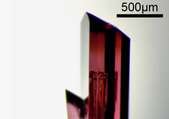
20th American Conference on Crystal Growth and Epitaxy (ACCGE-20) held jointly with the 17th US Biennial Workshop on Organometallic Vapor Phase Epitaxy (OMVPE-17)
| - |
In Big Sky, MT
The 20th American Conference on Crystal Growth and Epitaxy (ACCGE-20)Â
held jointly withÂThe 17th U.S. Biennial Workshop on Organometallic Vapor Phase Epitaxy (OMVPE-17)
to be held inBig Sky, Montana at Big Sky, Montana Resort
The 1st FEBS-INSTRUCT crystallization course in the middle EU. Advanced methods in macromolecular crystallization VI
| - |
In Nové Hrady
Course Information
The course is intended for undergraduate (5th year) and postgraduate students and postdocs with an interest in macromolecular crystallization. Number of participant is limited to 25.ÂThe crystallization of biological macromolecules is still poorly understood and, as a consequence, success of the common trial-and-error experiments is not predictable. On the other hand, more rational approaches have been developed in the past few years and prospects for the science of crystallogenesis are in fact good. Many of the new approaches are based on an improved theoretical insight into the processes of nucleation and crystal growth.Â
The course is designed to bring over the message of the benefits of more rational approaches to macromolecular crystallization. The course will consist of theoretical lectures, seminars as well as practical work and demonstrations (lectures 40%, practical work 50%, seminars 10%). For crystallization experiments, typical recipes using commercial proteins will be used. In addition, students can bring their own proteins and carry out crystallization trials on these during the course. A poster section is planned in order to encourage participants to present their own work.Â
Nove Hrady is located in the south of the Czech Republic. The Academic and University Center resides in a very styleful chateau, which provides many facilities such as two lecture halls, laboratories, apartments and a student dormitory.

6th International Workshop on Crystal Growth Technology
| - |
In Berlin
The workshop is organized by the Leibniz Institute for Crystal Growth (IKZ) Berlin, Germany, under the auspices of the International Organization for Crystal Growth (IOCG). The previous workshop was attended by more than 170 participants from industry and academia.Â
The workshop is intended to link science and practice, i.e. R&D and the actual production. The workshop will start with a stimulating panel discussion on how to advance new growth technologies to industrial application. Â
Its further program consists of invited talks (duration 40 min. each) from international specialists with additional time for discussion and debate. While the oral presentations will be on invitation only, all participants may present their own results in two evening poster sessions. Meet the experts at IWCGT-6!
Erice 2014 - Structural Basis of Pharmacology
| - |
In Erice
Diseases, from bacterial and viral infections to cancer to chronic maladies, are still among the greatest problems for mankind, in spite of tremendous progress in genetics, biology, and chemistry. Â Approaches to developing new treatments have changed over time, and so have the methodologies used, in order to solve the varied, new, challenging problems that may happen on the path to drug discovery. Â Together with ever-evolving experimental techniques, a variety of computational approaches have been applied at the various stages of the drug design process, and in the past two decades structure-based drug design has become one of the mainstream approaches. Â This method can be used to target protein-ligand and protein-protein interactions and nowadays is applicable to all aspects of drug discovery, including lead identification, lead optimization, ADMET prediction, and drug repurposing.Â
The purpose of the course is dual:1) It will provide a review of the fundamentals and the application of crystallography to drug design, and an evaluation of the technology at the present state.
2) It will review the progress in this field and summarize the application and results to current fields of interest. Â
In addition to lectures, there will be hands-on workshops providing training in using modern computer programs.
The topics that will be covered are:
- Targeting Resistance in Design of Anti AIDS Drugs - Molecular Modeling and Drug Design - Targeting Protein-Protein Interactions - Drug Design Targeting Bromodomains - Targeting GPCRs for Drug Design - Targeting Influenza Virus Polymerase - The Small Molecule Universe - Molecular Obesity and Other Addictions in Drug Discovery - Energetics of Protein-Ligand Interactions - Docking Experiences and Expectations - Structure of Human G-Protein Coupled Receptor - Using ARP/WARP for Structure-Based Drug Design - Antibody Technologies to Stabilize Targets for NCE Screening - Drug Design Tales from AstraZeneca - High Resolution Protein-Ligand Interactions by X-rays and Neutrons - Virus Structure and Antiviral Drug Design - Structure-Based Design of Drugs Against Diabetes - Membrane Protein Structure - Structural Bioinformatics - Protein Aggregation and Drug Design - Turning on Enzymes with Small Molecules
4th Granada International School of Crystallization
| - |
In Granada