Events
Schools
Rietveld Refinement Training School
| - |
In Durham
XII Intensive School on X-ray Structure Analysis
| - |
In Durham
Second African School and Workshop on X-rays in Materials: Some Established Techniques and Practical Applications
| - |
In Dakar
Foreword
Following the success of the first African School and Workshop on X-rays in Materials, held in Dakar, in December 2005, we are organizing the second edition of the school-workshop.Aims
The second conference aims at:- Promoting the scientific cooperation between African researchers in the materials science area;
- Introducing the principal techniques of structural investigation of materials using X-rays, with particular attention to X-ray diffraction from powders and X-ray scattering from non-crystalline materials;
- Training young researchers on new investigation techniques of the materials structure, by means of practical exercises of X-ray data analysis on computer;
- Presenting the actual research advances on materials characterization using X-ray techniques.
Topics
- Radiation
- Matter interaction;
- Radiation sources;
- X-ray Scattering;
- Powder Diffraction;
- Rietveld method;
- Applications of XRD to Materials Science;
- Other techniques: X-ray Diffusion; X-ray absorption and photoemission spectroscopies and their applications to Materials Science.
Format
Besides the School program, participants will be given the opportunity to hold oral presentations as well as to contribute to a poster session. Special care will be taken to ensure time for questions and discussions, as well as to organize round tables on topics which will share a particular interest for the participants. The Conference will finish with a conclusive discussion amongst all attendees.Participation
Scientists and students from African Countries that are members of the UN, UNESCO and IAEA can attend the School and Workshop. The official language of the School is English. Travel and subsistence expenses of the participants are borne by the home institutions. However, limited funds are available for some participants from the developing countries, who will be selected by the organizers on the basis of their curriculum vitae et studiorum. Such financial support is available only for those who attend the entire activity.
Latin American Workshop on Applications of Powder Diffraction and School on Methods of Powder Diffraction
| - |
In Campinas
Advanced Methods in X-ray Charge Density Analysis: Extracting Properties from a Multipolar Refinement
| - |
In Martina Franca
After the success of the workshop organized in Buffalo (NY) in 2003, a new school on accurate charge density determination and analysis is presented. The XD2006 program package has been recently released, including new features that summarize the main developments occurred in the field during the last few years.Â
New students have started projects on charge density analysis and therefore a systematic and accurate training is necessary.Â
The workshop is mainly intended for undergraduate, PhD or postdoctoral students as well as for senior researchers who want to approach the field. Theoretical lectures will be accompanied by hands on computing sessions, where students will learn how to perform a multipole refinement and the new methods to compute interactions between molecules in crystals or to analyze the electron density distribution.Â
The workshop is organized in a small village in the south of Italy (Martina Franca, nearby Bari) with the purpose to provide the students with a nice and relaxed atmosphere. We are grateful to commercial sponsors for economic support and to the IUCr for the availability of funds to assist young scientists.Â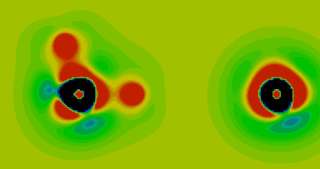
Structural Analysis by X-ray Diffraction, Crystallography under Perturbation
| - |
In Nancy
IUCr Teaching Commission Intensive School on Single-Crystal X-ray Structural Analysis
| - |
In Siena
The Teaching Commission (TC) of the International Union of Crystallography (IUCr) proposes to organise an International School on Basic Crystallography. Recognising that basic crystallographic curricula is regressing in the academic bachelors and masters formation, the TC expects to fill this formation gap by organising an intensive one week course possibly on a periodic basis.
The organisation of the school will be close to the successful model adopted by the British Crystallography Association (BCA), which has acquired an excellent popularity since its existence. The topics will be presented to students in two equally distributed forms, namely ex cathedra teaching during the morning and tutoring during the afternoon. The lecturers are experienced crystallographers with excellent international reputation and a long experience in teaching. Following the presentation of each topic, tutors will lead the students by working in small groups with the aim to solve practical exercises.
After a general introduction to crystallography, the student will first acquire elementary notions on matrices and group theories in order to get familiar with the concept of crystal symmetry. The concept of isometry will lead to point and space group symmetries. The student will be able to understand the description of crystalline structures on the basis of its space group, lattice constants and atomic coordinates.
The students will then be introduced to diffraction, which is fundamental for the study of matter at the atomic level. The various X-ray and neutron diffraction techniques, based on single crystal and powder methods, will be introduced. The techniques of data acquisitions, structure solutions and refinements will be followed by the derivation and the interpretation of the results. Finally, the student will be introduced to information retrieval from the numerous crystallographic databases, which are of prime importance for any research in the field of crystallography.
With its origins as a 14th century monastery, the Certosa di Pontignano provides a wonderful environment for teachers and students alike. It is now run by the University of Siena. Attractively placed on the top of a hill, it is surrounded by vineyards; with a direct view to the town of Siena, and a famous Chianti winery. We hope to have a productive school worth remembering both for its teaching content, and its surroundings.
13th International Summer School on Crystal Growth
| - |
In Park City, UT
The 13th International Summer School for Crystal Growth
Organized by Lawrence Livermore National LaboratoryThe 13th International Summer School on Crystal Growth will be held August 5-11, 2007 at the Park City Marriott in Park City, Utah. Following tradition, the School will be held the week prior to the 15th International Conference on Crystal Growth in Salt Lake City, Utah.
The objective of the school is to provide a comprehensive series of lectures on theoretical and experimental aspects of growth and characterization of semiconducting, oxide, metallic, organic, and biological crystals. Lectures by leading researchers will encompass crystal growth and epitaxial processes, nanocrystallization, in-situ and ex-situ characterization, properties, and applications, with a focus on fundamental discussion of the chemical and physical processes that control the assembly of atoms and molecules from the melt, solution, or vapor. A textbook based on the lectures will be given to each attendee at the School. The level of the school is intended for post-graduate and post-doctoral students as well as researchers from industry and academia who are interested in fundamental knowledge of crystal growth and epitaxy. Researchers new to crystal growth as well as experts are encouraged to attend. The format of the School is designed to encourage interaction between lecturers and attendees. Informal discussion of student research through posters is planned during extended coffee breaks. In addition, several social activities will provide ample opportunity for discussions.
International School on Theoretical and Mathematical Crystallography
| - |
In Havana
International School on Mathematical and Theoretical Crystallography
First MaThCryst School in Latin America
The University of Havana, Cuba
15-20 July 2007The IUCr-MaThCryst commission, in cooperation with the IUCr Commission on Crystallographic Teaching (CTC) and with the IUCr Commission on Inorganic and Mineral Structures (CIMS), has organised an International School on Mathematical and Theoretical Crystallography at the The school was held at the Universidad de la Habana Cuba.
Program
- 15 July, Sunday: arrival and registration
- 16 July, Monday: Group theory applied to crystallography: part I. Dimension-independent fundamental notions of crystallographic groups (lattices, point groups, vector systems); classification of crystallographic groups (arithmetic/geometric classes, crystal systems, lattice systems, crystal families). Bernd Souvignier, Radboud University Nijmegen, The Netherlands
- 17 July, Tuesday: Group theory applied to crystallography: part II. Application of crystallographic group theory to concrete problems in lower dimensional space. Marjorie Senechal, Smith College Northampton U.S.A.
- 18 July, Wednesday: Twinned crystals as polychromatic objects
- Morning session:Polychromatic point groups and their mathematics Marjorie Senechal, Smith College Northampton, U.S.A.
- Afternoon session:Reticular and symmetry theory of twins Massimo Nespolo, Université Henri Poincaré Nancy I, France
- 19 July, Thursday: OD structures Stefano Merlino, Università di Pisa, Italy
- 20 July, Friday, morning session: The mathematics of Polytypes Ernesto Estévez Rams, Institute for Materials and Reagents, Cuba
- 20 July, Friday, afternoon session: Modeling modular inorganic structures Giovanni Ferraris, Università di Torino, Italy
International Program Committe
Prof. Massimo Nespolo, Chair (MaThCryst) Prof. Paola Spadon (CTC) Prof. Giovanni Ferraris (CIMS) Prof. Ernesto Estevez Rams (IMRE)Local Organizing Committee
Prof. Ernesto Estevez Rams , Chair Dr. Arbelio Penton Madrigal , Vice-chair MSc. Cristy Azanza Ricardo Ms. Mariela Hurtado Carnero , SecretaryFirst School on Materials Applications of the Organic Solid State (SMAOSS) and XVIII International Conference on the Chemistry of the Organic Solid State (XVIII-ICOSS)
| - |
In Merida
International School on Biological Crystallization
| - |
In Granada
ISBC 2006 - Overview
The International School on Biological Crystallization (ISBC) was held in Granada (Spain) May 22-26, 2006 under the auspices of the International Union of Crystallography through the Commission of Crystal Growth.Enrollment was 119 and participants came from 24 different countries from Asia, Africa, Europe and both Americas, North and South.
ISBC spanned five days of lectures and practical demonstrations performed by 22 selected experts in the field of crystallization of biological macromolecules, crystallisation of drugs, small-molecule biological compounds, polymorphic precipitations and biomineralization.
The first day of the School dealt with the fundamentals of crystallization from solutions. Starting with an overview of the history of protein crystallization, the lectures covered the physicochemical properties of solutions, nucleation and crystal growth theories and mass transport processes, finishing with a video selection of in situ observations of crystal growth.
The second day of the School focused on protein crystallization. The students and participants learned from a number of vivid and lively lectures covering all aspects of protein crystal growth from the handling of solutions to the handling of crystals, including high-throughput methods, additives, post-translational modifications, crystallization strategies and new windows on crystallizability. A highlight of the day was the "hands-on" demonstration put on by the ISBC "ensemble" (Alex McPherson, Madeleine Ries, Terese Bergfors, and myself) showing how to set up batch, vapor diffusion, dialysis or counter-diffusion experiments. After a busy day we walked to the Alhambra for a romantic night tour of the Moorish Palacios Nazaríes.
The third day of the ISBC was devoted to hands-on experiments and the way it was done was an experiment in its own right. Practical training during ISBC was organized in an innovative and lively format called a Demonstration Fair. During the whole day, 15 specialists offered short (5-20 minutes) practical sessions periodically at scheduled times. Participants were free to choose what sessions they wanted to attend and in the order they wished, so that they selected their own learning program "a la carte". There were sessions on polymorphism, chocolate crystallization, membrane protein crystallization, seeding of crystals, robotics, light scattering, and, of course, all sessions and techniques were repeated as many times as needed to satisfy the motivated students. The Demonstrations' Fair proved to be an excellent teaching tool: it provided students opportunities to interact personally with the teachers, to watch at finger distance how to perform experiment and do them themselves, to plan their teaching schedules on the fly, to devote more time and attention to a particular demonstration, even to attend a session a second time if desired. The Demonstration Fair was very demanding for organizers, of course, and special thanks go to the Laboratorio de Estudios Cristalograficos team led by Dr. José Gavira, Dr. Fermin Otálora and Luis Gonzalez-Ramirez, whose experience in setting up microgravity flight experiments at Cape Canaveral and Baikonur made the installation and removal of lab benches on the Hotel premises within few hours seem like child's play.
The blending of the protein crystallization, small molecule crystallization and biomineralisation communities over common issues and shared challenges was another initiative tested at ISBC for the first time. The risk, of course, was a possible phase separation or "demixing" of the two or three traditional communities. However, to the surprise of many, the lecture hall on the fourth day, which was devoted to small molecule crystallization, was as full of participants as it was on previous days. According to the comments of students and teachers, the cross-interaction was very intense and it was agreed to be a major achievement of the ISBC. The day started with protein crystallization on industrial scales and moved to crystallization of pharmaceuticals, polymorphism, high-throughput screening with pharmaceutical compounds, crystallization of lipids and computational methods, ending with a tasteful flourish, talks on the crystallization processes of ice cream and chocolate. That night, dinner time in Spain, the participants visited the famous gypsy district of Sacromonte, renowned for its flamenco music. There, in the cave of Venta del Gallo, participants enjoyed a tapas' dinner followed by a Flamenco Fiesta until we decided to walk back to the Hotel, meandering the streets close to the river Darro and the Alhambra.
The last day started with a talk on functioning crystallization databases, a crucial tool for understanding crystallization in the future, and then moved to the field of biomineralization and biomimetic materials. Models for the formation of biominerals were reviewed as well as tools for studying textural characterization, the precipitation of calcium carbonate, calcium oxalates and phosphates in living organisms, and as a study case, the wonderful mineralization process of eggshell formation. Next were lectures on the synthesis and production of materials inspired by biomineral structures and on self-assembly of hierarchical mineral structures. The School closed with the presentation of prizes offered by the International Union of Crystallography (International Tables Volume A, F, and the Teaching Guide to Volume A) and Triana Science & Technology (GCBs and Crystallization mushrooms) to the presenters of the six posters judged to be the best at the school. Winners from Italy, Japan, Spain, France, Chile and Belgium were selected for award by an international panel chaired by Howard Einspahr. Responding to strong demand from teachers and students, a CD containing all the lectures and demonstrations has been prepared that includes posters and pictures provided by the participants.
School and Workshop on X-ray Micro- and Nanoprobes: Instruments, Methodologies and Applications
| - |
In Erice
Structure and Function of Large Molecular Assemblies
| - |
In Erice
Purpose of the Course
Crystallography and electron microscopy are pre-eminent techniques for obtaining the structure of biological macromolecules at atomic resolution. These structures, components of living organisms and viruses, are central to understand the detailed mechanisms of biological processes, and to discover novel therapeutics using a structure-based approach. Almost weekly, international journals such as Nature, Science, Cell show striking drawings of large biological molecular assemblies, and the articles therein explain the role and function in their biological environments. To counter the myriad modern threats of disease and their consequences for the living organisms, there is an urgent need to interpret the significance of the hundreds macromolecular structures published nowadays. This meeting will train upcoming generations of scientists to undertake this important task.
The present scientific programme will focus on the most recent achievements in structural studies of large molecular assemblies. Formal lectures in the main hall will be integrated with discussion and hot-question time sessions. The most recent advances in Information Technology -including speedy internet connection and most modern computers - will be available at the Ettore Majorana Foundation and Centre for Scientific Culture. Subject to agreeement by each speaker, the proceedings in the lecture hall will be web-broadcasted as a "Virtual Course".
The Virtual Course is available at http://erice2006.docking.org/vcourse/
Third Moroccan School of Crystallography
| - |
In Agadir
Ecole MICO multidisciplinaire sur des systèmes àfortes corrélations électroniques
| - |
In ILL, Grenoble
Programme
Outils de base : cours de mise à niveau facultatifs
- 1h : Brigitte Leridon : Â La seconde quantification
- 3h : Benjamin Canals :  Notions de base de théorie des groupes
- 3h : Marie-Bernadette Lepetit : Calculs ab initio pour les nuls (TP sur un code)
Concepts fondamentaux
- 2h : Marie-Bernadette Lepetit : De l’atome à la structure de bande en passant par les interactions magnétiques
- 2h : Marc Gabay : Des transitions de phases aux phénomènes critiques (aspets fondamentaux)
- 2h : Brigite Leridon : Supraconductivité conventionnelle (théorie BCS)
- 3h : Fabrice Bert : Magnétisme : états fondamentaux (FM, Ferri, AFM, PM), excitations élémentaires (ondes de spin)
- 2h : Béatrice Grenier : Cristallographie et techniques expérimentales associées
- 2h : Laurent Cario : Grandes classes de composés à propriétés électroniques remarquables
Cours avancés : Focuss
- 1h : Marc Gabay : Des transitions de phases aux phénomènes critiques (concepts avancés)
- 2h : Yann Gallais : Supraconductivité non conventionnelle
- 2h : Werner Paulus : Non stÅ"chiométrie, désordre et substittutions
- 1h : Julien Robert : Magnétisme avancé (liquide, verre, glaces de spin, frustration versus désordre)
- 2h : Ricardo Lobo : Les multiferroïques
Techniques d’investigation de la matière
- 1h00 : Pierre Bordet : Quelle technique expérimentale pour quelle information ?
- 1h30 : Marino Marsi : Dynamique ultrarapide étudiée par ARPES
- 1h30 : Sylvain Petit : Neutrons Inélastiques
- 1h30 : Vinh TaPhuoc : Conductivité optique (statique + résolue en temps)
- 1h30 : Andrei Rogalev : Sondes locales (Xanes Exafs XMCD)
Exposés d’ouverture
- 1h : David Carpentier : Isolants topologiques
- 1h : Nathalie Viart : Les méthodes de synthèse ou élaboration de matériaux.
6th AONSA Neutron School
| - |
In Serpong, Jakarta

Matériaux 2014
| - |
In Montpellier
Conférences Plénières
- Yves BRECHET: Les matériaux architecturés: une voie innovante pour le développement des matériaux.
- Albert FERT: Nanomagnétisme et nanospintronique.
- Denis GRATIAS: Alliages métalliques quasicristallins: élaboration, concepts et propriétés.
- Didier ROUX: Les innovations et les matériaux dans l'habitat du futur.
- Clément SANCHEZ: Biomimétisme et bio-inspiration: sources d'innovation en science des matériaux.

Summer School: Theory and Practice of Modern Powder Diffraction
| - |
In Ellwangen
The summer school is intended for graduate students, PhD students, and young scientists active in solid state research (chemistry, physics), geo-sciences, crystallography, and materials science.
Aim of the school is to give an overview on the capabilities of powder diffraction methods on polycrystalline matter, how to characterize atomic structures and microstructures. The school will provide a comprehensive introduction to diffraction theory, the use of different experimental setups, and modern methods for the evaluation of diffraction data.
For attending the workshop it is advantageous to have a basic knowledge on crystallographic methods. The participants are encouraged to present their work as short lectures or posters during evening sessions. Individual problems will be discussed.
Program
During the workshop the following topics are addressed:- Diffraction Theory: Ewald sphere, reciprocal lattice, Bragg equation
- Qualitative and quantitative phase analysis
- Crystal structure determination/refinement
- Real structure (defects, texture, disordered structures, size/strain, PDF)
- Non ambient, time dependent powder diffraction
Speakers
- Ross Angel (University Padova)
- Malte Behrens (FHI, Berlin)
- Jeremy Cockcroft (University College London)
- Bill David (Rutherford Appleton Laboratory)
- Robert E. Dinnebier (MPI, Stuttgart)
- Fabia Gozzo (Excelsus Structural Solutions S.P.R.L.)
- Christoph Kirchlechner (MPI, Düsseldorf)
- Andreas Leineweber (MPI, Stuttgart)
- Paolo Scardi (University of Trento)
- Claudia Weidenthaler (MPI, Mülheim an der Ruhr)

BioCrys2014. FEBS Practical & Lecture Course
| - |
In Oeiras
The seventh BioCrys course will be focused on Macromolecular Crystallography, by developing the fundamental concepts of Crystallography and illustrate these by tutorial and practical sessions.
This is particularly important due to the rapid development of the field and also due to the fact that many young researchers do not receive a formal education in Crystallography. Additionally, with the introduction of high-throughput methods, the need to understand and grasp the theory behind modern methods will certainly be critical to overcome the difficult problems that will arise and will not be solved by the automated procedures.
Topics of the course will run from fundamentals such as symmetry, point groups and crystal systems, basic diffraction physics, reciprocal space and the Ewalds sphere, radiation damage, data processing, symmetry in the diffraction pattern, structure factors, Patterson function to modern methodologies including molecular replacement, SAD, MAD, MIR and maximum likelihood phasing, direct methods, density modification, refinement, model building, twinning and structure validation. Main challenges on sample preparation and crystallization of proteins will also be covered.
The course will be organized with lectures in the mornings and interactive practicals and tutorials in the afternoons. Evening lectures will address two main important topics within Structural Biology, one covering studies of membrane proteins and the other the beginning of use of free electron lasers in macromolecular Crystallography.
Participants will be limited to 36, aimed primarly at people at the beginning of their crystallographic research activity as PhD students or others. Selected applicants are invited to present a poster during the course.

The Zürich School of Crystallography: bring your own crystals
| - |
In Zürich
Intended audience and purpose of the course
Read the announcement here.
The course is intended primarily for Master’s and PhD students in the molecular and solid state sciences, particularly from across Europe, but applicants from other regions will be considered. The goal is that the participants gain hands-on experience plus a theoretical background in the art and science of routine crystal and molecular structure determination of small molecules by single-crystal X-ray crystallography, as well as in the interpretation and presentation of results. The course will consist of lectures, computer exercises and practical work.
Elementary knowledge of general-purpose, first-year university-level chemistry and mathematical concepts is helpful. No specialized knowledge of crystallography is required, but some prior experience is useful. The course language is English and participants must be sufficiently proficient in English to be able to understand the lectures and participate in discussions without difficulty.
The course is not suitable for persons interested specifically in powder diffraction techniques or macromolecular crystallography.
Bring your own crystals
The unique aspect of the School is that participants get to collect data and determine the structure of one of their own compounds that they are currently interested in and that they have not worked on before. Participants prepare and send their own crystals of one compound several weeks before before the School, so that the crystal quality and suitability of the problem may be assessed. At the end of the School, participants give a ten minute presentation of the results of their analysis.
ECTS credit for course
The University of Zürich offers 3 ECTS points, equivalent to 90 contact hours, for the course to successful students. Receiving credit requires
- attendance during the full duration of the School.
- passing a two-hour written examination on the final morning of the School and a positive assessment of the practical course work by the directors of the School.
Acceptance of the credit points by the student's home university must be negotiated by the students themselves on the basis of the detailed School programme, the result of their examination and the course assessment by the School directors.