Events
Schools
International Summer School on Fundamentals and Basic Methods of Crystal Growth
| - |
In Brasov
Sixteenth International Conference on Crystal Growth in conjunction with the Fourteenth International Summer School on Crystal Growth
| - |
In Dalian
During the week after the school, the 16th International Conference on Crystal Growth (http://iccg16.tipc.cn) will be held in Beijing, China.
VII International School on Crystallography (Protein Crystallography)
| - |
In Havana
Advances in the Characterization of Industrial Minerals
| - |
In Chania
XX Jubilee International School on Physics and Chemistry of Condensed Matter
| - |
In Bialowieza
Summer Schools on Mathematical and Theoretical Crystallography
| - |
In Nancy
Summer Schools on Mathematical Crystallography
Nancy, France, 21 June - 2 July 2010On the occasion of the fifth anniversary of its foundation, the Commission on Mathematical and Theoretical Crystallography organised two summer schools devoted to the topology of crystal structures and to the irreducible representations of space groups
Topological Crystal Chemistry: Theory and Practice
The explosive growth in inorganic and organic materials chemistry has seen a great upsurge in the synthesis of crystalline materials with extended framework structures (zeolites, coordination polymers/coordination networks, Metal Organic Frameworks MOFs, supramolecular architectures formed by Hydrogen bonds and/or Halogen bonds etc.). There is a concomitant interest in simulating such materials and in designing new ones. However, it is a truism that before one can embark on systematic design of materials, one must know what the possibilities are. Indeed, in the last two decades there have been many parallel outcomes in the theoretical aspects of description and analysis of periodic structures (nets, tilings, surfaces, etc.), in the elaboration of databases, and in the development of software for analyzing and describing (illustrating) topological aspects of both real crystal structures and theoretical extended architectures. With these achievements, materials science and crystal chemistry comes up to a new level of their development that is characterized by deeper integration of mathematical methods, computer algorithms and programs into modeling and interpretation of periodic systems of chemical bonds in crystals.
The goal of this school is to give an introduction to this whole new area that we call Topological Crystal Chemistry. There will be large time dedicated to hands-on session on the use of the novel and still not widespread computer methods/software/databases so the student at the end of the course should be able to analyze any kind of extended structure through the eye of the topology and describe it in term of nets, entanglements, catenation etc.
The target audience is young scientists (graduate students and postdoctoral associates) actively engaged in materials research, (experimental and/or theoretical) but also crystallographers who want to look at familiar structure types with a different eye. Some basic knowledge in chemistry and crystallography will be assumed which will provided during the pre-school day, for those needing a basic introduction .
Irreducible representations of space groups
Group Theory is an indispensable mathematical tool in many branches of chemistry and physics. The school aims at giving the necessary background and practical skills for an efficient use of the group-theoretical methods in specific problems of solid-state physics, structural chemistry and material sciences. After a revision of the basic concepts of spatial symmetry and its description by crystallographic point and space groups according to International Tables of Crystallography, the principal results of the theory of group representations will be introduced with an emphasis on the practical aspects of the subject. Irreducible representations of crystallographic point and space groups and their derivation will be discussed in details. The abstract theory is limited to a reduced set of fundamental facts and statements. More attention is paid to different tools and techniques necessary for practical applications of the symmetry methods in solid-state problems as molecular dynamics, spectroscopy, electronic bands, phonon spectra, Landau theory of phase transitions.The applications of group-theoretical methods to molecular vibrations including the concept of normal modes of vibrations will be discussed in details. The students will learn how, starting from symmetry requirements, to determine the spectral-transition selection rules with special attention to infrared and Raman spectra. The important role of representations of crystallographic groups in the classification, labeling and the analysis of the degeneracies of the lattice vibrations and electronic energy bands of crystalline solids will be reviewed. The applications related to phase transition studies will include the introduction of efficient techniques allowing the determination of the principle characteristics of a system undergoing a phase transition. For example, the determination of the order parameter from the knowledge of the initial and final phases, or the enumeration of all symmetry allowed phases that can result from a continuous phase transition. The symmetry-mode analysis of structural phase transitions results in the decomposition of the symmetry-breaking distortion, present in the distorted structure into contributions from different symmetry modes. The exposition of the general theory and methods will be illustrated with number of examples of typical phase transitions of different nature so that the participant can learn to apply the group-theoretical procedures in practice for the analysis of phase-transition mechanisms and in the search for new functional materials.
A tutorial and practical guide to the Bilbao Crystallographic server (www.cryst.ehu.es) forms an essential part of the course. The server provides an excellent on-line tool for the study of crystallographic symmetry and its applications. It gives access to databases with symmetry information on crystallographic groups, their group-subgroup relations and irreducible representations. The school aims at giving the necessary background and practical skills for an efficient use of the computer databases and programs on the Bilbao Crystallographic Server focused on solid-state physics and chemistry applications.
The participants of the school will benefit from the practical training in the application of advanced symmetry methods in solid state physics and crystal chemistry problems. The minimal mathematical prerequisites for the school widen the participation audience to students and researchers from chemistry, physics, geological sciences and engineering.
Crystallography Online: International School on the Use and Applications of the Bilbao Crystallographic Server
| - |
In Zarauz
Crystallography online: International School on the use and application of the Bilbao Crystallographic Server
Lekeitio, Spain, 21-27 June 2009Supported by the:
- Spanish National Committee for Crystallography
- IUCr Commission on Teaching Crystallography
- ECA Special Interest Group No. 5 "Mineral and Inorganic Crystallography"
List of main topics
- Symmetry databases for point and space groups
- Applications of group-subgroup relations between space groups
- Crystal structure transformations and alternative descriptions
- Solid-state physics and chemistry applications of group theory
- Selection rules in spectroscopy; phonon selection rules
- Structural pseudosymmetry
- Symmetry-mode analysis of ferroic structures
- Domain-structure analysis
- Structural phase transitions
- Symmetry in ab-initio calculations
Lectures
- Mois I. Aroyo (Bilbao, Spain)
- J. Manuel Perez-Mato (Bilbao, Spain)
- Karen Friese (Bilbao, Spain)
- Massimo Nespolo (Nancy, France)
- Gervais Chapuis (Lausanne, Switzerland)
- Michele Catti (Milan, Italy)
- Yuri Kitaev (Saint-Petersburg, Russia)
- Juan Rodriguez-Carvajal (Grenoble, France)
- Harold Stokes (Utah, USA)
2nd School and Workshop on X-ray Micro- and Nanoprobes
| - |
In Palinuro
High-Pressure Crystallography: From Novel Experimental Approaches to Applications in Cutting-Edge Technologies
| - |
In Erice
Purpose of the Course
As a thermodynamic parameter, pressure is remarkable in many ways. It spans in the visible universe over sixty orders of magnitude, from the non-equilibrium pressure of hydrogen in intergalactic space, to the kind of pressure encountered within neutron stars.Â
In the laboratory, it provides unique possibility to control structure and properties of materials, dramatically alter electronic properties, break existing, or form new chemical bonds by reaching compressions in excess of an order of magnitude for molecular materials.Â
This agenda naturally encompasses elements of physics (properties and structure), chemistry (chemical reactions, transport), materials science (new materials) and engineering (mechanical properties); in addition it has direct applications and implications for geology (minerals in their natural, deep earth environments), planetary sciences, biology and medicine (deep sea ecosystems, membranes, protein and nucleic acid folding, the role of high-pressure in the origin of prebiotic forms of matter and the origin of life, des-activation of viruses and toxins).Â
Beyond its specificity, high-pressure science finds direct or indirect (i.e. economic) application in several fields of modern European technology, such as mechanical engineering (strain/stress analysis), optoelectronics and spintronics, nanotechnology, pharmaceutical industry, food processing, petroleum industry, seismic data interpretation, etc.
Structure and Function from Macromolecular Crystallography: Organization in Space and Time
| - |
In Erice
Purpose of the Course
The objective of this meeting is to introduce students to the use of advanced techniques for the study of structures of macromolecular assemblies involving protein, DNA, RNA and polysaccharide. Such assemblies regulate spatial and temporal organisation in cells and organisms. The course will focus on the structures and dynamics of membrane channels and receptor systems, cell signalling, DNA replication, protein synthesis, motile systems and viruses. These systems mediate many of the processes that lead to human disease.
There will be discussion of multi-component complex assembly and disassembly, macromolecular systems that drive protein movement, adaptors and templates that lead to cellular co-localisation, allostery and conformational changes over time, and the macromolecular interactions that mediate these regulatory systems. The course will review the techniques used to study protein assemblies and their dynamics, including X-ray diffraction and scattering, electron cryo-electron microscopy, electro nanospray mass spectrometry, NMR, protein docking and molecular dynamics.
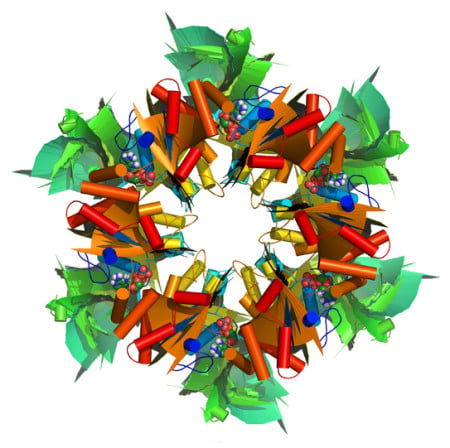
Second International School of Crystallization: Drugs, Foods, Agrochemicals, Minerals, New Materials
| - |
In Granada
Third Annual School on Advanced Neutron Diffraction Treatment using the FullProf Suite
| - |
In Tenerife
FullProf School-2010, 2-7 May, 2010
Chair:       Juan Rodriguez-Carvajal Co-chairs:   Marie-Hélène Lemée-Cailleau, Gabriel CuelloScientific scope:
Precise crystallography has significantly contributed to the success and recent developments in materials science, solid state physics and chemistry. Among the available programs for diffraction data analysis, the FULLPROF SUITE is one of the most widely used packages by the scientific community working in these fields. Â
By creating a regular school on the FULLPROF SUITE, our aim is to contribute directly to the training of the upcoming generation of scientists. These intensive, hands-on, schools are focus on the analysis of diffraction data with the FULLPROF SUITE.Â
After two successful issues, 2008 on "heterogeneous data coming from powders, single crystals, X-rays and time-of-flight neutron diffraction" and 2009 on "Magnetism", the third school, FPSchool 2010, took place in Grenoble from 2 to 7 May. It continued with the tradition of dedicating the first part to generalities and the second part of the school to a more specialized topic: complete diffraction-data treatment under constraints (powders and single crystals) using a symmetry mode approach for extended ionic/covalent materials and rigid body constraints for molecular materials.Lectures
The school lasted 5 days: three days dedicated to general applications plus two days dedicated to the specialised topic that will change each year. This year the school was mainly devoted to under constraint refinements.Theoretical introductory lectures (max. 1 hour/lecture) were followed by hands-on practical computing sessions. The afternoon was mostly dedicated to practical sessions.
Powder Diffraction and Rietveld Refinement School
| - |
In Durham
Topics to be covered will include:
- Data collection strategies for X-ray and neutron diffraction
- Constant wavelength and time of flight diffraction
- Modelling peak shapes
- Indexing powder patterns
- Rietveld, Le Bail and Pawley fitting methods
- X-ray and neutron combined Rietveld refinement
- Extended solids and molecular systems
- Restrained refinements
- Rigid body refinements
Adsorption, Absorption and Crystal Growth
| - |
In Gargnano
The International School on Adsorption, Absorption and Crystal Growth will be held April 18-23, 2010 at the Palazzo Feltrinelli in Gargnano, Italy. Located on the Garda lake and close to the Alps, Palazzo Feltrinelli offers a magnificent and quiet location for meetings and schools. In fact, since many years Palazzo Feltrinelli (Università degli Studi di Milano) constantly hosts schools, workshops, and conferences spanning many different fields.Â
The School Adsorption, Absorption and Crystal Growth is aimed at introducing the interested people to the adsorption phenomena occurring at the interface between crystals and their surrounding mother phase (vapour, solution or melt). An important place will be given to the equilibria between an adsorbed phase on both “foreign†and “reactive†substrates. The modification of the growth modes of crystal faces will be related to the foreign adsorption (solvent and impurities effects). The crystal-chemical specificity of the 2D-epitaxy will be considered for the understanding of the habit change of crystals.  The kinetics of crystal nucleation and growth will be detailed according to whether the foreign adsorption remains at the crystal surface or is followed by the absorption into the crystal lattice where either usual or anomalous mixed crystals originate.ÂOwing to its methodological character, the School is open to the topics of the crystal growth research which concern the Materials Science, the Bio-crystallization and mineralization, the Earth Sciences and all other fields where crystallization is a key step (pharmaceuticals, scaling and water treatment, etc). The School is of interest to graduate and post-graduate students, PhD students, post-doctorate fellows, and senior researchers as well as researchers from industry.Â
The lectures presented at the School will be published in a textbook which will be given to each attendee at the School registration desk.
Synchrotron Radiation and Neutrons for Cultural Heritage Studies
| - |
In Grenoble
HSC5: Synchrotron Radiation and Neutrons for Cultural Heritage Studies
Grenoble, 7 to 13 October 2007
![[HSC5 banner]](./?a=92178)
Part of the Marie Curie Conferences and Training Courses
SCOPE
Synchrotron and neutron sources offer recent and additional insight into the records of our cultural past. Over the last years, there has been an increasing demand for access to SR- and neutron-based techniques, and their applications in the fields of archaeological science and cultural heritage. The purpose of this Hercules Specialized Course is to give the participants an introduction to the basic principles of SR and neutron techniques (imaging, microscopy, diffraction, absorption and fluorescence, IR spectroscopy). The school will also provide cross-disciplinary examples illustrating the abilities of these techniques in a representative range of scientific cases in relation with the European cultural heritage. The lectures will cover both theoretical and experimental aspects to the attention of a non-expert audience. They will be complemented by tutorials (diffraction and XAS data processing), and practicals on a selection of artefacts taking place at several ESRF and ILL beamlines. Young scientists and newcomers at the interfaces of the disciplines of archaeology, archaeological science, art conservation and materials science are welcome.ORGANISERS
Loïc Bertrand, Eric Dooryhee, Jean-Louis Hodeau Secretariat: N. Petricola (ESRF)TOPICS
Introductory lectures:Â
Over the first 2 days, the HSC includes introductory talks on core SR and neutron methods (diffraction, XAS) and will also cover recent and dedicated developments in IR spectroscopy, full-field 2/3D imaging, micro-beams and microscopy, together with related tutorials.Complementarity lecturesÂ
The last day covers a variety of archaeological and cultural heritage issues, e.g. studies of pigments, metal ware, manuscripts and parchments, tissues, ceramics and glasses.PracticalsÂ
2 days of beamtime are planned for training and practising at the ESRF and ILL. The participants are encouraged to discuss with us the possibility to bring over their own samples as test cases and for preliminary measurements.
First K.H. Kuo Summer School of Electron Microscopy and Crystallography: Cryo-Electron Microscopy of Macromolecular Complexes
| - |
In Beijing
To train the next generation of scientists in this exciting field, a workshop on cryo-electron microscopy of macromolecular assemblies will be held at Tsinghua University, Beijing, China, July 14-16, 2008. The workshop will cover electron crystallography, single particle cryo-electron microscopy, and electron tomography. Both basic principles of these techniques and their state-of-the-art applications to biological systems will be taught at the school, and practical sessions may also be organized to show hand-on experience in cryo-electron microscopy as well as various image processing programs. Graduate students and postdocs who currently work in or who are interested in joining the field are particularly encouraged to attend. Importantly, a number of leading scientists will be lecturing at the school; young scientists will have plenty of opportunities to directly interact with these leading scientists.
The Zurich School of Crystallography Bring Your Own Crystals 2008
| - |
In Zurich
From Molecules to Medicines: Integrating Crystallography into Drug Discovery
| - |
In Erice
Purpose of the Course
It is primarily intended to educate the upcoming generation with experts drawn worldwide, in an intensive, hand-on forum not available at any other meeting, and in particular, unavailable to these students in any other way.Â
Global disease is perhaps the greatest threat to mankind. There are three primary tools at our disposal to counter this threat, vaccines, drugs and diagnostic tests. Protein crystallography plays a major role in all of these, from its contribution to the explanation of fundamental biological processes to the application of structure-based drug design.Scientifically, there is no better aid to the understanding of biological processes than to be able to visualize the exact position of every atom in a biologically active molecule. It is therefore not surprising that protein crystallography is such a fundamental part of the modern drug discovery process; both in increasing our understanding of disease processes and in the direct, structure-based design of drugs. Parallel to the developments in structural biology, great strides have been made towards targeted medicines. The discipline of bioinformatics is maturing towards ‘systems biology', i.e. a complete elucidation of the biology of an organism; this has been massively aided by the completion of the sequencing of the human genome. Highly targeted medicines, specifically tailored to small groups of patients, are a reality that is already with us, one that has a fundamental dependence on understanding biology at a molecular level. Protein crystallography not only impacts on society via health, but also via economics. This is particularly so in Europe, which has a rich history in medicines research, from the pioneering studies at the turn of the last century through to the establishment of the pharmaceutical giants and biotechnology industry of today, a key part of Europe's economic strength. Competition in this industrial field requires young European scientists to be trained to be able to exploit the techniques in this multidisciplinary area.
Fourth Moroccan School of Crystallography
| - |
In Rabat
Présentation et objectifs
La Faculté des Sciences de l’Université Mohammed V-Agdal et l’Association Marocaine de Cristallographie (AMC) organisent la 4ème Ecole Marocaine de Cristallographie (EMC4) du 26 au 29 mai 2008 sous le thème :La cristallographie, diffraction, instrumentation et leurs apports à la science des matériaux
L'AMC organise tous les deux ans une école sur les thèmes en relation avec la cristallographie. La 1ère école a eu lieu à la Faculté des Sciences de Marrakech en 2002 (100 participants), la 2ème à la Faculté des Sciences d’El Jadida en 2004 (126 participants) et la 3ème à la Faculté des Sciences d’Agadir en 2006 (133 participants).  L’objectif de cette manifestation scientifique est de regrouper les utilisateurs de la cristallographie, universitaires et industriels, pour faire le point sur les derniers développements réalisés dans ce domaine.En plus de l’aspect fondamental de la cristallographie, des applications multiples s’étendent de l’industrie minière à l’industrie pharmaceutique en passant par la métallurgie et le nucléaire.  Cette formation s’adresse aux chercheurs, doctorants, enseignants chercheurs et aux ingénieurs. Elle sera animée, par des personnalités scientifiques de renommée internationale, sous forme de conférences, de cours et d'ateliers pratiques. Une partie sera réservée à la démonstration de nouveaux matériels et de logiciels de cristallographie les plus récents.  Durant les quatre jours de cette école, les conférenciers débâteront les sujets suivants
- Diffraction des rayons X et des neutrons
- Diffraction électronique
- Rayonnement Synchrotron
- Structures modulées
- Structures des macro molécules (protéines)
- Instrumentations et logiciels
International School on Mathematical and Theoretical Crystallography
| - |
In Gargnano
Program
Monday April 28, morning. Introduction to crystallographic symmetry I. Massimo Nespolo, Université Henri Poincaré Nancy I, France- Basics of group theory. Space groups and space group types. Hermann-Mauguin symbols. Wyckoff positions, site symmetry. Unconventional settings of space groups. Extracting information from Volume A of the International Tables for Crystallography
- Mappings, symmetry operations, 4x4 matrices. Basis and coordinate transformations, origin shifts. Subgroups and splitting of Wyckoff positions.
- Dimension-independent fundamental notions of crystallographic groups (lattices, point groups, vector systems); classification of crystallographic groups (arithmetic/geometric classes, crystal systems, lattice systems, crystal families). Equivalent descriptions for a crystal structure (use of normalizers).
- Exercises on the Volume A1 of the International Tables for Crystallography
- Instructions how to build trees of group-subgroup relations between space groups. Examples for translationengleiche, klassengleiche and isomorphic subgroups; space groups related by a common supergroup; large structural families. Pitfalls and possible sources of errors.
- Applications: Structures with close-packed atoms and occupied interstices; symmetry aspects at phase transitions and topotactic reactions, twinning, domains; wrong structure determinations due to twinning; symmetry relations among molecular structures
- Elements of Landau theory of structural phase transitions. Symmetry group-subgroup relationships. Reconstructive, displacive and order-disorder solid-solid transformations. Evaluation of the crystal energy by periodic quantum-mechanical techniques. Applications to thermodynamic and kinetic aspects of displacive and reconstructive phase transitions of inorganic crystals.
- Introduction to the Bilbao Crystallographic Server
- Fundamentals of intermolecular potentials. Correlation-dispersion and exchange-repulsion. Close packing symmetry elements. Restrictions on space groups for organic crystals. Use of crystallographic Databases. Models for the calculation of intermolecular energies: recognition in gas-phase dimers versus pairwise molecular interactions in crystals. Quantitative ranking of approach modes: the hydrogen bond versus other bonding interactions. Quantitative ranking of lattice energies among polymorphs; crystals structure 'prediction'.