Topics
Biological macromolecules
PDBe Workshop for Programmers
| - |
In Hinxton, near Cambridge
Programmatic Access to Macromolecular Structure Information
The Protein Data Bank in Europe (PDBe;www.ebi.ac.uk/pdbe/
) is organising a hands-on, interactive
workshop for developers interested in using primary and value-added
information about the 3D structures in PDB and EMDB. Programmatic access
to macromolecular structure data as well as information about
assemblies, structure quality, literature and citations, and up-to-date
cross-references to other biomedical resources (UniProt, Pfam, CATH,
SCOP, etc.) are a critical requirement for integrative bioinformatics
analyses and workflows.
PDBe has developed a set of REST APIs
(http://www.ebi.ac.uk/pdbe/api/doc) that provide easy access to
high-quality information regarding biomacromolecular structures archived
in PDB and EMDB. They provide a simple, reliable, light-weight mechanism
to query macromolecular structure data, select entries or molecules of
interest, and access targeted information about them, including
information about the molecules, experimental details, assemblies,
motifs, function, taxonomy, structure quality, etc. The API is used by
PDBe services and is also integrated in Jmol/JSmol. We will also present
Solr/Lucene based query API for macromolecular structure information
including PDB, EMDB and value added information on assemblies, structure
quality and up-to-date cross-reference information to other biomedical
databases based on SIFTS (http://pdbe.org/sifts).
 ==== Is it for me?
Do you (plan to) develop software or online resources that use or need
access to information about structures in PDB or EMDB? Would you rather
not maintain your private infrastructure for retrieving, parsing,
storing and updating such information?
If so, then this workshop is for you. We will explain what information
is available through the API and how you can access it from your own
software or resource. There will be plenty of time for hands-on work
where experienced PDBe developers will help you to use the API for your
specific needs.
==== When and where?
The workshop will take place on 24 & 25 September 2015 (starting at
12.00 on 24 September, and finishing at 16.00 on 25 September) at
EMBL-EBI (www.ebi.ac.uk ) in Hinxton, near Cambridge.
==== How much does it cost?
There is no fee for the workshop. However, we expect you to arrange and
pay for your own travel to and from EMBL-EBI.
Accommodation will be provided if required at the Wellcome Trust
Conference Centrewww.wtconference.org.uk
which is on the same campus as EMBL-EBI.
Refreshments, lunch on both days and a workshop dinner on 24 September
will all be provided.
==== How can I apply?
To apply for the workshop, email Jose Dana at [email protected] no later
than Friday 26 Junewith the following details:
·        a brief description of the software you have developed or are
developing - i.e. what it does, in which field, how many users, relevant
publications, etc.
·        programming language(s) you are specifically interested in
(Python examples and tutorials will be provided)
·        how you would benefit from this workshop
·        any specific topics or questions you would like to see
addressed in the workshop
If the workshop is oversubscribed, we will select participants based on
the information provided.
You will be informed by the end of June if you have been selected for
the workshop or not.
==== Prerequisites?
Basic programming experience in use of REST API’s. Bring your own laptop
with git and iPython notebook pre-installed if you want to follow the
Python tutorial and examples. If you need to make plots, make sure that
matplotlib is also installed.
Â
Â
Â
Â

BCA Biological Structures Group Winter Meeting: Reactive Macromolecules
|
In Manchester
Reactive Macromolecules
Venue: Manchester Institute of Biotechnology (MIB)Organiser: Dr Steve Prince
The meeting will explore the latest research in macromolecular catalysis as revealed by crystallographic structures. The program will include sessions on enzymes involved in signalling through to co-factor bearing enzymes and their chemical mechanism.
Speakers include:
Dr Roberto Steiner, Kings College London
Prof. E. Yvonne Jones, University of Oxford
Dr Karl Payne, University of Manchester
Dr Tom Clarke, University of East Anglia
Dr Mathew Martin, Newcastle University
Prof. Richard Pickersgill, Queen Mary University of London
NJUST/CCP4 school: From data processing to structure refinement and beyond
| - |
In Nanjing
The first CCP4 Chinese crystallographic school will take place at the Nanjing University of Science and Technology (NJUST). It will focus on macromolecular structure solution, refinement and validation from X-ray diffraction image data.
The school will cover many modern crystallographic software packages including CCP4, XDS and SHELX, taught by authors and other experts. It will be organized in three sections â€" lectures, tutorials and hands-on trouble-shooting.
Applicants: Graduate students, postdoctoral researchers and young scientists at the assistant professor level are encouraged to apply. Only 20 applicants will be selected for participation. Participants of the workshop are strongly encouraged to bring their own problem data sets or crystals so the problems can be addressed during the school.
Application information: The application deadline is Friday August 7th. The application form, the program, contact info and other details can be found at
http://www.ccp4.ac.uk/schools/china-2015/index.php
Fees: There is no fee for the workshop. The students will be responsible for their transportation and lodging. The workshop organizers can help make the reservations for hotel accommodation close to NJUST. The likely total cost for lodging and meals will be in the region of 2500 RMBs.
Data Processing and Structure Solution Workshop
The aim of this workshop will be to cover all aspects of the structure solution process in macromolecular crystallography, starting from data processing, through phasing and refinement, and ending with validation and deposition.
The workshop will cover many popular programs used for data processing and structure solution with the software developers available to help throughout the week. Programs covered will include: Mosflm, Scala, DIALS, XDS, Refmac, ArpWarp, Phaser, Coot, SHELXC/D/E, BALBES, MrBUMP, Buccaneer and many more.
In Situ Serial Crystallography Workshop
| - |
In Paul Scherrer Institut
 This workshop is dedicated to the presentation of a novel in meso in situ serial crystallography (IMISX) method (Huang et al. 2015 Acta Cryst. D), which combines the many advantages of glass plates with high-throughput in situ serial data collection capabilities.  The workshop consists of introductory lectures, followed by hands-on practicals on methods for growing crystals of membrane proteins by the in meso or LCP method, for collecting serial diffraction data on micro-crystals directly in situ and for processing the data most efficiently for high-resolution structure determination.  There is no registration fee and all local expenses will be covered, but participants are requested to take care of their travel arrangements. The workshop is limited to 20 students. The application deadline is August 15.
3D solutions in Cryo-Electron Microscopy 2015
| - |
In Maastricht
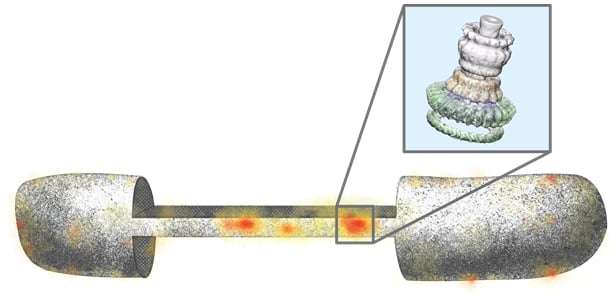
The aim of this workshop is to show, through lectures and practical courses, the solutions for 3D reconstruction in Cryo-Electron Microscopy.
Methodology
The lectures will cover single particle analysis, cryo-tomography of isolated specimens and cryo-tomography of structures inside a vitreous cryo-section or lamella and cryo-CLEM. The practical courses will show to the participants how to do sample preparation (high pressure freezing, plunge freezing, vitreous sectioning and cryo-fibbing), image acquisition in cryo-EM single-particle and cryo-tomography and 3D-reconstruction.
Summer School for Big Data in Biology
| - |
In Austin, TX
The Center for Computational Biology & Bioinformatics at The University of Texas at Austin is proud to host the 2nd annual Summer School for Big Data in Biology.
The Summer School offers intensive four-day workshops on diverse topics for analysis of large-scale DNA, RNA, and protein datasets. The summer schools provides a unique hands-on opportunity to acquire valuable skills directly from experts in the field, with courses tailored towards novices or intermediate and advance users.
This year we offer 10 workshops. Each workshop will meet for four half-days (either mornings or afternoons) for a total of twelve hours. Instructors will post lectures, datasets, exercises, and course information on a website accessible to enrolled participants. There will be no examinations, but participants may request certificates of completion. Academic credit will not be issued. Please carefully check the specified prerequisite knowledge before enrolling in a course.

Third CCP4-OIST school: From data processing to structure refinement and beyond
| - |
In Okinawa
Software workshop: the workshop will be taught by authors and other experts, including Garib Murshudov (refmac), Victor Lamzin (arp/warp), Robbie Joosten (pdb_redo) and Phil Evans (aimless). It will be organized in three Sections - lectures, tutorials and hands-on trouble-shooting. We will also be covering the use of DIALS for data processing and the new ccp4 interface.
There will be model data sets available for tutorials but data, provided by participants, will have higher priority for the hands-on sessions.
Applicants:
Graduate students, postdoctoral researchers and young scientists at the assistant professor level are encouraged to apply. Only 25 applicants will be selected for participation. Participants of the workshop are strongly encouraged to bring their own problem data sets so the problems can be addressed during data collection workshop and/or hands-on sessions.
Application:
Application deadline is 22 August. Application form, the program, contact info and other details can be found at http://www.ccp4.ac.uk/schools/OIST-2015
Fees:
There is no fee for the workshop. The students will be responsible for their transportation costs outside Okinawa. Lodging will be provided at the OIST Guest House "Seaside House". The workshop will also cover the expenses for all meals and refreshments.
Polymers. Progress Towards Tomorrow's Materials. GRS
| - |
In South Hadley, MA
BioXFEL STC 3rd Annual International Conference
| - |
In San Juan
Conference Co-Chairs: Dr Edward Snell (HWI) and Dr George Phillips (Rice)
Confirmed Speakers
- Andrew Aquila (SLAC)
- Guillermo Calero (U. Pittsburgh)Â
- Marco Cammarata (U. Rennes)Â
- Henry Chapman (DESY)
- Vadim Cherezov (USC)
- Aina Cohen (SSRL)
- Jeffrey Donatelli (LBL)
- Cathy Drennan (MIT)
- Robert Fischetti (Argonne)
- Petra Fromme (ASU)
- Klaus Giewekemeyer (European XFEL)
- Helen  Ginn (Oxford)
- Heinz Graafsma (DESY)Â
- Arjen Jakobi (EMBL)
- Jan Kern (LBL)
- Rick Kirian (ASU)
- Haiguang Liu (Beijing CSRC)
- Osamu Miyashita (RIKEN)
- Henrike Mueller-Werkmeister (U. Toronto)
- Abbas Ourmazd (UWM)
- Ilme Schlichting (MPI)
- Robert Schoenlein (SLAC)
- Joerg Standfuss (PSI)
- Martin Weik (IBS)
- Rahel Woldeyes (UCSF)
PPXRD-13. XRD Training for the Pharmaceutical Scientist!
| - |
In Bad Herrenalb
55 Years of British Biophysics. A symposium celebrating the handover of the Society minutes to join the UK National Archive at the Weston Library
|
In Oxford
0th May 2015. Weston Library, Oxford University. The British Biophysical Society was founded in 1960 to promote interdisciplinary research accross the sciences. Nobel laureate John Kendrew helped found the BBS and this one day meeting will mark the archiving of the minutes of the society into the Kendrew archive by the Bodleian Library. This meeting will reflect on the early days of the society and make a link with cutting edge British Biophysics.
Meeting Schedule
14:15 Scientific Programme, Weston Library.
16:50 What is Biophysics? Lecture by Prof. Mark Sansom.
17:20 Handover and Reception in Blackwell Hall.
Confirmed Speakers
Tuomas Knowles
Julea Butt
Richard Henderson
Tony North

Making the most of PDB and EMDB data
|
In Rovinj

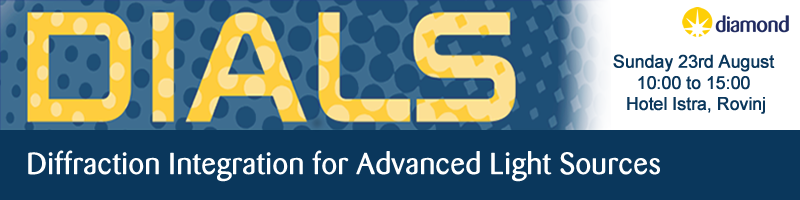
DIALS workshop - Diffraction Integration for Advanced Light Sources
|
In Rovinj
ECM29 Satellite meeting organised by Diamond Light Source & Croatian Association of Crystallographers
DIALS (Diffraction Integration for Advanced Light Sources) is a new integration package being developed as a collaboration between Diamond Light Source, CCP4 and Lawrence Berkeley National Laboratory, with significant input from the MRC-LMB and funding from Biostruct-X workpackage 6. The aim of this workshop is to introduce new users to the package, with a view to using the software for X-ray diffraction data processing from macromolecular samples. Since the software is completely free and open source the workshop attendees will have the opportunity to bring their own laptop computers to have the software installed, and will need to do so to run the tutorials.
Â
St Andrews CCP4 Protein Crystallography Summer School
| - |
In St Andrews, Scotland
The course will be taught by a number of tutors with expertise covering all aspects of the field, including Wulf Blankenfeldt (Braunschweig), Liz Duke (Diamond), Katherine Mcauley (Diamond), Bill Hunter (Dundee), Kevin Cowtan (York), Jim Naismith (St Andrews), Tracey Gloster (St Andrews), and Garry Taylor (St Andrews).
The School is intended for first year postgraduates or postdocs new to crystallography. The week is very intensive, and gives a concentrated overview of the methods which many find useful.
As in the past, priority is given to UK applicants because of the funding arrangements, but is open to a limited number of overseas applicants.
Applicants from industry are welcome, although an increased fee is charged â€" please contact us for further information.

ICM Workshop: Protein Structure and Drug Design
| - |
In San Diego CA

9th International Workshop on X-ray Radiation Damage to Biological Crystalline Samples
| - |
In Lund

2nd ICSU/IUPAC Workshop on Crystal Engineering
| - |
In Como
The scientific program will cover all important issues related to Crystal Engineering.
In particular, the topics of the workshop will be organized around
the following themes:
- Computational Crystallography
- 2D CrystalEngineering
- Pharmaceutical Co-crystals
- Functional Crystals
- Supramolecular Crystallography
- Biomacromolecules
- Metal-Organic Frameworks (MOFs)
- Organic Crystals
- Inorganic Crystals
- Functional Crystals
- Industrial Crystallization
- Porous Crystals
- Liquid Crystals
From Atomic Structures to Disease Mechanisms. XXVI Paulo Foundation Symposium
| - |
In Helsinki

Residential School on Medicinal Chemistry and Biology in Drug Discovery (ResMed): A Comprehensive One-Week Course
| - |
In Madison, NJ
The purpose of the School is to provide a strong background in the principles of drug discovery and development to enhance collaborative drug discovery programs. Previous attendees with backgrounds in macromolecular crystallography have found the course of great value in their research projects.
First Science at the ABBIX Beamlines: Structural Biology at a New Frontier
| - |
In Brookhaven National Laboratory, Upton, NJ
The NSLS-II will be home to three state-of-the-art beamlines for macro-molecular crystallography and life science applications of x-ray scattering. The purpose of the First Science at the ABBIX Beamlines meeting is to explore and discuss scientific areas and opportunities on which early operation of the beamlines could capitalize.
These three beamlines comprise the ABBIX (Advanced Beamlines for Biological Investigations with X-rays) Project, sponsored by the NIH, and are currently under construction at NSLS-II:
- The Frontier Macromolecular Crystallography (FMX) Beamline is optimized to address microbeam applications.
- The Highly Automated Macromolecular Crystallography (AMX) Beamline is optimized for highly automated throughput.
- The High Brightness X-ray Scattering for Life Sciences (LIX) Beamline will offer multiple modes of study using X-ray scattering.
-
Construction will conclude by the end of 2015 and then commissioning will start. During the commissioning period, there will be opportunities to perform early experiments before the general user programs of the beamlines commence in 2016.
Plenary Session
- Scientific research that the ABBIX beam lines will address
- Facilities updates on scientific capabilities at ABBIX beam lines
- Update on the Life Science and Biomedical Technology Research Resource (LSBR)
Parallel Session
- Two parallel sessions focusing on macromolecular crystallography and X-ray scatteringÂ
- Selected presentations from the meeting participants
Confirmed Speakers:
Karen Allen (Boston Univ)
Martin Caffrey (Trinity College Dublin)
Richard Gillilan (Cornell Univ)
Wayne Hendrickson (Columbia Univ)
André Hoelz (California Inst Tech)
Shenping Liu (Pfizer)
Lee Makowski (Northeastern Univ)
David Ostrov (Univ of Florida)
Anna Marie Pyle (Yale Univ)
Christian Riekel (ESRF)
Thomas Schneider (EMBL-Hamburg)
John Tainer (Scripps Research Inst)