Topics
Data analysis
DLS-CCP4 Data Collection and Structure Solution Workshop
| - |
In Harwell
The third joint Diamond-CCP4 MX workshop for graduate students, postdocs and early career scientists is announced. This event will take place at Diamond Light Source, on the Harwell Oxford campus in Oxfordshire, UK.
All aspects of structure solution will be covered during the workshop, from data collection through to phasing, refinement and validation.
- Lectures and tutorials will be delivered by experts in the field
- One day of data collection time will be provided at Diamond's excellent MX beamlines
- You will be able to work alongside world-leading scientists and methods developers on your own projects
- All costs apart from travel will be covered
Programme Overview
Tuesday 13th December: Registration and introductory talks (starting at 1.30pm)
Wednesday 14th December: Introductory talks and student poster session
Thursday 15th December: Data processing theory, preparations for beamtimeÂ
Friday 16th December: Data collection at the beamlines and data processing
Saturday 17th December:Â Experimental phasing talks and tutorialsÂ
Sunday 18th December: Molecular replacement talks and tutorials
Monday 19th December: Model building and refinement talks and tutorials
Tuesday 20th December: Model validation, Q&A, followed by the workshop dinner
Joint International Conference of the Hellenic Crystallographic Association and the Hellenic Society for Computational Biology and Bioinformatics - HeCrA-HSCBB16
| - |
In Athens
The 8th International Conference of the Hellenic Crystallographic Association (HeCrA) and the 11th Conference of the Hellenic Society for Computational Biology and Bioinformatics (HSCBB) are jointly organized as HeCrA-HSCBB16.Â
HeCrA-HSCBB16 will take place at the Agricultural University of Athens in October 7-9, 2016.Â
The conference will address key questions and issues in molecular structure and interactions. The Conference is the major event both of HeCrA & HSCBB. It is a forum to communicate state-of-the-art research, interact and establish scientific networks and collaborations.
In particular, it will bring together crystallographers with Bioinformaticians and Computational Biologists for the identification of macromolecular targets and small molecules of pharmaceutical and biotechnological interest and study their interactions.
There will be oral and poster presentations in addition to talks from distinguished invited speakers from Greece and the European Union.Â
Organisers: Hellenic Crystallographic Association & Hellenic Society for Computational Biology and Bioinformatics.
DISCUS Workshop
| - |
In Erlangen
Within this workshop you will get an opportunity to learn all about structure simulation using DISCUS (https://github.com/tproffen/DiffuseCode ), a program complementary to the Rietveld approach. DISCUS can simulate powder pattern for disordered materials, crystalline and nanocrystalline.
In this workshop you will learn to interpret diffuse scattering and to simulate disordered crystal structures.Â
Defects are quite common in crystals and are responsible for a number of properties like ionic conductivity, electronic properties of indirect semiconductors etc.Â
In diffraction, defects manifest themselves by the presence of diffuse scattering. While its peak intensity usually is weak, the total scattering intensity will be an appreciable fraction of the Bragg intensities.Â
Thus, the description of these structures is largely incomplete without proper interpretation of the diffuse scattering.
The workshop covers the techniques to simulate and to refine disordered structures for a wide range of defects, and the corresponding calculation of the diffraction pattern for single crystals and powder, as well as the calculation of the pair distribution function PDF.
For more info please visit:
http://www.lks.physik.uni-erlangen.de/DISCUS/index.html
Modern Methods in Rietveld Refinement for Structural Analysis
| - |
In Stony Brook University, New York

NYU X-Ray Diffraction Workshop 2016
| - |
In New York
The Workshop will span two days at New York University, with lectures and hands-on training on the X-ray diffraction methods. The Workshop will include lectures from various academic and industrial organizations. Faculty, graduate students, postdocs, and industrial researchers are invited to register. Attendees are encouraged to bring samples of interest to the workshop for the hands-on training Master Class, and scientific problems to the Round-Table Discussion.
AimsÂ
- Non-specialists can learn the basics of the X-ray diffraction and receive hands-on training on the operation of the instruments.
- Experts from similar or related areas can share experience and exchange ideas.
Topics
- Basics on single crystal and powder diffraction and the instrumentsÂ
- Crystallization
- Polymorphism and phase transitionÂ
- Phase identification, quantitative analysis, texture analysis, and crystallite size measurementÂ
- Applications of X-ray powder diffraction in industry
- Synchrotron radiation
Confirmed Speakers and InstructorsÂ
- Eric Dooryhee, Brookhaven National Lab, NY
- Bruce Garetz, New York University, NYÂ
- Ilia A. Guzei, University of Wisconsin-Madison, WIÂ
- Bob B. He, Bruker AXS, WIÂ
- Tony C. Hu, New York University, NYÂ
- Alexander G. Shtukenberg, New York University, NYÂ
- Michael D. Ward, New York University, NYÂ
- Shawn X. Yin, Bristol-Myers Squibb, NJ
Three SessionsÂ
- Lectures in both morningsÂ
- Hands-On Training Classes in both afternoons
RegistrationÂ
- The number of attendees in the workshop for Lecture Sessions is limited to 40.
- The Hands-On Training Master Class component is limited to 10 persons for APEXII and 10 for GADDS.Â
- Registration is free if you register by June 15, 2016. After that, $50 fee will be applied.Â
- Please register by providing the following information to Tony Hu at [email protected]

BCA/CCP4 Summer School in Protein Crystallography
| - |
In Diamond Light Source, Didcot
We recognise that an active social programme plays a role in enabling students to make links that may be maintained throughout a research career. There will be a conference dinner, and a number of other events, including a boat trip on the Thames from Oxford.
New Industrial and Scientific Opportunities for Structural Materials: Data, Modeling, Manufacturing. CHESS-U Workshop
| - |
In Ithaca, NY
BioSAXS Essentials 6: Getting Started in Biological Small-Angle X-ray Solution Scattering
| - |
In Ithaca, NY
While the primary purpose of the course is educational, students may bring a limited number of their own research samples. Prepared standard protein samples will be available to all students for practice.
This course now accepts remote students. These students will receive digital copies of all lectures, tutorials, and sample data, and will have access to a live stream of the course lectures. Remote students will not have data collection time during the course. This option is intended for current MacCHESS BioSAXS users who want a refresher, or for new users who have scheduled beamtime this May but cannot come to CHESS twice.
Course topics:
- Â Basic principles and processing methods
- Â Critical sample preparation and data collection procedures
- Â Evaluating data quality
- Â Computing envelopes and data modeling
- Â Online size-exclusion chromatography (SEC-SAXS)
- Â Overview of advanced and emerging methods
- Â What you need to know for publication
2016 Bioanalytics Meeting and Workshop
| - |
In Boston, MA

Synchrotron Radiation to study Atomic Layer Deposition
| - |
In Bellaterra (ALBA)
The three-day workshop will consist of different parts. On the first two days there will be three topical sessions with invited (introductory) lectures and contributed talks, and one evening poster session. On the third day we plan a visit to the beamlines of ALBA and tutorial sessions on the treatment and analysis of SR-data.
Tutorials on synchrotron experiments, data treatment and analysis
The participants will have the opportunity to register for three interactive tutorials that will be given in small groups on June 15th. The goal is to demonstrate how to prepare an experiment, and then treat and analyze XAS, GISAXS and PES data having some hands-on experience.
XANES and EXAFS
• Overview of the technique. How to organize a XANES and/or EXAFS experiment.
• Overview of available open-source software to treat XANES and EXAFS data.
• Introduction on how to use Athena.
• Practicing with Athena.
GISAXS
• Overview of the technique. How to organize a GISAXS experiment.
• Overview of available open-source software to treat GISAXS data / simulate GISAXS patterns.
• Introduction on how to use IsGISAXS.
• Practicing with simulating in IsGISAXS.
PES
• Overview of the technique. How to organize a photoemission experiment.
• Overview of available open-source software to fit photoemission spectra.
• Introduction on how to use Fityk.
• Practicing with Fityk.
9th ILL Annual School on Neutron Diffraction Data Treatment using the FullProf Suite (FPSchool2016)
| - |
In Grenoble
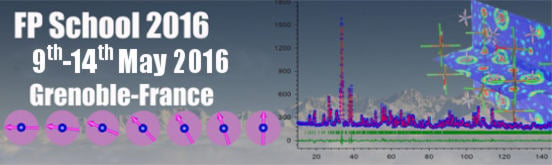
FPSchool aims to contribute to the training of scientists in treatment of X-ray and neutron diffraction data.
The school is based on intensive hands-on sessions using the computer programs of the FullProf Suite.
5th School of SAXS Data Analysis
| - |
In Campinas, São Paulo
The 5th SAXS school will be held in May 2016 at the Laboratório Nacional de Luz SÃncrotron and is intended to motivated post-graduate students and early career scientists willing to learn Small-Angle X-ray Scattering. The main objective of the school is to provide an opportunity for young scientists developing their research in areas related to Biology, Physical Sciences, Materials Science and Chemistry, to have a contact with the technique, acquiring both theoretical and experimental skills.
The course will offer an overview of SAXS theory, data reduction and analysis tools, as well as modelling techniques. It will include hands-on experiments at the LNLS SAXS facilities and tutorials.
The last day of the school will be dedicated to the new SAXS beamline, CATERETÊ @ SIRIUS, the 4th generation synchrotron in construction in Campinas), and the new techniques proposed such as coherent SAXS and coherent imaging techniques.
VI-th National Crystallographic Symposium (NCS2016)
| - |
In Sofia
We are happy to announce VI-th National Crystallographic Symposium (NCS2016) that will be held on October 05-07, 2016, Sofia, Bulgaria.
As you may have already recognized this is will be the sixth "NCS" of the series started in 2009.
We have already started the preparation of the next issue of the conference (submitted manuscripts will be published in the journal “Bulgarian Chemical Communicationsâ€, a special issues due April 2017).NCS16 papers will also be online available in full text via the present platform.  You are warmly invited to come and join us!
NCS2016 is held under the auspices of BCS and is the major event on Crystallography, crystal growth, structure analyses and related techniques in Bulgaria. The Symposium aims at the applications of different crystallographic techniques in combination with other methods in the fields of materials sciences, mineralogy, biology, environmental engineering, computational methods etc. Bringing together researchers from different areas NCS16 will provide them with a high-qualified platform for them to share their latest studies and to assist further findings and collaboration.
With passionate participants from the world, NCS2016 Â would be perfect for you to present your research and find collaboration for your future work.

Serial Crystallography Data Analysis with Cheetah and CrystFEL: Concepts and Tutorials
|
In Denver
This is a Workshop of the 66th Annual Meeting of the American Crystallographic Association.
Description:
Time resolved pump-probe SFX studies additionally benefit from the use of tiny crystals because they are smaller than the extinction length of a pump laser, while in current state-of-the-art pump-probe experiments at synchrotrons, typically only 10-40% of molecules in a fixed sample are photoactivated. Non-photoactive molecules with reactions initiated by chemical/physical changes such as temperature, pH, or reactants (e.g. introduced via a mixing jet) also benefit from using microcrystals because of higher diffusion rates in nano- and microcrystals. In SFX, nano/microcrystals are delivered to the pulsed X-ray beam by either a micron-thick liquid jet (most commonly), a recently invented lipidic cubic phase (LCP) jet, electrospray, or by raster scanning fixed target supports. At LCLS, the X-ray pulses arrive at 120 Hz (with much higher rates planned for future XFELs), resulting in huge data sets that need to be efficiently filtered and cleaned. Each diffraction pattern is corrected, cleaned and indexed independently, before the data set is merged. Thousands of diffraction patterns, and hence, crystals, are needed for a full data set.
For time resolved studies, thousands of randomly oriented patterns are needed for each time point. Indeed, a single experiment can result in over 100 terabytes of raw data. These high data collection rates and large data sets have necessitated the development of novel high-throughput, parallelizable data analysis software for "live" feedback during an SFX experiment, as well as for further processing of the clean diffraction patterns. Since the diffraction patterns consist almost entirely of partial reflections, complicated post-refinement/scaling procedures are necessary to reduce the amount of data required to obtain accurate structure factors. A number of post refinement methods are being developed in SFX analysis software, and will be discussed during the workshop.
Synchrotrons and future XFELs - rapidly growing SFX user base.
Technological advances at synchrotron sources, producing smaller, brighter beams, coupled with new detectors (e.g. pixel array detectors running in shutterless mode) and novel crystal delivery devices have enabled the collection of SFX data from microcrystals at synchrotrons. Synchrotron SFX experiments include studies of in vivo grown needle-shaped crystals (helically scanned to avoid radiation damage) and
LCP-SFX of membrane protein crystals in room temperature, in air. Initial LCP-SFX studies at LCLS yielded the first room temperature GPCR structure (from a few hundred micrograms of purified protein), but the recently demonstrated synchrotron based LCP-SFX (still at room temperature) is an even more exciting result for these biomedically important proteins in large part because of the availability of high end MX synchrotron beamlines.
In summary, SFX has yielded several major and unique advances in structural biology previously unattainable with conventional technologies, including the potential for sub-picosecond time-resolved crystallographic studies, probing cyclic or even non-cyclic reactions. With the construction of more than a dozen new XFELs currently under way, and the growing use of serial crystallography at synchrotrons, the potential user base is growing significantly. The development and appropriate use of new software to tackle the unique problems of SFX data analysis is vital to making SFX practicable. It is our desire and responsibility to share the knowledge and experience from early SFX experiments, and train a new generation of scientists in SFX data analysis to make this exciting new technique even more accessible to the crystallographic community. We anticipate that the impact of SFX on (dynamical) structural biology will ultimately be immense.
The workshop will start with an introductory seminar, followed by most of the day dedicated to detailed hands-on tutorials with data sets collected at LCLS using the software suites Cheetah and CrystFEL, two of the most commonly used packages for SFX analysis. All the concepts unique to SFX that we will be discussing are software independent.
The workshop outline is as follows:
1. An introduction to serial femtosecond crystallography and how the data differ from conventional crystallography data.
2. Cheetah tutorial: From raw data to useful diffraction patterns.
The first tutorial session will focus on Cheetah (www.desy.de/~barty/cheetah), and will involve the initial analysis and reduction of raw data to a set of clean, usable diffraction patterns in a facility-independent format (HDF5) for further analysis.
In addition to running the software, a major focus will be optimizing this process to retain the best data. Several data sets (of varying quality) collected at LCLS will be used to detail the steps from data collection to data analysis. Relevant details about LCLS data storage formats and procedures will be described. Detector considerations (geometry calibration and signal corrections) will be discussed and students will be shown how to accurately determine detector geometry, a critical component of successful indexing. Spot finding algorithms will be described and students will have the opportunity to experiment with various parameters to learn the best practices for optimization. Tips and tricks for analyzing and for evaluating the success of a set of parameters will be explained.
We will discuss and demonstrate how to generate virtual powder patterns, radial stacks, histograms of various hit finding statistics, extract the spectrum of each XFEL shot, record pump laser profiles and other pertinent metadata.
Cheetah is open-source and has been released under the GNU GPL v3 license. Though designed for XFEL experiments (both for SFX and single particle / solution scattering), Cheetah can be readily adapted for use where parallelized diffraction data reduction and detector correction is necessary. Its modular, facility-independent library makes Cheetah portable and expandable to use with new detectors, and data type and formats.
3. CrystFEL tutorial: Indexing, integrating, merging, post-refinement and evaluation of serial crystallography data.
The second tutorial session will focus on indexing, integrating and merging the cleaned SFX data using CrystFEL, a software suite created for SFX data analysis (and simulation). The development of CrystFEL is lead by Thomas White (CFEL, DESY), who will be the main instructor for this tutorial, with hands-on support for students from the workshop organizers experienced with CrystFEL: Grant and Zatsepin. The suite is written in C with supporting Perl and shell scripts, and is available as source code under version 3 or later of the GNU General Public License.
At the core of CrystFEL is an automated, high throughput processing pipeline which indexes and integrates each diffraction pattern in a serial crystallography data set. Merging the results yields diffraction data which can be imported into standard crystallographic processing packages for further analysis.
We will describe in what way indexing algorithms differ from conventional crystallography for snapshots from randomly oriented microcrystals, and show students how to optimize indexing parameters to extract the most accurate structure factors from the data. We will show how variations in physical crystal features such as size and unit cell parameters may affect spot shape and intensity and how that influences integration routines. We will discuss how the XFEL spectrum affects SFX data, and how to optimize integration parameters. Methods of evaluating successful integration will also be shown. Detailed descriptions of proper merging procedures will be discussed, as well as how to deal with influencing factors such as scaling, partiality of reflections, detector saturation and more. We will also show students how to determine and evaluate multiple parameters for measuring the quality of the merged data, including signal to noise and multiplicity, and internal consistency quantified by Rsplit and CC1/2.
XFEL pulses generated by self amplified spontaneous emission (SASE) differ in spectrum and intensity from shot to shot. Meanwhile, each crystals, arriving in a random orientation and position relative to the X-ray pulse, may differ in size and shape. Accurate structure factors can be obtained from merging diffraction data from thousands of snapshots collected in this manner by Monte Carlo integration (which we will discuss in the workshop), with accuracy increasing with 1/sqrt(number of patterns). Much development is now dedicated from multiple SFX data analysis developers to post refinement methods that move SFX analysis "beyond Monte Carlo" to a regime where more accurate structures can be obtained from much smaller data sets (significantly reducing sample consumption) by modeling and refining the experimental parameters that fluctuate from shot to shot.
Anomalous signals for de novo phasing (single or multi-wavelength anomalous diffraction) can be enhanced by combining data sets from multiple crystals. De novo SAD phasing from SFX data has also been demonstrated (though not optimized). We will touch upon these topics in the discussions on data quality, post refinement and heterogeneity.
Additional time will be spent discussing how to deal with SFX analysis problems such as resolving the indexing ambiguity arising from the uncorrelated orientations of diffraction snapshots for particular space groups, considering heterogeneity between crystals, dealing with weak diffraction and indexing multiple lattices. Finally, students will be shown how to import their results into standard crystallographic processing packages for further analysis. At each stage students will be encouraged to ask questions and instructors will be available for help.
Computational resources and workshop preparation for students
SFX data reduction and analysis requires high-performance computational resources. Fortunately, SLAC's computational infrastructure has been designed for high-throughput data analysis with the Cheetah and CrystFEL pre-installed. Students will be expected to bring laptops with appropriate software preinstalled for connecting to SLAC via SSH. Students will be sent detailed information prior to the workshop to request access to SLAC computational resources and other instructions for testing software installations and connections. This format worked well for our previous workshop and students were able to quickly connect and use SLAC's computing resources without any appreciable delay. A website will be set up prior to the workshop with useful instructions and publications for workshop preparation. On-site network connectivity will be provided as part of the course. The data used in the workshops will be SFX data collected at LCLS that is publicly available on the Coherent X-ray Imaging Data Bank (cxidb.org). All of the data will be stored and analysis performed on SLAC computers; only text and images will be sent over the network. X-window forwarding will be required to interact with software GUIs, which will require a moderate network connection. Our previous workshop provided ethernet connectivity for individuals to provide the necessary bandwidth for the network traffic, with some students using WiFi, and proved to be sufficient.
Participants will be presumed to have some basic knowledge of conventional crystallographic data analysis such as what indexing, integration, and merging are and will instead focus on the specific features of SFX analysis, as described above.
The workshop will begin at 9:00am and end at approx. 5:00pm. Lunch will be provided. Preregistration and payment is required.
Fees:
- Students and postdocs - $100
- Academics others - $150
- Corporate - $250
This workshop is organized by the BioXFEL Science and Technology Center established by the National Science Foundation in 2013, committed to the development of XFEL science for the analysis of biological systems.
Contact:
Tom Grant
[email protected]
716-898-8675
Hauptman-Woodward Institute, 700 Ellicott Street, Buffalo, NY 14203
Nadia Zatsepin
[email protected]
480-727-6364
Arizona State University, Physics Department, Center for Biological Physics, Tempe, AZ 85287-1504
CCP4/APS School in Macromolecular Crystallography: From data collection to structure refinement and beyond
| - |
In Argonne, IL
9th annual CCP4 USA Crystallography School organized jointly with the National Institute of General Medical Sciences and National Cancer Institute Structural Biology Facility at the Advanced Photon Source (GM/CA@APS).
Data collection workshop the first three days: beamline training and data collection on GM/CA@APS beamlines 23ID-B and 23ID-D. For data collection, only the participants' crystals will be used.
Crystallographic computation workshop: The rest of the time after data collection will feature many modern crystallographic software packages taught by authors and other experts. The daily schedule will be organized in three sections â€" lectures, tutorials, and hands-on, interactive trouble-shooting.
There will be model data sets available for tutorials but data, provided by participants, will have higher priority for the hands-on sessions.
Applicants: Graduate students, postdoctoral researchers and young scientists at the assistant professor level, along with commercial/industrial researchers are encouraged to apply. Only 20 applicants will be selected for participation. Participants of the workshop are strongly encouraged to bring their own problem data sets or crystals so the problems can be addressed during data collection and/or computation workshops.
Application: Application deadline is April 21.
Registration fees: The registration fee for the selected participants is $400 for the academic and $950 for the industrial researchers. The link for the on-line payments and instructions will be provided once the selection process is completed. The students will be responsible for their transportation and lodging. The workshop organizers can assist in making the reservations at economical lodging at the Argonne Guest House. The workshop will cover all other expenses.
6th Annual CLS Mx Data Collection School
| - |
In Saskatoon

CCP-EM Icknield Workshop on Model Building and Refinement for High Resolution EM Maps
| - |
In Harwell
This course is aimed at structural biologists with high resolution EM maps
ready for / in the process of modelling building and refinement. This
three day course will host some of the leading software developers and
provide ample contact time to allow delegates to discuss their data in
detail alongside traditional lectures and tutorials.
The course will be held at the RAL / Diamond campus, Harwell, UK.
Registration is free and we will provide food and two nights accommodation
at the Bear Hotel in nearby Wantage (2nd & 3rd March). Delegates are asked
to meet their own travel costs.
The course is limited to 20 delegates which will be selected from all
applicants. A maximum of 50 applicants can register interest.
Applications will close on Tuesday 2nd February and the 20 successful
applicants will be notified the following day.
* Confirmed tutors:
Kevin Cowtan (Buccaneer, York)
Paul Emsley (Coot, MRC-LMB Cambridge)
Agnel Joseph (FlexEM, Birkbeck)
Garib Murshudov (Refmac5, MRC-LMB Cambridge)
Maya Topf (FlexEM, Birkbeck)
MX beamline training sessions
| - |
In Diamond Light Source, Didcot
Sessions include:
24th February afternoon optional session Hands on software:
 *  MX pipelines and XIA2 at Diamond
 *  Tutorial sessions:
    *  CCP4i2: scaling with Aimless, phasing and refinement (CCP4 team)
    *  Data processing with DIALS
25th February session on MX beamlines:
 *  Mini-Kappa goniometry / Anomalous data collection
 *  Sample humidity control (HC1)
 *  I24 new end station/ In situ diffraction
 *  Fragment screening in crystals - I04-1/Lab36
 *  Experiment database: ISPyB
Registration is free-of-charge with lunch provided on the 24th and 25th February, and accommodation and dinner for the night of the 24th February. Travelling expenses within the UK will also be provided. The training is targeted at all users, and is not limited to students and post docs. It is essential that each BAG sends at least one representative per calendar year.
Places are limited to twenty five participants. The registration deadline is on the 4th February.
Â
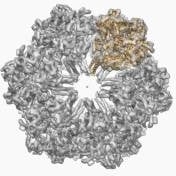
The Seventh Brazil School for Single Particle Cryo-EM
| - |
In Sao Paulo
course/workshop, in which theory and practice are tightly intertwined.
The understanding of the principles of cryo-EM data processing stands
central in this event and a few pioneers will explain the approaches to
the participants to the level where they can apply it themselves. The
spectrum of topics covered suits attendees who are new to the field as
well as those for whom the cryo-EM technique is of growing importance
and who wish to acquire an in-depth understanding of its fundamental
principles.
The final days of the meeting will be devoted to advanced topics such as
high-resolution refinements and the processing of heterogeneous data
sets ("4D cryo?EM?). Advanced topics will include:
- Optimizing data collection with direct electrons detectors and exploiting movies.
- Full data set automatic CTF correction.
- Correction of anisotropic magnification.
- Reaching atomic resolution without reference bias: alignment-by-classification (ABC) refinement procedures.
- Unbiased "Random Startup" of 3D and 4D reconstructions.
- 4D refinement procedures for high resolution results using IMAGIC-4D and/or Frealign.
- Fitting and refining atomic coordinates in high-resolution cryo-EM maps (~4? or better) using programs like REFMAC and Coot.
- Validation of the final results.
Advanced Methods in X-ray Powder Diffraction
| - |
In Newtown Square, PA
ICDD X-ray Diffraction Clinics
Session II
- Brief review of fundamentals
- Factors affecting accuracy of measured 2theta values: intensity aberrations, specimen displacement, specimen transparency, diffractometer alignment, and the use of external and internal standards
- Factors affecting intensities of diffraction peaks: structure-sensitive properties, specimen-sensitive effects, and measurement-sensitive effects
- Use of computer methods for data reduction and qualitative phase identification: peak-hunting methods, alpha2 stripping, search/match techniques and the Powder Diffraction File™, use of elemental data, error windows and probability searching, and scoring algorithms
- Advanced data mining with the PDF
- Exploration of powder pattern indexing methods
- Quantitative analysis: specimen preparation considerations, Reference Intensity Ratios, absorption correction methods, matrix-flushing methods, and whole-pattern analysis using the Rietveld method
- Structure solution and refinement using the Rietveld method