Topics
Neutron scattering
Polarised Neutron School
| - |
In Maryland
FEBS2022 Advanced course: Lost in Integration - Probing Biomolecules with Electrons, Photons, Neutrons and Magnetic Spins
| - |
In Spetses Island
International School of Crystallography. 46th Course, Crystallography under extreme conditions: the future is bright and very compressed
| - |
In Erice
Subjecting matter to extreme conditions reveals a multitude of fascinating phenomena, and is applicable to a wide range of disciplines. From the extremophiles that exist in the deepest depths of our oceans to the exotic new materials that are made when atoms are pushed ever closer together, understanding the structure of materials at extreme conditions affects Biology, Chemistry, Physics, Geoscience and Material Science. In order to achieve its goals, high pressure research has been always at the vanguard of technical progress. It is a discipline in which equipment plays a particularly important role. State-of-the-art diamond anvil cells can now achieve megabar ranges of pressure, millions of times atmospheric pressure, with this beaten by an order of magnitude in dynamic compression experiments. In this manner, scientists are able to mimic the conditions in the interiors of giant planets. Nature is even more ambitious, as in the stars petapascal pressures (the order of tens to hundreds billion atmospheres) are reached. In the laboratory, we can even create conditions of pressure, temperature and magnetic fields that are not found naturally, allowing us to complement nature to explore more exotic phases of matter.
Therefore, the course will cover broad ground in the application of extreme conditions crystallography. The topics will span from fundamentals of high-pressure single crystal and powder diffraction, to presenting the many flavors of static and dynamic compression, to reviews of sources for extreme conditions work (synchrotrons, neutrons and free electron lasers). Complementary experimental (Mössbauer spectroscopy, X-ray magnetic circular dichroism, X-ray absorption spectroscopy, inelastic scattering) and computational methods will also be discussed. Diffraction analysis on the structure of liquids, glasses and nanocrystalline materials as well as multigrain crystallography will also be introduced. The lectures will be harmonized with the related sessions of interactive tutorials, providing hands-on experience to the attendees. These workshops will be focused on basic laboratory skills and the elements of data processing software related to the high pressure.
78th Pittsburgh Diffraction Conference
| - |
In Online
The 78th Annual Pittsburgh Diffraction Conference, a free virtual event hosted by SLAC National Accelerator Laboratory from September 19th to September 21st, 2021, and concurrent with the 2021 SSRL/LCLS Users' Meeting and Workshops.
Â
The conference will feature a welcome reception on September 19th (via Kumospace) followed by two full days of lectures, poster presentations and virtual tours to the SLAC National Accelerator Laboratory facilities.

Session topics include metals in biology, computational methods in structural science, cryoEM of biomolecules and cells, scientific opportunities for remote access to user facilities, neutron diffraction, and powder diffraction in materials science research.

The best graduate student poster presentations at the conference will be awarded with the Chung Soo Yoo Award, established by the Pittsburgh Diffraction Society to honor Dr. Yoo’s memory, and a $400 cash prize. One award will be given to a poster related to biological research and one to a poster related to materials science or chemistry. All graduate students are welcome to submit a poster and be considered for the awards.

Advanced Software Tools for Single Crystal Data Analysis
| - |
In Online
The two-day workshop will showcase the structural study of Bragg and diffuse scattering from single crystal neutron diffraction using advanced software tools in JANA2020 and RMC-discord. Topical lectures will cover concepts and applications of symmetry relationship to solve and refine complex crystal structures from Bragg diffraction, including twinning, modulated structure associated with local ordering, charge and magnetic phase transitions using the JANA2020 program. A new program rmc-discord recently developed for Reverse Monte Carlo refinement of diffuse scattering from three-dimensional single crystals data will be introduced for the first time. Hands-on tutorials on JANA2006 and 3D RMC refinements will be provided. Additional instructions will show how data can be further analyzed in other programs. Both software programs will be available for download.
Confirmed Speakers:Â Vaclav Petricek (Institute of Physics, Czech Republic);Â Margarida S. Henriques (Institute of Physics, Czech Republic);Â Zachary Morgan, Neutron Scattering Division, ORNL;Â Feng Ye, Neutron Scattering Division, ORNL;Â Xiaoping Wang, Neutron Scattering Division, ORNL

Instruct-ERIC course on macromolecular X-ray, electron and neutron crystallography
| - |
In Online
The remote practical course covers principles, differences and applications of macromolecular crystallography using X-rays, neutrons and electrons. The course is targeted to PhD students and postdocs whose research project focuses on solving structures using crystallography.
Â
Â
Teachers:
Eugene Krissinel (CCP4, UK)
Andrey Lebedev (CCP4, UK)
Esko Oksanen (ESS, Sweden)
Edward Daniel (University of Oulu, Finland)
Bernhard Rupp (Medical University Innsbruck, Austria)

Neutron Scattering Applications in Structural Biology (HANDS2021)
| - |
In Online
Lectures: June 21 - June 25, 2021

Tutorials: June 28 - 30, 2021

2:00 pm - 5:30 pm EST

Registration (free) is now open and will close May 14, 2021: https://conference.sns.gov/event/291/registrations/
Â
This online course is designed for graduate students, post-doctoral researchers and faculty with knowledge of structure and function of biological macromolecules but with limited to no experience with neutron sciences. The course will cover the basics of deuterium labeling, small angle neutron scattering, neutron reflectometry, neutron spectroscopy, neutron imaging and neutron crystallography. Lectures will cover basic concepts, sample preparation, instrumentation and applications. Data collection and processing will be discussed in tutorials.
Magnetic Small Angle Neutron Scattering â€" From Nanoscale Magnetism to Longâ€Range Magnetic Structures
| - |
In Evangelische Akademie Tutzing

Atomic-scale simulations in neutron scattering
| - |
In Online
International workshop on searches for a neutron electric dipole moment
| - |
In Les Houches
#TheLightStuff: Neutron Scattering: An Invaluable Addition to the Nuclear Materials Characterization Toolbox
|
In Online
Online lectures on materials science with scattering and diffraction
#TheLightStuff: Neutron Scattering: An Invaluable Addition to the Nuclear Materials Characterization ToolboxStart: 13/11/2020 03:30 PM End: 13/11/2020 04:30 PM
Location
Zoom online
see meeting join link below
Organized by: Bundesanstalt für Materialforschung und -prüfung and Diamond Light Source, UK
Please note the given time above is CET (UTC + 1).
Topic
Neutron Scattering: An Invaluable Addition to the Nuclear Materials Characterization Toolbox
Presenter: Dr Caleb Massey, ORNL, US
Summary
Small angle neutron scattering (SANS) is an effective tool for understanding processing and irradiation effects on materials, especially when combined with other complimentary analysis techniques. In this presentation, the value of this technique will be highlighted using two recent case studies pertaining to nuclear materials: irradiation enhanced Cr-rich precipitation in FeCrAl alloys and nanoprecipitate optimization in oxide dispersion strengthened Fe-based alloys.
Registration fee
These lectures are free and can be attended via Zoom by to up to 100 attendees.
The lectures will be recorded as well, and (with permission of the presenter) will be made available online afterwards for a broader educational reach.
To participate, use the meeting join link here.
For further questions, please contact [email protected].
#TheLightStuff: Neutron 'Sees' Hydrogen Confined in Nanopores
|
In Online
Online lectures on materials science with scattering and diffraction
#TheLightStuff: Neutron ‘Sees’ Hydrogen Confined in NanoporesStart: 23/10/2020 03:30 PM End: 23/10/2020 04:30 PM
Location
Zoom online
see meeting join link below
Organized by: Bundesanstalt für Materialforschung und -prüfung and Diamond Light Source, UK
Please note the given time above is CEST (CEST = UTC + 2; BST = UTC + 1)
Topic
Neutron ‘Sees’ Hydrogen Confined in Nanopores
Presenter:
Dr Mi Tian, University of Exeter, GB
Summary
Nanoporous materials can adsorb large quantities of gases owing to the increased density of the gas inside the pores. Hydrogen, in its solid-state, offers far more compact energy storage density and capacity. We employed inelastic neutron scattering (INS) to prove the formation of solid-like hydrogen confined in nanopores. We identified the optimal porous structure to achieve the immobilised hydrogen with an extremely high density at mild conditions, without which we would not achieve such high hydrogen density. Then quasielastic neutron scattering (QENS) was then used to quantitatively illustrate the immobile and partially mobile H2 confined in pores at 35 K up to 130 K, indicating the population of immobile and partially mobile H2 is temperature-dependent. This confirmation of the effects of pore geometry and pore size on the confinement of molecules is essential in understanding and guiding the development and scale-up of porous adsorbents that are tailored for maximising H2 storage capacities, in particular for sustainable energy applications.
Registration fee
These lectures are free and can be attended via Zoom by to up to 100 attendees.
The lectures will be recorded as well, and (with permission of the presenter) will be made available online afterwards for a broader educational reach.
To participate, use the meeting join link here.
For further questions, please contact [email protected].
International conference on Materials Science and Engineering
| - |
In Brisbane
It is a great pleasure and honour to invite colleagues from academia and business, as well as young researchers and students from all parts of the world to attend the Materials Science Conference. The conference, scheduled from October 11-14, 2021 is organized by Prism Scientific Services in collaboration with The University of Queensland.
Â
The conference will underpin the need and importance of collaboration and cooperation by individuals from a wide range of professional backgrounds. Materials Oceania will bring together a multidisciplinary group of scientists and engineers from all over the world to present latest findings and to exchange their ideas. This in turn paves the way for further discoveries, which most often happen where disciplines and specialists meet and congregate. In fact the development of materials was, is and will be fundamental for all technological applications, and in the entire field of applied science targeting the improvement of quality of life for humanity. At the end of the materials conference, we hope that attendees will feel they have generated the most up-to-date information available.
Â
We hope that you will join us for a symphony of outstanding science, and to also take a little extra time to enjoy the spectacular and unique beauty of Brisbane City.
#TheLightStuff: The path to LoKI & SANS at the ESS
|
In Online
Start 09/10/2020 03:30 PM End 09/10/2020 04:30 PM
Location
Zoom online - see meeting join link below
Organized by
Bundesanstalt für Materialforschung und -prüfung and Diamond Light Source, UK
Please note the given time above is CEST (CEST = UTC + 2; BST = UTC + 1)
Topic: The path to LoKI & SANS at the ESS
Presenter: Dr Judith Houston, ESS, SE
Summary
As one of two small-angle neutron scattering beamlines under construction at the ESS, LoKI has been designed specifically with the needs of the soft matter, materials, and bio-science communities in mind. For example, its high flux and wide simultaneous Q-range will make it ideal for performing spatially-resolved and time-resolved studies.
In this talk, we want to take you through LoKI’s design, our progress with construction, and finally, give some highlights of the main scientific areas which are expected to benefit from this instrument.
Registration fee
These lectures are free and can be attended via Zoom by to up to 100 attendees.
The lectures will be recorded as well, and (with permission of the presenter) will be made available online afterwards for a broader educational reach.
To participate, use the meeting join link here.
For further questions, please contact [email protected].
Virtual Neutron Scattering School
| - |
In Canada
CNL's first Virtual Neutron Scattering School (VNSS)
November 30 until December 4, 2020
The curriculum covers a broad range of neutron scattering methods applicable to a variety of scientific areas, including magnetism, thin films, structural materials, and soft materials. The school is aimed at graduate students, post-doctoral fellows, and early-career researchers with backgrounds in physics, chemistry, materials science, engineering, biology, or mineralogy, with little or no prior knowledge of neutron scattering techniques.
Program
The School consists of morning lectures and afternoon interactive experimental simulation sessions.
Lectures
Lectures will be presented by national and international experts and will provide in-depth coverage of neutron scattering theory, methods, and applications. Several lectures will also illustrate applications of neutrons beyond neutron scattering, including materials irradiation and testing, isotope production, and boron neutron capture therapy.
Lecture topics will include:
Properties of neutrons
Basic theory of neutron scattering (elastic and inelastic)
Powder diffraction
Strain measurement and stress determination
Crystallographic texture measurements and analysis
Triple-Axis Spectroscopy (TAS)
Small-Angle Neutron Scattering (SANS)
Neutron reflectometry
Neutron imaging
Advances in neutron instrumentation
Application of neutron scattering (industrial, biological, surface sciences, and quantum materials)
Other applications of neutrons beyond scattering (irradiation, nuclear forensics, isotope production and boron neutron capture therapy)
Neutron sources (research reactors, spallation, and compact accelerator based)Â
Experimental Simulations
The afternoon experimental simulation sessions will cover several thermal-neutron scattering techniques to reinforce the concepts presented in the morning lectures. There will be ample opportunity to interact with experts and to learn first-hand how data are acquired and analyzed.
Simulation sessions will include:
Powder diffraction (Monday)
Reflectometry (Tuesday)
Stress/strain/texture measurements and analysis (Wednesday)
Inelastic scattering (Thursday)
Students will be able to attend all or only a selection of the lectures and simulations based on their interests and availability. We recommend the students to attend all the experimental simulation sessions to gain experience in these important neutron scattering methods.
Certificate of Attendance
A Certificate of Attendance will be issued to participants who attend ALL sessions. Course credit may be offered to students at the discretion of their educational institution. CNL staff will be able to register this training in CNL's online Learning Management System (LMS) using the Self-Reported Training feature.
Registration
There is no registration fee and the School is open to all. Space is limited and will be allotted on a first come-first served basis.
Registration is now open until October 30, 2020. Â
Contact us
Address further inquiries to school organizer Dr. Zahra Yamani ([email protected]).
Looking forward to (virtually) seeing you at CNL’s First Virtual Neutron Scattering School!

HERCULES 2021
| - |
In Grenoble
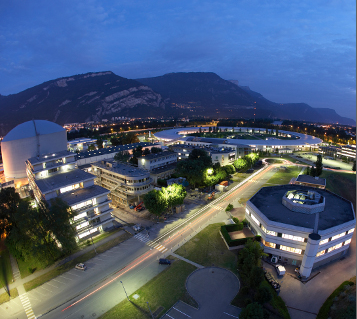
This one month course, coordinated by the Université Grenoble Alpes, is designed to provide training for students, postdoctoral and senior scientists from European and non-European universities and laboratories, in the field of Neutron and Synchrotron Radiation for condensed matter studies (Biology, Chemistry, Physics, Materials Science, Geosciences, Industrial applications). It includes lectures, practicals and tutorials, visits of Large Facilities and a poster session (each participant puts up a poster about her/his thesis or research topic for a day).
- PART I:Â BASIC METHODS AND INSTRUMENTSÂ :
(This part is common for all the participants - 1.5 weeks) - PART II is divided into two parallel specialized sessions (3.5 weeks) :
- Session A:Â PHYSICS AND CHEMISTRY OF CONDENSED MATTER
- Session B:Â BIOMOLECULAR STRUCTURE AND DYNAMICS
A special seven days programme is included , in a partner institution among European Large instruments. In 2021, one week (out of the five of the school) will be spent in one different partner institutions among 4:
- ALBA synchrotron in Barcelona, Spain
- KIT Light Source in Karlsruhe, Germany
- Elettra and FERMI in Trieste, Italy
- Swiss Light Source / Paul Scherrer Institute in Villigen, Switzerland
The language of the course is English.
Condensed Matter Research at the IBR-2
| - |
In Online
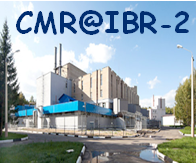
After modernization completed in 2011, the IBR high flux pulsed reactor renewed a regular operation and realization of the User Programme. Neutron scattering research at IBR-2 reactor covers different fields of condensed matter physics, materials science, chemistry, biophysical, geophysical and engineering sciences. At present, 200 experiments per year are performed by scientists from more than 20 countries at IBR-2 instruments in the framework of the User Programme.
The aim of the Conference on Condensed Matter Research at IBR-2 reactor, playing the role of the User Meeting, is to bring together the users of the neutron facility for discussion of recent experimental results, prospects of future research and development of IBR-2 instruments.
UK Neutron Scattering Group Early Career Meeting
| - |
In On-Line

MLZ User Meeting and Deutsche Neutronenstreutagung
| - |
In Munich
This year, the MLZ User Meeting will be directly linked to the German Neutron Scattering Conference which is hosted at Munich for the second time since 2008. A common poster session is going to link both meetings and will give the opportunity for exchange between the participants of both events.
#TheLightStuff: Probing Gel Structure using Scattering â€" an Insight into Designing New Soft Materials
|
In order to be able to design new soft materials, such as gels, understanding how they form is a critical first step. Bulk measurements, like rheology, provide excellent information on their properties, but understanding their structure can be more challenging. In this talk I will show how combining small-angle X-ray and neutron scattering can give insight into gel formation and how seemingly subtle changes in the molecular chemistry of gelators can lead to sometimes unexpected new outcomes.
Dr Annela Seddon from University of Bristol, UK
Organized by Bundesanstalt fur Materialforschung und -prufung and Diamond Light Source, UK.
Each in this series of online lectures on scattering and diffraction is free and can be attended via Zoom by to up to 100 attendees.
The lectures will be recorded and (with permission of the presenter) will be made available online afterwards for a broader educational reach.
To participate, use the meeting join link here.