Topics
Small-angle scattering
#TheLightStuff: Effects of annealing and pressure on the Grazing Incidence X-ray Scatterings of Conjugated Polymer blends used in Organic Solar Cells
|
In Online
Start: 02/10/2020 03:30 PM End: 02/10/2020 04:30 PM
Please note the given time above is CEST (CEST = UTC + 2; BST = UTC + 1)
Location: Zoom online
Organized by: Bundesanstalt für Materialforschung und -prüfung and Diamond Light Source, UK
Topic
Effects of annealing and pressure on the Grazing Incidence X-ray Scatterings of Conjugated Polymer blends used in Organic Solar Cells
Presenter:
Dr Benjamin Agyei-Tuffour, University of Ghana, GH
Summary
This presentation shows the results of an experimental study of the effects of pressure and annealing on the conjugated polymer chain configurations in poly (3-hexylthiophene) and [6,6]-phenyl C61-butyric acid methyl ester (P3HT:PCBM) blends that are used in bulk heterojunction organic photovoltaic cells (OPVs). Annealing and the application of static loads on P3HT:PCBM blends on glass substrates were investigated. Microscopy and grazing incidence x-ray scattering techniques were adopted to analyze the surface morphologies, nano-/micro-structures and the chain configurations in the conjugated polymer blends. The OPV devices fabricated resulted in the I-V characteristics that have large dependence on the changes in the nano-/ micro-structures of the polymer blends. The pressure induced polymer chain configurations that were in the direction of the applied pressure (edge-on), led to a reduced lamellae spacing between the polymer units. This increased the crystallinity in the blend and played significant role in the organic solar cell performance. The findings of the study are discussed to influence the design and control of the nano-/micro-structures and the performance of bulk heterojunction organic solar cells.
Registration fee
These lectures are free and can be attended via Zoom by to up to 100 attendees.
The lectures will be recorded as well, and (with permission of the presenter) will be made available online afterwards for a broader educational reach.
To participate, use the meeting join link here.
For further questions, please contact [email protected].
P12 User Workshop
| - |
In Online
With this 2-day online workshop, we wish to stimulate the information exchange between the SAXS team of EMBL-Hamburg and our User community. We will highlight our recent beamline developments and would like to see your SAXS results as poster presentations, flash talks or selected oral presentations. We are happy to announce that we have received goodie bags from our sponsor to reward outstanding contributions. There will be ample time to discuss your new ideas and help you get your application for the next beamtime period ready. Both present P12 users and potential future users willing to learn about the possibilities of SAXS at P12 are welcome.

HERCULES 2021
| - |
In Grenoble
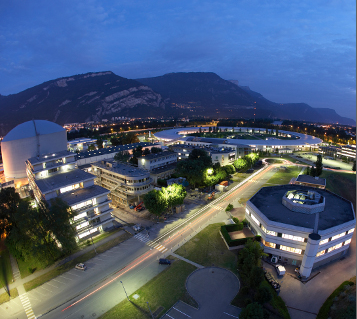
This one month course, coordinated by the Université Grenoble Alpes, is designed to provide training for students, postdoctoral and senior scientists from European and non-European universities and laboratories, in the field of Neutron and Synchrotron Radiation for condensed matter studies (Biology, Chemistry, Physics, Materials Science, Geosciences, Industrial applications). It includes lectures, practicals and tutorials, visits of Large Facilities and a poster session (each participant puts up a poster about her/his thesis or research topic for a day).
- PART I:Â BASIC METHODS AND INSTRUMENTSÂ :
(This part is common for all the participants - 1.5 weeks) - PART II is divided into two parallel specialized sessions (3.5 weeks) :
- Session A:Â PHYSICS AND CHEMISTRY OF CONDENSED MATTER
- Session B:Â BIOMOLECULAR STRUCTURE AND DYNAMICS
A special seven days programme is included , in a partner institution among European Large instruments. In 2021, one week (out of the five of the school) will be spent in one different partner institutions among 4:
- ALBA synchrotron in Barcelona, Spain
- KIT Light Source in Karlsruhe, Germany
- Elettra and FERMI in Trieste, Italy
- Swiss Light Source / Paul Scherrer Institute in Villigen, Switzerland
The language of the course is English.
#TheLightStuff: Probing Gel Structure using Scattering â€" an Insight into Designing New Soft Materials
|
In order to be able to design new soft materials, such as gels, understanding how they form is a critical first step. Bulk measurements, like rheology, provide excellent information on their properties, but understanding their structure can be more challenging. In this talk I will show how combining small-angle X-ray and neutron scattering can give insight into gel formation and how seemingly subtle changes in the molecular chemistry of gelators can lead to sometimes unexpected new outcomes.
Dr Annela Seddon from University of Bristol, UK
Organized by Bundesanstalt fur Materialforschung und -prufung and Diamond Light Source, UK.
Each in this series of online lectures on scattering and diffraction is free and can be attended via Zoom by to up to 100 attendees.
The lectures will be recorded and (with permission of the presenter) will be made available online afterwards for a broader educational reach.
To participate, use the meeting join link here.
CHRNS Summer School on Neutron Scattering
| - |
In Gaithersburg, MD
This year, a one-week "CHRNS Summer School on Methods and Applications of Small Angle Neutron Scattering and Neutron Reflectivity" will be held June 1-5, 2020 at the NIST Center for Neutron Research (NCNR).Â
This school provides participants the opportunity to learn about small angle neutron scattering (SANS), and neutron reflectometry (NR) at the NIST Center for Neutron Research (NCNR), via hands-on practical training and theoretical classes. These powerful experimental techniques are used by researchers in a variety of scientific disciplines to probe the microstructure of materials at length scales ranging from 1nm to 20 microns. The NCNR is home to world-class SANS, USANS (Ultra Small Angle Neutron Scattering), VSANS and NR instruments, which are available to all qualified researchers through the NCNR's anonymous, peer review proposal system.
Please note that this year the school will not cover inelastic neutron scattering.Â
Application deadline: 6th April 2020. The school is restricted to 42 participants.Â

School on SAXS/SANS and BioSAXS/BioSANS data analysis
| - |
In Kutná Hora, Prague
22nd National School on Neutron and X-ray Scattering (NXSchool)
| - |
In Argonne & Oak Ridge National Laboratories
The NXSchool is designed to introduce students to the capabilities available at U.S. neutron and x-ray user facilities and pays for students’ travel, meals and lodging costs. Lectures, presented by researchers from academia, industry, and national laboratories, include basic tutorials on the principles of neutron and x-ray scattering theory, the characteristics of neutron and synchrotron sources, as well as seminars on the application of scattering methods to a variety of scientific subjects. As part of the school, students also conduct a series of short experiments to obtain some hands-on experience using instruments at neutron and synchrotron sources, both at Oak Ridge's Spallation Neutron Source and High Flux Isotope Reactor facilities (1st week) and at Argonne's Advanced Photon Source (2nd week).Â
Further details can be found at http://bit.ly/NXSchool and http://neutrons.ornl.gov/nxs
Applications must be received by February 17th, 2020. The application process is quite competitive and requires submission of evaluation letters from the student’s advisor and two other professionals familiar with the student.
A Tribute to Isabelle Grillo: The Extraordinary Structure of Ordinary Things
| - |
In ILL, Grenoble
Isabelle Grillo dedicated her scientific life to the art of mixing surfactants, nanoparticles, polymers, emulsion droplets, as seen through the eyes of small-angle scattering. She showed that it is the most elegant method to go to the heart of colloidal interactions, by probing the intricate balance of colloidal forces, the morphology and the evolution of complex fluids.
Through the words of her closest collaborators, this symposium will highlight her outstanding contribution spanning from fundamental approaches to very practical industrially relevant questions on everyday products.
Registration and abstract submission for posters is now open. The deadline for abstract submission is 23 February 2020.Â
Magnetic Small Angle Neutron Scattering â€" from Nanoscale Magnetism to Longâ€Range Magnetic Structures
| - |
In Bad Honnef

BioSAXS 2019 Workshop
| - |
In Menlo Park CA
Everything BioSAXS 5: Getting started in biological small-angle x-ray solution scattering
| - |
In Argonne, IL
Fifth intensive HOW-TO course in BioSAX
Students will have two days of lectures and hands-on software tutorials on the
basics of BioSAXS data collection and processing from expert practitioners
in the field. This will be followed by data collection on the BioCAT
beamline (Sector 18 at the APS) and data analysis help. Students are
encouraged to bring 1-2 research samples for the data collection.
Also, for the first time ever, BioCAT is offering this course for remote
participants. Remote participants will get a live-stream of the lectures,
and all of the tutorial materials. They will not be able to collect data.
Registration for on-site participants is first come, first served, and limited to the
first 15 registrants due to time constraints on how many users can collect
data during the course.
Â

10th annual SIBYLS BioSAXS workshop
| - |
In Berkeley, CA
EMBO global exchange lecture course *Structural and biophysical methods for biological macromolecules in solution*
| - |
In Santiago
structural and biophysical techniques employed for characterization of
proteins and nucleic acids under close to native conditions. It includes
lectures on: small angle X-ray and neutron scattering, NMR, mass
spectrometry, analytical ultracentrifugation, bioinformatic tools,
cryoEM and interdisciplinary approaches. The registration fee of 170
euro will be requested from the academic participants covering the event
materials, lodging and meals. A limited number of travel grants and
child care grants are available.

6th International Symposium on Diffraction Structural Biology (ISDSB2019)
| - |
In Osaka
CHESS Users' Meeting
| - |
In Cornell
NY. CHESS has just completed a major upgrade to its storage ring and beamlines;
the meeting will be a great place to find out about the new opportunities for
science created by CHESS-U, and see the new facilities.
There will be two workshops at the meeting; of particular interest to this
audience is one on Biomolecules Under Pressure. Speakers will introduce
high-pressure bioscience as it relates to molecular biophysics, the evolution of
life, food science and the instrumentation required to perform high-pressure
biological experiments, primarily using crystallography and SAXS. The workshop
will include a short overview of data acquisition at the CHESS BioSAXS station.

S4SAS 2019
| - |
In Didcot
This is the annual Diamond conference for all Small Angle Scatterers (SAS). It aims to reach out to all users of the technique providing a forum for technological advancement, as well as showcasing the current state-of-the-art in experimentation and data analysis for SAS users. By highlighting leading scientific research in the field alongside technological advancements, both at synchrotron and laboratory sources, this conference aims to provide a forum for discussion all users of Small Angle Scattering (SAS).

Workshop canSAS XI
| - |
In Freising
An international workshop organized by the Jülich Centre for Neutron Science entitled: canSAS XI is driving the science of small angle scattering
Â

GISAXS 2019
| - |
In DESY, Hamburg
This workshop aims to bring together different communities in the field of thin films, nanostructures, surfaces and interfaces, to gain insights to the very powerful method of grazing incidence small angle x-ray scattering and related techniques.Â
Abstracts should be written according to the provided template and sent to [email protected].
Abstract submission deadline: 1st October 2019.Â
Registration deadline: 31st May 2019Â
EMBO Practical Course: Small Angle Neutron and X-ray Scattering from Biomacromolecules in Solution
| - |
In Grenoble
This EMBO Practical Course will focus on the use of small angle scattering of both neutrons and X-rays for the determination of the structures of biological macromolecules. Particular attention will be paid towards sample preparation and the analysis and interpretation of small angle scattering data in a biological context.
The course will consist of lectures, tutorials and practicals, taking advantage of the location of the European Synchrotron Radiation Facility and the Institut Laue Langevin on the same scientific campus in Grenoble.Â
Registration deadline : 21st June 2019Â
Neutrons for membrane biophysics
| - |
In Garching (near Munich)
The organised school will be an international meeting with contributions from leading neutron scattering and deuteration facilities. Together with contributions by academic researchers there is a great potential impact for neutron scattering over a diverse range of scientific problems. We will focus on the three experimental techniques (neutron reflectivity, neutron lamellar diffraction and small angle neutron scattering) and the structural perspective that these techniquesgive on the arrangements of lipids into bilayers, the solubilisation of small molecules and interactions of larger biomolecules with lipid bilayers.  These generic problems have wide relevance including the fields of food science, the plant sciences, biotechnology, structural biology and more general problems involving the physico-chemistry of lipid bilayers. There will be hands on experience in producing good quality samples and the measurement and analysis of data on world class neutron instrumentation.  Deuteration is an indispensable adjunct to the structural perspective of neutron scattering which allows the experimentalist to highlight and resolve very specific molecular detail.  An important aspect of this workshop is to provide a context for molecular deuteration from experts, well versed in the power, and importantly the limitations of the technique.Â
Additionally we will give instruction, and provide software for, traditional methods of data analysis, modelling of SANS and reflectivity data, and unit cell reconstructions of diffraction data. We will also examine the possibilities in the use of molecular dynamics simulations for direct comparison with scattering derived models.