Topics
Solid-state physics
28th Croatian-Slovenian Crystallographic Meeting
| - |
In PoreÄ, Croatia
Polarized Neutrons for Condensed Matter Investigations (PNCMI)
| - |
In Maryland
PNCMI is the most comprehensive conference on the latest scientific research using polarized neutrons and on related instrumentation development. The topics will include:
- Multiferroics and chirality
- Strongly correlated electron systems
- Frustrated and disordered systems
- Quantum materials
- Magnetic nanomaterials
- Thin films and multilayers
- Soft matter
- Imaging
- Polarized neutron instrumentation
- Polarized neutron techniques and methods
International School of Crystallography. 46th Course, Crystallography under extreme conditions: the future is bright and very compressed
| - |
In Erice
Subjecting matter to extreme conditions reveals a multitude of fascinating phenomena, and is applicable to a wide range of disciplines. From the extremophiles that exist in the deepest depths of our oceans to the exotic new materials that are made when atoms are pushed ever closer together, understanding the structure of materials at extreme conditions affects Biology, Chemistry, Physics, Geoscience and Material Science. In order to achieve its goals, high pressure research has been always at the vanguard of technical progress. It is a discipline in which equipment plays a particularly important role. State-of-the-art diamond anvil cells can now achieve megabar ranges of pressure, millions of times atmospheric pressure, with this beaten by an order of magnitude in dynamic compression experiments. In this manner, scientists are able to mimic the conditions in the interiors of giant planets. Nature is even more ambitious, as in the stars petapascal pressures (the order of tens to hundreds billion atmospheres) are reached. In the laboratory, we can even create conditions of pressure, temperature and magnetic fields that are not found naturally, allowing us to complement nature to explore more exotic phases of matter.
Therefore, the course will cover broad ground in the application of extreme conditions crystallography. The topics will span from fundamentals of high-pressure single crystal and powder diffraction, to presenting the many flavors of static and dynamic compression, to reviews of sources for extreme conditions work (synchrotrons, neutrons and free electron lasers). Complementary experimental (Mössbauer spectroscopy, X-ray magnetic circular dichroism, X-ray absorption spectroscopy, inelastic scattering) and computational methods will also be discussed. Diffraction analysis on the structure of liquids, glasses and nanocrystalline materials as well as multigrain crystallography will also be introduced. The lectures will be harmonized with the related sessions of interactive tutorials, providing hands-on experience to the attendees. These workshops will be focused on basic laboratory skills and the elements of data processing software related to the high pressure.
International Conference of Physics Students 2021
| - |
In Online
The International Conference of Physics Students is a student-run event organized annually by one of the member committees of the International Association of Physics Students.

ECS6. 6th European Crystallographic School
| - |
In Online
This school will be a fully online event organized in Budapest, Hungary
Extended Standard registration deadline
30 June 2021
Student under 35 years: EUR 240
Participant above 35 years: EUR 290
Non-Academic: EUR 390
Â
Â
16th International Conference on the Physics of Non-Crystalline Solids (PNCS16)
| - |
In Canterbury

Magnetic Small Angle Neutron Scattering â€" From Nanoscale Magnetism to Longâ€Range Magnetic Structures
| - |
In Evangelische Akademie Tutzing

International conference on Materials Science and Engineering
| - |
In Brisbane
It is a great pleasure and honour to invite colleagues from academia and business, as well as young researchers and students from all parts of the world to attend the Materials Science Conference. The conference, scheduled from October 11-14, 2021 is organized by Prism Scientific Services in collaboration with The University of Queensland.
Â
The conference will underpin the need and importance of collaboration and cooperation by individuals from a wide range of professional backgrounds. Materials Oceania will bring together a multidisciplinary group of scientists and engineers from all over the world to present latest findings and to exchange their ideas. This in turn paves the way for further discoveries, which most often happen where disciplines and specialists meet and congregate. In fact the development of materials was, is and will be fundamental for all technological applications, and in the entire field of applied science targeting the improvement of quality of life for humanity. At the end of the materials conference, we hope that attendees will feel they have generated the most up-to-date information available.
Â
We hope that you will join us for a symphony of outstanding science, and to also take a little extra time to enjoy the spectacular and unique beauty of Brisbane City.
HERCULES 2021
| - |
In Grenoble
This one month course, coordinated by the Université Grenoble Alpes, is designed to provide training for students, postdoctoral and senior scientists from European and non-European universities and laboratories, in the field of Neutron and Synchrotron Radiation for condensed matter studies (Biology, Chemistry, Physics, Materials Science, Geosciences, Industrial applications). It includes lectures, practicals and tutorials, visits of Large Facilities and a poster session (each participant puts up a poster about her/his thesis or research topic for a day).
- PART I:Â BASIC METHODS AND INSTRUMENTSÂ :
(This part is common for all the participants - 1.5 weeks) - PART II is divided into two parallel specialized sessions (3.5 weeks) :
- Session A:Â PHYSICS AND CHEMISTRY OF CONDENSED MATTER
- Session B:Â BIOMOLECULAR STRUCTURE AND DYNAMICS
A special seven days programme is included , in a partner institution among European Large instruments. In 2021, one week (out of the five of the school) will be spent in one different partner institutions among 4:
- ALBA synchrotron in Barcelona, Spain
- KIT Light Source in Karlsruhe, Germany
- Elettra and FERMI in Trieste, Italy
- Swiss Light Source / Paul Scherrer Institute in Villigen, Switzerland
The language of the course is English.
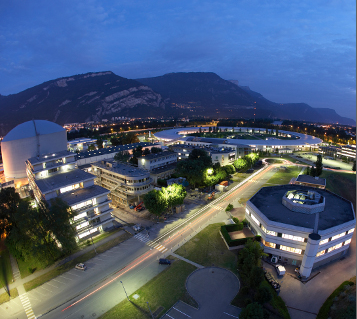
#TheLightStuff: The MIEZE technique and its application towards examining magnetic materials
|
We introduce MIEZE, a variant of the spin-echo technique optimized for the study of dynamic processes in magnetic materials. We show how MIEZE can be applied to these materials with the help of several examples: fluctuations around the Curie point in iron, spin dynamics in paramagnetic Ho2Ti2O7 and weak crystallization of fluctuating skyrmion textures in MnSi.
Presenter: Dr Johanna Jochum from Technical University Munich, Germany
Organized by Bundesanstalt fur Materialforschung und -prufung and Diamond Light Source, UK.
Each in this series of online lectures on scattering and diffraction is free and can be attended via Zoom by to up to 100 attendees.
The lectures will be recorded and (with permission of the presenter) will be made available online afterwards for a broader educational reach.
To participate, use the meeting join link here.
Workshop on Perspectives and Applications of Deep Learning for Accelerated Scientific Discovery in Physics
| - |
In Copenhagen

CMD2020GEFES: Condensed Matter General Conference
| - |
In Madrid
FROLIC GOATS: 13th HIGH-PRESSURE DIFFRACTION WORKSHOP
| - |
In PoznaÃ...„, Poland
Its primary goal is to disseminate practical skills allowing one to perform high-pressure experiments in an x-ray lab, and to outline possibilities to continue one's studies at dedicated high-pressure beamlines in synchrotrons, nuclear reactors and spallation sources.
Modern x-ray diffraction equipment installed in most laboratories can be used for high-pressure experiments straightforwardly, or after few minor modifications - these modifications can be as simple as mounting a shorter collimator and re-positioning the beam-stop to provide space for the diamond- anvil cell (DAC). The DAC is a simple and relatively cheap device, so crystal structures in high pressure can be studied in most x-ray labs.

Introducing photons, neutrons and muons for condensed matter physics and materials science. A PSI course for master students 2020
| - |
In Paul Scherrer Institut
- Interaction of photons, neutrons and muons with matter
- Production of photons, neutrons and muons
- Experimental setups: optics and detectors
- Crystal symmetry, Bragg's law, reciprocal lattice, structure factors
- Elastic and inelastic scattering with neutrons and photons
- X-ray absorption spectroscopy, x-ray magnetic circular dichroism
- Polarized neutron scattering for the study of magnetic materials
- Imaging techniques using x-rays and neutrons
- Introduction to muon spin rotation
- Applications of muon spin rotation
Spring Meeting of the German Physical Society: Condensed Matter (DPG spring meeting)
| - |
In Dresden
- Condensed Matter Section (SKM)
- Biological Physics
- Chemical and Polymer Physics
- Thin Films
- Dynamics and Statistical Physics
- Semiconductor Physics
- Crystalline Solids and their Microstructure
- Magnetism
- with working group Magnetism
- Metal and Material Physics
- with working group Metal and Material Physics
- Surface Science
- Physics of Socio-Economic Systems
- Low Temperature Physics
- Vacuum Science and Technology
- Environmental Physics
- Working Group on Accelerator Physics
- Working Group on Equal Opportunities
- Working Group on Energy
- Working Group on Industry and Business
- Working Group "Young DPG"
- Working Group on Physics, Modern IT and Artificial Intelligence
CONEXS conference: Emerging Trends in X-Ray Spectroscopy
| - |
In Newcastle (U.K.)
CONEXS Conference
Emerging Trends in X-Ray Spectroscopy
Â
The Collaborative Network for X-Ray Spectroscopy (CONEXS) is an EPSRC-funded network in partnership between Newcastle University and Diamond Light Source. The first CONEXS Conference will be taking place at Newcastle University on the 18-20 February 2020, bringing together leading national and international experts to discuss emerging trends in X-ray Spectroscopy and examine the intersection of experiment and theory.
Â
Date: 18-20 February 2020
Venue: Newcastle University, UK
Call for Abstracts
We are now welcoming submissions for abstracts for both oral presentations and posters, the abstract guidance and the submission form are available here:Â https://research.ncl.ac.uk/conexs/conference/abstractsubmission/.
Â
Registration (https://research.ncl.ac.uk/conexs/conference/registration/)
Registration for the conference is now open, at a rate of £150 (standard) or £75 (students/ECRs). This price includes attendance at the conference dinner.
Keynote speakers
•            Prof. Serena DeBeer, Professor and Director, Max Planck Institute for Chemical Energy Conversion
•            Prof. John Rehr, Professor Emeritus of Physics, University of Washington
•            Prof. Sonia Coraini, Professor in Physical Chemistry, University of Denmark
•            Dr. Anna Regoutz, Lecturer in Materials Chemistry, University College London
•            Prof. Matthias Bauer, Professor in Inorganic Chemistry, University of Paderborn
•            Prof. Neil Hyatt, Professor of Nuclear Materials Chemistry, University of Sheffield
•            Dr. Marius Retegan, Scientist, European Synchrotron Radiation Facility
•            Dr. Olga Safonova, Senior Scientist, Paul Scherrer Institute
•            Dr. Mihaela Gorgoi, Beamline Scientist, EMIL Berlin
•            Prof. Jakub Szlachetko, Associate Professor, Institute of Nuclear Physics PAS
Â
Conference website: https://research.ncl.ac.uk/conexs/conference/
Normal 0 false false false EN-GB X-NONE X-NONE MicrosoftInternetExplorer4 /* Style Definitions */ table.MsoNormalTable {mso-style-name:"Table Normal"; mso-tstyle-rowband-size:0; mso-tstyle-colband-size:0; mso-style-noshow:yes; mso-style-priority:99; mso-style-parent:""; mso-padding-alt:0cm 5.4pt 0cm 5.4pt; mso-para-margin:0cm; mso-para-margin-bottom:.0001pt; mso-pagination:widow-orphan; font-size:10.0pt; font-family:"Times New Roman",serif;}
17e Journée de la Matière Condensée
| - |
In Rennes
Advanced Nanomaterials and Methods - ANAM2019
| - |
In Yerevan
American Geophysical Union Fall Meeting
| - |
In San Francisco, CA
57th European High Pressure Research Group Meeting on High Pressure Science and Technology
| - |
In Prague
The European High Pressure Research Group (EHPRG) was established in the sixties of the last century to support a development of both the basic as well as the applied high pressure research by the annual meetings. To create a close contact of all the workers in scientific and technological high pressure disciplines, the wide scope of the EHPRG conferences is traditional and characteristic feature of these meetings. A relatively rapid increase of high pressure activities in almost all areas of Physics, Geosciences, Material Research, Chemistry and namely in Biosciences during the last decades demands a similarly rapid exchange of knowledge in high pressure research and technology.