Topics
Biological macromolecules
EMBO|EMBL Symposium: Molecular and Cell Biology of Membranes
| - |
In Heidelberg
Topics
- Intracellular lipid homeostasis
- Regulation of lipid synthesis and transport
- Protein-lipid interactions
- Functionalised lipids and novel tools to study lipids in cells

XXIII West Coast Protein Crystallography Workshop
| - |
In Pacific Grove, CA
Explore the Future of Structural Biology
19th IUPAB Congress and 11th EBSA Congress
| - |
In Edinburgh
Joint 19th International Union of Pure and Applied Biophysics (IUPAB) and 11th European Biophysical Societies' Association (EBSA) Congress

MXIS 2016: Practical course on in-plate crystallography, with special focus on ligand screening. Part 2
| - |
In Grenoble
crystallography, with a special emphasis on ligand screening. This
workshop is organized in two parts, each one lasting for 3 days. It
includes:
 * Part 1 (Montpellier 7-9 Nov 2016): full lectures at the “Centre de Biochimie
   Structurale†followed by practicals. Topics: plate pre-coating
   for “Dry†co-crystallization [1], in situ screening on a lab source).
 * Part 2 (Grenoble): full lectures at the “Institut de Biologie
   Structurale†and practical sessions at the ESRF, on beamlines
   FIP-BM30A and ID30B. Full classes will be done in day 1 while
   practical sessions will be organized in subgroups, from day 2 to day
   3. Topics: in situ diffraction for crystal screening and structure
   resolution, in situ data processing.
Possibility will be given to participants to practice on their own samples.
The workshop is limited to 6 and 8 participants for Part 1 and 2
respectively.
No fees are required.
The application period will close on the 30th September. Applicants will
be required to submit a short CV and a motivation letter to
[email protected]

MXIS 2016: Practical course on in-plate crystallography, with special focus on ligand screening. Part 1
| - |
In Montpellier
Part 1 (Montpellier): full lectures at the “Centre de Biochimie
   Structurale†followed by practicals. Topics: plate pre-coating
   for “Dry†co-crystallization [1], in situ screening on a lab source).
Â
 Part 2 (Grenoble - 30 Nov-2 Dec 2016): full lectures at the “Institut de Biologie
   Structurale†and practical sessions at the ESRF, on beamlines
   FIP-BM30A and ID30B. Full classes will be done in day 1 while
   practical sessions will be organized in subgroups, from day 2 to day
   3. Topics: in situ diffraction for crystal screening and structure
   resolution, in situ data processing.
The workshop is limited to 6 and 8 participants for Part 1 and 2,
respectively.
No fees are required.
The application period will close on the 30th September. Applicants will
be required to submit a short CV and a motivation letter to
[email protected]
Â
International School of Crystallography 50th Course: Integrative Structural Biology
| - |
In Erice (Sicily)
PURPOSE OF THE COURSE
Over the last 50 years, crystallography has developed from a method capable of determining the structures of isolated, soluble proteins to one able to provide detailed information on mechanisms of action of integral membrane proteins, whole viruses and the complex nano-machines that are central to cellular function. To discover how biology works researchers are now combining the power of crystallography with multiple other methods, spanning from the atomic to cellular scale, and including revolutionary developments in electron cryo-microscopy and tomography. This Course will celebrate its milestone as the 50th in the crystallography series started by Dorothy Hodgkin by focusing on integration:
- of different techniques,
- of molecular and cellular approaches and
- of the crystallographic community, including diversity.
discussion of topics ranging from sample preparation to data analysis software. To commemorate the achievements of the Erice crystallography school over the past 50 years, the course will feature several sessions that reflect on the past and look to the future to highlight the factors that create an inclusive discipline.
APPLICATIONS
Interested candidates should register by 30th November 2016 using the form available in the school website (crystalerice.org).
Applicants may be able to apply for partial financial support. Please visit cristalerice to view the full eligibility criteria.
CURRENT LIST OF SPEAKERS AND TOPICS
- Nenad Ban (ETH Zurich):Â Protein synthesis by large cellular assemblies
- David Barford (LMB Cambridge): The anaphase-promoting complex
- Pamela Bjorkman (Caltec):Â Â Immune recognition of viral pathogens
- Tom Blundell (Cambridge University):Â Â TBD and "Celebrating the 50th International School of Crystallography"
- Bridget Carragher (NYSBC):Â Intro to Cryo-EM
- Wah Chiu (Baylor College of Medicine):Â Electron cryo-microscopy of biological nanomachines
- Elena Conti (MPI for Biochemistry):Â RNA metabolism
- Piet Gros (Utrecht University): The complement system
- Sun Hur (Harvard University):Â Signal transduction by immune receptors
- Yvonne Jones (University of Oxford):Â Cell surface signaling assemblies
- Werner Kühlbrandt (MPI for Biophysics): Membrane proteins: Structure and mechanisms
- John Kuriyan, (UC Berkeley):Â Cellular signal transduction
- Debora Marks(Harvard University):Â TBD
- Jenny Martin (Griffith University):Â Antimicrobial drug design
- Naoko Mizuno (MPI for Biochemistry):Â TBD
- Poul Nissen (Aarhus University):Â Membrane transporters in the brain
- Lori Passmore (LMB Cambridge):Â TBD
- Michael Rossmann (Purdue University):Â The structure of the Zika virus
- Michael Rout (The Rockefeller University:Â The nuclear pore complex
- Giovanna Scapin (Merck & Co):Â Â Structural Biology in Drug Discovery
- Irmi Sinning (Heidelberg University):Â Protein targeting and membrane protein biogenesis
- Titia Sixma (NKI Amsterdam):Â Molecular mechanisms in carcinogenesis
- David Stuart (University of Oxford):Â Virus structure and vaccine design
- Sriram Subramaniam (NCI Bethesda):Â Â Â High resolution electron microscopy
- Alessandro Vannini (ICR London):Â Â TBD
- Antoine van Oijnen (University of Wollongong):Â Single molecule biophysics
- Wei Yang (NIDDK Bethesda):Â Â Â Â DNA repair, replication and recombination
- Xiaodong Zhang (Imperial College London):Â Â Â DNA processing and damage response
WORKSHOPS
- Riccardo Pellarin (Pasteur Institute): Integrative Modeling Platform
- Cornelius Gati (MRC): RELION
- Randy Read (MRC): Validation/errors
- Paul Emsley (MRC) :COOT
- Debbie Marks & Chris Sanders (Harvard): EV fold
- Airlie McCoy (MRC): Solution and refinement of large complexes/low resolution systems
- Ardan Patwardhan (EBI/PDBe): EMDB/EMPIAR:Â linking structural information from molecules to cells
CCP4 Study Weekend
| - |
In Nottingham
From Crystal to Structure
 Sessions will cover:
- Getting the data
- Is there a homologue?
- No model - back to experiments
- Refining and building
- Did you get it right?
- Going forwards
Price: £235
Fee Info: The registration fee covers refreshments, lunch and conference dinner. Early bird registration starts on 5th September and ends on 20 November 2016. After this date registration goes up to £285. Registration will close on 12 December 2016 (or earlier if places sell out).
DLS-CCP4 Data Collection and Structure Solution Workshop
| - |
In Harwell
The third joint Diamond-CCP4 MX workshop for graduate students, postdocs and early career scientists is announced. This event will take place at Diamond Light Source, on the Harwell Oxford campus in Oxfordshire, UK.
All aspects of structure solution will be covered during the workshop, from data collection through to phasing, refinement and validation.
- Lectures and tutorials will be delivered by experts in the field
- One day of data collection time will be provided at Diamond's excellent MX beamlines
- You will be able to work alongside world-leading scientists and methods developers on your own projects
- All costs apart from travel will be covered
Programme Overview
Tuesday 13th December: Registration and introductory talks (starting at 1.30pm)
Wednesday 14th December: Introductory talks and student poster session
Thursday 15th December: Data processing theory, preparations for beamtimeÂ
Friday 16th December: Data collection at the beamlines and data processing
Saturday 17th December:Â Experimental phasing talks and tutorialsÂ
Sunday 18th December: Molecular replacement talks and tutorials
Monday 19th December: Model building and refinement talks and tutorials
Tuesday 20th December: Model validation, Q&A, followed by the workshop dinner
Structural Biology Symposium
|
In Hormel Institute, Minnesota
Invited Speakers
Jenny Hinshaw (NIDDK, Bethesda)
Georgios Skiniotis (University of Michigan, Ann Arbor)
Wen Jiang (Purdue University, Lafayette)

Fragment-based Lead Discovery Conference
| - |
In Cambridge, MA

BioCAT Advanced SAXS Training Course 2016
| - |
In Chicago, IL
Small-angle X-ray Scattering (SAXS) is an increasingly important tool for the structural biology and biochemistry community but many are unfamiliar with the technique. In this workshop, participants will be given, through a series of lectures and hands-on practical tutorials, a comprehensive training on how to use collect, analyze and model SAXS data using the BioCAT Beamline 18ID at the Advanced Photon Source, Argonne National Laboratory. Lectures will cover both the basics of SAXS and the specialized techniques supported by BioCAT including size-exclusion chromatography SAXS and time-resolved approaches. This will be followed by a hands-on session where participants are encouraged to bring their own samples for SAXS measurements as well as using samples provided by BioCAT. Finally, participants will be given hands-on training in use of the ATSAS software suite covering almost all aspects of SAXS data reduction, data analysis and modeling. This will provide a basic knowledge on the principles of the various methods underlying the individual ATSAS programs. Participants will be expected to leave the course with a good understanding of the strengths and limitations of the SAXS technique and be able to model and interpret SAXS data properly.
Application deadline: September 30, 2016
How to apply: please send a cover letter and CV to Weifeng Shang (
[email protected])
How to pay: A nominal fee ($200) to cover coffee and lunch will be charged. After the selection process, the participants will be notified with payment information.
7th annual SIBYLS bioSAXS workshop
| - |
In Berkeley, CA
The 7th annual SIBYLS bioSAXS workshop will cover frontiers in Biological SAXS. The two-day workshop will provide participants with software tutorial sessions for biological SAXS in addition to hands-on training in experimental techniques. The latest advances in SAXS studies on biological systems will be discussed with particular focus on advances in synchrotron scattering techniques, dynamic and flexible structures in biomolecule, membrane protein scattering, and complementary methods in crystals and in solution. Updates on current developments of software for SAXS analysis pertaining to structural biology will be illustrated.
The first day of the workshop will begin with a brief run-through on current updates. Greg Hura, Berkeley Lab’s SAXS Beamline Scientist, will introduce the capabilities of the new detector and the future of high throughput SAXS at the SIBYLS Beamline 12.3.1. The keynote speakers, Frank Gabel (IBS, Grenoble), Hayden Mertanes (EMBL, Hamburg), and Robert Rambo (Diamond, Oxford) will continue Dr. Hura’s and Hammel’s discussion by elaborating on the basics of bioSAXS.

Atomistic Modeling of Small-Angle Scattering Data Using SASSIE-web. A BioCAT CCP-SAS workshop
| - |
In Chicago, IL
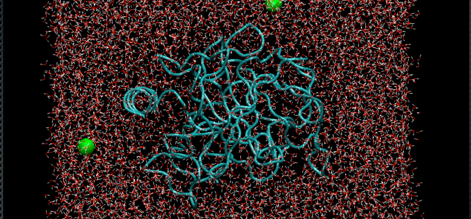
Molecular simulation is an important technique to analyze and interpret molecular phenomena across many disciplines. Small-angle scattering (SAS) utilizing either X-ray or neutron sources is a valuable method to characterize shape, interactions, and properties of many soft-matter systems. Modeling of SAS data is typically done using analytical functions and/or dummy-ball (DB) models. While these methods are simple, they have proven to be quite robust and have allowed for a tremendous expansion of SAS studies to a wide variety of systems. Atomistic modeling can be used to interpret SAS data and inherently provides structural and atomic interactions that are unavailable using analytical or DB models. In additional, atomistic models can allow the use of experimental and computational constraints on the SAS data.
The goal of this three day introductory course is to use modern simulation methods and software tools to predict and analyze small-angle scattering data of soft-matter systems, focussing particularly on biological systems. Participants will be gain experience with modern simulation tools such as VMD, NAMD. The latter half of the course will introduce SASSIE, a software framework designed to facility the use of atomistic modeling to interpret scattering data.
The course will involve a mixture of lectures and examples with student lessons. Examples will involve various protein, dna, and their complexes. Advanced simulation methods for glycosylated proteins, lipidic systems and coarse-grain methods can be accommodated depending on demand. The emphasis will be on structure building, ensemble molecular simulation, calculation of scattering profiles and comparison to experimental data.
Day 1: Introduction to molecular modeling using force-fields
Day 2: Intermediate MD, SASSIE and advanced building methods.
Day 3: Advanced SASSIE and student projects.
Students are encouraged to contact the course organizers in advance to discuss their systems as a portion of the course will involve helping students set-up initial models for their own projects.
Molecular Machines: Integrative Structural and Molecular Biology
| - |
In EMBL Heidelberg
From Functional Genomics to Systems Biology
| - |
In EMBL Heidelberg
CCP4 Northern Protein Structure Workshop
| - |
In Carlisle
Structure Solution
Invited speakers: Randy Read (University of Cambridge) and Kevin
Cowtan (University of York).
The aim of the meeting is to foster discussion on many aspects of
protein structural work: It provides an ideal opportunity for those
early in their scientific career to present and discuss their latest
work (including work in progress) at an external scientific meeting. The
meeting is run with a friendly, informal atmosphere in mind.
Every year we are grateful to the invited speakers who generously give
us their time and share their extensive experience.
Venue : Fusehill Campus, University of Cumbria, Carlisle
Cost: including registration, two night's accommodation and meals on
site: (for students at UK universities who submit a talk title)
(talks on ANY TOPIC related to structural biology are welcomed), and the
bargain price of £160 for other participants, with thanks to CCP4 and
our sponsors for their generous support.
Programme: Will include a plenary session, during which the invited
speakers will focus on structure solution. We will have an update on the
CCP4 software suite. The remainder of the programme will be made up of
short talks chosen from those submitted by students and postdocs.
Poster Session: We will again hold a poster session; presenting a
poster is not intended as an alternative to students submitting a talk
title. The intention is to provide an opportunity for those who would
like to discuss any aspect of their work in an informal setting, and
explore alternative ideas. Often the number of titles submitted for
talks exceeds the time available, so the poster session also ensures
that everyone can present their work in some form at the meeting. The
poster can cover the same work as your oral presentation or be
completely unrelated. Posters may have been presented elsewhere.
We hope to secure sponsorship for a prize for best poster and best talk.
Social Programme: There will be a free afternoon on Thursday for
walking, exploring Carlisle, playing football etc. The Conference dinner
will be on Thursday evening
Protein quality control: Success and failure in health and disease
| - |
In Sant Feliu de Guixols
Protein quality control is vital for cells and organisms and failure to maintain protein quality control is associated with a broad range of human diseases.
The key players of protein quality control are chaperones and degradation machineries. This EMBO Conference is pluridisciplinary and brings together structural biologists, biochemists and cell and molecular biologists who study the actions of chaperones and protein degradation machines in cells and tissues. Dysfunction of protein quality control is at the origin of a broad range of age-related diseases including the devastating neurodegenerative diseases such as Alzheimer's, Parkinson's and prion diseases. Aging and protein misfolding diseases are an integrated part of this EMBO Conference, as well as potential therapeutics.
Towards novel therapies: Emerging insights from structural and molecular biology
| - |
In Groningen

Structural Biology meets Biophysics
| - |
In Obernai
The French Society of Biophysics and the Biology Discussion Group of the French Association of Crystallography (GTBIO) join forces to promote scientific interactions among researchers whose work lie at the interface between physics and biology. The aim is to bring together students and researchers interested in the fundamental aspects of living mechanisms such as interactions between hosts and pathogens, cell compartmentalization, cell signalling or genomic integrity. Attendees will learn about the latest methods developed in the field of structural biology, molecular physics, spectroscopy and imaging.

5th Banff Meeting on Structural Dynamics
| - |
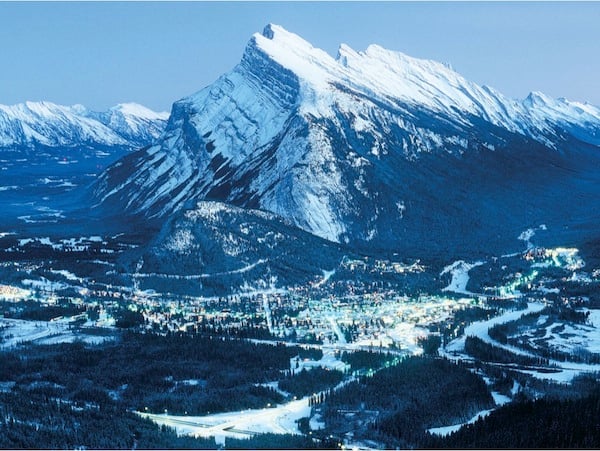
In Banff, Alberta
The meeting is devoted to the dramatic improvements in observing transient phenomena at the atomic scale, brought about by breakthroughs in high peak-brightness electron and X-ray sources opening up new capabilities in time-resolved X-ray and electron diffraction, crystallography, spectroscopy and imaging.
Previous meetings held in 2010, 2012, 2013, and 2015 were extremely exciting and vibrant, with presentations and discussions on spectacular developments that have been opening up new vistas with atomic clarity. The field is continuing with its explosion of ideas and disruptive technologies that greatly benefits from the sharing of information and cross pollination of concepts from a broad range of disciplines and technical approaches. No less is expected in 2017, with new developments in electron sources, and possibly first results from the European XFEL and
the Pohang XFEL appearing at that time. The beautiful setting of Banff brings an intangible quality to the meeting that really enhances these exchanges.
- Latest developments in ultrafast electron and X-ray sources
- Dynamic and diffractive imaging of molecules (diffractive imaging and laser alignment)
- Time-resolved X-ray spectroscopy of complex molecules
- Strongly correlated materials
- Structural dynamics in molecules and biomolecular systems