Topics
Neutron scattering
Australian X-ray Analytical Association (AXAA) 2017 Conference and Exhibition
| - |
In Melbourne, VIC
Key Topics
- Mining, mineral processing and metallurgy
- Geology and geochemistry
- Functional materials incorporating nanoparticles
- Energy
- Environment
- Biomaterials
- Manufacturing
- Thin films
- In addition to AXAA's traditional focus areas of XRF and XRD, analytical methodologies including neutron scattering, micro-XRF/XFM, tomography, total scattering/PDF, SAXS and XAS
HERCULES European School
| - |
In Grenoble
This one month course, coordinated by the Université Grenoble Alpes, is designed to provide training for students, postdoctoral and senior scientists from European and non-European universities and laboratories, in the field of Neutron and Synchrotron Radiation for condensed matter studies (Biology, Chemistry, Physics, Materials Science, Geosciences, Industrial applications). It includes lectures, practicals and tutorials, visits of Large Facilities and a poster session (each participant puts up a poster about her/his thesis or research topic for a day).
- PART I: BASIC METHODS AND INSTRUMENTS :
(This part is common for all the participants - 1.5 weeks) - PART II is divided into two parallel specialized sessions (3.5 weeks) :
- Session A: PHYSICS AND CHEMISTRY OF CONDENSED MATTER
- Session B: BIOMOLECULAR STRUCTURE AND DYNAMICS
The course is held in Grenoble at the Polygone Scientifique Louis Néel. This is close to partner institutions where practicals and tutorials will take place:
- European Molecular Biology Laboratory (EMBL)
- European Synchrotron Radiation Facility (ESRF)
- Institut de Biologie Structurale (IBS)
- Institut Laue-Langevin (ILL)
- Institut Nanosciences & Cryogénie (CEA)
- Institut Néel (CNRS)
A special seven days programme is included , in a partner institution among European Large instruments, either at:
- DESY and European XFEL in Hambourg, Germany
- Elettra and FERMI in Trieste, Italy
- Swiss Light Source / Paul Scherrer Institute in Villigen, Switzerland
- SOLEIL (St Aubin, France) and Laboratoire Léon Brillouin (CEA Saclay, France)
The language of the course is English.

Neutron and Muon School at J-PARC
| - |
In Tokai
The School provides neutron and muon beam research training for newcomers through overall perspective of physics, chemistry, biology, materials science and more. In addition to lectures, the course provides practical sessions of hands-on experiments and data analysis. All neutron and muon techniques are generally covered.
37th Berlin School on Neutron Scattering
| - |
In Berlin
The school program consists of three days of lectures giving a theoretical introduction to the fundamentals of neutron scattering and the principles of various neutron scattering techniques. After the lectures, there will be three and a half days of hands-on experiments on seven different neutron scattering instruments.
Furthermore, there will be a students' poster session which will give the students the opportunity to present their work and discuss with the HZB scientists how neutron scattering could benefit their research.
The school will finish with lectures on how to use neutron scattering as a tool for research in the areas of biology, chemistry, engineering and physics etc. This course is part of the curriculum of the Faculty of Mathematics and Sciences at the Technical University Berlin.

New Trends in Magnetic Structure Determination
| - |
In Grenoble
New Trends in Magnetic Structure DeterminationÂ
Scientific scope:This workshop aims to contribute to the training of scientists in the treatment of neutron diffraction data for magnetic structure determination, putting the stress in the new improved methods and tools made available in the last years. In particular, the methods that make a combined use of magnetic symmetry groups and representational analysis will be shown and practiced (both for commensurate and incommensurate structures). The workshop will be based on selected lectures together with intensive hands-on sessions using the most popular computer programs (Isotropy Software Suite, Bilbao Crystallographic Server, FullProf Suite, Jana2006, etc.).The lectures and tutorials will provide the essential tools necessary to determine complex magnetic structures, and show the most recent capabilities added to traditional software.
Lectures
The Workshop consists of 5 days dedicated to acquire a general overview of the methods of magnetic structure determination and analysis, in the frame of the specific free software presently available. A preliminary program can be consulted in the link below:
(https://indico.ill.fr/indico/event/53/page/3) For the practical sessions, participants should bring their own computers with FullProf Suite and Jana2006 already installed.Lectures and tutorials will be presented by Juan RodrÃguez-Carvajal (Grenoble, France), J. Manuel Pérez-Mato (Bilbao, Spain), Branton J. Campbell (Provo, USA), Laurent Chapon (Grenoble, France), Harold Stokes (Provo, USA), Vaclav Petricek (Prague, Czech Republic) and Luis Elcoro (Bilbao, Spain).
Participants
The school is aimed at PhD students and experienced scientists with a good knowledge of diffraction techniques and crystallography. As usual, among the participants there will be a mix of different levels of experience in using the different crystallographic tools (Isotropy Software Suite, Bilbao Crystallographic Server, FullProf Suite, Jana2006, etc.), therefore during this workshop both theoretical lectures and practical sessions will be combined to ensure an optimal benefit from this workshop.Â
The maximum number of participants is limited, which guarantees the quality of the given training. The selection of candidates is based on the motivation letter and CV (plus a recommendation letter from the thesis supervisor for PhD students). If necessary, a criterion of balance between laboratories and countries will be applied.ÂModern Trends in Neutron Scattering from Magnetic Systems & Single-crystal Diffraction with Polarised Neutrons
| - |
In Tutzing, Munich
An international workshop organized by the Jülich Centre for Neutron Science entitled "Modern Trends in Neutron Scattering from Magnetic Systems & Single-crystal Diffraction with Polarised Neutrons" will be held in 3-7 October 2016 at Tutzing in the southern suburbs of Munich, Germany.
In 2016 the annual JCNS-Workshop series is dedicated to neutron scattering from magnetic systems. The JCNS-Workshop will also host the well-established workshop FLIPPER, Single-crystal Diffraction with Polarized Neutrons, which was organized in 2010 and 2013 by the Institut Laue Langevin in Grenoble.
The following scientific topics will be covered in this joint workshop:
- Unconventional superconductors
- Frustrated spin systems
- Functional materials
- Neutron methods
- Nanomagnetism
- Molecular magnets
- Multiferroics/domains
- Chirality
- Actinides
- 4d/5d transition-metal compounds
- Philipp Gegenwart (Universität Augsburg)
- Tatiana Guidi (ISIS, Didcot)
- Karen Friese (JCNS, Jülich)
- Niels van Dijk (TU-Delft)
- Stéphane Raymond (CEA, Grenoble)
- Lieh-Jeng Chang (National Cheng Kung University, Tainan)
- Arsen Goukassov (CEA, Saclay)
- Peter Böni (TUM, Munich)
- Pascale Deen (ESS, Lund)
- Andrew Boothroyd (University of Oxford)
- Rodrigue Lescouëzec (IPCM, Paris)
- J.A. Rodriguez Velamazan (ICMA at ILL, Grenoble)
- Laurent Chapon (ILL, Grenoble)
- Kristiaan Temst (KU Leuven)
Please kindly refer to the following workshop homepage for more details, http://www.fz-juelich.de/jcns/EN/Leistungen/ConferencesAndWorkshops/JCNSWorkshops/2016Workshop/_node.html
Deadline for submission of abstracts: 1 August, 2016
We look forward to welcoming you in Tutzing.

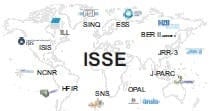
9th International Workshop on Sample Environment at Scattering Facilities
| - |
In Gettysburg
The workshop will cover all relevant sample environment topics to address topical science ranging from soft matter to extreme physical parameters. Both sample environment for neutron and synchrotron experiments are highlighted. An exhibition of specialized capabilities and technological innovation by commercial companies will give the opportunity for industrial contacts.
The 9th International Workshop on Sample Environment will bring together scientists, engineers and technicians, as well as leading suppliers, to exchange experience, form collaborations and discuss new ideas around a world class program of seminars and workshops. We welcome your input and look forward to your visit!  Key dates: Abstract submission closes on August 1, 2016 Early registration closes on August 14, 2016 Registration closes on September 1, 2016
Synchrotron Radiation and Neutrons in Art and Archaeology (SRA Chicago 2016)
| - |
In Chicago, IL
Main Conference Topics
- Conservation and Alteration
- New Methods and Analytical Processes
- Paleontology and paleoenvironment
- Technical Art History and Archaeometry at the nano-, micro-, and macro scale

RACIRI Summer School 2016
| - |
In Repino (near Saint Petersburg)
The novel format of the RACIRI Summer School is driven by scientific frontier themes and challenges in the field of materials sciences with a strong connection to the superb analytical potential at current and future research infrastructures (synchrotron radiation, X-rays and neutrons) in the Baltic region.
The RACIRI Summer School is held every year under a special focus theme. Its venue rotates annually among the three partnering countries.
The first RACIRI Summer School was organized 2013 in Petergof, Russia. Focus theme: "Soft Matter and Nano Composites".
The second RACIRI Summer School was held from 24-31 August 2014 in the Stockholm area, Sweden, under the focus theme "Imaging with X-rays and Neutrons in Life and Materials Sciences".
The third RACIRI Summer School was held during 22-29 August 2015 in Sellin, Island of Rügen, Germany. Its focus theme: "Time-resolved and In-situ Studies of Materials: Basics and Applications".
BornAgain School and User Meeting
| - |
In Garching
BornAgain (http://bornagainproject.org) is a novel software package to simulate and fit small-angle neutron and x-ray scattering at grazing incidence. It provides a generic framework for modeling multilayer samples with smooth or rough interfaces and with various types of embedded nanoparticles.
This School will introduce students, instrument scientists, and both novice and experienced researchers working in the field of GISAS or reflectometry at large to new opportunities for simulating and fitting their data. In compact introductory lectures, we will outline the theory implemented in BornAgain, and explain the design of the software. Extensive hands-on tutorials will highlight practical aspects of GISAS simulation.
Registration is available at https://webapps.frm2.tum.de/indico/event/34/
At the User Meeting, users of BornAgain are kindly invited to share their experiences, to present first results, but also to report on difficulties, to suggest improvements and to request missing features. This feedback offers a unique opportunity to influence the further development of BornAgain.
For convenience of colleagues from overseas, this event is scheduled as a satellite of the GISAXS2016 workshop (https://indico.desy.de/conferenceDisplay.py?confId=14264), which takes place on November 16-18 in Hamburg.

CGE2016 â€" Cinquième école Cristallographie et Grands Equipements
| - |
In Saint Aubin (SOLEIL)
GISAS Summer School: experiments and data analysis
| - |
In Munich
Novel, smart thin film materials are the focus of many research projects ranging from sensing to displays and from wireless communication to energy conversion and energy storage. These are all active research fields where understanding of material properties will lead to innovation. Although the list of resulting applications is very wide, all these novel materials have something important in common: the physical properties, and therefore the industrial usefulness, is closely related to the molecular and nano-morphology of these materials.
Therefore, methods of characterizing such thin film materials are needed. Grazing incidence scattering techniques have proven here to be very successful. With this method the morphology inside thin films can be probed on the nanometer scale â€" not just on small micron spots â€" but on macroscopic areas of the sample, yielding industrially relevant information.
To aid students to carry out successful grazing incidence scattering measurements this summer school will kick-start beginners and introduce new data analysis tools for students with scattering experience.
The school takes place at the TUM Garching Campus and can be easily reached using public transport from Munich.(U6 Garching Forschungszentrum).
http://www.hg.mse.tum.de/en/gisas/Â
Â
Workshop on SoNDe application in neutron detection
| - |
In Freising
SoNDe is a project for the development and construction of a high-flux capable neutron detector funded by the European Union within the Horizon 2020 framework. The development focuses on the following specifications:
- high-flux capability, capable of handling the peak-flux of up-to-date spallation sources (gain factor of 20 over current detectors)
- high-resolution of 3 mm by single-pixel technique, below by interpolation
- high detection efficiency of 80 % or more
- no beam stop necessary, thus enabling investigations with direct beam intensity
- strategic independence of 3He
- time-of-flight (TOF) capability, necessary to exploit maximum flux, with a time resolution in the µs regime
- modularity, improving maintenance characteristics of today's neutron detectors
2016 Croucher Summer Course on Neutron Scattering
| - |
In Hong Kong
Applications are invited from graduate students and early career scientists who wish to learn about the theory and applications of neutron scattering in materials research.
This year's course will empathise on inelastic neutron scattering to study the dynamics, and nanostructure determination by small angle neutron scattering and neutron reflectometry.
Data analysis will be a focus of the summer course, and tutors will be arranged to guide the students in learning, in addition to the lecturers.

V TALLER DE LA AACr "Técnicas de Luz Sincrotrón y de Neutrones para la Caracterización de Materiales"
|
In San Luis
III International Conference on Small Angle Neutron Scattering
| - |
In Dubna
The Third International Conference on Small Angle Neutron Scattering is dedicated to the 80th anniversary of Yu. M. Ostanevich (1936â€"1992), an outstanding neutron physicist and the founder of small-angle neutron scattering (field, group, and instrument).

Advances and Challenges in Multimodal Characterizations of Functional Materials
| - |
In Cancun
Exploring, understanding, and designing structures and functionalities of materials for energy, information and technological applications has been the main goal of materials discovery. This goal has inspired new efforts to develop integrated approaches to probe the dynamical processes of materials synthesis, as well as the evolution of structures, properties and performance of functional materials. Light-source-based X-ray methods, high flux source enabled neutron techniques and advanced (scanning) transmission electron microscopy have been tremendously developed to meet fast-growing research needs in materials science.

7th International Conference Photosynthesis Research for Sustainability
| - |
In Puschino
The 7th International Conference Photosynthesis Research for Sustainability is in Puschino in the Russian Federation. Of particular interest to this list is that we have a session on neutron scattering applied to photosynthesis research.
http://photosynthesis2016.cellreg.org/Home.php
Â
We have some limited support for young scientists.
Please to note that deadline for visa applications is 10th of April.
Â
18th National School on Neutron & X-ray Scattering. NX School
| - |
In Oak Ridge, TN AND Argonne, IL
The school will take place July 30-August 13, 2016. The school will start at Oak Ridge National Laboratory (ORNL), Oak Ridge, TN and will continue at Argonne National Laboratory (ANL), Argonne, IL after roughly one week. Students will be housed and transportation will be provided from lodging to the school. Lodging accommodations will be available starting July 30, 2016. Lectures and hands-on experiments will be held during normal working hours, but some experiments will be conducted during evening sessions. Social events will be arranged for participants.
Â
 Program
The program of the school focuses on the following areas:
- The fundamentals of the interaction of X-rays and neutrons with matter
- X-ray and neutron production and experimental instrumentation
- Theory and practical application of various X-ray and neutron experimental techniques
- Hands on experience gained through experiments at the Advanced Photon Source (APS), Spallation Neutron Source (SNS) and High Flux Isotope Reactor (HFIR).
Lectures are given by prominent scientists drawn from universities, several national laboratories, and industry. Subjects for lectures include:
- Interactions of X-rays and Neutrons with Matter
- Neutron Generation and Detection
- Neutron Instrumentation
- X-ray Generation and Detection
- X-ray Instrumentation
- Single-Crystal and Surface Diffraction
- Powder Diffraction
- Inelastic Scattering
- Reflectivity
- Magnetic Scattering
- EXAFS
- Small Angle Scattering
- Diffuse Scattering
- Nuclear Resonant Inelastic X-ray Scattering
- Coherent X-ray Scattering
- Amorphous Scattering
Experiments are led by the staff of the beamlines at the APS and the staff of SNS and HFIR. Students will be divided into groups and will do six experiments. Experimental areas include:
- Powder Diffraction
- Small Angle Scattering
- Reflectivity
- Inelastic Scattering
- Quasi-elastic neutron scattering
- Liquids and Amorphous Scattering
- Stress/Strain/Texture
- EXAFS
- Single Crystal Diffraction
- Magnetic Dichroism
- Coherent X-ray Scattering
- X-ray Microprobe
Neutrons in Chemistry. Bunsen Discussion Meeting
| - |
In Bielefeld
- Julian Oberdisse
Universite Montpellier 2, Montpellier, France
Lecture title: (not yet published)Â - Tobias Unruh
Friedrich-Alexander-Universität Erlangen-Nürnberg, Erlangen, Germany
Lecture title: Structure of the solid liquid interface of funtionalized nanoparticles as seen by SAXS/SANS studies - Â
- Melissa Sharp
European Spallation Source ERIC, Lund, Sweden
Lecture title: Probing the structure and dynamics of proteins using neutron scattering - Â
- Ilja Voets
Department of Chemical Engineering and Chemistry, Eindhoven University of Technology, Netherlands
Lecture title: A new angle to single chain polymeric nanoparticles - Â
- Francisco Monroy
Dpt. Physical Chemistry, University Complutense, Madrid, Spain
Lecture title: (not yet published)