Topics
Powder diffraction
Session II - Advanced Methods in X-ray Powder Diffraction. ICDD X-ray Diffraction Clinic
| - |
In Newtown Square, PA
Session II - Advanced Methods in X-ray Powder Diffraction
- Brief review of fundamentals
- Factors affecting accuracy of measured 2theta values: intensity aberrations, specimen displacement, specimen transparency, diffractometer alignment, and the use of external and internal standards
- Factors affecting intensities of diffraction peaks: structure-sensitive properties, specimen-sensitive effects, and measurement-sensitive effects
- Use of computer methods for data reduction and qualitative phase identification: peak-hunting methods, alpha2 stripping, search/match techniques and the Powder Diffraction File™, use of elemental data, error windows and probability searching, and scoring algorithms
- Advanced data mining with the PDF
- Exploration of powder pattern indexing methods
- Quantitative analysis: specimen preparation considerations, Reference Intensity Ratios, absorption correction methods, matrix-flushing methods, and whole-pattern analysis using the Rietveld method
- Structure solution and refinement using the Rietveld method
Session I - Fundamentals of X-ray Powder Diffraction. ICDD X-ray Diffraction Clinic
| - |
In Newtown Square, PA
Session I - Fundamentals of X-ray Powder Diffraction
- Production and properties of X-rays: continuous and characteristic radiation, absorption, scatter and diffraction
- Production of monochromatic X-radiation: choice of source conditions, use of beta-filters, proportional detectors and pulse height selection, monochromators, use of the Si(Li) and Ge(Li) detectors
- Components of the diffraction pattern: expected reflections, Miller indices, unexpected reflections, effect of scatter and fluorescence, factors affecting peak positions and intensities
- The powder diffractometer: optical arrangement, factors affecting instrumental profile widths; choice and function of divergence slits, calibration and alignment, detectors, X-ray optics
- Acquisition of good diffraction data: specimen requirements, preparation techniques, use of standards, and proper operation of powder diffractometers
- Qualitative phase identification: the Powder Diffraction File™, quality of reference patterns, the Alphabetical, Hanawalt, and Fink Indexes, automated methods, and specialized subfiles
- Industrial applications of X-ray powder diffraction
- Hands-on use of computers for demonstration of the latest software
- Data mining with the PDF
Advanced Methods in Rietveld Refinement
| - |
In Nabeul

4th School on Crystal Structure Determination from Diffraction Data; Application on Powder Samples
| - |
In Hammamet
Denver X-ray Conference (DXC)
| - |
In Big Sky, MT
Zeit-, temperatur- und ortsaufgelöste Röntgen-Pulver-Diffraktometrie (XII) [Time, temperature and space-resolved X-ray powder diffractometry (XII)]
| - |
In Pfinztal
Themen
- Apparative Entwicklungen und Komponenten zum Beispiel:
- Messsysteme und Konzepte
- Röntgenquellen
- Hoch- und Tieftemperaturkammern
- Druck-, Feuchte- und Reaktionskammern
- Röntgenoptiken
- Detektoren
- Analysemethoden zum Beispiel:
- Rietveld-Anwendungen
- Defektanalyse, Size-Strain
- Phasenanalyse und -übergänge
- Kristallinitätsgrad
- Nano- & amorphe Strukturen (PDF)
- Spannungs- und Gefügeanalyse
- Kinetische und thermodynamische Auswertung - Industrielle Anwendungen und aktuelle Forschungsthemen zum Beispiel:
- Katalysatoren
- Werkstofftechnik
- Pharmazie und Life Science
- Minerale und Keramik
- Halbleitertechnik

Basics and applications of the Rietveld method
| - |
In Stuttgart
DMG / DGK Doctoral Course
Basics and Application of Rietveld
Organised by R.E. Dinnebier in cooperation with the Universities of Tübingen and Stuttgart and the Powder Diffraction Working Group of the DGK.Course Description
The aim of the intensive course is to teach the basics of the Rietveld method in theory and practice. Specifically, the following topics: • Fundamentals of Powder Diffraction • Whole Powder Pattern Fitting (WPPF) Fundamental parameters, complex reflection profiles • Creation of instrument profiles for powder diffractometer • Correction factors: LP-factor, absorption, microabsorption, extinction, preferred orientation • Methods for the development of a starting model for the crystal structure • Application of Penalty Functions, Constraints, Restraints, etc. • Preparation of Rigid Bodies (flexible polyhedron molecules, such matrices) • Structure strategies, global optimization methods in direct space, charge flipping • Use of the difference Fourier method in combination with Rietveld refinements • Refinement of microstructural parameters using the Rietveld refinement • Quantitative phase analysis using the Rietveld method • Comparison of different methods for determining the amorphous portion • Alternative structural descriptions by symmetry and rotational modes • parameterization of Rietveld refinements (macro programming) • Global Optimization stack disordered crystal structures • Global and local optimization of the pair distribution function • Creation of Rietveld plots for publicationsCourse fee: 60 euros for students / PhD students / post-docs (including dinner). Student DMG members get a subsidy of 50 euros from DMG. (Course fees for industry participants 400 Euro, if seats are free).
Language: Lectures in English. Exercises in English and German
Exercises: For the exercises a laptop (Windows 64-bit) with administrator privileges. TOPAS 5/6 will need to be installed prior to school.
Further information and the registration form available soon at: http://www.fkf.mpg.de/xray
ECTS For the successful completion of the course can 2 ECTS (European Credit Transfer System) points will be awarded (subject to the existence of a written test).
Attendance: Approximately 40
Please register via WWW, E-mail or fax to the following address: Prof. Dr. Robert E. Dinnebier Max Planck Institute for Solid State Research Heisenbergstrasse 1 D-70569 Stuttgart Germany Tel: (49) (0) 711 689 1503 Fax: (49) (0) 711 689 1502 E-mail: [email protected] WWW: http://www.fkf.mpg.de/xray
A Century of Powder Diffraction Mini-symposium
|
In Argonne National Laboratory
Powder diffraction was developed independently in 1916 by Peter Debye and Paul Scherrer in Germany and Albert Hull in the U.S. To commemorate this 100th anniversary, a half-day symposium on historical developments in powder diffraction as well as contemporary APS work was held on November 11, 2016.
Where the speakers have agreed, recordings of the talks and slides have been placed in youtube.
David Cox, Brookhaven National Laboratory (Retired)“Some Recollections from the Early Days of Neutron and Synchrotron X-ray Powder Diffractionâ€
Tim Fawcett, International Centre for Diffraction Data“100 Years of Powder Diffractionâ€
Pete Chupas, Advanced Photon Source“80+ Years of Pair Distribution Function Measurementsâ€
Andrey Yakovenko, Advanced Photon Source"New In-Situ Capabilities at 17-BM Rapid Acquisition Powder Diffraction Line"
Saul Lapidus, Advanced Photon Source“Improving On Great: The High-Resolution Powder Diffractometer, 11-BMâ€
Olaf J. Borkiewicz, Advanced Photon Source“What’s New in High Energy Powder Diffraction at 11-IDâ€
Robert B. Von Dreele, Advanced Photon Source
Workshop on high-pressure multigrain crystallography
| - |
In Argonne, IL
With the developments in micro-beam technology many traditional high-pressure powder samples may contain only tens or hundreds of multiple grains, displaying “spotty†poor powder patterns in diffraction images. As a result, polycrystalline structural refinement for ultrahigh-pressure samples becomes increasingly difficult and the results could be uncertain. On the other hand, successful examples of growth and preservation of micron-sized single crystal samples above 100 GPa are challenging and extremely rare. The recently developed “multigrain crystallography†treats multiple grains as a collection of single crystallites, obtaining diffraction data from a few to hundreds of single crystallites simultaneously. The multigrain approach provides great promise for structure refinement of miniature samples at ultrahigh pressures. This workshop will bring scientists from multiple disciplinary fields to (1) discuss the current status of multigrain crystallography, (2) review the currently used algorithms and various experimental procedures at synchrotron facilities, and (3) identify the challenges and opportunities of multigrain crystallography in high pressure research. Both the diffraction techniques using monochromatic and polychromatic beams will be discussed in this two-day forum.
The workshop contents:
- Â Plenary sessions with invited speakers, first day
- Â Discussions, second day
- Â Promises and limitations
- Â Indexation
- Â Integration filtering and scaling
- Â 2D/3D information
- Â Challenges and opportunities for high-pressure research
A registration fee of $150 will be assessed to all attendees except invited speakers. Â This fee includes the cost of meals, coffee breaks, and an abstract volume. Registration fee paid via PayPal (Visa and Mastercard accepted).
Organizing Committee
- Dmitry Popov (HPCAT), [email protected]
- Guoyin Shen (HPCAT), [email protected]
- Stas Sinogeikin (HPCAT), [email protected]
- Przemek Dera (University of Hawaii at Manoa), [email protected]
Local Administrator
Freda Humble, (630) 252-0479, [email protected] Â Workshop contact: [email protected]Â
DISCUS Workshop
| - |
In Erlangen
Within this workshop you will get an opportunity to learn all about structure simulation using DISCUS (https://github.com/tproffen/DiffuseCode ), a program complementary to the Rietveld approach. DISCUS can simulate powder pattern for disordered materials, crystalline and nanocrystalline.
In this workshop you will learn to interpret diffuse scattering and to simulate disordered crystal structures.Â
Defects are quite common in crystals and are responsible for a number of properties like ionic conductivity, electronic properties of indirect semiconductors etc.Â
In diffraction, defects manifest themselves by the presence of diffuse scattering. While its peak intensity usually is weak, the total scattering intensity will be an appreciable fraction of the Bragg intensities.Â
Thus, the description of these structures is largely incomplete without proper interpretation of the diffuse scattering.
The workshop covers the techniques to simulate and to refine disordered structures for a wide range of defects, and the corresponding calculation of the diffraction pattern for single crystals and powder, as well as the calculation of the pair distribution function PDF.
For more info please visit:
http://www.lks.physik.uni-erlangen.de/DISCUS/index.html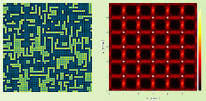
Modern Methods in Rietveld Refinement for Structural Analysis
| - |
In Stony Brook University, New York

PPXRD-14. Pharmaceutical Powder X-ray Diffraction Symposium
| - |
In Fort Myers, FL
18th National School on Neutron & X-ray Scattering. NX School
| - |
In Oak Ridge, TN AND Argonne, IL
The school will take place July 30-August 13, 2016. The school will start at Oak Ridge National Laboratory (ORNL), Oak Ridge, TN and will continue at Argonne National Laboratory (ANL), Argonne, IL after roughly one week. Students will be housed and transportation will be provided from lodging to the school. Lodging accommodations will be available starting July 30, 2016. Lectures and hands-on experiments will be held during normal working hours, but some experiments will be conducted during evening sessions. Social events will be arranged for participants.
Â
 Program
The program of the school focuses on the following areas:
- The fundamentals of the interaction of X-rays and neutrons with matter
- X-ray and neutron production and experimental instrumentation
- Theory and practical application of various X-ray and neutron experimental techniques
- Hands on experience gained through experiments at the Advanced Photon Source (APS), Spallation Neutron Source (SNS) and High Flux Isotope Reactor (HFIR).
Lectures are given by prominent scientists drawn from universities, several national laboratories, and industry. Subjects for lectures include:
- Interactions of X-rays and Neutrons with Matter
- Neutron Generation and Detection
- Neutron Instrumentation
- X-ray Generation and Detection
- X-ray Instrumentation
- Single-Crystal and Surface Diffraction
- Powder Diffraction
- Inelastic Scattering
- Reflectivity
- Magnetic Scattering
- EXAFS
- Small Angle Scattering
- Diffuse Scattering
- Nuclear Resonant Inelastic X-ray Scattering
- Coherent X-ray Scattering
- Amorphous Scattering
Experiments are led by the staff of the beamlines at the APS and the staff of SNS and HFIR. Students will be divided into groups and will do six experiments. Experimental areas include:
- Powder Diffraction
- Small Angle Scattering
- Reflectivity
- Inelastic Scattering
- Quasi-elastic neutron scattering
- Liquids and Amorphous Scattering
- Stress/Strain/Texture
- EXAFS
- Single Crystal Diffraction
- Magnetic Dichroism
- Coherent X-ray Scattering
- X-ray Microprobe
Debye & Rietveld: A 100 & 50 year celebration
|
In Amsterdam, the Netherlands
Diffraction of radiation is used to determine the atomic structure of materials. The technique developed more than 100 years ago, using single crystals, which are hard to get or to make.
Exactly 100 years ago, Peter Debye alleviated this limitation with the invention of powder diffraction, making sample preparation a piece of cake.
Then 50 years later, Hugo Rietveld introduced a data analysis method that enabled accurate determination of the 3D crystal structure from the obtained powder data.
These two major steps forward make powder diffraction a standard tool in academia and industry today.
We want to celebrate the centennial + golden jubilee with you on 22 September 2016.
Day Programme
09:00 Registration and coffee 09:30 WelcomeHuub Kooijman (Shell) 09:40 The Rietveld Method
t.b.a. 10:00 Debye-Scherrer: An Accidental InventionÂ
Jurrie Reiding (Maastricht University) 10:30 Coffee 10:45 Powder diffraction in direct space: How the Pair Distribution Function can complement powder diffraction
Reinhard Neder (Univ. Erlangen) 11:25 Powder diffraction: providing one of the best views of the material world
Bill David (Univ. Oxford) 12:05 lunch, posters, exhibition 13:30 How much information can be deduced from a powder pattern: A tribute to Peter Debye and Hugo Rietveld
Robert Dinnebier (MPI Stuttgart) 14:10 Debye and Rietveld in industrial applications
Jaap Louwen (Albemarle) 14:40 Debye equation: How did it evolve?
Paolo Scardi (Univ. Trento) 15:20 Tea and posters 15:50 Neutrons And X-rays for battery materials
Marnix Wagemaker (TU Delft) 16:20 Macromolecular Powder Diffraction: Past, Present, Future
Irene Margiolakis (Univ. of Patras)
Evening Programme
17:00 Boat cruise leaving from STCA through Amsterdam canals 19:00 Dinner at restaurant along the IJ river.Â

9th ILL Annual School on Neutron Diffraction Data Treatment using the FullProf Suite (FPSchool2016)
| - |
In Grenoble
FPSchool aims to contribute to the training of scientists in treatment of X-ray and neutron diffraction data.
The school is based on intensive hands-on sessions using the computer programs of the FullProf Suite.
VI-th National Crystallographic Symposium (NCS2016)
| - |
In Sofia
We are happy to announce VI-th National Crystallographic Symposium (NCS2016) that will be held on October 05-07, 2016, Sofia, Bulgaria.
As you may have already recognized this is will be the sixth "NCS" of the series started in 2009.
We have already started the preparation of the next issue of the conference (submitted manuscripts will be published in the journal “Bulgarian Chemical Communicationsâ€, a special issues due April 2017).NCS16 papers will also be online available in full text via the present platform.  You are warmly invited to come and join us!
NCS2016 is held under the auspices of BCS and is the major event on Crystallography, crystal growth, structure analyses and related techniques in Bulgaria. The Symposium aims at the applications of different crystallographic techniques in combination with other methods in the fields of materials sciences, mineralogy, biology, environmental engineering, computational methods etc. Bringing together researchers from different areas NCS16 will provide them with a high-qualified platform for them to share their latest studies and to assist further findings and collaboration.
With passionate participants from the world, NCS2016 Â would be perfect for you to present your research and find collaboration for your future work.

23rd Conference of the Serbian Crystallographic Society
| - |
In Andrevlje (Novi Sad)
Conference venue
The 23rd Conference of the Serbian Crystallographic Society, which will be held on June 9â€"11th 2016, in Andrevlje (FruÅ¡ka Gora), near Novi Sad, Serbia, hotel “CePTOR†(http://www.ceptor-andrevlje.com).Topics
All fields of crystallography.
Presentations:
- Plenary lectures (45 + 15 min)
- Oral presentations (12 + 3 min)
- Posters
Invited plenary lecturers
Aleksandar Višnjevac
RuÄ'er BoÅ¡ković Institute
Physical Chemistry Division
Zagreb, Croatia
Bernhard Spingler
University of Zurich,
Department of Chemistry
Zurich, Switzerland
Edward Tiekink
The University of Malaya,
Kuala Lumpur, Malaysia
Horst Borrmann
Max-Planck-Institut für Chemische Physik fester Stoffe
Dresden, Germany
Miha PavÅ¡iÄ
University of Ljubljana
Faculty of Chemistry and Chemical Technology
Ljubljana, Slovenia
Pascal Roussel
Université de Lille
Ecole Nationale Supérieure de Chimie de Lille
Lille, France
Conference Materials
At the beginning of the Conference every participant will receive the Book of abstracts in Serbian and English.
Language
The official language of the Conference is English.
Â

Crystallographic Computing School
| - |
In Bangalore
The School is intended for senior postgraduates and postdocs in all areas of crystallography (including macro- and small-molecule crystallography, powder diffraction, and small-angle scattering) who may want to become involved in software development, but lack experience in this.
The 2017 IUCr Crystallographic Computing School will take place at the Molecular Biophysics Unit at the Indian Institute of Science in Bangalore, India. It will introduce modern methods of programming crystallographic calculations in a series of lectures and in-depth tutorials by leading crystallographic software developers. Our teachers are drawn from across the crystallographic world and include experts in protein, small-molecule and powder crystallography. By working together, we aim to share what we know with the next generation of crystallographic developers.
Combined Analysis Using X-ray and Neutron Scattering by using MAUD software
| - |
In Caen

Introduction to ISIS and Diamond facilities for CDT students 2016
| - |
In Rutherford Appleton Laboratory
Diamond Light Source and the ISIS neutron and muon facility will host a four-day general introduction to these facilities, aimed at first-year PhD students within UK research-council funded Centres of Doctoral Training.
The course will provide an introduction to facilities and techniques, based on the following techniques: Imaging & Tomography; Small Angle Scattering & Disordered Systems; Surfaces, Films & Multilayers; Powder & Single Crystal Diffraction; Electronic & Molecular Spectroscopy; Muon Studies. Â The School will be comprised of numerous short introductory talks and selected tutorial/practical sessions, plus evening research seminars given by experienced facility users. It will be suitable for first-year PhD students who have a broad interest in science, and will require no prior experience of the techniques. (Note that ISIS and Diamond provide specialist training in specific techniques, with information available via facility web pages).