Topics
Powder diffraction
ICDD XRD Session I - Fundamentals of X-ray Powder Diffraction
| - |
In Newtown Square, PA
First Masuku Remote Crystallography Openlab
| - |
In Franceville
Teaching crystallography and diffraction method for the crystal structure determination
Topics
- Crystal lattices and symmetry
- Crystallographic calculation
- International Tables for Crystallography
- X-ray scattering and diffraction
- Resolution of crystal structures on single crystals
- Powder diffraction and practical work on the diffractometer
- Crystal engineering
- Electron density modelling

Southern Africa Powder Diffraction Conference 2023
| - |
In Midgard Country Estate
The Southern African Powder Diffraction Conference will be directed at solid state scientists from chemistry, biology, physics, materials science and related fields such as crystallography, spectroscopy, nano-technology and catalysis. The scientific sessions will include invited presentations and contributed oral presentations as well as a poster session.
On 16 and 17 April a Topas workshop will be presented, followed by the conference from 17 to 21 April 2023.
7ème École Marocaine de Cristallographie
| - |
In ENSA-Khouribga
Diffraction des rayons X et des électrons sur poudre, monocristal et couches minces
British Crystallographic Association Chemical Crystallography Group Autumn meeting 2022
|
In Online
BCA CCG Autumn meeting 2022
Going beyond the data for chemical crystallographers
Registration for the Chemical Crystallography Group Autumn meeting is now live! The meeting will be held online on Wednesday 16th November 2022. For details and registration, visit: https://www.eventbrite.co.uk/e/chemical-crystallography-group-autumn-meeting-2022-tickets-425715124397
European Conference on Neutron Scattering (ECNS 2023)
| - |
In Garching near Munich
The MLZ is delighted to host the Eighth European Conference on Neutron Scattering after successful events atÂ
- Interlaken 1996
- Budapest 1999
- Montpellier 2003
- Lund 2007
- Prag 2011Â
- Zaragoza 2015
- St. Petersburg 2019
The conference is organized on behalf of the European Neutron Scattering Association (ENSA) and is one of the most important scientific events in the field of neutron research.Â
The conference will take place at the TUM Department of Mechanical Engineering and the new Science Congress Center Munich - both located in the immediate vicinity of the MLZ at Garching.Â
After a warm Welcome on March 19th, we are looking forward to four days of thrilling talks, pleasant posters, and decent discussions of the European neutron scattering community between March 20th and 23rd!Â
Â
8th European Crystallography School
| - |
In Berlin
ECS8, the 2023 European Crystallographic School, is planned as an in-person event.
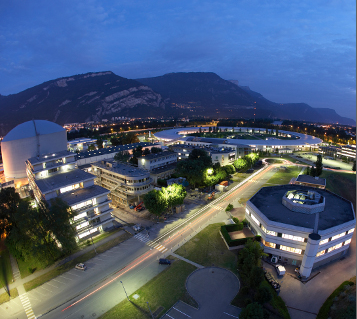
The school will be held in Berlin, at the site of the BESSY II electron storage ring operated by the Helmholtz-Zentrum Berlin.
Up to 100 young international students and scientists will have the chance to meet with renowned lecturers and tutors and become acquainted with the most up-to-date principles and applications of X-ray crystallography.
Topics
- Fundamentals of Crystallography
- Single Crystal Diffraction
- Powder Diffraction
- Synchrotron Radiation in Crystallography
- Macromolecular Crystallography
- Applications of CrystallographyÂ
Fundamental lectures will be taught during the mornings. Afternoons will be dedicated to lectures on applications and hands-on tutorials.
Application for ECS8 is open until 28 February 2023.

28th Croatian-Slovenian Crystallographic Meeting
| - |
In PoreÄ, Croatia
IEEE Around-the-Clock Around-the-Globe (AtC-AtG) Magnetics Conference 2022
|
In Worlwide
Dear Colleagues,
It is our great pleasure to announce the 'IEEE Around-the-Clock Around-the-Globe (AtC-AtG) Magnetics Conference 2022', a virtual event hosted by the IEEE Magnetics Society covering the vast field of magnetism. Following the great success of the previous editions, this unique 24-hour non-stop virtual conference will take place on August 31st, 2022, with contributions from speakers spanning six continents.
The AtC-AtG Magnetics Conference offers a diverse and inclusive virtual environment that foments collaboration between junior and senior researchers across the many subfields of magnetism. The invited speaker lineup includes both junior and senior scientists with outstanding research contributions. More information can be found on the dedicated conference website.
Join us by registering through our website before 24th August!Â
Highlights:
 - Invited talks from leading experts in magnetism
 - Covers all continents and time zones
 - Interactive online broadcasting with questions and discussions
 - Student presentation and poster awards
 - NO REGISTRATION FEE
Call for Abstracts:
Abstract submission for the contributed talks at AtC-AtG Conference is now open! Young researchers are encouraged to submit abstracts (oral and poster) and join us on this fantastic platform to meet researchers worldwide!
The abstract template and submission form are available on our website. Submissions close on June 12th!
Looking forward to seeing you all connected!
Best Regards,
On behalf of the AtC-AtG Organization Committee (2022)
Combined Analysis using X-ray Scattering
| - |
In Caen
People working on real materials (time-consuming or hard to elaborate, rare, subjected to change under grinding or impossible to grind, films or multilayers, ...), are a priori interested by this workshop. Personal examples can be brought to Caen, might be measured before or during the workshop.
Gordon Research Conference - Crystal Engineering
|
In Sunday River, Maine (USA)
The 2022 Gordon Research Conference on Crystal Engineering (GRC-CE) is a biannual meeting. The 2022 GRC-CE will bring together organic, inorganic, physical, computational chemists, as well as pharmaceutical scientists, materials scientists, data scientists, and others in a uniquely and highly interactive environment to discuss latest results at the cutting edge of the field. The program for the 2022 GRC-CE GRC includes sessions on Order, Disorder and Defects, Crystal Assembly, Polymorphs and Mixtures, Crystals Under Pressure, Crystal Reactivity, Pharmaceuticals and Cocrystals, Big Data and Informatics, Porosity and Open Framework Materials, and Engineering Across Different Length Scales.Â
An associated Graduate Research Seminar (GRS) prior to the GRC-CE conference ensures that young scientist are well represented as attendees at the GRC-CE. The highly interactive format of both the GRC and GRS ensures it will be a valuable experience for the next generation of researchers in the field. Â
International School of Crystallography. 46th Course, Crystallography under extreme conditions: the future is bright and very compressed
| - |
In Erice
Subjecting matter to extreme conditions reveals a multitude of fascinating phenomena, and is applicable to a wide range of disciplines. From the extremophiles that exist in the deepest depths of our oceans to the exotic new materials that are made when atoms are pushed ever closer together, understanding the structure of materials at extreme conditions affects Biology, Chemistry, Physics, Geoscience and Material Science. In order to achieve its goals, high pressure research has been always at the vanguard of technical progress. It is a discipline in which equipment plays a particularly important role. State-of-the-art diamond anvil cells can now achieve megabar ranges of pressure, millions of times atmospheric pressure, with this beaten by an order of magnitude in dynamic compression experiments. In this manner, scientists are able to mimic the conditions in the interiors of giant planets. Nature is even more ambitious, as in the stars petapascal pressures (the order of tens to hundreds billion atmospheres) are reached. In the laboratory, we can even create conditions of pressure, temperature and magnetic fields that are not found naturally, allowing us to complement nature to explore more exotic phases of matter.
Therefore, the course will cover broad ground in the application of extreme conditions crystallography. The topics will span from fundamentals of high-pressure single crystal and powder diffraction, to presenting the many flavors of static and dynamic compression, to reviews of sources for extreme conditions work (synchrotrons, neutrons and free electron lasers). Complementary experimental (Mössbauer spectroscopy, X-ray magnetic circular dichroism, X-ray absorption spectroscopy, inelastic scattering) and computational methods will also be discussed. Diffraction analysis on the structure of liquids, glasses and nanocrystalline materials as well as multigrain crystallography will also be introduced. The lectures will be harmonized with the related sessions of interactive tutorials, providing hands-on experience to the attendees. These workshops will be focused on basic laboratory skills and the elements of data processing software related to the high pressure.
1st on-line edition of the International School on Synchrotron Radiation, Fundamentals, Methods and Applications
| - |
In Online (from Muggia, Trieste)
Topics
The main topics will be:
- Production and properties of Synchrotron Radiation;
- Basics of the interaction between matter and radiation;
- X-ray Absorption Spectroscopy (EXAFS and XANES);
- X-ray Diffraction (single crystal and powder diffraction, anomalous scattering);
- Small angle X-ray scattering;
- Photoemission (from valence and from core levels; angular, time and spin resolved);
- IR spectroscopy and microscopy;
- Imaging;
- Data analysis on X-ray Absorption, Powder Diffraction and Core Level Photoemission Spectroscopy experiments
- Applications in many fields (materials, nanoscience, catalysis, earth science, environmental science, cultural heritage, biology and medicine).

78th Pittsburgh Diffraction Conference
| - |
In Online
The 78th Annual Pittsburgh Diffraction Conference, a free virtual event hosted by SLAC National Accelerator Laboratory from September 19th to September 21st, 2021, and concurrent with the 2021 SSRL/LCLS Users' Meeting and Workshops.
Â
The conference will feature a welcome reception on September 19th (via Kumospace) followed by two full days of lectures, poster presentations and virtual tours to the SLAC National Accelerator Laboratory facilities.

Session topics include metals in biology, computational methods in structural science, cryoEM of biomolecules and cells, scientific opportunities for remote access to user facilities, neutron diffraction, and powder diffraction in materials science research.

The best graduate student poster presentations at the conference will be awarded with the Chung Soo Yoo Award, established by the Pittsburgh Diffraction Society to honor Dr. Yoo’s memory, and a $400 cash prize. One award will be given to a poster related to biological research and one to a poster related to materials science or chemistry. All graduate students are welcome to submit a poster and be considered for the awards.

ICDD Rietveld Refinement & Indexing Clinic
| - |
In ICDD Headquarters, Newtown Square PA
This clinic introduces the theory and formalisms of various indexing methods and structural refinement techniques. One unique aspect of this clinic is the extensive use of computer laboratory problem solving and exercises that teach method development in a hands-on environment. We will use EXPGUI and GSAS for the Rietveld laboratory work; Crysfire (especially Dicvol, Ito and Treor) will be used for indexing exercises.
ICDD Clinic on Advanced Methods in X-ray Powder Diffraction
| - |
In Virtual Meeting
Advanced Methods in X-ray Powder Diffraction, is designed for the experienced user and focuses on computer-based methods of qualitative and quantitative phase analysis, as well as crystal structure analysis and refinement. For maximum benefit from the Advanced Methods in X-ray Powder Diffraction, the ICDD Clinic faculty strongly recommends that students have previously attended Session I. The format of the clinic is a combination of morning lectures and afternoon recitations and workshops.
ICDD Clinic on Fundamentals of X-ray Powder Diffraction
| - |
In Virtual Meeting
Fundamentals of X-ray Powder Diffraction is directed to both relative newcomers in the field and to more experienced users wishing to broaden their understanding of fundamental concepts and established procedures. The major emphases of Fundamentals of X-ray Powder Diffraction are the acquisition of reliable experimental data and qualitative phase identification using both manual and automated search techniques.
HERCULES 2021
| - |
In Grenoble
This one month course, coordinated by the Université Grenoble Alpes, is designed to provide training for students, postdoctoral and senior scientists from European and non-European universities and laboratories, in the field of Neutron and Synchrotron Radiation for condensed matter studies (Biology, Chemistry, Physics, Materials Science, Geosciences, Industrial applications). It includes lectures, practicals and tutorials, visits of Large Facilities and a poster session (each participant puts up a poster about her/his thesis or research topic for a day).
- PART I:Â BASIC METHODS AND INSTRUMENTSÂ :
(This part is common for all the participants - 1.5 weeks) - PART II is divided into two parallel specialized sessions (3.5 weeks) :
- Session A:Â PHYSICS AND CHEMISTRY OF CONDENSED MATTER
- Session B:Â BIOMOLECULAR STRUCTURE AND DYNAMICS
A special seven days programme is included , in a partner institution among European Large instruments. In 2021, one week (out of the five of the school) will be spent in one different partner institutions among 4:
- ALBA synchrotron in Barcelona, Spain
- KIT Light Source in Karlsruhe, Germany
- Elettra and FERMI in Trieste, Italy
- Swiss Light Source / Paul Scherrer Institute in Villigen, Switzerland
The language of the course is English.
MA-XRPD: a novel method for the non-invasive analysis of cultural heritage artifacts
|
In Webinar
2 pm CEST
To avoid invasive analytical procedures on artworks, the use of non-invasive macroscopic imaging techniques is becoming more prevalent in the field of cultural heritage. For this purpose, a macroscopic X-ray powder diffraction (MA-XRPD) scanner, capable of visualizing crystalline compounds in a highly specific manner, was recently developed at the University of Antwerp. In this webinar, Steven De Meyer, a PhD student at the University of Antwerp, will highlight the possibilities and limitations of this method, along with several case studies that have contributed towards a better understanding of the original pigments used by the Old Masters and the manner in which those pigments have deteriorated over time.