Topics
Synchrotron radiation
GeCatS Infoday "Synchrotron Radiation and Neutrons for Catalysis, Materials Research and Development"
|
In DECHEMA-Haus, Frankfurt am Main
VIII AUSE Congress and III ALBA User's Meeting
| - |
In Madrid

MECA SENS 2017: 9th International Conference on Mechanical Stress Evaluation by Neutron and Synchrotron Radiation
| - |
In Skukuza
Both engineering and scientific aspects of residual stress are considered, including topics such as:
- Stress evaluation using neutrons, synchrotron radiation and X-rays
- Development of measurement methods and instrumentation
- Material processing with relation to residual stresses
- The influence of residual stresses on physical and mechanical properties of materials and components
- Measurement and assessment of residual microstresses and intergranular stresses
- Residual strains and stresses in complex materials, e.g. multiphase materials and biomaterials
- Residual stresses in thin films and microcomponents
- Industrial applications of residual stress analyses using neutrons, synchrotron radiation and X-rays
- Complementary techniques for residual stress measurements, e.g. mechanical methods versus diffraction.
- Others
Microsymposia during MECA SENS 8 covered the topics:
- Techniques & Instruments
- Surface Modification and Coating
- Microstructure characterisation
- Deformation & Modelling
- Fatigue/Creep Plasticity
- Processing & Welding
- 3D/4D characterisation
- Others

XIV School on Synchrotron Radiation: Fundamentals, Methods and Applications
| - |
In Muggia
The main topics will be:
- Production and properties of synchrotron radiation;
- Free electron lasers;
- Basics of the interaction between matter and radiation;
- X-ray absorption spectroscopy (EXAFS and XANES);
- X-ray diffraction (single crystal and powder diffraction, anomalous scattering);
- Small angle X-ray scattering;
- X-ray microscopy;
- Photoemission (from valence and from core levels; angular, time and spin resolved);
- IR spectroscopy and microscopy;
- Imaging;
- Resonant spectroscopy and diffraction;
- Inelastic X-ray scattering.
- Applications in the fields of materials, nanoscience, magnetism, catalysis, earth science, environmental science, cultural heritage, biology and medicine will be presented.
COLA 2017. International Conference on Laser Ablation
| - |
In Marseille
Conference topics:
- Fundamentals of Laser-Material Interactions
- Ultrafast Phenomena
- Pulsed Laser Ablation and Deposition
- Laser interaction in bulk materials
- Laser interaction in liquid
- Micro/nano structuring
- Laser direct write
- New trends in laser process development
- Smart beam shaping and manipulation
- Laser for biology and life sciences
- Emerging photon sources and applications
- Laser-based analytical methods
- Lasers in Nanosciences

X-Ray Science (GRC)
| - |
In Easton, MA
Frontier Science with Forefront Synchrotrons and XFEL Sources
X-Ray Science (GRS)
| - |
In Easton, MA
Frontier Science with Forefront Synchrotrons and XFEL Sources
MX BAG Training. Training sessions for user of the Macromolecular Crystallography (MX) beamlines
| - |
In Didcot, UK
The aim is to provide MX users with sufficient training to be able to operate any of the Diamond MX beamlines efficiently and to get the most benefit from their beam-time. The training will involve hands-on sessions on the suite of five operational MX beamlines (http://www.diamond.ac.uk/mx-home/) as well as offline software sessions.
Â
Sessions include:
5th July afternoon session hands-on software:
Two tutorial sessions:
- CCP4
- DIALS
6th July, MX beamlines and data room sessions:
- MX software: automation in data analysis
- Multi axis goniometry / SAD Anomalous data collection
- Introduction to VMX-i
- I24 new end station/ In situ diffraction
- Fragment screening â€" I04-1/Lab36
- Experiment database: new ISPyB
Â
Â
Registration is free-of-charge with lunch provided on the 5th and 6th July, and accommodation and dinner for the night of July 5th. Travelling expenses within the UK will also be provided. The training is targeted at all users, and is not limited to students and post docs. It is essential that each BAG sends at least one representative per calendar year.
Â
Places are limited to twenty five participants. The registration deadline is on the June 25th 2017 at 11:59. Registration is now open.
The 1st Asia Oceania Forum (AOF) Synchrotron Radiation School
| - |
In Clayton, VIC
The AOF Synchrotron Radiation School will present a range of lectures and practical sessions relating to the theory and applications of synchrotron radiation to a wide range of science and technology research. The school is aimed at science and engineering graduate students, postdoctoral fellows and early career researchers from across the Asia-Oceania region who are interested in pursuing a career in synchrotron radiation-related fields.
School curriculum
5th EIROforum (ESI 2017). School of Instrumentation
| - |
In Schenefeld

Modern Methods in Rietveld Refinement for Structural Analysis
| - |
In Oak Ridge National Laboratory, TN
 The third annual “Modern Methods in Rietveld Refinement for Structural Analysis†school will be held from June 18th-23th, 2017, at Oak Ridge National Laboratory in close partnership with the Shull-Wollan Center Joint Institute for Neutron Sciences (University of Tennessee and ORNL) and Bruker-AXS.Â
Â
The primary goal of this school is to teach participants Rietveld refinement and other methods for evaluating crystal structures from powder diffraction data with an emphasis on data collected on US national user facility beamlines optimised for structural analysis such as the 11-BM, 17-BM, and 11-ID-B synchrotron beamlines at the APS of Argonne National Laboratory, the POWGEN and NOMAD time-of-flight neutron diffraction beamlines at the SNS of Oak Ridge National Laboratory, and the XPD synchrotron beamline at the NSLS-II of BNL.  This course will emphasise traditional solid state compounds (non-molecular), and will use the TOPAS software as the platform for Rietveld refinement (complementary trial license will be provided to participants). Â
Â
There will be a special secondary emphasis this year on the complementary use of pair distribution function (PDF) data to carry out small-box refinements for average unit cells, highlighting the new functionality of the TOPAS software to carry out both Rietveld and PDF refinements. Both NOMAD (neutron PDF) and 11-ID-B (synchrotron PDF) beamline scientists will be present as instructors at the course, and there will be an opportunity for participants to have data suitable for both Rietveld and PDF refinement collected on their own sample at both synchrotron and neutron beamlines.
Â
While this course is open to all applicants, priority will be given to Ph.D. students and post-doctoral researchers from North American institutions.  Completed applications should be received by March 31, 2017, although later applications may still be considered.
2017 NSLS-II and CFN Users' Meeting
| - |
In Upton, NY
Making and Measuring in 4-Dimensions (M24D)
Workshops
Monday 15th
- Workshop 1. Multi-dimensional and multi-modal X-ray imaging and analysis
- Workshop 2. Spectro-microscopy at the Nanoscale: Exploring Chemical, Electronic and Magnetic Properties of Novel Materials
- Workshop 3. Synchrotron Techniques in Support of DOE's Subsurface R&D Effort
- Workshop 4. Measurement and Interpretation of Diffuse Scattering in X-Ray Diffraction for Macromolecular Crystallography
Wednesday 17th
- Workshop 5. Bringing Big Science into the Classroom
- Workshop 6. Polarized Resonant Soft X-ray Scattering at the NSLS-II
- Workshop 7. Prospects in Imaging Materials and their Dynamics by Coherent X-ray Scattering
- Workshop 8. Data Acquisition Cookbook: A Tutorial on NSLS-II's Python DAQ Software
- Workshop 9. Nano-mechanics: From Material Fabrication to In-Operando Characterization
NXS 2017: 19th National School on Neutron and X-Ray Scattering
| - |
In Oak Ridge National Laboratory
Application deadline:Â Monday, April 10, 2017
The main purpose of the National School on Neutron and X-ray Scattering is to educate graduate students attending North American universities in the use of major neutron and X-ray facilities. Lectures, presented by researchers from academia, industry and national laboratories, will include basic tutorials on the principles of scattering theory and the characteristics of the sources, as well as seminars on the application of scattering methods to a variety of scientific subjects. Students will conduct short experiments at Argonne National Laboratory's Advanced Photon Source and at Oak Ridge National Laboratory's Spallation Neutron Source and High Flux Isotope Reactor, which provides hands-on experience for using neutron and synchrotron sources.
Â
The selection process is highly competitive with priority given to students who are in an early stage in their research projects and who are likely to use a wide range of X-ray and/or neutron techniques and thus will benefit from the breadth of the school.
Spring School on Condensed Phase Spectroscopy. First Photon School at HZB
| - |
In Berlin
Covering:
- Photon Absorption and Photon and Electron Emission
- Ground-State and Excited State Molecular Structure
- Liquid and Solid Phase
- Theory and Experiment
29th MAX IV Laboratory User Meeting (UM17)
| - |
In Lund

MX beamline training sessions
| - |
In Diamond Light Source, Didcot
The Diamond Light Source Macromolecular Crystallography group would like to invite both our academic and industrial users to MX beamline training sessions on the 22nd and 23rd February 2017.
The aim is to provide MX users with sufficient training to be able to operate any of the Diamond MX beamlines efficiently and to get the most benefit from their beamtime. The training will involve hands-on sessions on the suite of five operational MX beamlines (http://www.diamond.ac.uk/mx-home/) as well as optional offline software sessions.
 Sessions include:
22nd February afternoon optional session hands-on software:
Tutorial sessions:
- Â CCP4i2: scaling with Aimless, phasing and refinement (CCP4 team)
- Â Data processing with DIALS and Mosflm
23rd February session on MX beamlines:
- Multi-axis goniometry / Anomalous data collection
- Sample humidity control (HC1)
- I24 new end station/ In-situ diffraction
- Experiment database:Â ISPyB
- MX pipeline / autoprocessing
Registration
Places are limited to twenty five participants. The registration deadline is on the 8th February.
6th Joint Workshop on High Pressure, Planetary and Plasma Physics (HP4)
| - |
In Göttingen
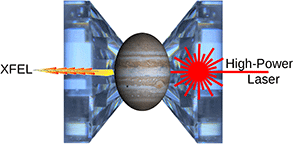
- The generation and diagnostics of extreme states of matter as appearing in the interior of planets, brown dwarfs and stars is one of the key scientific challenges in a number of scientific fields. These include:
- Generation of such conditions at FLASH and the future free electron laser facility (European XFEL).
- Generation of higher pressures in static experiments both in the laboratory and at synchrotron facilities (PETRA III).
- Development of new diagnostic tools.
- Predictions of high pressure and temperature properties of materials from ab initio methods.
- Application of such results to the study of interior of planetary and astrophysical bodies.
EUROMAT2017 Symposium: Materials Science with Synchrotron Radiation X-rays
| - |
In Thessaloniki

Research with High Energy X-Rays at Ultra-Low Emittance Sources
| - |
In DESY, Hamburg
High-energy X-rays are used in many fields of science, from solid-state physics, chemistry and biomedical science to geoscience, engineering materials science and nanotechnology. PETRA IV can provide unique conditions for experiments with high-energy X-rays. In particular, the high-energy X-ray beam can be efficiently focused to obtain local information about the sample, e.g. using powder and single-crystal diffraction, pair-distribution-function (PDF) analysis, grain mapping, imaging in absorption and phase contrast, and potentially even coherent X-ray diffraction imaging. In this way, PETRA IV opens a unique perspective for in-situ and operando experiments.
The scientific case for high-energy X-rays at an ultra-low emittance source will be discussed together with the required experimental parameters.

Time-resolved Photoelectron Spectroscopy
| - |
In Trieste