Events
Conferences
Synchrotron Environmental Science VI
| - |
In Argonne, IL
Consistent with previous SES Conferences, we hope to bring together and promote dialogue between Synchrotron Science experts and Environmental Science experts. Building on the recent excitement of science that would be enabled by diffraction limited X-ray sources, as well as by Free Electron Laser (FEL) X-ray sources, the emphasis of the meeting will be identification of new opportunities in Environmental Science afforded by new or soon-to-be-available X-ray sources.Â
The conference will include presentations from synchrotron scientists who will explain the projected qualities of these new sources (X-ray spot and/or illumination size, coherence/spectral qualities, timing capabilities, etc.). It will also include presentations from scientists who have used synchrotron radiation sources in their research who will describe their work and their vision for how these new sources will benefit their research in the future. Program managers that fund enviromental science research will also be invited to give presentations and answer questions.
Scientific themes highlighted will include the following:
♦ Biogeochemistry
♦ Fate and transport of trace, nutrient, and heavy metal elements
♦ Mesoscale science

SPIE Optics + Photonics 2014
| - |
In San Diego, CA
The premier conference for the latest developments in optical design and engineering, as well as space optical systems, X-ray / EUV optics, information processing, photonic devices, remote sensing, and astronomical instrumentation.
- NanoScience + Engineering
- Solar Energy + Technology
- Organic Photonics + Electronics
- Optical Engineering + Applications
- SPIE Optical Engineering + Applications

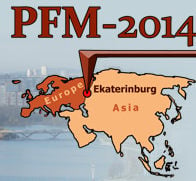
Piezoresponse ForÃ'Âe Microscopy and Nanoscale Phenomena in Polar Materials (PFM-2014) combined with International Youth Conference Functional Imaging of Nanomaterials
| - |
In Ekaterinburg
Scope
The joint conference will cover a wide range of topics related to functional imaging of nanomaterials by various techniques including Scanning Probe Microscopy (Piezoresponse Force Microscopy â€" PFM, Electrochemical Strain Microscopy â€" ESM, Kelvin Probe Microscopy â€" KPM), Scanning Electron Microscopy (SEM), Optical Microscopy (Confocal Microscopy â€" CM, Scanning Near-Field Optical Microscopy â€" SNOM, and Raman Microscopy â€" RM). The Youth Conference will consist of an extensive tutorial and scientific conference on nanoscale phenomena in ferroelectrics, ionic conductors, and polar biomaterials.
PFM-2014 main topics
- Instrumental aspects of PFM, ESM, KPM, SNOM, and related techniques as applied to functional nanomaterials
- Ferroelectrics, piezoelectrics, and ionic conductors on the nanoscale
- Multiferroic phenomena and magnetoelectric coupling on the nanoscale
- Disordered ferroelectrics, domains, and mesoscopic effects
- Ferroelectric data storage and polarization lithography
- Ferroelectric photovoltaics and tip-enhanced phenomena
- Interface and domain engineering
- Biocompatible & organic polar materials on the nanoscale
- 1D and 2D nanostructured materials
- Theory and modeling
From Functional Genomics to Systems Biology. EMBO Conference
| - |
In Heidelberg
Challenges in Nanoscience ISACS 15
| - |
In San Diego, CA
Challenges in Nanoscience ISACS 15 will bring together leading scientists from across the world to discuss the latest advances in nanoscience, which encompasses a broad range of disciplines, including chemistry, biology, physics and engineering. This meeting follows the successful ISACS 9 conference held in Xiamen, China in 2012
The conference will take place at the University of California, San Diego and the Scientific Committee warmly invites you to take part in ISACS 15.
Themes- Nanomedicine/Bionanotechnology
- Programmable Materials / Self Assembly
- Energy and Catalysis
- Characterisation and preparation - new materials       Â
Â
BACG 2014: 45th Annual Conference of the British Association for Crystal Growth
| - |
In Leeds
The 2014 Annual Conference of the BACG will be hosted by the University of Leeds, which is the home of the pioneering work underpinning the discipline of X-ray crystallography undertaken by William Henry Bragg and his son, William Lawrence Bragg in 1912-13, and for which they were jointly awarded a Nobel Prize in Physics in 1915. This conference will provide a forum for the exchange of scientific/technological ideas and findings amongst researchers from the UK and overseas focusing on the following topics. Internationally renowned researchers, both from academia and industry, will deliver a series of stimulating lectures.Â
Conference topics:
- Crystallisation Modelling Across Length Scales
- Crystallisation for Product Formulation
- Fundamentals of Nucleation and Crystal Growth
- Ice Nucleation and Crystallisation
- Industrial Crystallisation Processes
Invited Speakers:
- Peter Dryburgh (President of the BACG)
- Katsuo Tsukamoto (Tohoku Univ, Japan), Annual Lecture
- Richard B. Braatz (MIT, USA), Plenary Lecture
- Elias Vlieg (Radboud Univ, The Netherlands), Plenary Lecture
- Neil George (Syngenta, Jealott’s Hill, UK)
- Angelos Michaelides (Univ College London, UK) Â
- John Morris (Asymptote Ltd, Cambridge, UK)
- Chris Price (GSK, Stevenage, UK)
- NaÃr RodrÃguez-Hornedo (Univ of Michigan, USA)
- Sven L.M. Schroeder (Univ of Manchester, UK)
- Pete Wood (Cambridge Crystallographic Data Centre, UK)
- Chuan-Yu (Charley) Wu (Univ of Surrey, UK)
Conference Committee: Tariq Mahmud & Yi-Yeoun Kim (Co-Chairs, Leeds U), Robert B. Hammon (Leeds U), Mingzhong Li (De Montfort U), Fiona Meldrum (Leeds U), Kevin J. Roberts (Leeds U), Ghazala Sadiq (CCDC), Linda Seton (Liverpool John Moores U).Â

Oxide Thin Films for Advanced Energy Applications: Materials Chemistry of Thin Film Oxides
| - |
In Bloomingdale, IL
Oxide thin films are finding applications in a wide range of energy technologies, from ion conductors through photovoltaics and thermoelectrics to dielectrics and capacitors. Each of these technologies requires a thorough understanding of the materials chemistry of the oxide film and its interactions with the environment, substrate etc. Whilst in each technology area there may be materials differences, much of the materials chemistry.
Key Sessions- Nanoionics
- Batteries
- Ferroelectrics
- Thermoelectrics
- Fuel cellsÂ
- Nanoelectronics
- Multiferroics
- Solar and Fuel Cells
- Oxide Thin filmsÂ
UK Colloids 2014
| - |
In London
92nd Annual Meeting of the Deutsche Mineralogische Gesellschaft
|
In Jena
Minerals at Focal Point
The conference aims at bringing together researchers from all fields of our multifaceted discipline mineralogy. The meeting program advertises thus a wide range of topics in or at the crossroads of the fields crystallography, applied mineralogy, petrology, and geocosmochemistry.
The organization of the 2014 DMG meeting coincides with the 100th anniversary of the journal "Chemie der Erde/Geochemistry", which was originally founded in Jena. On the occasion of this event a special volume is under preparation that will be handed out to the attendees of the conference.
The meeting offers also a half-day excursion to the close-by former Uranium mining district at Ronneburg.
7th Mid-European Clay Conference
| - |
In Radebeul (Dresden)
Main Topics
• geology of clays
• clay minerals in soils
• clays as industrial raw materials
• clays in geotechnical applications
• developments of analytical tools
• crystal structure and surface properties of clay minerals
Plenary and Keynote Speaker (preliminary)
• Anne-Claire Gaillot (Nantes/FR)• Reinhard Gaupp (Jena/DE)
• Stephen Hillier (Aberdeen/UK)
• Mark Jensen (Toronto/CA)
• Johannes Lützenkirchen (Karlsruhe/DE)
• Fernando Nieto García (Granada/ES)
• Boris Sakharov (Moscow/RU)
• Andreas Voegelin (Dübendorf/CH)
• Mark Wilkinson (Edinburgh/UK)

ECCG5
| - |
In Bologna
Dear Colleagues,
on behalf of the Crystal Growth section of Italian Association of Crystallography (AIC) and the European Network of Crystal Growth (ENCG), we cordially invite you to attend the Fifth European Conference on Crystal Growth (ECCG5), which will be held at the CNR Research Area in Bologna on 9-11 September 2015.
The aim of ECCG5 is to represent the wide variety of topics connected with Crystal Growth, with a multidisciplinary approach able to answer the demands of the society in different fields of modern life, such as microelectronics, photonics, pharmaceutical and chemical material production, healthcare and cosmetics to name few.
The Conference also intends to promote the meeting of researchers coming from public and private entities and to facilitate the cooperation between academia and industry.
We warmly invite all of you in Bologna.
Giuseppe FaliniAndrea Zappettini
ECCG5 Conference ChairsÂ
Important dates:Â
- 01 March 2015 - Abstract submission openÂ
- 01 June 2015 - Deadline abstract submissionÂ
- 09-11 September 2015 - ECCG5 Conference
Molecular Basis of Microbial One-Carbon Metabolism. Gordon Research Conference
|
In South Hadley, MA
Probing the Biology: Chemistry Interface from Molecules to Ecosystems
One carbon (C1) metabolism plays a central role in microbial metabolism and global biogeochemical cycles. Key molecules of C1 metabolism include methane, carbon monoxide, carbon dioxide, and methanol, coenzyme-bound one-carbon moieties (e.g., methyl-corrinoids), as well as organic compounds without carbon-carbon bonds such as dimethyl sulfide. Many of them (e.g., methane) are important energy sources, some (e.g., carbon dioxide and methane) are potent greenhouse gases, and others (e.g., dichloromethane) are toxic chemicals used industrially in large quantities. The conference spans natural and synthetic systems under oxic and anoxic conditions at scales from molecules to ecosystems. There is an emphasis on the molecular aspects of autotrophic microbes, methanogens, methylotrophs, methanotrophs, and acetogens. Participants will hear the latest cutting-edge research on microbial C1 metabolism, the role of these reactions in biogeochemical cycles, and current approaches to engineer microbes and biochemical pathways for societal applications. These applications include the production of biofuels and the remediation of environmental contamination.
The conference program will feature talks from a mix of junior and senior investigators. Complementary perspectives will be provided by leaders in biochemistry, general microbiology, molecular biology, structural biology, microbial ecology, and systems and synthetic biology. The meeting will also feature dynamic and interactive poster sessions. Selected poster presenters will be invited to give short talks in appropriate sessions. The GRC format, with extensive discussion sessions and informal gatherings in the afternoons and evenings, and the collegial nature of this long running meeting provides an ideal setting for researchers from different fields and generations to exchange ideas, brainstorm and discuss cross-disciplinary collaboration.
Â
Electron Donor-Acceptor Interactions. Gordon Research Conference
| - |
In Newport, RI
Understanding and Manipulating Electron and Energy Transfer Processes
For over three decades the Gordon Research Conference on Electron Donor-Acceptor Interactions (GRC - EDAI) has maintained its prominence as a key international forum for the presentation and discussion of cutting-edge ideas and experimental results related to electron and energy transfer reactions. The ever increasing concerns over anthropogenic effects on climate and the sharply increasing demand for energy, has made the study and understanding of these fundamental processes even more important scientific goals than they have been historically. The upcoming 2014 GRC - EDAI will continue a tradition of encompassing a variety of topical areas of current theoretical and experimental importance, ranging from fundamental studies on small molecules to electron and energy transfer in materials. Because of the centrality of electron-transfer processes across biology, chemistry, physics and materials and energy science, the GRC - EDAI attracts conferees with a diversity of the backgrounds representing all of the traditional sub-disciplines of chemistry as well as materials science, biochemistry, and physics. This diversity makes for a stimulating intellectual environment where science at the interface of these areas can be explored.
The 2014 GRC - EDAI will include topical sessions on coupled electron transfer, dye-sensitized solar cells, electron transfer in protein and biological systems, spin and chirality effects, light harvesting, electron transfers in nanostructured systems, as well as emerging ideas on energy conversion. World leaders in all of these areas will be featured as speakers and discussion leaders, making the conference an excellent forum for scientists from different disciplines to meet and initiate new directions; for scientists from different countries to make contacts; and for young scientists to network and establish personal contacts with other members of this scientific community. The meeting also features an interactive atmosphere with lively poster sessions (several of which will be selected for oral presentations). The 2012 conference featured the first Electron Donor-Acceptor Interactions Gordon Research Seminar (EDAI-GRS) which was highly successful. The 2014 GRC-EDAI will again be accompanied by the EDAI-GRS which is to be held immediately prior to the main meeting.
Polymer Physics. Gordon Research Conference
| - |
In South Hadley, MA
New Developments in Polymer Dynamics, Crystallization, Self-Assembly, and Interface/Confinement Effects
The 2014 Gordon Research Conference on Polymer Physics will feature outstanding lectures and discussions in this interdisciplinary field that impacts diverse industrial sectors, including electronics, transportation, medicine, textiles, and energy. The focus of this international meeting is on new experimental, simulation, and theoretical developments in polymer physics, with particular emphasis on the following areas:
- Dynamics of Polymer Melts and Glasses
- Crystallization and Self-Assembly
- Interfacial, Surface, and Nanoconfinement Effects
- Biomacromolecular Physics
- Polymers for Energy and Electronic Applications
The conference will feature nineteen lectures by senior researchers, whose talks will include a ten-minute introduction designed for a general polymer audience, as well as one session highlighting new work by six young scientists. Poster sessions and informal activities will provide ample opportunity to share and discuss the latest advances in polymer physics.
Ion Channels. Gordon Research Conference
| - |
In South Hadley, MA
The Molecular Basis of Excitability and Disease
The 2014 Gordon Research Conference on Ion Channels will continue the long tradition of bring together leading researchers to share unpublished, cutting-edge biomedical research focused on the proteins responsible for ion transport. The 2014 scientific program will cover all aspects of ion channel biology and biophysics, including the structure and regulation of ion channels, protein biogenesis and trafficking and integrated aspects of ion channels in physiological function. Invited Speakers have been selected to ensure a diverse set of topics, channels and presenters. All participants are asked to submit an abstract for presentation in the poster session and approximately ten short talks will be chosen from the abstracts. We strongly encourage graduate students and post-doctoral fellows to apply to both the 2014 Ion channels GRC and to the GRS held immediately before the meeting. Selected abstracts from these early-career investigators will be chosen for presentation in a short 2 minute "Data Blitz", a very popular feature at the 2012 GRC.Â
Intrinsically Disordered Proteins. Gordon Research Conference
| - |
In Easton, MA
Understanding Intrinsically Disordered Regions (IDRs) at Different Scales: From Single Molecules to Complex Systems
Â
The 2014 Gordon Conference on Intrinsically Disordered Proteins (IDPs) will present cutting-edge research aimed at understanding the role of disordered regions: from studies on single molecules to complex systems and from research that investigates changes that happen at the millisecond time-scale to the evolutionary time-scale.
The conference will feature a wide range of topics involving Intrinsically Disordered Regions (IDRs) that will be of interest to biophysicists, biochemists, computational, evolutionary and structural biologists, molecular geneticists, and cell biologists. The session topics have been carefully chosen to highlight exciting new science in the last couple of years including (a) breakthroughs in peptide motif biology, (b) emerging views on how disordered regions mediate the formation of functional and non-functional aggregates, reversible assemblies and phase transitions, (c) state-of-the-art experimental approaches to investigate the structure, function and dynamics of IDRs, (d) emerging methods to exploit IDRs for therapeutic applications and synthetic biology, (d) new concepts in evolutionary, molecular, and systems biology that describe how IDRs rewire interaction networks, and are able to link genotype to phenotype through their highly dynamic structural ensembles and (e) the future directions of the "unstructural" biology field. The conference also has an underlying theme that will highlight how IDRs are involved in human diseases.
The conference will bring together a collection of investigators who are at the forefront of their respective field, and will provide ample opportunities for interdisciplinary interaction that will catalyze the cross-fertilization of ideas, and provide a chance for junior scientists and graduate students to present their work. The session chairs promise to orchestrate lively discussions. The collegial atmosphere of this conference, with programmed discussion sessions as well as opportunities for informal gatherings in the afternoons and evenings, provides an avenue for scientists from different disciplines to brainstorm and promotes cross-disciplinary collaborations in the various research areas represented. There will be a poster competition judged by a committee of experts. Two awards will be given to graduate students whose posters are deemed to be the best by the committee. The new location for this conference is scenic, convenient, and promises to be an excellent setting for numerous informal interactions.
For the first time in the meeting series, a Gordon Research Seminar (GRS) will precede the conference. The Intrinsically Disordered Proteins GRS is designed to further facilitate the participation of graduate students and postdoctoral researchers. Planned by and for the trainees, it will provide an opportunity for our junior researchers to present seminars and posters in a supportive, interactive environment. It will act as an important springboard for the development of the future thought leaders in the field.
This conference will highlight the pervasiveness of IDPs in biology and enhance our understanding of their dynamic structure and function. We therefore warmly welcome you to participate, experience and enjoy the IDP GRC 2014.
Â
Noble Metal Nanoparticles. Gordon Research Conference
| - |
In South Hadley, MA
Synthesis, Characterization, Modeling, and Application
The 2014 Gordon Conference on "Noble Metal Nanoparticles" will strive to provide the same level of cutting-edge science and technology discussion that was the trademark of the 2010 and the 2012 previous two "Noble Metal Nanoparticles" conferences. The synthesis, characterization, modeling, and application of noble metal nanoparticles will be featured in the broadest possible way by creating sessions that put together chemists, physicists, material scientists, engineers, biologists, and doctors. There will be an attempt to create discussions that stem from a variety of disciplines as well as from a mixture of established and young scientists. The Conference will feature a wide range of topics, such as clusters, plasmonics, advanced characterization, assembly, biology, and a variety of applications. Some poster presenters will be selected for short talks. The atmosphere of this Conference, will be tuned to provide as many opportunities as possible for informal gatherings in the afternoons and evenings, so to create avenues for scientists from different disciplines to brainstorm and discuss. A great emphasis will be placed on the presentation and discussion of unpublished, novel, and exciting results.
Energetic Materials
| - |
In Newry, ME
Forward Thinking: New Approaches, Concepts, and Paradigms Towards Understanding and Predicting EM Response
The 2014 Gordon Research Conference on Energetic Materials, and its associated Gordon Research Seminar, will present the latest fundamental science of the physics and phenomena underlying the performance of energetic materials: explosives, propellants, pyrotechnics, and thermites. Presenters and attendees are scientists and engineers associated with government laboratories, research universities, and private industry that come together from across the globe to discuss multidisciplinary fundamental research on energetic materials. Topics of discussion include theory, chemistry, material properties, and physics associated with characterization, initiation, combustion, detonation, ageing, thermal decomposition, synthesis, and sensitivity of energetic materials. The Conference will bring together a collection of investigators who are at the forefront of their field and will provide opportunities for junior scientists and graduate students to present their work in poster format at as well as meet and exchange ideas with leaders in the field. The collegial atmosphere of this Conference, with programmed discussion sessions as well as multiple opportunities for informal gatherings in the afternoons and evenings, provides an avenue for scientists from different disciplines to brainstorm new concepts and paradigms while also promoting cross-disciplinary collaborations in the various research areas represented.
ic-cmtp3. 3rd International Conference on Competitive Materials and Technology Processes
| - |
In Miskolc
The event is based more to academia than to industry and all papers will be peer reviewed before publication in IOP Conference Series Materials Sciences and Engineering, which is refereed by SCOPUS and many others. The international conference ic-cmtp3 provides a platform among leading international scientists, researchers, engineers, students and PhD students for discussing recent achievements in research and development of material structures and properties of competitive materials like nanomaterials, ceramics, glasses, films and coatings, metals, alloys, biomaterials, composites, hetero-modulus and hybrid-materials, … etc.
Among the major fields of interest are materials with extreme physical, chemical, thermal, mechanical properties and dynamic strengths; including their crystalline and nano-structures, phase-transformations as well as methods of their technological processes, tests and measurements.
Promote new methods and results of scientific researches and multidisciplinary applications of material science and technological problems encountered in sectors like ceramics, glasses, metal alloys, thin films, aerospace, automotive and marine industry, electronics, energy, security, safety and construction materials, chemistry, medicine, cosmetics, biosciences, environmental sciences are of particular interest.

SNI2014. German Conference for Research with Synchrotron Radiation, Neutrons and Ion Beams at Large Facilities 2014
| - |
In Bonn
- Soft Matter
- Magnetism
- Nanostructures and Interfaces
- Biological Systems and Medicine
- Microscopy and Tomography
- Materials
- Structure and Dynamics
- Methods and Instrumentation
- Chemical Prozesses and Phase Transitions
- Matter under Extreme Conditions
- Particles and Nuclei
The main language of the conference is German, but English contributions are admitted.