Topics
Computing
Computational Approaches in Integration of Structural Biology Techniques. Instruct-ERIC workshop
| - |
In Vestec near Prague
The workshop is focused on areas important for all researchers and
specialists working in the field of structural biology or utilizing one or
more methods of structure analysis of biological macromolecules.
The skills and tools for combining experimental approaches and
computational tools in structural biology are in the center of this event.
Theoretical lectures will be complemented by user cases and practical
tutorials on laboratory equipment and in computational analysis.
Dynamo Workshop for Subtomogram Averaging
| - |
In Basel
The workshop will provide hands-on training on all practical aspects of subtomogram averaging, encompassing all stages of the pipeline: tomogram visualization and archiving, particle picking in different geometries, averaging, refinement and classification. In addition to these core contents on subtomo processing, this year we will conduct a longer workshop, covering also generic data analysis tasks in cryo electron tomography, as alignment of tilt series, tomogram reconstruction, advanced scripting and management of large data sets.
No previous experience is required and participants of all levels are welcome and strongly encouraged to bring along their own data. Computing infrastructure for intense numerical experiments will be provided in place, including guidance for the use of GPUs in the Amazon cloud computing services.
The registration fee is 280 CHF (accommodation is not included), deadline is July the 6th. As we can only provide a limited number of workstations, we typically accept participants on a "first come - first serve? basis. Please do not hesitate to contact me for any questions.
Â

6th International Symposium on Diffraction Structural Biology (ISDSB2019)
| - |
In Osaka
2019 Computational Structural Bioinformatics Workshop (CSBW)
| - |
In Niagara Falls, New York
Topics of interest, but not limited to, include the following:
- Structure representations
- Structure prediction and refinement
- Structure comparision and alignment
- Molecular interaction, docking and simulation
- Coarse grained modeling
- Mining structural data
- Structural genomics
- Applications of high performance computing to structural problems
- Applications of graph theory and optimization to structural problems
- Structure-based drug design
- Biomolecular graphics
CIFiesta. AIC International Crystallography School2019
| - |
In Naples
AICS2019 offers an intensive course in Crystallographic Information, covering the extraction, dissemination and use of scientific knowledge from the structure determination experiment to database-driven discovery. This school will emphasise to students the need to collect the most complete and meaningful raw data, extract the most reliable information they can, critically review the structural model they have derived, and disseminate that information in a complete and verifiable manner through the twin channels of scientific publication and curated database deposition.
BSI-2019: First French Congress on Integrative Structural Biology
| - |
In Toulouse
The congress will focus on topics such as DNA & RNA biology, computational methods and modeling, drug design and structural organization in membrane and cellular contexts. Â
Deadline for abstract submission: 10th June 2019
Registration deadline: 30th August 2019Â
EXPO&more International Workshop
| - |
In Bari
This workshop is a four-day software fayre dedicated to the more recently developed version of the open source computer programs EXPO, QUALX, OChemDb and RootProf. The authors will explain the theoretical framework of the software, the program workflow, the latest developments and examples of application. Participants will be very familiar with the software by the end of the workshop; there will be opportunities for participants to process their own data.
Registration is now open.
Early registration deadline: 20th June 2019
17th European Powder Diffraction Conference - EPDIC17
| - |
In Ã... ibenik
The European Powder Diffraction Conference, EPDIC, is a biannual conference dedicated to all aspects of the analysis of polycrystalline materials by diffraction methods. Each EPDIC has the aim to highlight the latest developments in powder diffraction including methodology, data analysis and instrumental advances. EPDICs traditionally bring together scientists from institutes, universities and instrumentation companies to discuss the progress in academic and industrial research related to powder diffraction. The 17th edition of EPDIC (EPDIC17) will take place in the town of Šibenik, an emerging star of the Croatian Adriatic coast.

MAUD 2018
| - |
In Trento
The aim is to bring together participants from various fields of both the academic and non-academic world and give them the necessary information and tools to be able to characterize their own samples using the combined analysis method and the software MAUD.Â
XRD, XRF and electron microscopy equipment available at the Dipartimento Ingegneria Industriale (DII) and Fondazione Bruno Kessler (FBK) will be used to demonstrate technical aspects and to support the theoretical and practical issues of this course.
Second CCP4/Spring-8 (RIKEN) workshop
| - |
In SPring-8
This workshop will cover data collection, processing and structure solution. Details are available at http://www.ccp4.ac.uk/schools/Japan-2018 , with more to follow. Registration is on the same site.
Registration will close on 24 August.
Topics will include XDS (Kay Diederichs), DIALS (Graeme Winter), the CCP4 suite (Charles Ballard and others), PDB_REDO (Robbie Joosten), COOT and others. The format will cover data collection, lectures, tutorials and problem solving, so students are encourages to bring their own data to work on.
CCP4 workshop at CSIR-IMTech
| - |
In Chandigarh
The course is intended mainly for graduate students and postdoctoral researchers in the area of structural biology. In some cases, assistant -professor-level applicants can be accepted as well. The school is not meant as an introductory level course to protein crystallography. It is designed more for applicants with reasonable expertise in crystallography and experience with the CCP4 suite. The purpose of the school is to address specific problems that the applicants face while processing diffraction data and while solving and refining novel structures. Applicants with already collected data will be given strong consideration, although this not a mandatory requirement.
Note: for the tutorials and practicals there is a limit of 35 students, lectures are open to all.
Application to the workshop is free of charge, but a letter from the supervisor or the professor will be required.Travel expenses will be the responsibility of the participant, accommodation and meals will be provided. There accommodation at the CSIR guest house.
12th NOBUGS 2018 Conference
| - |
In Brookhaven Laboratory, Upton NY
The goal of the NOBUGS (New Opportunities for Better User Group Software) Conference Series is to foster collaboration and exchange between scientists and IT professionals working on software for X-ray, neutron and muon sources from around the world.

Model Building and Refinement Workshop
| - |
In Solna
The advanced CryoNet workshop is aimed at students and postdocs who have obtained high-resolution cryo-EM maps and currently in the process of model building and refinement. Alongside lectures and tutorials, ample contact time will be provided to discuss practical issues in detail, therefore participants are expected to bring their own data. The software will be presented in the context of large and complex macromolecules with variable quality throughout the map. Special attention will be given to: sharpening, automation, nucleic acids, validation.
Speakers
- Paul Adams, Berkley University of California, USA
- Frank Dimaio, University of Washington, Seattle, USA
- Rouslan Efremov, Vrije Universiteit Brussels, Belgium
- Paul Emsley, MRC Laboratory of Molecular Biology, Cambridge, UK
- Dmitry Lyumkis, Salk Institute, San Diego, USA
- Garib Murshudov, MRC Laboratory of Molecular Biology, Cambridge, UK
- Richard Neutze, University of Gothenburg, Sweden

NSLS-II Pair Distribution Function School
| - |
In Brookhaven NL, Upton, NY
The primary objective of the school is to give a hands-on training to participants on PDF data acquisition, reduction, and analysis covering all required steps from measurement to the final model. Data acquisition training will be conducted at the newly constructed PDF and XPD beamlines at NSLS-II. All participants are expected to being their own laptop computers for data analysis; the latest python based software package, xPDFsuite, will be used for data processing and modelling.
Registration fee: $225 - this will cover the cost of the xPDFsuite software and meals. A limited number of rooms in BNL dormitories are available for a discounted price.
Registration deadline: 30th June 2018.
50th IFF Spring School: "Scattering! Soft, Functional and Quantum Materials"
| - |
In Forschungszentrum Jülich
The IFF Spring School 2019 will provide a solid introduction into scattering methods for the investigation of condensed matter and biomaterials. Topics will include modern scattering techniques and the advanced methods utilised at large scale facilities.
Participants are expected to have a basic knowledge of quantum mechanics and physics and/or chemistry of condensed matter. All lectures will be held in English.
Registration period: 5th November 2018 to 10th January 2019.
Financial support is available for students who have yet to finish their Master's degree, to cover part of accommodation costs.
More details will be available closer to the registration date.
AIC International Crystallography School 2018:
| - |
In Bari
Powder diffraction: Theory, Software and Applications
The aim of the 2018 edition of the Italian Crystallographic Association (AIC) International Crystallography School (AICS2018) is to give an overview on the characterization of polycrystalline materials through X-ray Powder Diffraction. The topics of the school span from the fundamental principles of powder diffraction to advanced methods of data collection and analysis with examples of applications of scientific and industrial interests. For each topic, theory will be strictly followed by practical sessions centred on the relevant software so that participants familiarise with some widely used computer programs for data analysis and interpretation of the results.
A number of bursaries and grants are available to aid the participation of young researchers in attending the school. Please visit the conference website and complete the necessary application forms to apply for bursaries and register for the school.
Bursary application deadline: 20th May 2018
Registration deadline: 15th June 2018
Workshop on subtomogram averaging with Dynamo
| - |
In Basel
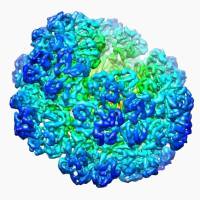
The seventh Basel Workshop on Tomography and Subtomogram Averaging with Dynamo, which will take place at the Biozentrum of the University of Basel.
The workshop will provide hands-on training on all practical aspects of subtomogram averaging, encompassing all stages of the pipeline: tomogram visualization and archiving, particle picking in different geometries, averaging, refinement and classification. In addition to these core contents on subtomo processing, this year we will conduct a longer workshop, covering also generic data analysis tasks in cryo electron tomography, as alignment of tilt series, tomogram reconstruction, advanced scripting and management of large data sets.
The Eighth Brazil School for Single Particle Cryo-EM
| - |
In Maripora, SP
This single-particle data processing school is an intensive hands-on course/workshop, in which theory and practice are tightly intertwined. The spectrum of topics covered suits attendees that are new to the field as well as those for whom the technique is already of growing importance in their research and who wish to acquire an in-depth understanding of the methodology. Topics range from data collection and three-dimensional reconstruction techniques to the final interpretation of the cryo-EM maps by (flexible) fitting of X-ray structures. The last days of the meeting will be devoted to advanced topics such as dealing with heterogeneous data sets ("4D" cryo electron microscopy) and high-resolution refinements.Â
The attendees are expected to bring along a modern notebook computer onto which all necessary software will be installed. Most processing will take place in the context of the IMAGIC software system but other software packages such as Frealign will also be used. Cryo-EM data sets will be distributed for processing during the course. The participants may bring their own data sets for processing and discussion.Â
It is planned to stay at the 2016 school venue which was located in the country side of Mairiporã at the border of the Rio Juqueri (state of São Paulo).Â
European Crystallographic Computing Forum
| - |
In Mieres
ECACOMSIG - the European Crystallographic Association's Computing Special Interest Group is organising a three-plus-two-half day Computing Forum.
The Forum will be held in Mieres, Spain, 18th - 22nd August 2018 (preceding the ECM). We invite both beginners (from graduate level) and experienced software developers from all crystallographic disciplines.
Participants can bring their own software development project to work on it in teams, interspersed with tutorials and lectures. There will be opportunity to exchange and connect with other crystallographic software developers.
The registration fee (360 €) includes: accommodation (4 nights), full board and refreshments and transfer to the ECM. We offer childcare and family rooms. Bursaries are available.
CCP-EM Icknield Workshop for High Resolution Model Building and Refinement
| - |
In Diamond Campus, Harwell
We are proud to announce the 2018 Icknield Workshop kindly supported by
Instruct. This course is aimed at structural biologists with high-
resolution EM maps ready for / in the process of model building and
refinement. This four day course (1st-4th May) will host some of the
leading software developers and provide ample contact time to allow
delegates to discuss their data in detail alongside traditional lectures
and tutorials. It will cover all aspects of model building including: map
optimisation, docking, automated model building, medium resolution
refinement, high-resolution refinement, interactive refinement, validation
and deposition.
The course will be held at the RAL / Diamond Campus, Harwell, UK, site of
the eBIC national facility. Registration is free, thanks to generous
funding from Instruct, and we will provide food and three nights
accommodation at the Bear Hotel in nearby Wantage (nights of 1st, 2nd and
3rd May). Please note that during the application process you will be asked
if you would like to make an accommodation request - if you would like
accommodation provided for you free of charge please select yes and let us
know which nights you would like. If you do not want accommodation provided
for you please select no. Delegates are asked to meet their own travel
costs. Please see the agenda for full course times.
The course is limited to 20 delegates who will be selected from all
applicants. A maximum of 50 applicants can register interest.
 * Confirmed tutors / topics:
Tristan Croll (Cambridge)
ISOLDE: Interactive model building/real-space refinement based on
interactive molecular dynamics
Kevin Cowtan (York)
Buccaneer: automated model building
Paul Emsley (MRC-LMB Cambridge)
Coot: macromolecular model building, model completion and validation
Arjen Jakobi (Delft)
LocScale: scaling tool using prior model information to improve map
contrast
Oleg Kovalevskiy (Murshudov group, MRC-LMB Cambridge)
Refmac: refinement of high-resolution EM structures
Ardan Patwardhan (EBI)
EMBD: deposition in EMBD
Joerg Schaarschmidt (Bonvin Group, Utrecht)
Powerfit: Fast and sensitive rigid-body fitting into cryo-EM density maps
Maya Topf (Birkbeck)
FlexEM: fitting and refinement of atomic structures guided by cryoEM density
Â