Topics
Computing
11th annual CCP4 crystallographic school *â€Å"From data collection to structure refinement and beyond
| - |
In ANL, Chicago, IL
The school comprises two parts: *data collection workshop* and *crystallographic computing workshop*.
Data collection workshop includes beamline training, data collection on GM/CA@APS beamlines 23ID-D and
23ID-B equipped with Pilatus3 6M and Eiger 16M detectors respectively, and data processing.
For data collection, only the participants' crystals will be used. Crystallographic computation workshop will feature many modern crystallographic software packages taught by authors and other experts. The daily schedule will be organized in three sections â€" lectures, tutorials, and hands-on (interactive trouble-shooting of the technical difficulties the participants face in their projects). We have had considerable success resolving these problems in past years, attested by resulting publications (see http://www.ccp4.ac.uk/schools/APS-school/publications.php).
DL_Software Training Workshop
| - |
In Daresbury

RapiData 2018
| - |
In Stanford, CA
RapiData 2018 at SSRL is a practical course in macromolecular X-ray diffraction data collection, data processing and structure solution. The aim of the RapiData course is to educate and train young scientists in data collection and processing methods at synchrotron beamlines, using state-of-the-art software and instrumentation
The course will comprise hands-on experiments at the SSRL beamlines, software tutorials, and lectures on the following topics:
- Specimen preparation, tactics in data collection
- X-ray light sources
- X-ray detectors
- Data reduction
- Structure solving by MAD, SAD and Molecular replacement
- Complementary methods (spectroscopy and small angle scattering)
Methods and applications of crystal structure prediction: Faraday Discussion
| - |
In Cambridge
SMARTER 6
| - |
In Ljubljana
The series of SMARTER meetings aims to bring together scientists in the areas of computation, diffraction, and NMR spectroscopy to promote combining various techniques and develop smarter approaches for structure determination of complex inorganic, organic and biological materials.
Registration and more information about the meeting can be found here:Â Â https://smarter6.ki.si/index.php/smarter6/
Registration opens in Spring 2018.Â
CCP-EM Dynamo workshop
| - |
In Harwell
A two day workshop on the subtomogram averaging software Dynamo led by the developer Daniel Castaño-DÃez (University of Basel).Â
The workshop will provide hands-on training on all practical aspects of subtomogram averaging, encompassing all stages of the pipeline: tomogram visualization and archiving, particle picking techniques for different geometries, averaging, refinement and classification. No previous experience is required, and participants are welcome and encouraged to bring their own data sets.

ToposPro & 13th USPEX Workshop. An international workshop
| - |
In HPSTAR, Pudong Shanghai
MX BAG Training. Training sessions for user of the Macromolecular Crystallography (MX) beamlines
| - |
In Didcot, UK
The aim is to provide MX users with sufficient training to be able to operate any of the Diamond MX beamlines efficiently and to get the most benefit from their beam-time. The training will involve hands-on sessions on the suite of five operational MX beamlines (http://www.diamond.ac.uk/mx-home/) as well as offline software sessions.
Â
Sessions include:
5th July afternoon session hands-on software:
Two tutorial sessions:
- CCP4
- DIALS
6th July, MX beamlines and data room sessions:
- MX software: automation in data analysis
- Multi axis goniometry / SAD Anomalous data collection
- Introduction to VMX-i
- I24 new end station/ In situ diffraction
- Fragment screening â€" I04-1/Lab36
- Experiment database: new ISPyB
Â
Â
Registration is free-of-charge with lunch provided on the 5th and 6th July, and accommodation and dinner for the night of July 5th. Travelling expenses within the UK will also be provided. The training is targeted at all users, and is not limited to students and post docs. It is essential that each BAG sends at least one representative per calendar year.
Â
Places are limited to twenty five participants. The registration deadline is on the June 25th 2017 at 11:59. Registration is now open.
5th CCP-SAS Project Workshop
| - |
In Cardiff
The workshop, to be held at the University of Cardiff, will focus on the work of the CCP-SAS Project and the SASSIE software suite in the form of seminars and poster/presentation sessions. Â Past and current projects will be reviewed; there will also be a planning session for future projects. Â On Wednesday 21st June a tutorial session will take place to provide a learning platform for beginner users of the SASSIE software.
Attendees are encouraged to bring posters showcasing their modelling work of biological and soft matter systems or illustrating their need for modelling capability. Registration, limited to an attendance of around 100 for the main event on Monday 19th June, is mandatory and must be completed by 5th June.
Registration is also required for the tutorial session on 21st June. Â

Atomistic Modeling for Neutron Scattering Workshop
| - |
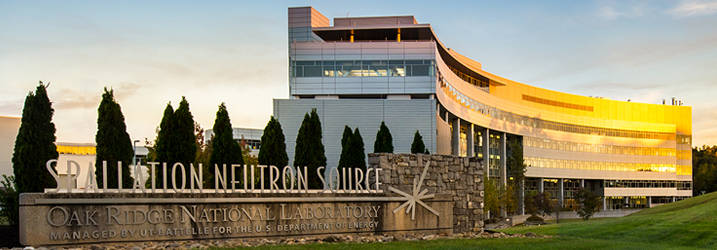
In Spallation Neutron Source, ORNL
This workshop will bring together atomistic modelling experts with neutron scattering users to teach the modelling techniques and also provide the opportunity for the two communities to discuss current limitations, new capabilities, and future developments. Â The workshop will consist of a combination of tutorials and lectures and include practical sessions on CASTEP and CP2K. Â
Further information and registration can be found at:
https://conference.sns.gov/event/76/Â
The workshop is limited to 40 participants and selected applicants will be notified on or before 22nd May.
The 8th Int'l Conference on Advances in Physics (CAP 2017)
| - |
In Suzhou

Sixth Basel Workshop on Subtomogram Averaging with Dynamo
| - |
In Basel
Structural Bioinformatics Training Workshop & Hackathon 2017
| - |
In San Diego
Application of Big Data Technology and 3D Visualization
This 3-day hands-on workshop introduces participants to the development of fast and scalable structural bioinformatics methods using state-of-the-art Big Data technologies and Web-GL 3D visualization. The first two days of the workshop combine lectures, hands-on applications, and programming sessions. On the third day participants apply the new technologies to theirown projects.
This workshop is held at the University of California, San Diego and hostedby the Structural Bioinformatics Laboratory at SDSC in collaboration with the RCSB Protein Data Bank.
Sponsorship
This workshop is sponsored by the NIH Big Data to Knowledge (BD2K) initiative. Air travel and 4-day lodging will be provided for non-commercial participants, including a limited number of international participants. Apply now to secure your place in the workshop. Participants will be selected based on the best fit to the program. Application deadline: April 30, 2017.
Target Audience
The workshop is aimed at graduate students, postdocs, staff, faculty, industrial researchers, and scientific software developers who develop software for Structural Bioinformatics applications. Intermediate to advanced programming skills in high-level languages are required (Java, JavaScript, Python, C++).

DDDWG Research Data Management Workshop
|
In New Orleans
This is the third and final Workshop organised by the Diffraction Data Deposition Working Group (DDDWG), appointed by the IUCr Executive Committee to define the need for and practicalities of routine deposition of primary experimental data in X-ray diffraction and related experiments. It will take the form of a full-day workshop at the 2017 American Crystallographic Association Meeting with lectures from crystallographic practitioners, data management specialists and standards maintainers.
Objective: This workshop has two plenary sessions:
- What every experimentalist needs to know about recording essential metadata of primary (raw) diffraction data
This will include: sample preparation and characterization; correct recording of instrument axes, correction factors, calibration - instrument manufacturers; attention to diffuse scattering or other interesting "metadata". - Research Data Management policy mandates and requirements on Principal Investigators (PIs)
This will include metadata standardization; data repositories; primary data linking to publications.
There will also be an optional technical session:
- High-data-rate/high-performance-computing issues of research data management for MX
For synchrotron- and XFEL-based macromolecular crystallography (MX), high source brightness and the new generation of pixel array detectors raise big-data, high-performance-computing and high-performance-networking issues in research data management. There will be an optional early evening sub-session of the Research Data Management workshop to discuss the high-data-rate/high-performance-computing issues of research data management for MX that will include discussion of appropriate hardware choices and programming techniques that are useful in this context. All registrants for the Research Data Management workshop are welcome to attend this workshop sub-session.
Time: 08:30-18:15
8th Workshop on Combined Analysis In XRD By Using MAUD Software
| - |
In Caen
This workshop will take place in Caen, France. Â The training will cover many aspects of "Combined Analysis" by X-ray and neutron scattering ranging from fundamental requirements to technically relevant industrial and academic applications, including diffraction techniques, phase analysis, electron microscopy and the use of MAUD software.
The number of places on the workshop is limited to 30. Â Registration deadline is 30th June 2017.
Â
Â

CCP-EM Icknield Workshop for High Resolution Model Building 2017
| - |
In Harwell
at structural biologists with high resolution EM maps ready for / in the
process of modelling building and refinement. This three day course will
host some of the leading software developers and provide ample contact time
to allow delegates to discuss their data in detail alongside traditional
lectures and tutorials.
The course will be held at the RAL / Diamond campus, Harwell, UK.
Registration is free and we will provide food and two nights accommodation
at the Bear Hotel in nearby Wantage (5th & 6th April). Delegates are asked
to meet their own travel costs.
The course is limited to 20 delegates which will be selected from all
applicants. A maximum of 40 applicants can register interest.
Applications will close on Sunday 12th March and the 20 successful
applicants will be by Tuesday 14th March. (Please note the short
registration time as we would like to work on 'live' datasets).

10th annual CCP4 crystallographic school â€Å"From data collection to structure refinement and beyondâ€Â
| - |
In Argonne, IL
To be held at Advanced Photon Source, Argonne National Laboratory.
The school comprises:
Data collection workshop: beamline training; data collection on GM/CA@APS beamlines 23ID-D and 23ID-B equipped with Pilatus3 6M and Eiger 16M detectors, respectively; and data processing. For data collection, only the participants' crystals will be used.
Crystallographic computation workshop: will feature many modern crystallographic software packages taught by authors and other experts. The daily schedule will be organized in three sections â€" lectures, tutorials, and hands-on, interactive trouble-shooting of the technical difficulties the participants face in their projects. We have had considerable success resolving these problems in past years, attested by resulting publications
Applicants: Graduate students, postdoctoral researchers and young scientists at the assistant professor level, along with commercial/industrial researchers are encouraged to apply. Only 20 applicants will be selected for participation. Participants of the workshop are strongly encouraged to bring their own problem data sets or crystals so the problems can be addressed during data collection and/or computation workshops.
Application: Application deadline is April 19. For the application form, the program, contact info and other details click here.
Registration fees: The registration for application is free but there is $500 participation fee for the selected academic students and $950 for the industrial researchers. The link for the on-line payments and instructions will be provided once the selection process is completed. The students will be responsible for their transportation, lodging and breakfast. The workshop organizers can assist in making the reservations at economical lodging at the Argonne Guest House. The workshop will cover all other expenses.
Triple Resolution Axis Workshop
| - |
In Garching (Munich)
The workshop will take place at the MLZ in Garching.
There are no workshop fees and lunch and coffee will be served. The participants have to cover the costs for accommodation and travel.
For registration and the detailed program please use the following link: https://webapps.frm2.tum.de/indico/e/tripres
There are only places available for 20 participants - registration closes on 28th February 2017.
DL_Software training workshop (3-5 April) followed by a Hack Day (6 April)
| - |
In London
The events could be of value to the community as it will showcase the CCP5 software framework and its application for bio-molecule force-field model set-up and other general complex and organic molecules such as drugs and polymers. DL_FIELD and DL_POLY offer advantages in setting up multi-component, complex systems, including organic-inorganic interfaces, by utilising a wide range of force-field schemes and a large selection of MD techniques, not commonly available in other traditional, bio-simulation programs. Access to modelling polymer and organic systems on the mesoscale is facilitated by DL_MESO via Dissipative Particle Dynamics.
The aim of the training workshop is to provide course material and training to the following molecular modelling packages â€" DL_POLY, DL_FIELD, DL_MESO and DL_CGMAP. DL_MONTE and ChemShell will also be showcased on day 3 (5 April 2017); however, support for these packages will be limited during the tutorial sessions.
The events are an opportunity for current and potential users of DL_Software to learn what methodologies and algorithms these programs offer, how to use them efficiently and best apply to user specific needs. The workshop also offers demonstrations and hands-on sessions giving users the opportunity to compile, run and experiment with the programs as well as interact with their developers.
For the full workshop description and registration, please click here
The Hack Day is a one-day technical workshop aiming specifically for researchers who are interested to modify the supported DL_Software programs (DL_POLY, DL_FIELD, DL_MESO, ChemShell, DL_MONTE) and tailor model set-up to their specific project needs. For instance: model set-up, software porting, addition of new features, modification of the existing features, etc. (please, state your needs in the registration page). In addition, the Hack Day is the best opportunity for those who may be interested to seek advice and help in simulation set-up and model development, work flow scripting, job submissions, etc.
For the Hack Day registration, please click here
SAXS Software Packages Irena and Nika -- Winter 2017 Course
| - |
In Lemont , IL