Topics
Materials
Matériaux 2014
| - |
In Montpellier
Conférences Plénières
- Yves BRECHET: Les matériaux architecturés: une voie innovante pour le développement des matériaux.
- Albert FERT: Nanomagnétisme et nanospintronique.
- Denis GRATIAS: Alliages métalliques quasicristallins: élaboration, concepts et propriétés.
- Didier ROUX: Les innovations et les matériaux dans l'habitat du futur.
- Clément SANCHEZ: Biomimétisme et bio-inspiration: sources d'innovation en science des matériaux.

Corrosion 2014
| - |
In Gliwice
Physical Chemistry 2014. 12th International Conference on Fundamental and Applied Aspects of Physical Chemistry
| - |
In Belgrade
Aim of the Conference
The 12th International Conference on Fundamental and Applied Aspects of Physical Chemistry "PHYSICAL CHEMISTRY 2014" is organized to bring together scientists from all domains of Physical Chemistry in order to exchange their recent experience and achievements, and to improve the scientific cooperation.
Conference Program
The Conference will include a plenary and section lectures delivered by foreign and national scientists, as well as oral and poster presentations. The following tentative topics will be covered during the conference:
- Chemical Thermodynamics
- Spectroscopy
Molecular Structure
Physical Chemistry of Plasma - Kinetics
Catalysis - Nonlinear Dynamics
- Electrochemistry
- Biophysical Chemistry
Photochemistry
Radiation Chemistry - Radiochemistry
Nuclear Chemistry - Material Science
- Solid State Physical Chemistry
- Macromolecular Physical Chemistry
- Environmental Protection
Forensic Sciences
Pharmaceutical Physical Chemistry - Phase Boundaries
- Complex Compounds
- General Physical Chemistry
- Geophysical Chemistry
- Education
History - Free Topic

NAP2014. 4th International Conference on Nanomaterials: Application & Properties '2014
| - |
In Alushta
The conference is devoted to new actual problems of modern Material Science, such as technology of nanomaterial production, and research; properties of nanoparticles, and nanosystems. The conference is also focused on the applications of nanoobjects and nanostructured matters in Hi-Tech Industry, Biology, Medicine, Chemistry, etc.
The Conference will be held in Alushta, on the Crimean-Southern coast (Golden Resort 9, Chervonoarmiiys'ka Str., Â Alushta, the Crimea, Ukraine, www.goldenkolos.com), that is one of the most beautiful places on Earth. The Mediterranean climate makes it the main resort and tourist area in Ukraine.
NAP 2014 it is
- Wide variety of actual topics
- Interdisciplinarity and bringing together theory and experiment
- Smart website for dissemination of your activity
- Open access Proceedings, that are promoted to well known databases
- Fee discounts for students and postgraduates
- Comfortable hotel (Cat B) as the conference host
- Beautiful nature of the Crimean southern coast.
Physical Chemistry of Functionalised Biomedical Nanoparticles. Faraday Discussion 175
| - |
In Bristol
Physical Chemistry of Functionalised Biomedical Nanoparticles: Faraday Discussion 175
Organised by the Faraday Division in association with the Materials Chemistry Division
Introduction
Nanotechnology, especially nanoparticle research, has played very important roles in many scientific discoveries, laying the foundation for their applications in many aspects of our life, such as healthcare, efficient energy, cleaner environments. The field is moving very quickly, with an increasing number of researchers. This Faraday Discussion will focus on one very fundamental issue of nanoparticle (NP) research: functionalisation, relating specifically to biomedical applications. Without the right functionalisation, NPs will be rendered useless. So, how can NPs be synthesised with the desired functionality?ÂAims
This very focused meeting will promote deep discussions on a topic many other meetings have failed to debate; the whole field would stand still without the appropriate functionalisations for specific applications. We therefore aim to discuss in depth this very important issue which would help to harness the full potential of nanoparticle research.Format
The Faraday Division have been organising high impact Faraday Discussions in rapidly developing areas of physical chemistry and its interfaces with other scientific disciplines for over 100 years.ÂFaraday Discussions have a special format where research papers written by the speakers are distributed to all participants before the meeting, and most of the meeting is devoted to discussing the papers. Everyone contributes to the discussion - including presenting their own relevant research. The research papers and a record of the discussion are published in the journal Faraday Discussions.Â
Themes
- Noble metal NPs: Novel synthesis of Au and Ag NPs, for example, and better understanding of surface chemistry and interactions between NPs and ligands
- Quantum dots: Novel syntheses and novel biofunctionalisation to enhance quantum yield of quantum dots, as well as being a protective layer for biomedical applications
- Magnetic NPs: Novel syntheses for enhanced magnetic properties and functionalisation for specific targets in vivo
- Carbon nanotube & graphite/graphene and other NPs: There is very limited literature on biomedical applications of this type of material. Therefore, biofunctionalisation is a very important aspect of this research topic Â
ESPS2014. European Symposium of Photopolymer Science
| - |
In Vienna
The field of photopolymer science continues year after year to steadily advance fueled both by academic enthusiasm and by industrial pragmatism. The numerous environmental and economic benefits of light induced chemistry make these technologies popular for manufacturers and fabricators within a wide range of different industrial sectors.Â
The European Symposium of Photopolymer Science (ESPS) aims to bring together the brightest minds from both academia and industry to collectively present and discuss the fundamental issues within this still burgeoning field. The meeting consists of seminars from not just European but international leaders of photopolymer science with topics addressing critical issues such as photochemistry, reaction kinetics, analytical methods, photoinitiator and monomer synthesis, structure-property relations, polymer processing, as well as applications.
The first ESPS meeting was held in Mulhouse, France in 2010 and the second meeting took place in Torino, Italy in September 2012.  Looking to continue a tradition of excellence set by the two previous meetings, the Vienna University of Technology will host the Third Symposium.
It is the intention of the organizers to provide ample time for discussion to emphasize the workshop character and stimulate the exchange of new ideas. The program will be mainly based on invited talks given by respectable scientists working in the field of photopolymer science. In addition, other contributed papers with 15 minutes allotted for presentations as well as posters may be submitted.Â
Topics that will be discussed at the meeting include: (but are by no means limited to):
- Radical and Cationic UV-Curing Process
- Thiol-Ene Polymerizations
- Oxygen Inhibition
- Polymerization Kinetics
- Novel Concepts
- Advanced Materials and Applications
- Additive Manufacturing / 3D Printing
- Hydrogels
- Medical and Dental Materials

The Role of Magnetic Symmetry in the Description and Determination of Magnetic Structures
| - |
In Hamilton
IUCr Congress Satellite Workshop on the Role of Magnetic Symmetry in the Description & Determination of Magnetic Structures
Venue: Brockhouse Institute for Materials Research, McMaster University, Hamilton, Canada (near Toronto).
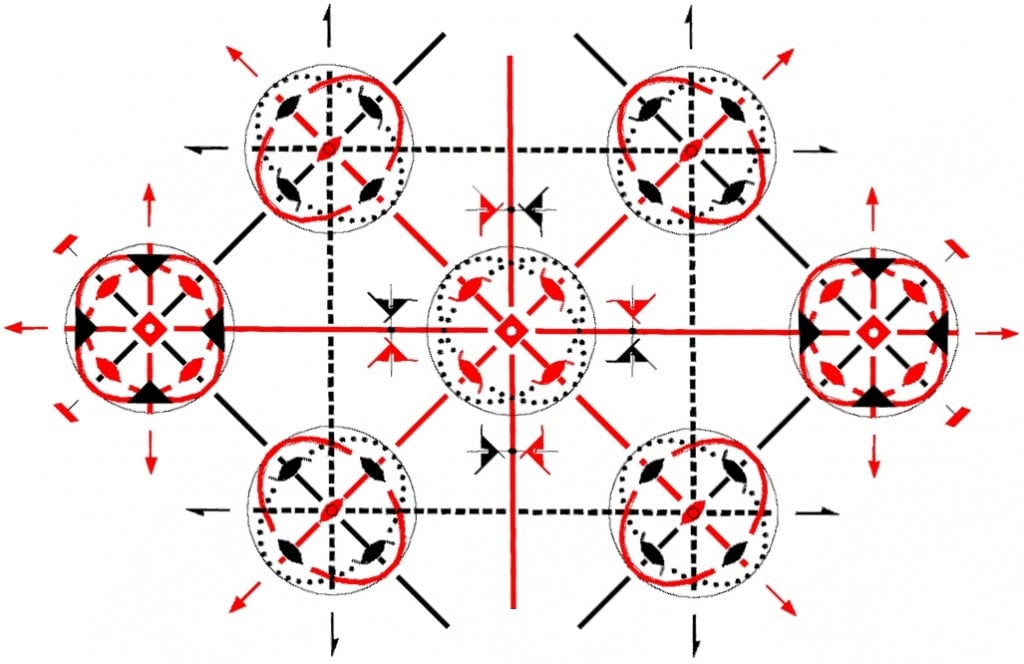
A three-day workshop on the "The Role of Magnetic Symmetry in the Description and Determination of Magnetic Structures". Hands-on tutorials on the exploitation of magnetic symmetry in ISODISTORT, FullProf, JANA, TOPAS, and the Bilbao Crystallographic Server.
Focus: Lecture presentations and hands-on workshop tutorials will focus on the role of magnetic symmetry in the solution and refinement of magnetic structures. Â This will include discussions of magnetic neutron diffraction, the proper description of a magnetic structure (e.g. supercell, wave or irrep-mode parameters), magnetic space groups and superspace groups, magnetic systematic absences, the use of symmetry operators to constrain magnetic models, and the use of symmetry in widely-available structure solution/refinement packages.Target Audience: Â Because many of the methods and tools for applying magnetic symmetry to the solution and refinement of commensurate and incommensurate magnetic structures are relatively new and developing rapidly, this workshop will be of interest to experts and novices alike. Â Students, post-docs, faculty and industrial scientists with a strong interest in the crystallography of magnetic materials should plan to attend. Â We anticipate between 30 and 50 participants.
Polarised Neutrons for Condensed-Matter Investigations PNCM-2014
| - |
In Sydney NSW
The conference will include a tour of the polarised-neutron facilities at the OPAL Research Reactor at ANSTO.
Topics
- Multiferroics and chirality
- Strongly correlated electron systems, including superconductors
- Frustrated and disordered systems
- Magnetic nanomaterials
- Molecular magnetism
- Thin films and multilayers
- Soft matter and biology
- Imaging
- Instrumentation and methods, including nuclear polarisation, Larmor techniques, and depolarisation
- Complementary techniques (NMR, XMCD, …)
- Facility reports

Neutron Scattering Applications to Hydrogen Storage Materials
| - |
In Berlin
Ionic Liquids: Solvents, Materials, or Medicines? Gordon Research Conference
| - |
In Newry, ME
Gordon Research Conference
Ionic Liquids are not new materials - they have been known for over 100 years, but have gained a substantial growth in renewed interest over the last 20 years, and particularly from 1995 onwards, first due to efforts by the United States Air Force in applying ILs as electrolytes, and then as a result of suggestions that ILs have unique properties as VOC solvent replacements and materials with new combinations of physical properties. Interest in the area blossomed in the mid 1990s with the realization that the complexity of the anion and cation components of ionic liquids allowed for relatively easy synthesis of structural variations, causing them to be known as 'designer solvents.' Today ILs are defined generally as those salts with melting points below 100 °C and whose melts are composed of discrete ions, but it is often the unique materials properties set, unavailable from molecular compounds or crystalline salts, that are bringing ILs under even more intense scrutiny. Interest in ionic liquids has been rapidly growing, in part because of the fascinating set of physical, chemical, and biological property sets these materials possess, and in part from the growing realization of new applications in such key areas as Sustainable Energy, Biomass, Biorefineries, Renewable Fuels and Chemicals, Materials, Pharmaceuticals, Separations, Catalysis, and Biotechnology (to name a few). Government and industrial funding in the area is rapidly increasing with the recognition of the many unique potential industrial applications this field offers.
This GRC will highlight many of the emerging themes which are becoming quite important worldwide and will represent an opportunity to meet and discuss these and other major topics in the field with international experts. In addition, representatives from large and small industry can provide insight into key issues such as scale-up, costs, availability, registration, and other key parameters needed to plan new ventures. Lively poster sessions and social events will provide much time for interaction with ionic liquid scientists and engineers from around the world. Participants will learn more about the Ionic Liquid state of matter and the growing impact of these fascinating materials on key societal issues such as Sustainable Energy, New and Renewable Materials, Biology, Biotechnology, and Industrial Processes.
- Chair: Robin D. RogersÂ
- Vice Chair: Anja V. Mudring
Topological methods for expert systems in materials science
| - |
In Samara
The main part of the tutorial will be devoted to practical works with the computer programs TOPOS ( http://www.topos.samsu.ru/ ), Systre, and 3dt ( http://www.gavrog.org/ ) with a special attention to TOPOS.
Multiferroic & Magnetoelectric Materials: Designing for Multifunctionality. Gordon Research Conference
| - |
In Biddeford, ME
The 2014 Gordon Research Conference on Multiferroic and Magnetoelectric Materials is the first in a series of biennial meetings that will present cutting-edge research on the design and properties of multifunctional materials with coexisting and mutually interacting orders. The conference features a wide range of scientifically and technologically important topics such as the origins of various microscopic coupling mechanisms, the behavior of domain structures, the role of spin-orbit coupling, and the consequences of nanoscale confinement. Because these topics are highly cross-cutting, the invited speakers represent a number of different scientific disciplines including chemistry, physics, materials science, and engineering. Lively and well-attended poster sessions are also anticipated. In the spirit of the Gordon Research Conferences, we encourage speakers and poster presenters to emphasize important advances and unpublished results. Besides bringing together researchers from different communities to identify the latest advances and challenges, we anticipate that this venue will promote discussion, jump-start collaborations, and educate a new generation of young researchers and students. This conference will follow the traditional Gordon Research Conference format with programmed discussion sessions after each talk as well as opportunities for informal gatherings in the afternoon and evenings. We encourage active contribution at these events.
- Chair: Janice L. MusfeldtÂ
- Vice Chair: Bernd Lorenz
2014 PSI Summer School on Condensed Matter Research (13th edition) Exploring time, energy and length scales in condensed matter
| - |
In Zug
2014 PSI Summer School on Condensed Matter Research (13th edition)
Exploring time, energy and length scales in condensed matter
Institut Montana, Zug, Switzerland  The PSI summer school 2014 is dedicated to the topic: Exploring time, energy and length scales in condensed matter. International experts and PSI staff members will introduce and deepen your knowledge of these scientific topics. Additionally, you will learn about the experimental methods applied at the large-scale facilities of PSI in order to understand the phenomena, presently at the forefront of modern solid state physics and chemistry.Synchrotron radiation, neutron, and muon sources are used to investigate the structural, electronic and magnetic properties of condensed matter. Using these facilities, the focus of the school is the study of dynamic processes in nature and technology, over the full range of time and length scales at which they actually occur. The principles of the underlying experimental methods will be explained. Evening lectures will address the importance of time, energy and length scales in other scientific fields.  Following the school a practical training at PSI is offered to a limited number of participants. The training allows a hands-on experience at the beamlines of the facilities.
Conductivity & Magnetism in Molecular Materials: Understanding and Controlling Emergent Properties. Gordon Research Conference
| - |
In Lewiston, ME
Conductivity & Magnetism in Molecular Materials
Understanding and Controlling Emergent Properties
August 3-8, 2014Bates College
Lewiston, ME
- Chair: John SchlueterÂ
- Vice Chair: James S. Brooks
Carbon in Electrochemistry. Faraday Discussion 172
| - |
In Sheffield
Carbon in Electrochemistry: Faraday Discussions 172
Introduction
Carbon is ubiquitous in electrochemical research and has played an important role in the development of the discipline. Carbon paste and glassy carbon electrodes have been indispensable in electroanalysis as cheap alternatives to noble metals. The development of the carbon fibre microelectrode revolutionised the use of electrochemical measurements in investigating biological function. In recent years the use of carbon in more novel forms (e.g. carbon nanotubes, graphene) has impacted on all areas of fundamental and applied electrochemistry and this is likely to continue into the future. Advanced electrochemical techniques such as scanning electrochemical microscopy, electrochemical AFM and spectroelectrochemistry have moreover increased our understanding of the interfacial properties of traditional carbon electrode materials. Carbon also plays an important role in technologically applied areas of electrochemistry - Â in energy generation and storage and catalyst support. The use of carbon electrodes thus spans a range of disciplines, requiring input from materials chemists, engineers and physicists as well as those engaged in more traditional aspects of electrochemistry. The subject area is of both academic and technological relevance. The discussion will be of relevance to several of the RSC roadmap priorities, particularly energy, underpinning chemical science, water and health.Aims
This meeting aims to provide an opportunity for researchers from different backgrounds and disciplines to interact.ÂFormat
The Faraday Division have been organising high impact Faraday Discussions in rapidly developing areas of physical chemistry and its interfaces with other scientific disciplines for over 100 years. Faraday Discussions have a special format where research papers written by the speakers are distributed to all participants before the meeting, and most of the meeting is devoted to discussing the papers. Everyone contributes to the discussion - including presenting their own relevant research. The research papers and a record of the discussion are published in the journal Faraday Discussions.Themes
- Graphene, carbon nanotubes and carbon at the nanoscale
- Diamond and sp3 carbons in electrochemistry
- Carbon electrodes in electrochemical energy technology
- Understanding and controlling the carbon interface    Â
Structural Nanomaterials. Gordon Research Conference
| - |
In The Chinese University of Hong Kong
Structural Nanomaterials
Recent Advances in Understanding the Structures and Properties of Nanomaterials
July 20-25, 2014Â
The Chinese University of Hong KongHong Kong, China
- Chairs: Chain T. Liu & T. G. NiehÂ
- Vice Chairs: Jian Lu & Christopher Schuh
Colloidal Semiconductor Nanocrystals: From Fundamental Physics to Functional Materials
| - |
In Smithfield, RI
In its relatively short lifetime, research in field of colloidal semiconductor nanocrystals has clarified and revealed new concepts and mechanisms in photophysics, electronic structure, magnetism, interfacial chemistry, redox chemistry, charge transport, crystal nucleation and growth, and self-assembly, and has introduced new approaches to energy harvesting and conversion, electronics, catalysis, chemical and biological sensing, and biological imaging. The quantum dot field is growing rapidly and in many different directions. We created this new GRC to celebrate, compile, and push forward research in this complex interdisciplinary field. The conference will bring together an outstanding and diverse group of scientists who are making exciting contributions in both fundamental and applied research within the field of colloidal nanocrystals.
- Chair: Emily A. WeissÂ
- Vice Chair: Delia J. Milliron
Nanostructure Fabrication: Nanostructures in Information Technology, Energy Conversion, and Nanoelectromechanical Systems
| - |
In Biddeford, ME
Nanostructure Fabrication
Nanostructures in Information Technology, Energy Conversion, and Nanoelectromechanical Systems
July 13-18, 2014University of New England
Biddeford, ME
- Chair: Charles T. BlackÂ
- Vice Chair: James A. Liddle
International Conference on Highly Frustrated Magnetism 2014
| - |
In Cambridge
This conference follows in the series of HFM 2012 (Hamilton, Canada), HFM 2010 (Baltimore, USA), HFM 2008 (Braunschweig, Germany), HFM 2006 (Osaka, Japan), HFM 2003 (Grenoble, France) and HFM 2000 (Waterloo, Canada).
Cambridge University is conveniently located 45 minutes north-east of London by express train (leaving King's Cross Station). The conference will be hosted at Queens' College, within walking distance of Cambridge city centre. For information on the climate, the history of the City and University, local orientation, and other details please refer to the ever-so-useful Wikipedia page.
Organisers
- Steve Blundell
- Steve Bramwell
- Claudio Castelnovo (chair)
- John Chalker
- Oleg Petrenko

11th European SOFC and SOE Forum
| - |
In Lucerne
11th EUROPEAN SOFC & SOE FORUM
18th Conference in Series with Exhibition
The 11th EUROPEAN SOFC FORUM will be a highlight of the European high temperature fuel cell year. This time, Solid Oxide Fuel Cells and Electrolysers, Proton Conducting Ceramic Fuel Cells and Mixed Ione-Electronic Ceramics â€" SOFC, SOE, PCFC and MIEC â€" will be featured. The topics will range from material to systems and FC&H demonstrations and deployment projects.
Venue place is again the attractive "Kultur- und Kongresszentrum Luzern" (KKL) on the waterfront of the Lake of charming Lucerne in the heart of Switzerland.The EUROPEAN SOFC FORUM consists of a Fuel Cell TUTORIAL on Tuesday, July 1, two parallel lecture series from Wednesday, July 2 to Friday, July 4 and a Fuel Cell EXHIBITION open from Tuesday 16:00 h to Friday 12:00 h. Onsite registration starts on Tuesday, 16:00 h followed by the Welcome Reception from 18:00 to 19:00 h. The Forum is known for its relaxed atmosphere, good food services and attractive side events. All participants will receive the Electronic Proceedings at the time of registration. Social gatherings like the "Swiss Surprise", or the "Dinner on the Lake" on board beautifully restored paddle wheel steamers create excellent opportunities for networking and friendliness.
