Topics
High pressure
IUCr High Pressure Workshop
| - |
In Lund
The workshop will be organized by the ESS (European Spallation Source) with support from MAX IV Laboratory.
Please, save the dates:
- Abstract submission deadline: April 15th
- Abstract notification: May 3rd
- Deadline for registration when accepted abstract: June 1st

4th DyCoMaX Workshop
| - |
In ESRF, Grenoble, France
The DyCoMaX workshop is dedicated to new scientific opportunities offered by the combination of dynamic compression, induced by powerful lasers or other shock-generating devices, with brilliant time-resolved X-ray probes.
Dynamic compression allows to explore very extreme regions of the pressure and temperature phase diagram, up to multi-Mbar pressures and thousands of Kelvin. Exotic states of matter can be induced, such as the Warm Dense Matter - relevant for fundamental science, to constrain theoretical models, and for planetary science, for the description of the interior of (exo)planets. At moderate conditions, the behaviour of matter under high strain rate can be investigated, relevant for material and industrial science, for example for the synthesis of new materials.
States obtained under dynamic compression are transient and difficult to probe. However, in the recent years, the coupling of shock-generating devices to brilliant and time-resolved X-rays probes has brought to a revolution in this field, finally allowing a fine microscopic analysis under dynamic conditions. Two main strategies have emerged: on one side, the development of in-situ X-ray probes at large lasers facilities, on the other side, the construction of powerful and compact lasers or meso-scale gas-launcher at X-rays facilities.
At the ESRF, dynamic compression has been developing around three time resolved techniques: X-ray Absorption on ID24, with the opening of the new High Power Laser Facility (HPLF); X-ray Imaging on ID19 coupled with different dynamic compression devices (meso-scale gas-launcher, laser, Hopkinson bar) and managed through a new community access mode, the Shock BAG;Â X-ray Diffraction on ID09 coupled to a newly installed 5J ns laser.
2023 has also seen the opening of another important facility in Europe: the DIPOLE laser is now in operation on the HED instrument at European XFEL, coupling different X-ray techniques to laser-induced dynamic compression.
Â
News compared to the previous editions:Â
the 4th DyCoMaX will be open to abstract submission, moreover, a training session for selected students will take place on the 14th afternoon.
Â
The main topics of the workshop are:
- Planetary science: structure, evolution, geodynamics of planets, space impacts
- Warm Dense Matter: experiments and modelling
- Behaviour of matter under high strain rates
- Synthesis of new materials, new chemistry
- Synergy with static compression
- Ab-initio simulations for matter under extreme conditions
80th Pittsburgh Diffraction Conference
|
In Pittsburgh, PA
Dear Colleagues
We (the board members of the Pittsburgh Diffraction Society) are pleased to announce the availability of travel awards to attend the 80th Pittsburgh Diffraction Conference. The Conference will be held at the Society’s ancestral home, in Pittsburgh, PA, on October 15, 2023 â€" October 17, 2023.
The awards are aimed at students, postdoctoral fellows as well as (non-faculty) staff scientists. Applications from minorities underrepresented in the sciences are especially encouraged. Details can be found here as well as attached.
The conference program includes
·        A historic overview on the Pittsburgh Diffraction Society
·        Scientific Sessions covering the Latest Development at Light Sources, High-pressure Applications, Structure-based drug design, Synergy of Computation and Crystallography, Crystallography and Cryo-EM, Structure property relationships in Quantum and Layered Materials, and many more!
·        A Young Investigator Platform showcasing achievements of students and postdocs
·        Student posters are eligible for the Chung Soo Yoo Award, which carries a $400 cash prize, related to materials and biological research, respectively
·        Fun social activities and Vendor Shows!
·        A Phenix Workshop prior to the conference (Oct 14, 2023, limited availability!)
Â
For the entire program, the venue and more details, and to register, please visit the conference web page.
ECM-34. European Crystallographic Meeting
| - |
In Padova
The flagship of the European Crystallographic Association (ECA) activities is the European Crystallographic Meeting (ECM), held every year, except when there is an IUCr Congress. The ECMs are the main meeting point for crystallographers in the ECA area to show their recent research. Microsymposia at ECMs are proposed and organized by ECA SIGs.
ECM 34 will be organized at the Padova Congress Centre on behalf of ECA and AIC. It will include all topics of interest to crystallography and it will be organized in synergy with EPIDC 18, which will follow ECM 34 in the same location.
10th Anniversary Meeting of the Young Crystallographers
|
In Hamburg, Germany
The Young Crystallographers are a working group within the German Society for Crystallography (DGK). For 10 years, we meet regularly in autumn at different universities or the STOE facilities.
These meetings specifically aim to provide a platform for networking and scientific exchange for young scientists with an interest in crystallography, as well as to establish contacts with industry and research institutions.
We want to give young scientists the opportunity to gain early experience in scientific presentation in a relaxed atmosphere and without the stress of a larger conference.
For our grand anniversary, we are happy to meet at the DESY facilities! We are working hard to allow you deep insights as well as a great overview of the possibilities at this large-scale facility.
During the 3-day meeting, you willÂ
- present your own work as a poster (A0 portrait) and lightning talk (~5 min.)
- have the DESY campus tour
- participate in an experiment and get a hands-on experience at a beamline of your choice at PETRA III (see The Experiments)
- hear academic talks from senior scientists
- hear industry talks from our sponsors/partners
At the end of the meeting, you will also have the chance to join a tour of the European XFEL Campus. If you intend to participate, please indicate so during registration. Note that you will need to get to the XFEL facilities by public transport as it is a bit outside the main DESY campus.
The registration fee of 60 € includes the tours and experiments at DESY, coffee breaks as well as lunch and BBQ on Thursday.
Deadline for registration is 22.08.23.
European Conference on Neutron Scattering (ECNS 2023)
| - |
In Garching near Munich
The MLZ is delighted to host the Eighth European Conference on Neutron Scattering after successful events atÂ
- Interlaken 1996
- Budapest 1999
- Montpellier 2003
- Lund 2007
- Prag 2011Â
- Zaragoza 2015
- St. Petersburg 2019
The conference is organized on behalf of the European Neutron Scattering Association (ENSA) and is one of the most important scientific events in the field of neutron research.Â
The conference will take place at the TUM Department of Mechanical Engineering and the new Science Congress Center Munich - both located in the immediate vicinity of the MLZ at Garching.Â
After a warm Welcome on March 19th, we are looking forward to four days of thrilling talks, pleasant posters, and decent discussions of the European neutron scattering community between March 20th and 23rd!Â
Â
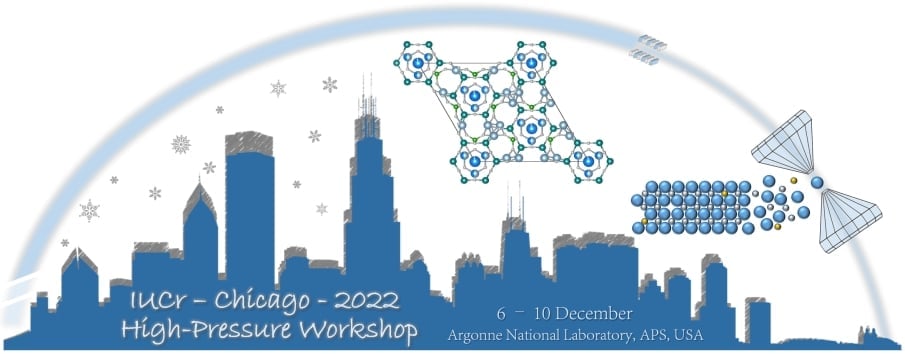
2022 IUCr High Pressure Workshop â€Å"Advanced High Pressure Crystallographyâ€Â
| - |
In Chicago
For the past three decades high pressure research has made breakthrough progress in many fields of science mainly due to the significant improvements in the high-pressure apparatus and developments of advanced static and dynamic probes. Most of the experiments at extreme conditions are very challenging and require dedicated techniques to collect crystallographic data with unprecedented speed and resolution to quantitatively characterize pressure/temperature induced transformations in the crystalline lattice. The tunability, brilliance, and collimation of synchrotron X-ray sources provides scientists with unique capabilities for probing the structural, chemical, and physical properties of various types of materials in-situ at extreme pressure, temperature, and strain with ultra-high spatial, temporal and energy resolution. However, in many cases the complex energy landscapes of multicomponent chemical systems require the use of the predictive power of computational methods that play an essential role in extreme-conditions crystallography coupled with physical experiments.
The purpose of the 2022 workshop of the International Union of Crystallography (IUCr) Commission on High Pressure is to bring together researchers who apply extreme-conditions crystallography in combination with other experimental and computational methods to study a wide range of material properties covering various fields of science, including condensed-matter physics, solid-state chemistry, geophysics, materials science, biology, nanotechnology etc. The workshop aims to facilitate extensive discussion and interdisciplinary collaboration.
Students, postdocs and early carrier scientists in particular will find this workshop helpful in gaining improved familiarity with available state-of-the-art methods and how they can be applied to their research.
We plan to organize a tour to the relevant APS beamlines for workshop attendees (pandemic permits) and a half-day tutorial with hands on examples.
Gordon Research Conference - Crystal Engineering
|
In Sunday River, Maine (USA)
The 2022 Gordon Research Conference on Crystal Engineering (GRC-CE) is a biannual meeting. The 2022 GRC-CE will bring together organic, inorganic, physical, computational chemists, as well as pharmaceutical scientists, materials scientists, data scientists, and others in a uniquely and highly interactive environment to discuss latest results at the cutting edge of the field. The program for the 2022 GRC-CE GRC includes sessions on Order, Disorder and Defects, Crystal Assembly, Polymorphs and Mixtures, Crystals Under Pressure, Crystal Reactivity, Pharmaceuticals and Cocrystals, Big Data and Informatics, Porosity and Open Framework Materials, and Engineering Across Different Length Scales.Â
An associated Graduate Research Seminar (GRS) prior to the GRC-CE conference ensures that young scientist are well represented as attendees at the GRC-CE. The highly interactive format of both the GRC and GRS ensures it will be a valuable experience for the next generation of researchers in the field. Â
International School of Crystallography. 46th Course, Crystallography under extreme conditions: the future is bright and very compressed
| - |
In Erice
Subjecting matter to extreme conditions reveals a multitude of fascinating phenomena, and is applicable to a wide range of disciplines. From the extremophiles that exist in the deepest depths of our oceans to the exotic new materials that are made when atoms are pushed ever closer together, understanding the structure of materials at extreme conditions affects Biology, Chemistry, Physics, Geoscience and Material Science. In order to achieve its goals, high pressure research has been always at the vanguard of technical progress. It is a discipline in which equipment plays a particularly important role. State-of-the-art diamond anvil cells can now achieve megabar ranges of pressure, millions of times atmospheric pressure, with this beaten by an order of magnitude in dynamic compression experiments. In this manner, scientists are able to mimic the conditions in the interiors of giant planets. Nature is even more ambitious, as in the stars petapascal pressures (the order of tens to hundreds billion atmospheres) are reached. In the laboratory, we can even create conditions of pressure, temperature and magnetic fields that are not found naturally, allowing us to complement nature to explore more exotic phases of matter.
Therefore, the course will cover broad ground in the application of extreme conditions crystallography. The topics will span from fundamentals of high-pressure single crystal and powder diffraction, to presenting the many flavors of static and dynamic compression, to reviews of sources for extreme conditions work (synchrotrons, neutrons and free electron lasers). Complementary experimental (Mössbauer spectroscopy, X-ray magnetic circular dichroism, X-ray absorption spectroscopy, inelastic scattering) and computational methods will also be discussed. Diffraction analysis on the structure of liquids, glasses and nanocrystalline materials as well as multigrain crystallography will also be introduced. The lectures will be harmonized with the related sessions of interactive tutorials, providing hands-on experience to the attendees. These workshops will be focused on basic laboratory skills and the elements of data processing software related to the high pressure.
Crystallography under Extreme conditions: the future is bright and very compressed
| - |
In Erice(TP)
Subjecting matter to extreme conditions reveals a multitude of fascinating phenomena, and is applicable to a wide range of disciplines. From the extremophiles that exist in the deepest depths of our oceans to the exotic new materials that are made when atoms are pushed ever closer together, understanding the structure of materials at extreme conditions affects Biology, Chemistry, Physics, Geoscience and Material Science.
In order to achieve its goals, high pressure research has been always at the vanguard of technical progress. It is a discipline in which equipment plays a particularly important role. State-of-the-art diamond anvil cells can now achieve megabar ranges of pressure, millions of times atmospheric pressure, with this beaten by an order of magnitude in dynamic compression experiments.
The course will cover broad ground in the application of extreme conditions crystallography. The topics will span from fundamentals of high-pressure single crystal and powder diffraction, to presenting the many flavors of static and dynamic compression, to reviews of sources for extreme conditions work (synchrotrons, neutrons and free electron lasers). Complementary experimental (Mössbauer spectroscopy, X-ray magnetic circular dichroism, X-ray absorption spectroscopy, inelastic scattering) and computational methods will also be discussed. Diffraction analysis on the structure of liquids, glasses and nanocrystalline materials as well as multigrain crystallography will also be introduced.
3rd workshop on Studies of Dynamically Compressed Matter with X-rays
| - |
In Online
Dynamic compression offers a route to extreme conditions of pressure and temperature that go beyond what is possible today by static compression. Exotic states of matter can be attained, such as Warm Dense Matter, relevant for planetary science, for the description of the interior of the planets and extrasolar planets, fundamental science, to constrain theoretical models, and energy science, for Inertial Confinement Fusion.
In more moderate conditions, dynamic compression can be used to look at the behavior of matter and materials under high strain rates that can strongly differ from the static case. This area of research also encompasses industrial processes such as laser machining or synthesis of new materials.

IUCr High-Pressure Workshop 2021
| - |
In Online
Due to the pandemic restrictions, the workshop will be held online using Zoom software.
No registration fee is required. Participation is free for all participants, but registration is obligatory.
FROLIC GOATS: 13th HIGH-PRESSURE DIFFRACTION WORKSHOP
| - |
In PoznaÃ...„, Poland
Its primary goal is to disseminate practical skills allowing one to perform high-pressure experiments in an x-ray lab, and to outline possibilities to continue one's studies at dedicated high-pressure beamlines in synchrotrons, nuclear reactors and spallation sources.
Modern x-ray diffraction equipment installed in most laboratories can be used for high-pressure experiments straightforwardly, or after few minor modifications - these modifications can be as simple as mounting a shorter collimator and re-positioning the beam-stop to provide space for the diamond- anvil cell (DAC). The DAC is a simple and relatively cheap device, so crystal structures in high pressure can be studied in most x-ray labs.

Diffraction sous conditions extrêmes ou atypiques
| - |
In Rennes
Le RÉseau des Chercheurs et ITA PROfessionnels de la Cristallographie Structurale, ЯÉCIPROCS, organise une formation sur la diffraction sous conditions extrêmes ou atypiques à Nancy les lundi 18 et mardi 19 novembre, juste avant le colloque Rayons-X & Matière.
Au programme: diffraction sous champ électrique, photocristallographie, XFEL, diffraction sous flux et pression de gaz, .... Pour tout le programme et les inscriptions, voir ici. Date limite d'inscription le 30 septembre prochain.
BCA Industrial and Chemical Groups meeting "By hook or by crook â€" structural solutions from challenging crystals"
|
In Stevenage, UK
American Geophysical Union Fall Meeting
| - |
In San Francisco, CA
The 27th AIRAPT International Conference on High Pressure Science and Tecnology
| - |
In Rio de Janeiro, Brazil
The 27th International Conference on High Pressure Science and Technology (AIRAPT27), the largest and most important international scientific event in the field of high pressure science and technology, will be held in Rio de Janeiro from 04th to 09th August, 2019, in the Convention Center of the Windsor Barra Hotel, a 5 stars hotel located in the region of Barra da Tijuca, Rio de Janeiro, Brazil.
On this website you will find information regarding registration, abstract submission, hotel reservation, visa procedure, the city of Rio and Brazil, social events, and many other subjects of interest to those who plan to attend the AIRAPT27 Conference.
As an important complement, to enhance the impact of the AIRAPT Conference in Brazil and taking advantage of the planned commissioning of the extreme conditions beamline at SIRIUS in 2019, a satellite event on Synchrotron techniques under high pressure (PRESSYNC) will be organized in Campinas, the week before the AIRAPT27, to celebrate this milestone in high pressure research in Latin America.

Synchrotron Techniques Under High Pressure
| - |
In Campinas, Brazil
Between July 31st and August 2nd, 2019, the Brazilian Synchrotron Light Laboratory (LNLS), part of the Brazilian Center for Research in Energy and Materials (CNPEM), will host the event Synchrotron Techniques Under High Pressure (PRESSYNC).PRESSYNC is a satellite workshop to the 27th International Conference on High Pressure Science and Technology (AIRAPT27).
The AIRAPT27 conference, sponsored by AIRAPT (International Association for the Advancement of High-Pressure Science and Technology), is the largest and most important international scientific event in the field of high-pressure science and technology. The 27th conference in Rio de Janeiro will be the first one to be held in the southern hemisphere. The conference gathers a multidisciplinary international community whose focus is on fundamental and applied research at extreme pressure conditions, as well as on the associated technology and instrumentation.
Taking advantage of this opportunity, the PRESSYNC Satellite Workshop will bring together world leaders in high-pressure science to discuss the potential of synchrotron-based techniques under high pressure on the new fourth-generation synchrotron light sources, such as Sirius.
Sirius, the new Brazilian synchrotron light source, is planned to be one of the most advanced facilities of its kind in the world, opening new perspectives for research in a wide range of fields. Hence, PRESSYNC aims specially to motivate the community around the several possibilities that will be available at Sirius’ extreme conditions beamline, EMA.

57th European High Pressure Research Group Meeting on High Pressure Science and Technology
| - |
In Prague
The European High Pressure Research Group (EHPRG) was established in the sixties of the last century to support a development of both the basic as well as the applied high pressure research by the annual meetings. To create a close contact of all the workers in scientific and technological high pressure disciplines, the wide scope of the EHPRG conferences is traditional and characteristic feature of these meetings. A relatively rapid increase of high pressure activities in almost all areas of Physics, Geosciences, Material Research, Chemistry and namely in Biosciences during the last decades demands a similarly rapid exchange of knowledge in high pressure research and technology.
Gordon Conference on Research at High Pressure
| - |
In Holderness, NH, US