Topics
Solid-state chemistry
30th Annual Meeting of the German Crystallographic Society
| - |
In Munich
The 30th Annual Meeting of the German Crystallographic Society (DGK 30), which will take place in the historical main building of the Ludwig-Maximilians-University in Munich, will feature presentations and discussions of recent and exciting results of research on crystallographic topics.
International School of Crystallography. 46th Course, Crystallography under extreme conditions: the future is bright and very compressed
| - |
In Erice
Subjecting matter to extreme conditions reveals a multitude of fascinating phenomena, and is applicable to a wide range of disciplines. From the extremophiles that exist in the deepest depths of our oceans to the exotic new materials that are made when atoms are pushed ever closer together, understanding the structure of materials at extreme conditions affects Biology, Chemistry, Physics, Geoscience and Material Science. In order to achieve its goals, high pressure research has been always at the vanguard of technical progress. It is a discipline in which equipment plays a particularly important role. State-of-the-art diamond anvil cells can now achieve megabar ranges of pressure, millions of times atmospheric pressure, with this beaten by an order of magnitude in dynamic compression experiments. In this manner, scientists are able to mimic the conditions in the interiors of giant planets. Nature is even more ambitious, as in the stars petapascal pressures (the order of tens to hundreds billion atmospheres) are reached. In the laboratory, we can even create conditions of pressure, temperature and magnetic fields that are not found naturally, allowing us to complement nature to explore more exotic phases of matter.
Therefore, the course will cover broad ground in the application of extreme conditions crystallography. The topics will span from fundamentals of high-pressure single crystal and powder diffraction, to presenting the many flavors of static and dynamic compression, to reviews of sources for extreme conditions work (synchrotrons, neutrons and free electron lasers). Complementary experimental (Mössbauer spectroscopy, X-ray magnetic circular dichroism, X-ray absorption spectroscopy, inelastic scattering) and computational methods will also be discussed. Diffraction analysis on the structure of liquids, glasses and nanocrystalline materials as well as multigrain crystallography will also be introduced. The lectures will be harmonized with the related sessions of interactive tutorials, providing hands-on experience to the attendees. These workshops will be focused on basic laboratory skills and the elements of data processing software related to the high pressure.
2nd International School on Advanced Porous Materials (MOFschool 2021)
| - |
In Online from Como
Virtual Workshop: Searching and analysing using ConQuest and Mercury
|
In Virtual
Wednesday, 21st July from 3pm to 4.30pm (BST)
Â
In this workshop you will explore advanced tips and tricks to search and analyse metal-organic structures by:
- Learning advanced searching options in ConQuest.
- Learning how to use subsets in ConQuest.
- Learning how to export and analyse hitlists in Mercury.
The workshop will focus on metal-organic structures, but is open to scientists interested to other structures in the CSD.
Â
Requirements:
- Feeling comfortable with basics of Mercury visualisation:
- Navigating the Mercury interface.
- Editing styles, and colours.
- Displaying packing diagrams.
If not, consider reviewing our self-guided visualisation workshop before the event.Â
- Feeling comfortable with the basics of searching in ConQuest:
- Navigating the ConQuest interface, and in particular the Build Queries tab options.
- Drawing substructures in the Draw window.
If not, consider reviewing our self-guided searching workshop before the event.Â
- A current, valid CSD licence - CSD-Core or above.
11th Belgian Crystallography Symposium
|
In Online
Given the current situation and the fact that knowledge dissemination has to continue, the BCS meeting will be an 'open for all', free of charge event. Registration is required for organizational purposes.
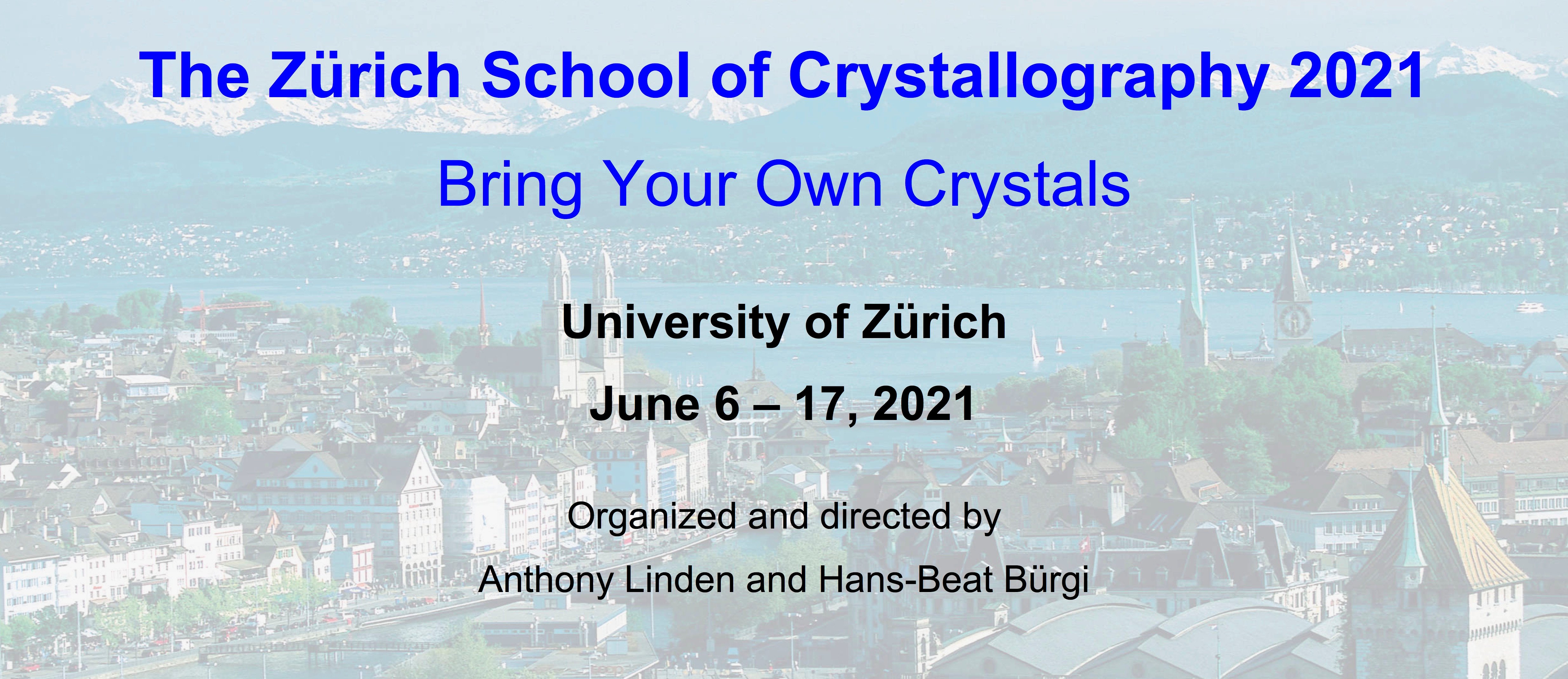
The Zurich School of Crystallography 2021: Bring Your Own Crystals
| - |
In Zurich
International conference on Materials Science and Engineering
| - |
In Brisbane
It is a great pleasure and honour to invite colleagues from academia and business, as well as young researchers and students from all parts of the world to attend the Materials Science Conference. The conference, scheduled from October 11-14, 2021 is organized by Prism Scientific Services in collaboration with The University of Queensland.
Â
The conference will underpin the need and importance of collaboration and cooperation by individuals from a wide range of professional backgrounds. Materials Oceania will bring together a multidisciplinary group of scientists and engineers from all over the world to present latest findings and to exchange their ideas. This in turn paves the way for further discoveries, which most often happen where disciplines and specialists meet and congregate. In fact the development of materials was, is and will be fundamental for all technological applications, and in the entire field of applied science targeting the improvement of quality of life for humanity. At the end of the materials conference, we hope that attendees will feel they have generated the most up-to-date information available.
Â
We hope that you will join us for a symphony of outstanding science, and to also take a little extra time to enjoy the spectacular and unique beauty of Brisbane City.
#TheLightStuff: Effects of annealing and pressure on the Grazing Incidence X-ray Scatterings of Conjugated Polymer blends used in Organic Solar Cells
|
In Online
Start: 02/10/2020 03:30 PM End: 02/10/2020 04:30 PM
Please note the given time above is CEST (CEST = UTC + 2; BST = UTC + 1)
Location: Zoom online
Organized by: Bundesanstalt für Materialforschung und -prüfung and Diamond Light Source, UK
Topic
Effects of annealing and pressure on the Grazing Incidence X-ray Scatterings of Conjugated Polymer blends used in Organic Solar Cells
Presenter:
Dr Benjamin Agyei-Tuffour, University of Ghana, GH
Summary
This presentation shows the results of an experimental study of the effects of pressure and annealing on the conjugated polymer chain configurations in poly (3-hexylthiophene) and [6,6]-phenyl C61-butyric acid methyl ester (P3HT:PCBM) blends that are used in bulk heterojunction organic photovoltaic cells (OPVs). Annealing and the application of static loads on P3HT:PCBM blends on glass substrates were investigated. Microscopy and grazing incidence x-ray scattering techniques were adopted to analyze the surface morphologies, nano-/micro-structures and the chain configurations in the conjugated polymer blends. The OPV devices fabricated resulted in the I-V characteristics that have large dependence on the changes in the nano-/ micro-structures of the polymer blends. The pressure induced polymer chain configurations that were in the direction of the applied pressure (edge-on), led to a reduced lamellae spacing between the polymer units. This increased the crystallinity in the blend and played significant role in the organic solar cell performance. The findings of the study are discussed to influence the design and control of the nano-/micro-structures and the performance of bulk heterojunction organic solar cells.
Registration fee
These lectures are free and can be attended via Zoom by to up to 100 attendees.
The lectures will be recorded as well, and (with permission of the presenter) will be made available online afterwards for a broader educational reach.
To participate, use the meeting join link here.
For further questions, please contact [email protected].
HERCULES 2021
| - |
In Grenoble
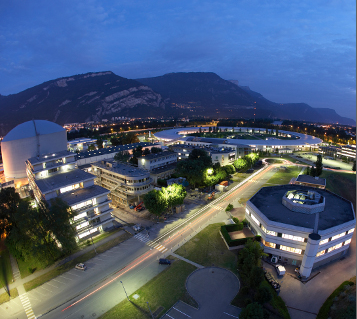
This one month course, coordinated by the Université Grenoble Alpes, is designed to provide training for students, postdoctoral and senior scientists from European and non-European universities and laboratories, in the field of Neutron and Synchrotron Radiation for condensed matter studies (Biology, Chemistry, Physics, Materials Science, Geosciences, Industrial applications). It includes lectures, practicals and tutorials, visits of Large Facilities and a poster session (each participant puts up a poster about her/his thesis or research topic for a day).
- PART I:Â BASIC METHODS AND INSTRUMENTSÂ :
(This part is common for all the participants - 1.5 weeks) - PART II is divided into two parallel specialized sessions (3.5 weeks) :
- Session A:Â PHYSICS AND CHEMISTRY OF CONDENSED MATTER
- Session B:Â BIOMOLECULAR STRUCTURE AND DYNAMICS
A special seven days programme is included , in a partner institution among European Large instruments. In 2021, one week (out of the five of the school) will be spent in one different partner institutions among 4:
- ALBA synchrotron in Barcelona, Spain
- KIT Light Source in Karlsruhe, Germany
- Elettra and FERMI in Trieste, Italy
- Swiss Light Source / Paul Scherrer Institute in Villigen, Switzerland
The language of the course is English.
HERCULES European School: Neutrons & Synchrotron for Science
| - |
In Grenoble
This one month course, coordinated by the Université Grenoble Alpes, is designed to provide training for students, postdoctoral and senior scientists from European and non-European universities and laboratories, in the field of Neutron and Synchrotron Radiation for condensed matter studies (Biology, Chemistry, Physics, Materials Science, Geosciences, Industrial applications). It includes lectures, practicals and tutorials, visits of Large Facilities and a poster session (each participant puts up a poster about her/his thesis or research topic for a day).
- PART I: BASIC METHODS AND INSTRUMENTS :
(This part is common for all the participants - 1.5 weeks) - PART II is divided into two parallel specialized sessions (3.5 weeks) :
- Session A: PHYSICS AND CHEMISTRY OF CONDENSED MATTER
- Session B: BIOMOLECULAR STRUCTURE AND DYNAMICS
The language of the course is English.

Colloidal, Macromolecular and Polyelectrolyte Solutions
| - |
In Ventura, CA
Engineered Response in Soft Matter
Molecular and Ionic Clusters. Gordon Research Conference
| - |
In Ventura, CA
Molecular Models of Chemical Structure and Dynamics
23rd EuroQSAR - 23rd European Symposium on Quantitative Structure-Activity Relationship Integrative Data-Intensive Approaches to Drug Design
| - |
In Barcelona
The program will include the following sessions:
- QSAR without Borders
- Artificial Intelligence in Drug Design
- Molecular Dynamics and Kinetics
- Chemical Space Annotation and Expansion
- Modelling Drug Safety
- Challenges in GPCR Drug Design
- Modelling Drug Transport Mechanisms
- Predicting Off-Target Pharmacology
- Network Medicine
- New Modes of Target Interaction
- New Trends in Quantum Mechanics
- Future Challenges Ahead

BCA Industrial and Chemical Groups meeting "By hook or by crook â€" structural solutions from challenging crystals"
|
In Stevenage, UK
57th European High Pressure Research Group Meeting on High Pressure Science and Technology
| - |
In Prague
The European High Pressure Research Group (EHPRG) was established in the sixties of the last century to support a development of both the basic as well as the applied high pressure research by the annual meetings. To create a close contact of all the workers in scientific and technological high pressure disciplines, the wide scope of the EHPRG conferences is traditional and characteristic feature of these meetings. A relatively rapid increase of high pressure activities in almost all areas of Physics, Geosciences, Material Research, Chemistry and namely in Biosciences during the last decades demands a similarly rapid exchange of knowledge in high pressure research and technology.
First International School on Advanced Porous Materials
| - |
In Como
It is a great pleasure for us to welcome you to the
First International School on Advanced Porous Materials (MOFSchool)
Metal-organic Frameworks (MOFs) and Covalent-organic Frameworks (COFs) are non-conventional porous materials based on the self-assembly of organic/inorganic and organic/organic prearranged synthons, respectively. The extensive library of synthons and synthetic conditions can lead to the formation of a wide variety of MOFs and COFs with functional properties â€" adsorption, separation, capture, heterogeneous catalysis, sensing, drug delivery, to quote a few â€" that outperform, in many aspects, those of classical porous materials.
This field of research is progressing very fast, evolving from an initial interest on the synthesis and characterization of these systems to the preparation of targeted advanced porous materials with exotic properties.
Advanced porous materials functional properties are of interest to the ever increasingly demanding technological sector. Consequently, unique products based on them are arriving (or will soon arrive) on the market. Yet, there is still a large playground for making new materials and/or improving the properties of existing ones.
The big question is: How can we do it??
The MOFSchool aims to provide you with tools to answer this question, by showing you how to rationally prepare, characterize, modify and shape MOFs and COFs into next-generation materials. In order to achieve this goal, we have gathered an impressive group of internationally recognized teachers, including Vladislav A. Blatov, Silvia Bordiga, Roland A. Fischer, Felipe Gándara, Rob Ameloot, Kirill A. Lomachenko, Jeffrey R. Long, Jorge A.R. Navarro, Davide M. Proserpio and Omar M. Yaghiâ€
The MOFSchool, jointly organized by the Universities of Insubria, Milano La Statale and Granada, has made a great effort to encourage participation of young, enthusiastic scientists from any corner of the world, for which we are gratefully indebted to our generous funders.
We are looking forward to welcoming you to Villa del Grumello
and we are sure you will have a very fruitful and pleasant stay on the amazing shores of the Lake of Como!
Sincerely yours,
Valentina Colombo, Simona Galli and Jorge A.R. Navarro (School Directors)
17th European Powder Diffraction Conference - EPDIC17
| - |
In Ã... ibenik
The European Powder Diffraction Conference, EPDIC, is a biannual conference dedicated to all aspects of the analysis of polycrystalline materials by diffraction methods. Each EPDIC has the aim to highlight the latest developments in powder diffraction including methodology, data analysis and instrumental advances. EPDICs traditionally bring together scientists from institutes, universities and instrumentation companies to discuss the progress in academic and industrial research related to powder diffraction. The 17th edition of EPDIC (EPDIC17) will take place in the town of Šibenik, an emerging star of the Croatian Adriatic coast.

14th International Symposium on Macrocyclic and Supramolecular Chemistry
| - |
In Lecce
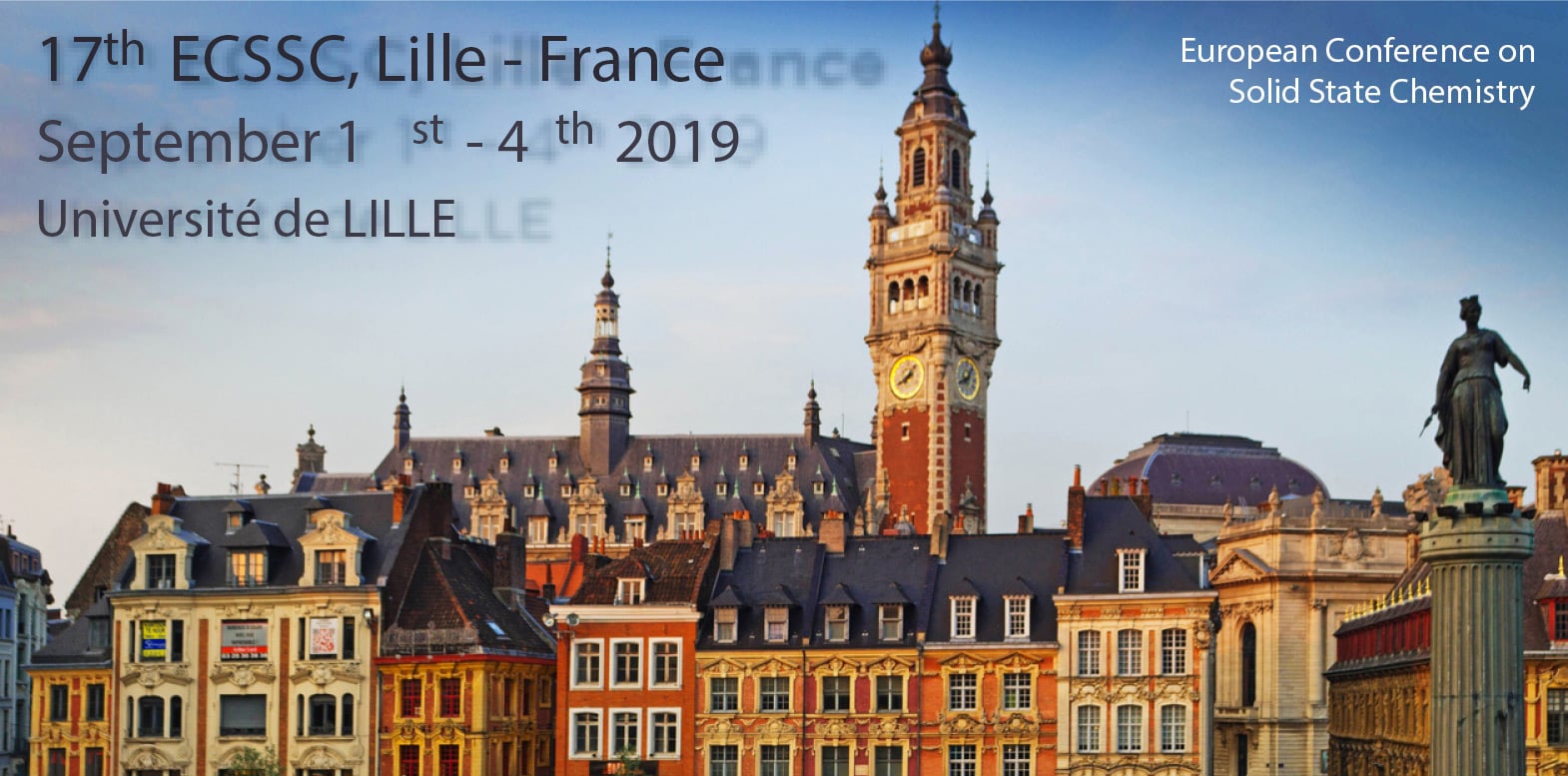
17th ECSSC European Conference on Solid State Chemistry
| - |
In Lille
Bordeaux Polymer Conference (BPC 2018)
| - |
In Bordeaux
The Laboratoire de Chimie des Polymères Organiques (LCPO) is delighted to announce the first edition of Bordeaux Polymer Conference (BPC 2018) to be held from May 28-31, 2018 in Bordeaux (Talence Campus).
The goal of BPC 2018 is to gather the best scientists involved in the field of Polymer Science to discuss topics as wide as :
- Polymerization mechanism and catalysis
- Macromolecular engineering
- Green polymers
- Polymer self-assembly
- Interactions of polymers in life sciences and electronics