Quantum crystallography is a relatively new interdisciplinary field that combines quantum mechanics with crystallographic methods to determine and interpret the electronic structure of materials from diffraction data. It goes beyond classical structure determination by modeling electron-density distributions rather than only atomic positions. Its goal is to link measured structural data to underlying electronic properties, enabling deeper insight into chemical bonding, reactivity, and material behavior.
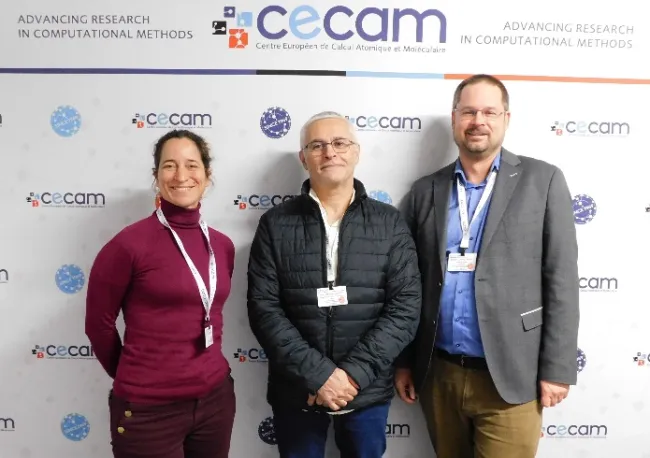
This workshop was the third edition of the discussion meetings on quantum crystallography, organized for the first time as a flagship meeting at the CECAM headquarters on the EPFL campus with just over 50 participants from around the world. After the Gordon Research Conference on Electron Distribution and Chemical Bonding held in 2013, this was the first dedicated conference on quantum crystallography in Switzerland (Feb 11th to 13th, 2026). The generous financial support by IUCr was gratefully acknowledged.
These CECAM discussion meetings follow a format different from regular conferences or workshops. Research presentations are not in the focus, but extended discussions about controversial and timely issues in the field – across generations. This time, the workshop focused on methodological advances and interdisciplinary integration. A major topic was the use of AI and machine learning to improve electron-density analysis, solve the phase problem, and accelerate data processing. While promising, these approaches raised concerns about interpretability, reproducibility, and their black-box nature. Strong emphasis was also placed on combining quantum crystallography with quantum mechanics and advanced experimental techniques such as time-resolved crystallography and Compton scattering. Participants highlighted that integrating theory and experiment is essential for accurately describing electronic structure and dynamics. Additional discussions addressed disorder, diffuse scattering, and thermal motion, as well as the need for more unified and user-friendly software environments. Community and structural aspects were also central, including exchanges between early-career and senior researchers and discussions on inclusivity, career development, and work–life balance. The historical development of the field and its communication to related disciplines were also reflected upon.
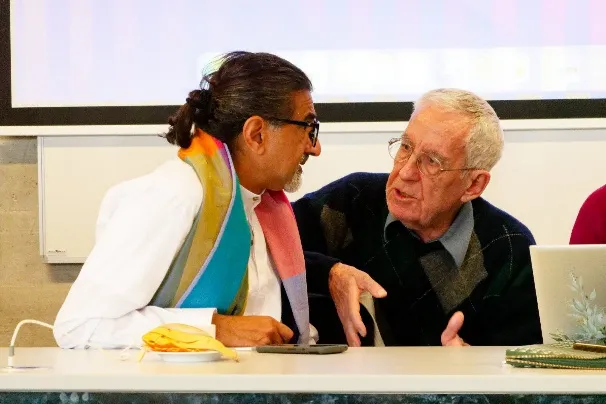
Dylan Jayatilaka and Hans-Beat Bürgi
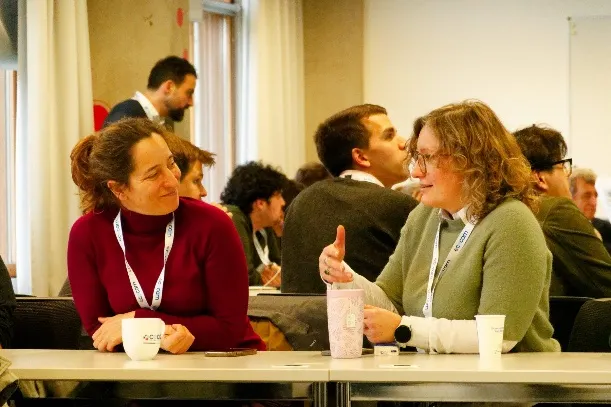
Julia Contreras-García and Anna Krawczuk
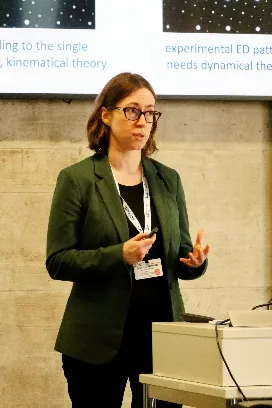
Joke Hadermann
Author Information
Simon Grabowsky