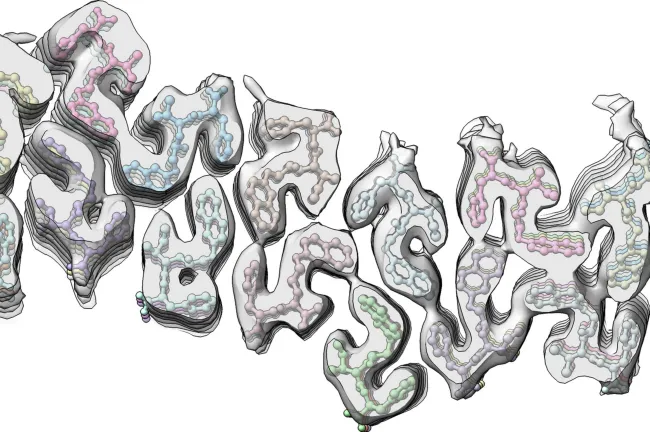
In 2014 Werner Kühlbrandt wrote a Perspective entitled The Resolution Revolution (Kühlbrandt, 2014) about how we were entering a new era in molecular biology where structures of macromolecular complexes could now be determined at near-atomic resolution by electron cryo-microscopy (cryo-EM). The Perspective heralded the publication of a 3.2 Å resolution cryo-EM structure of the mitochondrial ribosome's large subunit (Amunts et al., 2014). While this ribosome structure was a spectacular advance at the time, showing that such a complex did not need to be crystallized to reach a resolution that would enable the building of an atomic model, reaching such a resolution is now a daily event using cryo-EM. In fact, there are now ∼1800 ribosome structures at better than 4.0 Å resolution deposited in the Electron Microscopy Data Bank (EMDB), with 36 of these at a resolution better than 2.0 Å. True atomic resolution (which by definition means that individual atoms are resolved) is not reached until 1.2–1.3 Å. If 3.2 Å is near-atomic resolution, than a 1.6 Å ribosome structure (Fromm et al., 2023) might be called 'even nearer' atomic resolution.
Author Information
Edward Egelman