Topics
Nanomaterials
ElCryS24 : Electron Crystallography School 2024
|
In Padova, Italy
Synclight 2024 - São Paulo School of Advanced Science on 4th Generation Synchrotron Techniques
|
In Campinas
Promoted by CNPEM and funded by São Paulo Research Foundation (FAPESP), SyncLight 2024 aims to gather young researchers from Brazil and around the world to discuss the recent opportunities offered by advanced experimental synchrotron techniques available at Sirius, the Brazilian 4th generation light source.
Over the past decades, synchrotron light sources have played a significant role in the development of modern natural sciences and engineering. With a wide range of experimental techniques available, synchrotron light sources have revolutionized the way scientists study and characterize materials in the fields of Physics, Chemistry, Biology, Health, Energy, New Materials, Environmental Sciences, and many others.
The interdisciplinary nature of the event, combined with the collaboration of the LNLS User Committee, which includes researchers from various institutions across Brazil, will contribute to the exchange of experiences among young researchers, professors, and experienced researchers. The event's program includes lectures, poster sessions, and guided tours at the facilities will also be organized. Tutorials on experiments conducted, demonstrations on the control of the accelerators, as well as data analysis and simulations taught by LNLS researchers, at the laboratory's beamlines, are also planned.
The theme is particularly relevant to the Brazilian scientific scenario, as Sirius is one of the most modern and brilliant synchrotron light sources in the world. Currently, ten beamlines are open to the scientific and technological community, out of a set of 14 initially planned to cover a wide range of scientific programs. One of the objectives of SyncLight 2024 is precisely to assist in the training and formation of a new generation of user-researchers, capable of benefiting from this large scientific infrastructure in operation in Brazil.
SyncLight 2024 is part of the São Paulo School of Advanced Science (SPSAS) modality, funded by FAPESP, which provides resources to promote short courses in different areas of knowledge in the State of São Paulo.

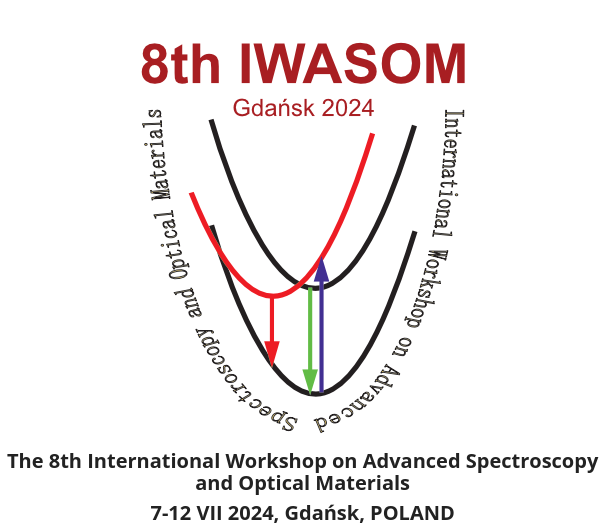
International Workshop on Advanced Spectroscopy and Optical Materials (IWASOM 2024)
| - |
In Gdansk
Topics
- Nanoscale optical materials and single nano-objects
- Thin films and low-dimensional systems
- Optical control and detection of quantum systems
- Phosphors: recent progress, new materials, and applications
- Radioluminescence, optically and thermally stimulated luminescence in solids
- Luminescent sensors
- Hybrid and organic optical materials
- Novel fluorophores, optical materials, devices for biosensing, biomedical and environmental applications
- Characterization techniques for optical materials
- Photovoltaic and photocatalytic materials
- Theory and modeling
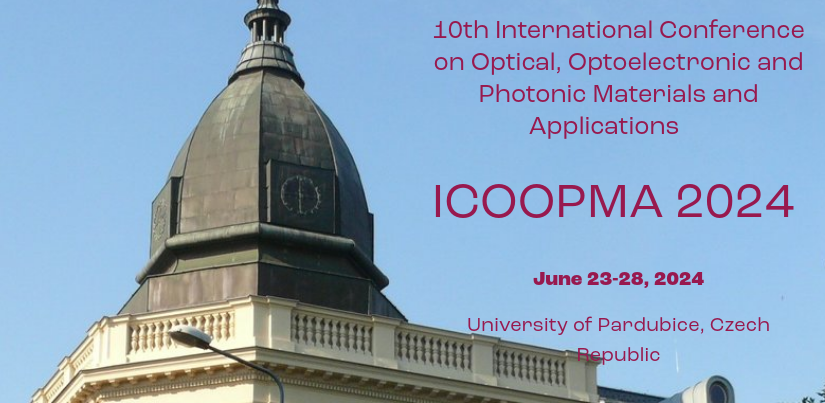
10th International Conference on Optical, Optoelectronic and Photonic Materials and Applications (ICOOPMA 2024)
| - |
In Pardubice
Topics
-
bioimaging
-
biophotonics
-
electro-optic effects
-
energy conversion in rare earth doped materials
-
energy transfer in materials
-
femtosecond and terahertz spectroscopy
-
luminescent materials and phosphors
-
nanophotonics
-
nanostructures including photonic crystals
-
nanothermometry
-
non-linear effects
-
optical properties of all classes of materials
-
plasmonics
-
photoconductivity
-
photoinduced effects
-
photovoltaic materials
-
photonic band gap materials
-
photonic materials and devices
-
quantum dots
-
quantum wires
-
semiconductors for optoelectronics
-
silicon photonics
-
waveguides
9th Asian Conference on Crystal Growth and Crystal Technology. CGCT-9
| - |
In Jeju
JNSCAR-CECAM Conference: MD@60
| - |
In Bengaluru (Bangalore)
XVIIIth International Conference on Electron Microscopy (EM 2024)
| - |
In Zakopane
The XVIIIth International Conference on Electron Microscopy is jointly organized by the Institute of Metallurgy and Materials Science of the Polish Academy of Sciences and the Polish Microscopy Society. The conference is to be held in southern part of Poland in the picturesque Zakopane resort.
The conference will bring together researchers from different fields of science and engineering including materials science, chemistry, physics, life science (biology and medicine), whose focal point is on application of electron microscopy to study of materials and materials related properties. The broad spectrum of topics comprises analytical electron microscopy, imaging in SEM/STEM, crystallography and HRTEM techniques, 3D imaging, in-situ electron microscopy, cryomicroscopy, as well as applications of electron microscopy to study materials spanning from traditional engineering materials to highly advanced functional materials, nanomaterials and biological materials.
The conference also welcomes scientists, engineers and representatives of electron microscopes manufacturers, whose focus is on instrumentational developments to showcase and review the latest technical advances. It will provide a forum for the exchange of thoughts and ideas, news on the latest trends in the field of electron microscopy as well as to promote cooperation between the participants from science and industry.
Hope to see you in Zakopane!
18th European Powder Diffraction Conference (epdic18)
| - |
In Padova
The EPDIC Conference is the biennial meeting dedicated to all aspects of the analysis of polycrystalline materials by diffraction methods. It brings together experts from universities, research institutes and instrumentation companies to share their knowledge and discuss the current trends and challenges in powder diffraction.
In agreement with the traditional character of this Conference, EPDIC18 will yield an exciting scientific program that will cover a broad range of hot traditional and new topics interesting to the powder community.
The Conference will be held in Padova, at the Padova Congress Centre on behalf of AIC. It will be organized in synergy with ECM34, which will precede EPDIC18 in the same location.
Bridging Length Scales in Magnetism â€" Diffuse Scattering from the Atomic to the Mesoscale
| - |
In Physikzentrum Bad Honnef
10th Anniversary Meeting of the Young Crystallographers
|
In Hamburg, Germany
The Young Crystallographers are a working group within the German Society for Crystallography (DGK). For 10 years, we meet regularly in autumn at different universities or the STOE facilities.
These meetings specifically aim to provide a platform for networking and scientific exchange for young scientists with an interest in crystallography, as well as to establish contacts with industry and research institutions.
We want to give young scientists the opportunity to gain early experience in scientific presentation in a relaxed atmosphere and without the stress of a larger conference.
For our grand anniversary, we are happy to meet at the DESY facilities! We are working hard to allow you deep insights as well as a great overview of the possibilities at this large-scale facility.
During the 3-day meeting, you willÂ
- present your own work as a poster (A0 portrait) and lightning talk (~5 min.)
- have the DESY campus tour
- participate in an experiment and get a hands-on experience at a beamline of your choice at PETRA III (see The Experiments)
- hear academic talks from senior scientists
- hear industry talks from our sponsors/partners
At the end of the meeting, you will also have the chance to join a tour of the European XFEL Campus. If you intend to participate, please indicate so during registration. Note that you will need to get to the XFEL facilities by public transport as it is a bit outside the main DESY campus.
The registration fee of 60 € includes the tours and experiments at DESY, coffee breaks as well as lunch and BBQ on Thursday.
Deadline for registration is 22.08.23.
ECRS-11 European Conference on Residual Stresses
| - |
In Prague
ECRS is a well-established conference series that focuses on residual stresses in structural and functional materials. From experimental methods via modelling techniques to industrial applications a broad gamut of residual stress-related topics is addressed. The series is well attended by scientists, PhD students and engineers from both academia and industry.
Previous editions have been successfully held in Karlsruhe (1983), Darmstadt (1990), Frankfurt/Main (1992), Cluny (1996), Delft (1999), Coimbra (2002), Berlin (2006), Riva del Garda (2010), Troyes (2014) and Leuven (2018).Â
This gathering brings together scientists, students, and engineers with a shared interest in residual stresses, a phenomenon that affects the physical properties of materials and surfaces across various scales. While its core focus lies in mechanical engineering and materials science, residual stresses also hold relevance in solid-state physics, life sciences, geology, and the chemical reactivity of solids. Managing residual stresses can unlock improved material and structural properties, such as enhanced fatigue life and geometrical stability. The analysis of residual stresses, being a highly sensitive parameter influenced by micro/nano-structure, provides valuable insights into the history of materials and structures. This conference offers an interactive platform for experts from diverse disciplines including mechanics, physics, optics, chemistry of solids, manufacturing, diffraction, and engineering. Attendees can exchange their perspectives and share recent advancements through experimental, theoretical, and numerical approaches.
 Two tutorials are planned
Main topics
- Diffraction Methods
- Mechanical Relaxation Methods
- Acoustic Methods
- Electromagnetic Methods (Barkhausen effect)
- Electron Microscopy Methods
- Instrumentation
- Modelling methods
- Stresses in Microelectronics
- Stresses in Additive Manufacturing
- Microstructures, Composites and Nanomaterial
- Thin Films and Coatings
- Welding, Fatigue and Fracture
- Cold Working and Machining
- Heat Treatments and Phase Transformations
Nanomaterials for Applications in Energy Technology (GRS)
| - |
In Ventura, CA
7th Microscopy characterisation of organic-inorganic interfaces meeting
|
In McMaster University, Hamilton, Canada
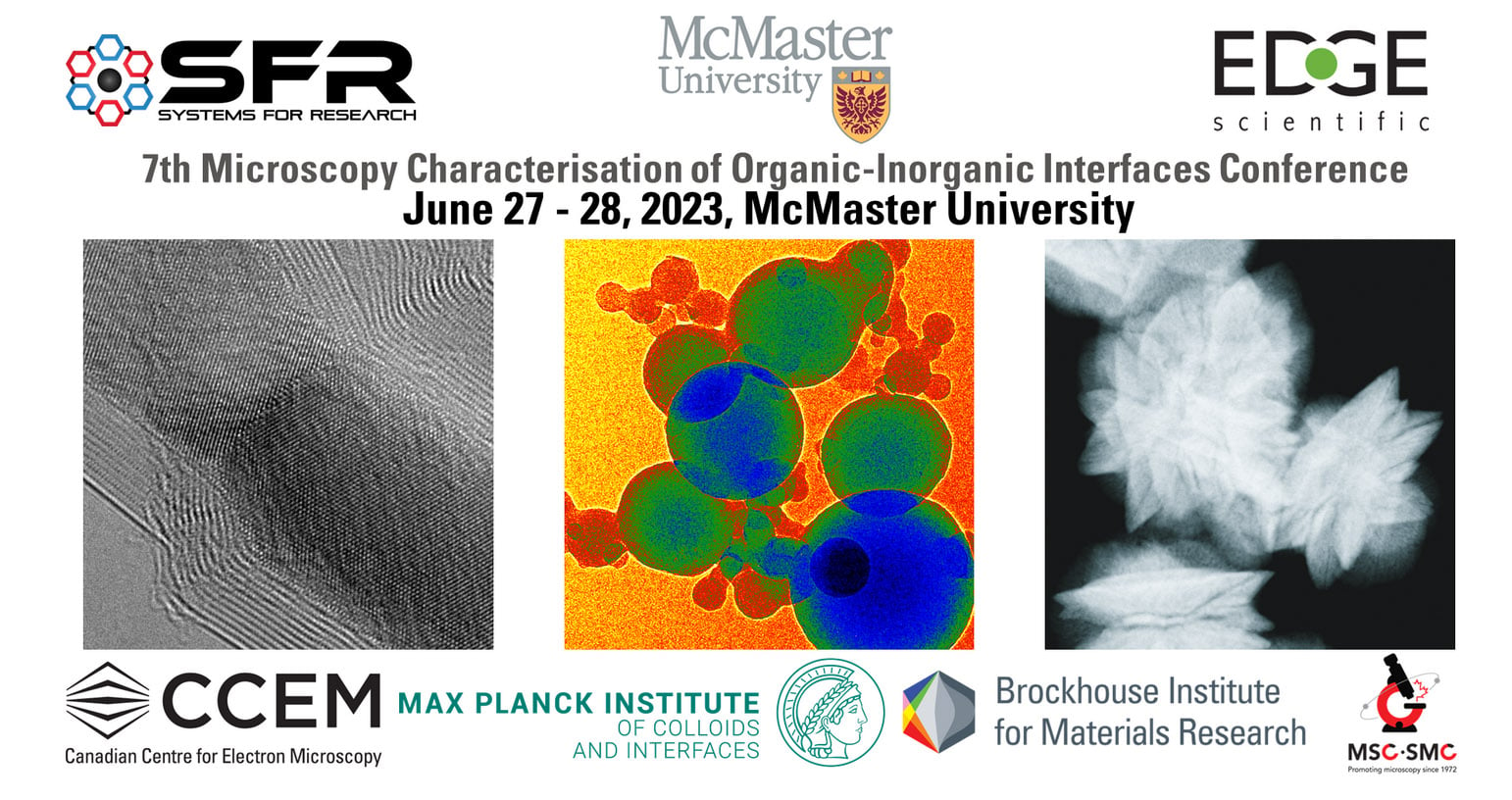
The 7th Microscopy Characterisation of Organic-Inorganic Interfaces (MCOII) meeting will return to an in-person format in 2023 and will be hosted for the first time in North America at McMaster University in Hamilton, Canada, home of the Canadian Centre for Electron Microscopy. The transatlantic scientific organizing team of Nadja V. Tarakina (MPIKG, Germany) and Kathryn Grandfield (McMaster University, Canada) have put together an exciting two-day programme. As usual, the first day will be more general, covering a broad range of microscopy approaches (correlative microscopy solutions, in-situ liquid microscopy methods, low-voltage electron microscopy and many more) in the context of imaging hybrid and soft matter.On the second day, a special Focus Lecture Series, entitled "Multi-dimensional and multiscale microscopy of organic-inorganic interface" will cover a more-detailed range of lectures on tomographic methods spanning light, X-ray and electron microscopy, as well as atom probe tomography and in situ electron microscopy/tomography. This conference will bring together world-leading experts in microscopy, highlighting the latest achievements, new opportunities and outstanding challenges in probing beam-sensitive and hybrid materials and their interfaces.
European Conference on Neutron Scattering (ECNS 2023)
| - |
In Garching near Munich
The MLZ is delighted to host the Eighth European Conference on Neutron Scattering after successful events atÂ
- Interlaken 1996
- Budapest 1999
- Montpellier 2003
- Lund 2007
- Prag 2011Â
- Zaragoza 2015
- St. Petersburg 2019
The conference is organized on behalf of the European Neutron Scattering Association (ENSA) and is one of the most important scientific events in the field of neutron research.Â
The conference will take place at the TUM Department of Mechanical Engineering and the new Science Congress Center Munich - both located in the immediate vicinity of the MLZ at Garching.Â
After a warm Welcome on March 19th, we are looking forward to four days of thrilling talks, pleasant posters, and decent discussions of the European neutron scattering community between March 20th and 23rd!Â
Â
18th European Organic Chemistry Congress
|
In Amsterdam, Netherlands
Conferences Series welcomes professional chemists, bioscience experience researchers, professors, scientific communities, delegates, students, business professionals and executives from all over the globe to attend the “18th European Organic Chemistry Congressâ€[Euro Organic Chemistry Conference 2022] that is to be organized during July 18-19, 2022 Amsterdam, Netherlands which incorporates prompt keynote presentations, oral talks, poster displays and exhibitions.
Euro Organic Chemistry 2022 is an international platform to debate and learn about new compounds and its structures, bonding, reactivity in field of chemistry and in organometallic chemistry, organic chemical science, biogeochemistry, marine chemical science, petroleum chemical science, bioorganic and medicinal chemistry, advancements in the fields of modern experimental chemistry, modern analytical chemistry, modern theoretical chemistry, combinatorial chemistry, flow chemistry, microwave chemistry, green chemistry, spectroscopy, new synthetic ways and advances in catalysis.
28th Croatian-Slovenian Crystallographic Meeting
| - |
In PoreÄ, Croatia
IEEE Around-the-Clock Around-the-Globe (AtC-AtG) Magnetics Conference 2022
|
In Worlwide
Dear Colleagues,
It is our great pleasure to announce the 'IEEE Around-the-Clock Around-the-Globe (AtC-AtG) Magnetics Conference 2022', a virtual event hosted by the IEEE Magnetics Society covering the vast field of magnetism. Following the great success of the previous editions, this unique 24-hour non-stop virtual conference will take place on August 31st, 2022, with contributions from speakers spanning six continents.
The AtC-AtG Magnetics Conference offers a diverse and inclusive virtual environment that foments collaboration between junior and senior researchers across the many subfields of magnetism. The invited speaker lineup includes both junior and senior scientists with outstanding research contributions. More information can be found on the dedicated conference website.
Join us by registering through our website before 24th August!Â
Highlights:
 - Invited talks from leading experts in magnetism
 - Covers all continents and time zones
 - Interactive online broadcasting with questions and discussions
 - Student presentation and poster awards
 - NO REGISTRATION FEE
Call for Abstracts:
Abstract submission for the contributed talks at AtC-AtG Conference is now open! Young researchers are encouraged to submit abstracts (oral and poster) and join us on this fantastic platform to meet researchers worldwide!
The abstract template and submission form are available on our website. Submissions close on June 12th!
Looking forward to seeing you all connected!
Best Regards,
On behalf of the AtC-AtG Organization Committee (2022)
GEOMETRY AND TOPOLOGY IN CONTEMPORARY MATERIAL SCIENCE - INTERNATIONAL SUMMER SCHOOL 2022
|
In Copenhagen
• Mesoporous silicates
• Metal organic frameworks and coordination polymers
• Amphiphiles, lipids, star polyphiles forming lyotropic liquid crystals
• Block copolymers including star miktoarm copolymers
Lectures will emphasise the fundamental structural aspects, with an introduction to the following concepts from modern geometry, crystallography and topology:
• Two-dimensional symmetries and orbifolds (wallpaper and point groups)
• Graph theory and net embeddings, knots and entanglement
• Triply-periodic minimal surfaces and related polycontinuous patterns
• 2D hyperbolic tilings and their embedding in 3D
No specialised mathematical knowledge is assumed, apart from some elementary familiarity with the shape of space, polyhedra and symmetry. The course will introduce students to unifying structural concepts in a range of ordered multi-phase hard/soft materials. We encourage students with theoretical or experimental backgrounds to attend.
The course will familiarise students with open-source software for construction and characterisation of structures from nets to surfaces. Hands-on tutorials will explore the concepts, via models and software like Kaleidotile, Surface Evolver, Houdini, GAVROG (3dt and Systre), RCSR, EPINET and HooMD for molecular simulations.
ELDICO webinar: Characterization of nano-sized intermetallics in Al-alloys and in high entropy alloys
|
In Online
Presented by Professor Louisa Meshi, Ben-Gurion University Israel at 3pm CET

Eldico webinar: Nano-crystals in heterogeneous catalysis
|
In Online
To be given by Professor Jeroen A. van Bokhoven (ETH & PSI)
Online at 3pm CET