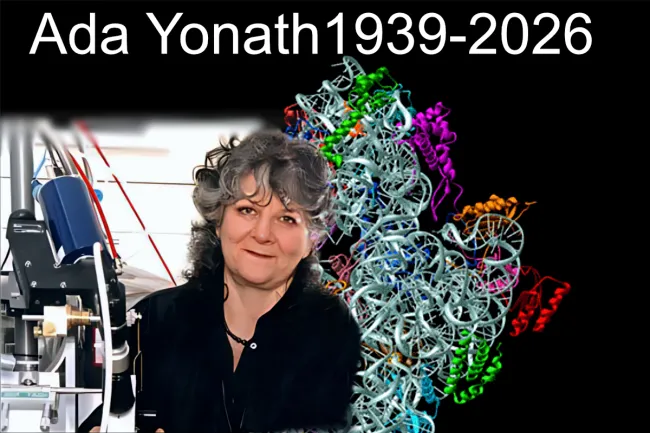
Professor Ada E. Yonath, who died on 31 August 2026 at the age of 87, changed structural biology by pursuing an experiment that many experienced scientists thought was impossible. For more than two decades, she worked toward determining the atomic structure of the ribosome, the enormous and flexible ribonucleoprotein machine responsible for translating genetic information into proteins. At the time she began, even obtaining useful ribosome crystals seemed unrealistic. Ada nevertheless continued. She persisted because the question mattered to her, and because each technical failure suggested another experiment. Ada did not easily give up (Fig. 1)
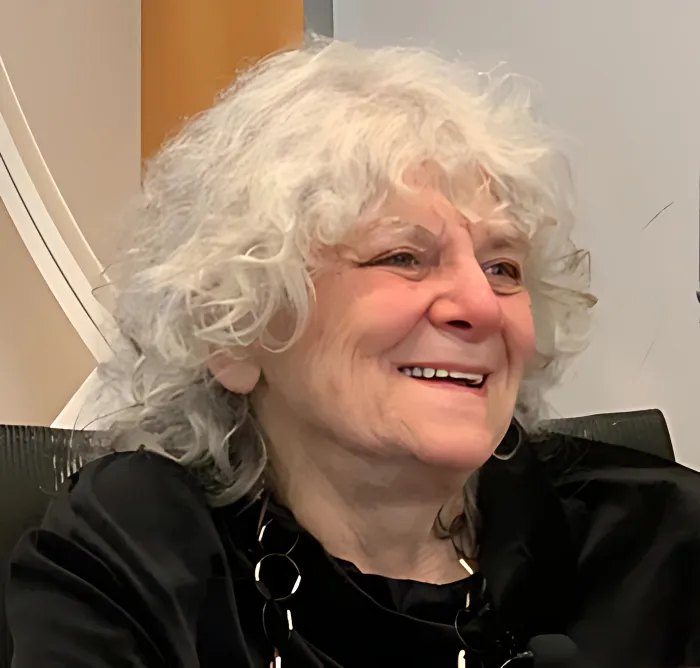
Fig. 1. Ada Yonath speaking at the Weizmann Institute of Science, December 2019.
Her beginnings gave little indication that she would one day stand in Stockholm receiving the Nobel Prize in Chemistry. Ada was born in Jerusalem on 22 June 1939 into a family of very modest means. Her parents, who had emigrated from Poland, had little formal education. Her father was a rabbi, and the family tried to make a living from a small grocery shop. They lived crowded together with other families, with very little money. Yet poverty did nothing to suppress Ada’s curiosity. From an early age, Ada was intensely curious about how things worked. In one story she often told, when she was five, she tried to determine the height of the family balcony by building a tower of furniture. The experiment ended with a fall and a broken arm.Her father suffered from prolonged illness and died when Ada was only eleven. The family’s already difficult circumstances became even harder. Ada worked cleaning, babysitting, and tutoring to help her mother and younger sister. After the family moved to Tel Aviv, she taught mathematics and chemistry to help pay her school fees. Her parents nevertheless regarded education as worth sacrificing for, and a perceptive kindergarten teacher had recognized early that Ada’s curiosity needed encouragement. Ada later described science as almost a luxury in the circumstances in which she grew up.
After her compulsory military service, she studied chemistry at the Hebrew University of Jerusalem and then came to the Weizmann Institute of Science for doctoral studies. Working with the late Wolfie Traub, she completed her PhD in X-ray crystallography in 1968. Her doctoral research focused on fibrous biological structures, including collagen, rather than on the high-resolution macromolecular crystallography that later became central to her work. She subsequently undertook postdoctoral work at Carnegie Mellon University and at MIT, where she was exposed more directly to the emerging possibilities of protein crystallography. Returning to Rehovot in 1970, she established Israel’s first protein crystallography laboratory, which, for almost a decade, was the only one of its kind in the country.
Joel remembers his first meeting with Ada very clearly. It was in 1972, when he was doing a very short postdoc at the Hebrew University in Jerusalem, after completing his PhD with the late Cyrus Levinthal. He had just obtained small crystals of an RNA fragment and wanted to determine whether they diffracted. He asked around and learned that the only X-ray system suitable for testing them was at the Weizmann Institute, and that he should contact Ada Yonath.
To his surprise, Ada immediately invited Joel to come to Rehovot. Joel was a young postdoc whom she did not know, yet she readily gave him her time and access to the equipment, and together they set about testing the crystals. Her generosity and the seriousness with which she listened to his questions and discussed the experiment went far beyond anything he could have expected. She treated a young scientist’s small experiment as something worth her time and attention.
That willingness to help others remained characteristic of Ada even as her career advanced and demands on her time increased. At the same time, her own ambitions were turning toward one of the most difficult problems in structural biology. This was the structure of the ribosome, a subject that would occupy her for decades and ultimately define her scientific career.
The question was simple to state: how does the ribosome actually work?
By the late 1970s, the overall role of ribosomes was well established. Messenger RNA was read, tRNAs delivered amino acids, peptide bonds were formed, and proteins emerged. But to a structural biologist, much remained unknown. Where were these components in three dimensions? How were substrates positioned? What produced fidelity? How was the growing peptide accommodated? And, ultimately, what constituted the catalytic heart of this enormous assembly?
Ada believed that only structure determination could provide the answer. The obstacle was the ribosome itself. Compared with the proteins routinely studied by crystallographers at that time, it was gigantic. It was an asymmetric complex of RNA and proteins, conformationally mobile, chemically heterogeneous, easily damaged, and notoriously prone to losing biological activity. Eminent laboratories had already encountered formidable difficulties in crystallizing ribosomal particles. To many colleagues, therefore, Ada’s program seemed impossibly ambitious.
What strikes us in retrospect is how early Ada committed herself to the problem. In the 1980s, the computers, data-collection facilities, and software required for an atomic ribosome structure did not yet exist. Ada nevertheless expected that the technology would improve and that people from different areas of structural biology would eventually contribute what was needed. This reflects the courage, determination, and foresight of a fearless scientist. She was prepared to begin before she could know exactly how the problem would ultimately be solved.
Other people’s failures did not persuade her to stop. Quite the opposite. She once remarked, in effect, that if distinguished scientists could fail at the problem, she was quite prepared to join them.
Her work also grew out of earlier ribosome research at the Weizmann Institute. David Elson, Ada Zamir, Ruth Miskin, and colleagues had investigated reversible ribosomal inactivation and the biochemical conditions required to preserve functional particles. Related work by Zamir, Nahum Sonenberg, and Meir Wilchek used affinity and photoaffinity probes to investigate the peptidyl-transferase centre and, remarkably, pointed to an intimate role for 23S rRNA long before atomic structures established the predominantly RNA nature of the catalytic centre. For Yonath, one lesson from this work became particularly important: the ribosome preparation had to be homogeneous, intact, and, critically, active. She wanted crystals of particles that still represented a biologically meaningful state.
An unexpected observation then gave Ada an important clue about how ribosomes might be crystallized. While recovering from a serious bicycle accident, Ada read about the ordered packing of ribosomes in cells of hibernating animals. Ribosomes could apparently remain densely and regularly organized during prolonged inactivity and later resume function. To Ada, this was compelling evidence that ribosomes could form highly ordered arrays without being destroyed.
Her memorable conclusion was: “If polar bears know how to do it, we can do it too1,2.”
The polar bears were not what first drew Ada to ribosomes. The biological problem came first. But the observation strengthened her conviction that ordered packing of intact ribosomes was physically possible.
She therefore looked for particularly stable ribosomes. If ordinary ribosomes were too fragile, why not obtain them from organisms whose entire biology demanded molecular robustness? With the late Heinz-Günter Wittmann and colleagues at the Max Planck Institute for Molecular Genetics in Berlin, she turned initially to the large ribosomal subunit from the thermophile Bacillus stearothermophilus, now known as Geobacillus stearothermophilus. Later, highly stable ribosomes from organisms inhabiting still more extreme environments, including the Dead Sea halophile Haloarcula marismortui, became crucial experimental systems.
In 1980, Yonath, Müssig, Tesche, Lorenz, Erdmann, and Wittmann3 reported three-dimensional crystals of the B. stearothermophilus 50S subunit. In 2005, Joel emailed Ada to ask whether this was the first paper on ribosome crystals she had published. Her reply was brief: “Indeed, that was the first.” The crystals were not yet suitable for determining an atomic structure, but the paper established a decisive point: isolated ribosomal subunits could crystallize. Conceptually, an important barrier had been broken.
Her collaboration with Wittmann also marked the beginning of an increasingly important scientific connection with Germany. In 1986, Ada became Head of the Max Planck Research Unit for Ribosome Structure at DESY in Hamburg. For the next eighteen years, until 2004, she effectively led three research groups in parallel: one at the Weizmann Institute in Rehovot, another at the Max Planck Institute for Molecular Genetics in Berlin, and a third at the Max Planck Research Unit for Ribosomes at the DESY campus in Hamburg. This unusual arrangement gave her access to both expertise in ribosome biology and the synchrotron facilities that became increasingly important as the project progressed (Fig. 2).
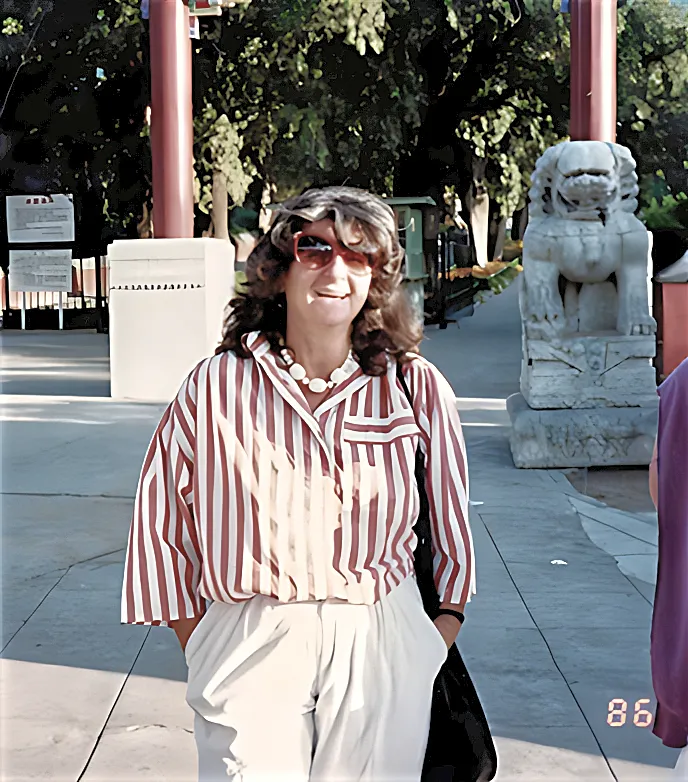
Fig. 2 Ada in Beijing, China, at the Molecular Structure: Chemical Reactivity and Biological Activity Conference, September 1986, where she reported on her progress in her ribosomal research.
Obtaining the first ribosome crystals was only the beginning. It took roughly two more decades before high-resolution structures became possible. Crystal quality had to be improved; severe radiation damage had to be reduced; workable data-collection and phasing strategies had to be developed; and increasingly powerful synchrotron sources had to be exploited. As Alon Chen, President of the Weizmann Institute of Science, noted in announcing her death4, some 25,000 crystallization experiments were carried out along the way.
Ada and her collaborators also had to adapt emerging crystallographic approaches to the exceptional challenges posed by ribosome crystals. In the late 1980s, Håkon Hope visited the Weizmann Institute to work with Joel Sussman and Felix Frolow on reviving a crystal-supercooling method that could protect crystals from radiation damage during X-ray diffraction. Michael Rossmann and David Haas had originally developed the underlying approach during Haas’s time at the Weizmann Institute in the late 1960s, when Yonath was completing her PhD5-7. Hope, Frolow, and Sussman demonstrated the method with a 13-mer DNA crystal8 being studied by Leemor Joshua-Tor, then a student in Sussman’s laboratory. Building on that proof of principle, Yonath adapted cryogenic crystal preservation to ribosome crystals9. She went on to play a major role in developing, establishing, and popularizing cryo-biocrystallography as an essential component of macromolecular crystallography.
Anat joined Ada's group in 1989 and became her first Ph.D. student in Israel to work on the structure of the ribosome. Ada had been an examiner for Anat’s MSc thesis on DNA structure, carried out with the late Dov Rabinovich and Zippora Shakked. At that time, the first X-ray data from ribosome crystals had already been collected, and processing such large datasets was far from routine. Ada suggested that Anat join the ribosome structural project. Anat subsequently worked with Ada on many aspects of ribosome structure and function for 37 years as a staff scientist, and they published more than 100 scientific papers together.
Ada’s own 2005 description of those early years captures both the resistance she encountered and her delight in experimentally answering critics. Writing about her 1982 paper on parameters governing ribosomal-subunit crystallization10she said that it had been written to show her “friends” that the project was not a “wishful dream” and her enemies that it was not a “lie.” That sentence was vintage Ada: mischievous, combative, funny, and entirely serious about the science.
By 1987, working with Leonard and Wittmann11, she used electron microscopy of negatively stained, two-dimensional 50S crystalline sheets, together with three-dimensional image reconstruction, to reveal a tunnel through the large ribosomal subunit. Remarkably, they proposed that this tunnel provided the path for the nascent polypeptide chain, an interpretation confirmed more than a decade later by atomic structure determinations. The proposal was not immediately accepted. For years, sceptics referred to her as "Ada with the hole,” and some joked that she had a "hole in her head.” A decade later, as additional evidence accumulated, the tunnel's existence and function became widely accepted.
In 2000 and 2001, the long journey initiated by Ada, and later joined by several other groups, finally yielded high-resolution X-ray 3D structures of ribosomal subunits and their functional complexes. The structures transformed our understanding of translation. The structures revealed in atomic detail the architecture of ribosomal RNA, the organization of the decoding and peptidyl-transferase centers, the nascent-chain tunnel, and the binding sites of many antibiotics that selectively interfere with bacterial protein synthesis. They also made it possible to discuss translation and antibiotic action in precise structural terms.
Ada’s laboratory continued to investigate antibiotic binding and resistance, ribosome evolution, and what she believed might be remnants of a primordial RNA apparatus for peptide-bond formation. In 2009, Ada shared the Nobel Prize in Chemistry with Venkatraman Ramakrishnan and Thomas Steitz “for studies of the structure and function of the ribosome.” She was the first Israeli woman to receive a Nobel Prize and the first woman in 45 years to receive the Chemistry prize. The Nobel joined an extraordinary list of distinctions that included the Israel Prize, the Wolf Prize, the Harvey Prize, the Louisa Gross Horwitz Prize, and many others.
The prizes mattered, but they were not what animated her scientific life. What drove Ada was curiosity, and that curiosity was contagious (Fig. 3).
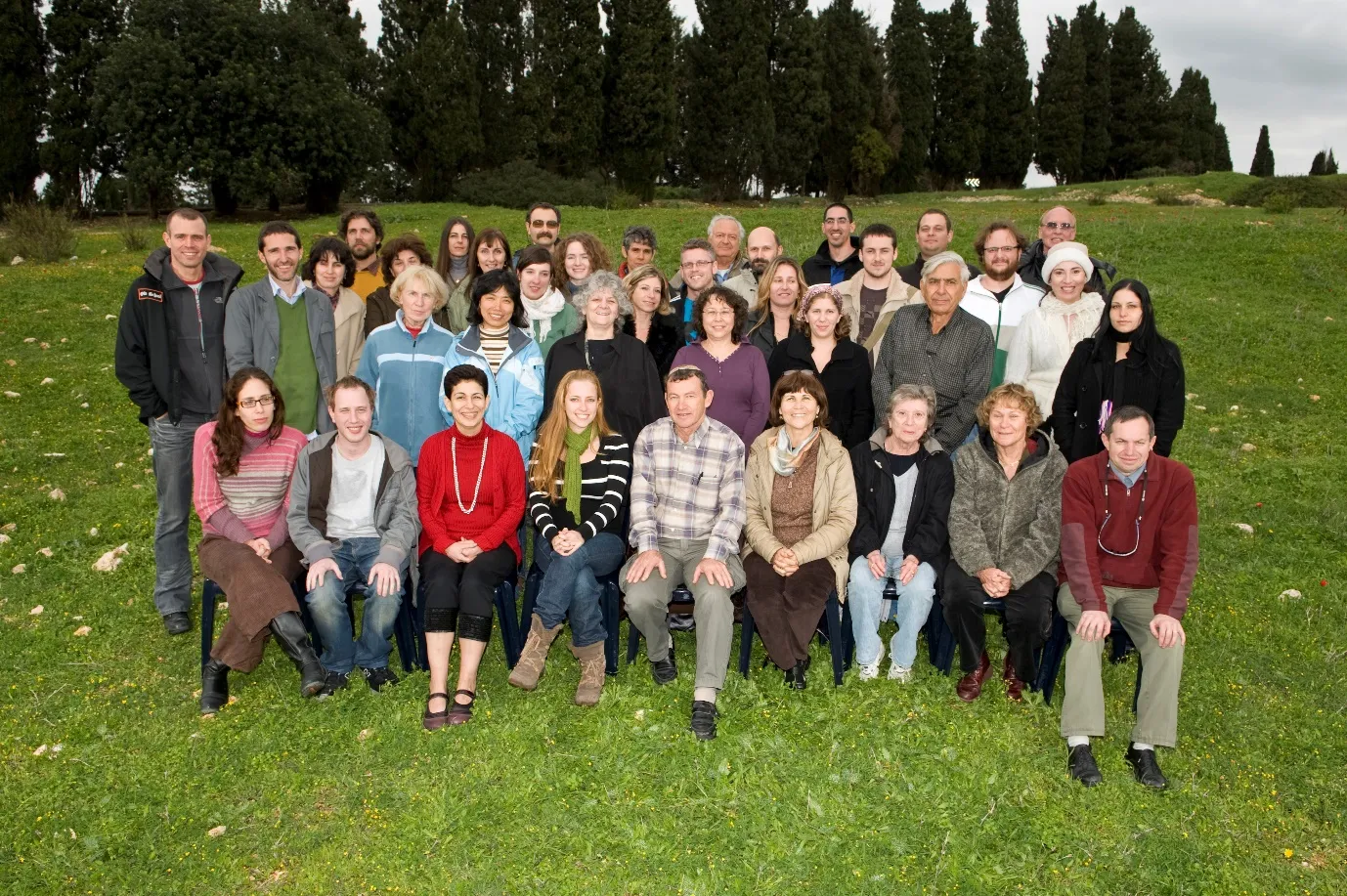
Fig. 3 In January 2010, following the Nobel Prize award, the Israeli group, including many past and present members of the Yonath group, gathered for a retreat in the Druze village of Daliyat al-Karmel in northern Israel. The gathering was an opportunity to celebrate the Nobel Prize together with the many people of the Israeli group who had contributed to the project over the years.
Ada’s commitment to synchrotron science eventually extended beyond her own research. She became an enthusiastic supporter of SESAME [https://www.sesame.org.jo], the synchrotron facility established in Jordan to serve scientists throughout the Middle East. SESAME represented something she believed deeply: that science could cross boundaries that politics could not.
Joel saw a striking example of this at the SESAME Users’ Meeting in Petra, Jordan, in November 2009, only weeks after Ada had received official word that she would receive the Nobel Prize. Scientists had come from across the region, including countries with little or no political contact with Israel. After Ada’s lecture, a group of young Iranian scientists, several of them women, gathered excitedly around her. They wanted to speak with her, to be photographed with her, and to be near someone whose scientific achievements and her achievements as a woman in science had inspired them. One young Iranian woman even embraced her, and a photograph from that meeting captures the moment beautifully: Ada surrounded by these young scientists, with no hint of the political hostility between their countries (Fig. 4).
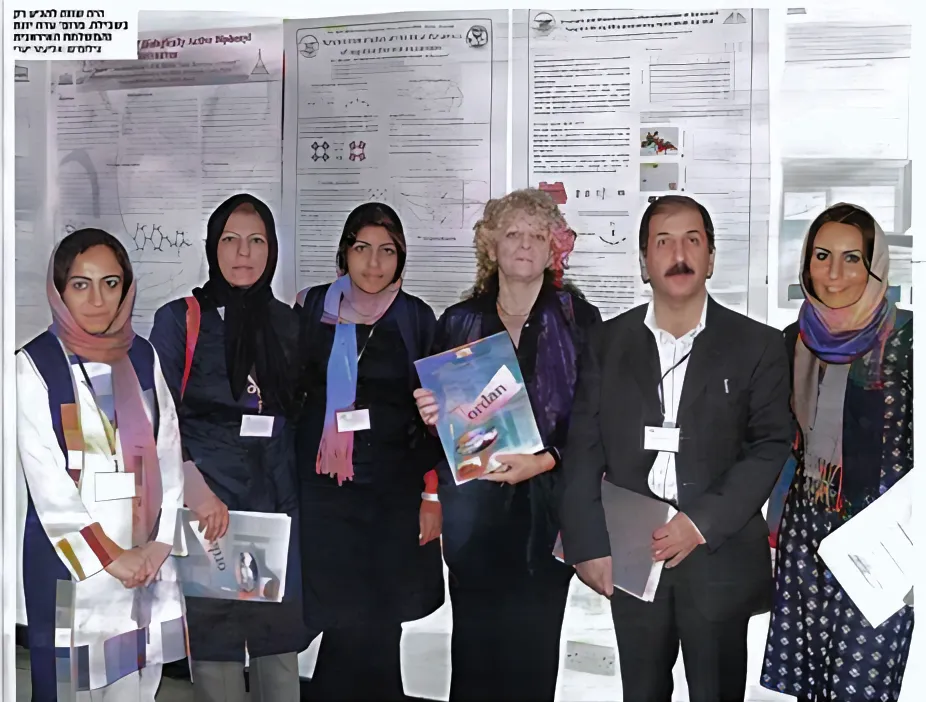
Fig. 4 Ada (center), flanked by young Iranian students at the 8th SESAME Users Meeting in Petra, Jordan, November 2009. (Photo reprinted with permission of Eliezer Yaar.)
For Joel, that photograph expresses something important about both Ada and SESAME. The political differences had not disappeared, but for those few minutes, they were irrelevant. They were scientists talking to another scientist, united by curiosity and a common language. It was a small but very real example of something Ada believed in: science as a bridge between people, science in the service of peace.
Joel saw something similar in Chennai, India, in 2018. After a full day of scientific lectures, including her keynote lecture, Ada was asked to take part in a festive evening event honoring a group of young undergraduate women who had just completed internships in biotechnology. She was asked to present each student with a certificate and spoke briefly with each of them. Joel remembers the incredible excitement on their faces as they came forward to meet her. It was obvious that meeting Ada meant something very special. Watching them, Joel could not help but wonder what that brief encounter might mean for their confidence in pursuing science, and perhaps even for the directions their lives would take.
Ada was also a very strong supporter of Israel’s participation in European scientific projects. She and her group interacted particularly closely with the Israeli Instruct-ERIC Center (https://instruct-eric.org), the Israel Structural Proteomics Center at the Weizmann Institute, on many of her projects. She also took part in the design of new synchrotron beamlines at the APS facility near Chicago, USA, and the ESRF facility in Grenoble, France, proposing beamline architectures suited to the unusual demands of ribosome crystals.
Ada repeatedly advised younger scientists to be curious, then more curious, and to choose problems for which they felt genuine passion, because a life in science inevitably contains long periods of darkness. She knew those periods well. For much of her career, progress did not come in dramatic Eureka moments, but in small, hard-won increments: a slightly better crystal, a few additional x-ray reflections, less radiation damage, another heavy-atom derivative, a somewhat more interpretable map. What was striking about Ada was how much encouragement she could draw from advances that to others might have seemed disappointingly small. She knew that, in science, those small steps can eventually make the seemingly impossible possible.
She continued doing science almost to the end of her life. Her publication list extends into 2026. Even after the ribosome had become one of the most structurally characterized machines in biology, Ada continued to see unanswered questions: the origins of translation, species-specific antibiotic interactions, ribosomopathies, and the evolutionary pathway from an ancient RNA world to the modern ribosome.
Over the years, Ada trained and mentored many students and postdoctoral fellows, passing on not only her scientific knowledge and expertise but also her curiosity, determination, and fearless approach to challenging scientific questions. Many of her former trainees have gone on to establish research groups of their own, or to build scientific careers at institutions around the world. In this way, her scientific legacy extends far beyond her own discoveries, through the generations of researchers she has inspired and helped shape.
There was also another side of Ada, known especially to her daughter Hagith, her granddaughter Noa, and, more recently, her great-granddaughter Eli. Ada became a mother during her doctoral years and often worked unconventional hours to combine laboratory life with raising a child. She never regarded family as an impediment to science. On the contrary, she spoke of motherhood as a privilege.
Among the many medals, honorary degrees, and international prizes Ada received during her remarkable career, one distinction was especially dear to her. It came not from Stockholm or from one of the great scientific academies, but from her granddaughter Noa: the “Grama of the Year award” (Fig. 5). Ada often spoke of it with particular pride. For those who knew her only through her science, it is a reminder that alongside the formidable scientist was a devoted mother and grandmother, as well as a colleague and friend.
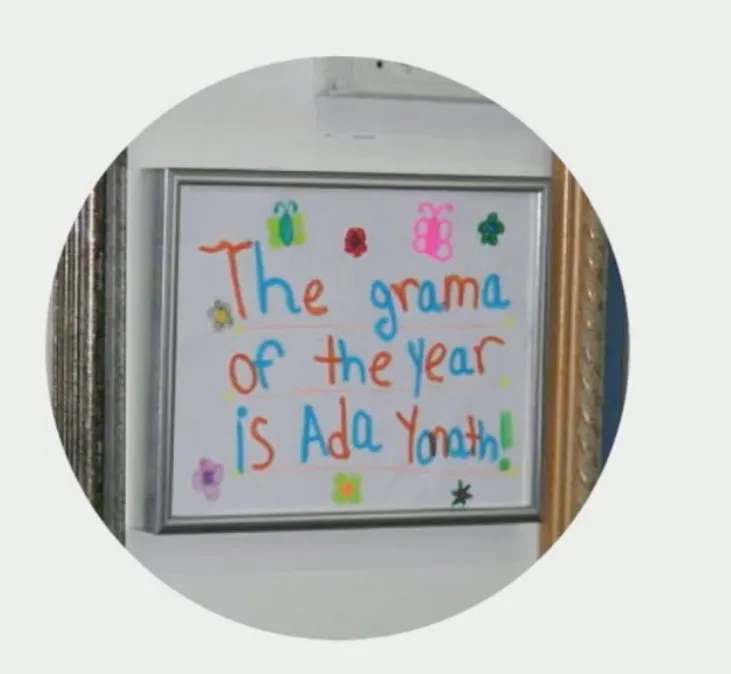
Fig. 5 Grama of the Year award given to Ada by her granddaughter, Noa.
For structural biologists, Ada leaves an extraordinary scientific legacy. She chose a problem that most of the field considered beyond the reach of crystallography and pursued it for more than two decades, through poor crystals, radiation damage, inadequate methods, and considerable scepticism. She dared to take a long shot, the imagination to find ways around one obstacle after another, and, perhaps most importantly, the persistence not to give up. Our understanding of the ribosome, and of what structural biology can attempt, is different because she did not.
Author Information
Joel L. Sussman and Anat Bashan
Department of Chemical and Structural Biology, Weizmann Institute of Science, Rehovot, Israel
References
1 Yonath, A. (2010). “Polar bears, antibiotics, and the evolving ribosome (Nobel Lecture).” Angew. Chem. Int. Ed. Engl. 49, 4341–4354.
2 Yonath, A. (2018). Ada Yonath: Nobel Prize laureate. https://humans.esrf.fr/ada-yonath
3 Yonath, A., Muessig, J., Tesche, B., Lorenz, S., Erdmann, V. A. & Wittmann, H. G. (1980). “Crystallization of the large ribosomal subunit from B. stearothermophilus.” Biochem. Int. 1, 428–435.
4 Prof. Ada Yonath, Nobel Laureate and a Model of Scientific Perseverance, Has Passed Away (2026). https://wis-wander.weizmann.ac.il/people/prof-ada-yonath-nobel-laureate-and-model-scientific-perseverance-has-passed-away
5 Ramakrishnan, V. (2018). Gene Machine: The Race to Decipher the Secrets of the Ribosome, Chapter 7. The University of Chicago Press.
6 Barnhart, M. (2026). Ada Yonath, Nobel laureate and crystallographer, dies at 87. https://cen.acs.org/people/obituaries/ada-yonath-nobel-laureate-crystallographer-obituary/104/web/2026/09
7 Haas, D. J. & Rossmann, M. G. (1970). “Crystallographic studies on lactate dehydrogenase at -75°C.” Acta Cryst. B26, 998–1004.
8 Joshua-Tor, L., Rabinovich, D., Hope, H., Frolow, F., Appella, E. & Sussman, J. L. (1988). “The three-dimensional structure of a DNA duplex containing looped out bases.” Nature 334, 82–84.
9 Hope, H., Frolow, F., von Bohlen, K., Makowski, I., Kratky, C., Halfon, Y., Danz, H., Webster, P., Bartels, K. S., Wittmann, H. G. & Yonath, A. (1989). “Cryocrystallography of ribosomal particles.” Acta Cryst. 45, 190–199.
10 Yonath, A., Mussig, J. & Wittmann, H. G. (1982). “Parameters for crystal growth of ribosomal subunits.” J. Cell Biochem. 19, 145–155.
11 Yonath, A., Leonard, K. R. & Wittmann, H. G. (1987). “A Tunnel in the Large Ribosomal Subunit Revealed by Three-Dimensional Image Reconstruction.” Science 236, 813–816.