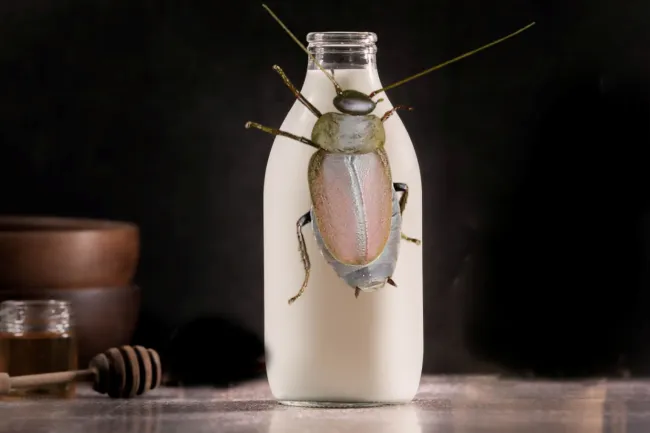
When an email landed in my inbox announcing that our research team had won the 2026 Ig Nobel Prize in Chemistry, my initial reaction wasn't triumph; it was suspicion. Between the surreal subject line and references to paper aeroplanes and novelty Zimbabwean currency, I was convinced it was either an elaborate phishing scam or a prank pulled by a colleague. It was only after a few double-takes and a quick sanity check that the reality set in. The Ig Nobel Prizes, organized by the Annals of Improbable Research, famously celebrate scientific achievements that "first make people laugh, and then make them think." As structural biologists and crystallographers, we spend our days analyzing diffraction patterns, refining electron density maps, and wrestling with phase problems; we rarely expect our work to end up in the comedic spotlight. Yet, thanks to the crystalline stomach contents of an unusual insect, that is precisely where we found ourselves.
The journey to this delightfully absurd honour began years ago with a simple observation of the Pacific beetle cockroach, Diploptera punctata. Unlike the vast majority of insect species, D. punctata is viviparous (it gives birth to live young). To support its developing embryos, the mother secretes a nutrient-dense liquid from her brood sac. Inside the midgut of the embryo, this liquid undergoes a fascinating transformation: it concentrates and crystallizes into tiny, solid protein crystals.
Unravelling the true nature of these crystals was a multi-decade saga of curiosity, persistence, and serendipity. The effort originally began with Barbara Stay, a pioneer in cockroach reproductive biology, and Nathan Coussens, who was captivated by the strange, crystal-like shapes visible in embryonic midguts. Early on, Subramanian Ramaswamy suspected they might merely be metabolic byproducts like urea. However, Coussens used X-ray diffraction to prove they were genuine protein crystals; without knowing the underlying protein sequence, solving the structure remained an overwhelming challenge. For years, the team pursued creative, highly innovative strategies to determine the structure, but the puzzle stubbornly refused to yield.
The missing link fell into place years later when I happened to attend a presentation by Ramaswamy detailing these recalcitrant crystals. Convinced that our lab had the right structural tools and methodological approach to crack the phase problem, I suggested joining forces. That chance encounter sparked a dynamic collaboration, finally bringing together the complete interdisciplinary team required to solve the enigma.When we ultimately solved the crystal structure, and published our findings in IUCrJ, what emerged was
a true crystallographic marvel. The in vivo-grown milk crystals were extraordinarily complex: highly heterogeneous, containing varying amino acid sequences, heavily glycosylated, and bound to functional lipids. Nature had performed a micro-crystallization experiment directly within the gut of an embryonic insect, creating a tightly packed crystal structure that serves as a slow-release, ultra-concentrated food source. In fact, we calculated that these crystals pack roughly three times the caloric energy of an equivalent mass of dairy cow milk.
Following the publication of our findings, news outlets and science media picked up on the story, coining catchy phrases like "cockroach milk" and framing the protein crystals as a potential "superfood." While this media reaction was surprising to us as structural biologists, the unexpected pairing of a common insect with a remarkably efficient biological nutrient source clearly caught the public imagination. How exactly our study came to the attention of the Ig Nobel committee remains a mystery to us, but it undeniably brought an unexpected spotlight to a very subtle piece of biological crystallography.
This brings us to the 36th First Annual Ig Nobel Prize Ceremony, which, for the first time in its history, was held outside the United States. On the evening of Thursday, September 3, 2026, we found ourselves at the Kongresshaus in Zürich, Switzerland, surrounded by enthusiastic attendees. The atmosphere was less like a scientific conference and more like an academic carnival.
The ceremony was a wonderfully chaotic celebration of curiosity. Before we took the stage, the audience enjoyed a pre-show dance performance about lab disasters, followed by fanfares played by an orchestra featuring an alphorn, a didgeridoo, and a yodeler. The official theme of the 2026 ceremony was "FUNGI," and the organizers fully committed to the motif.
When our turn came to receive the Chemistry prize, we were guided behind a stage curtain that dramatically opened to reveal our team and a presentation of our work to the audience. We received our award from the distinguished Swiss Nobel laureate Michel Mayor, flanked by fellow Nobel laureates who were thoroughly enjoying the light-hearted spectacle. In a wonderfully cheeky twist, the laureates were even offered a glass of milk to sample, a moment that clearly sparked some humorous hesitation as they pondered the exact nature and origin of what was in their glasses!
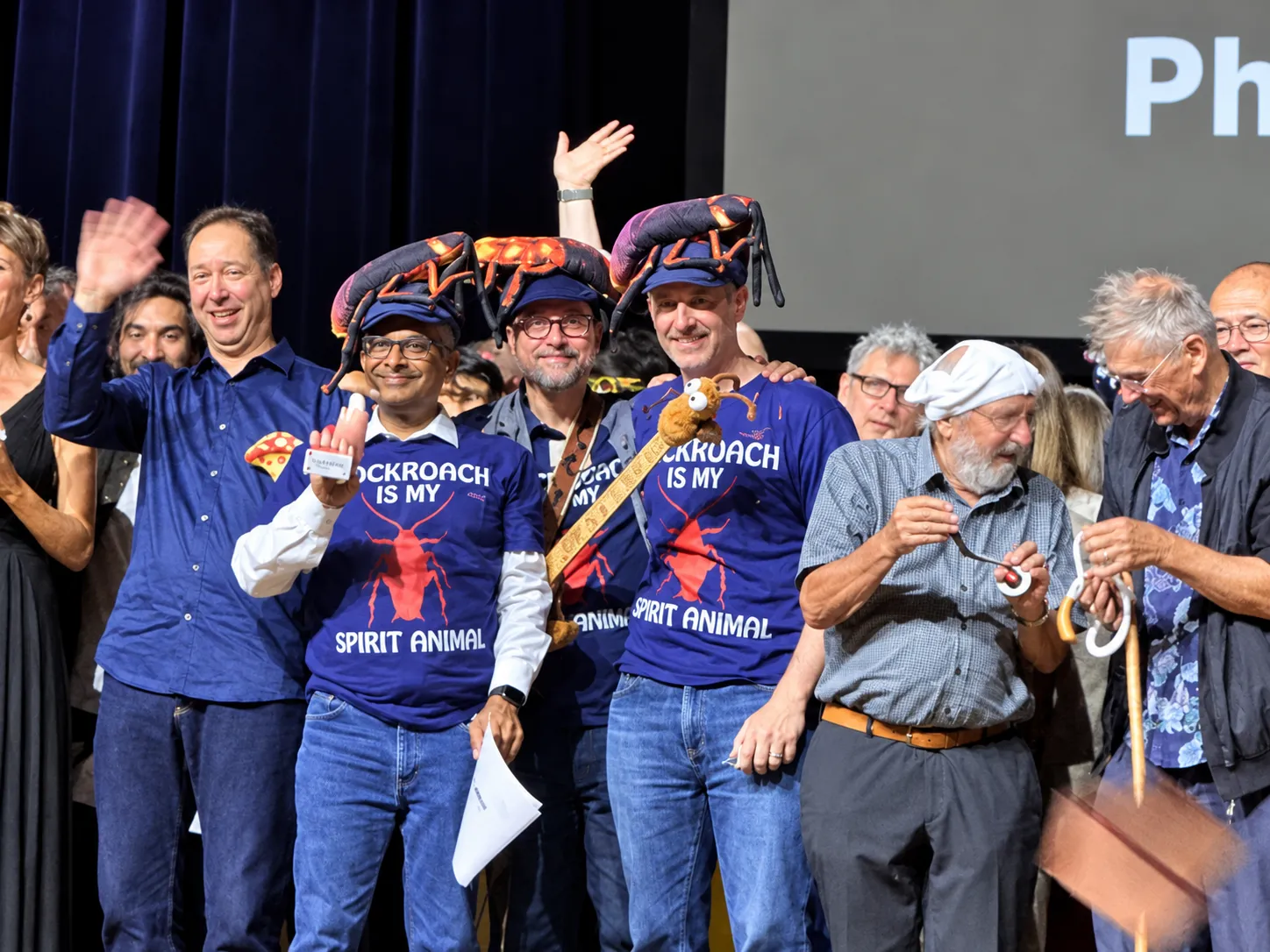
Happy Ig and Nobel laureates, sharing precious moments of science celebration
For our three-minute acceptance speech, we led the audience in a song dedicated to Diploptera punctata. As our musical tribute ran slightly over time, three performers dressed as bananas joined us on stage to help belt out the final chorus, a brilliantly bizarre conclusion to an unforgettable moment.
In true Ig Nobel tradition, where a brand-new trophy is custom-designed and handcrafted each year around the ceremony's theme, our award was a masterpiece of delightfully absurd artwork: a giant mushroom whose stalk ended in a human foot, complete with tiny toadstools growing between the toes, all mounted on a base shaped like blue cheese. Alongside the trophy, we were handed another classic Ig tradition: a novelty ten-trillion-dollar bill from Zimbabwe, serving as a tongue-in-cheek nod to the practicalities of scientific research funding.
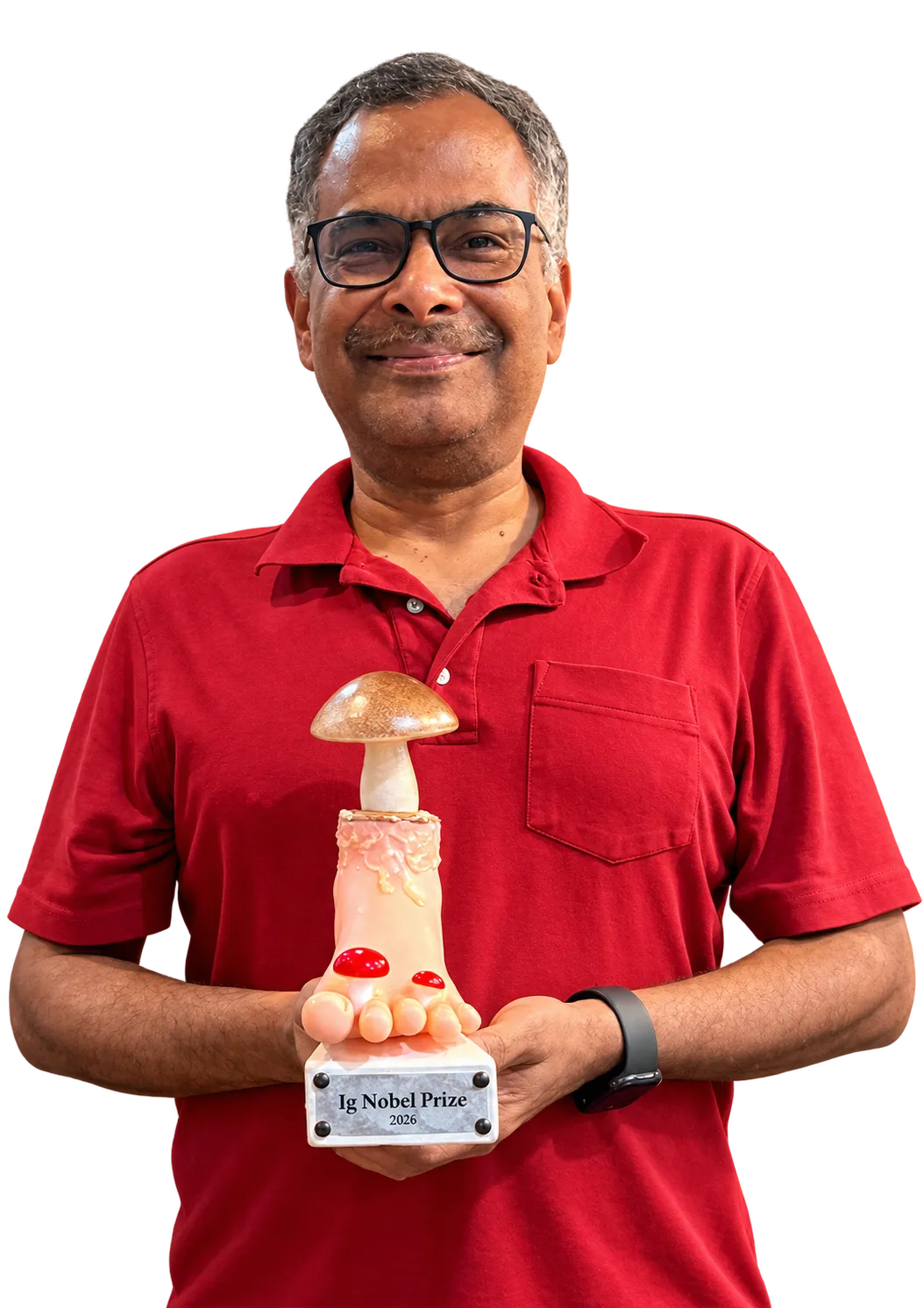
Ig Nobel in Chemistry 2026 laureate S. Ramaswamy proudly carrying the Ig Award 2026
Looking back on the surreal experience in Zurich, I am reminded of why we do science in the first place. Crystallography is fundamentally about revealing the invisible. Whether it is a viral protease, a novel synthetic material, or the bizarre milk crystals from a viviparous cockroach, our field seeks to uncover the hidden order of the natural world. Sometimes that structure is profoundly transformative; other times, it is delightfully strange. Beyond the main ceremony, our team was invited to participate in a series of face-to-face Ig Nobel public events in Zurich, Tokyo, and Boston. Having taken part in both the Zurich and Tokyo gatherings, I experienced firsthand the true impact of this recognition. Engaging directly with the public made me realize just how vital, and deeply rewarding, it is to communicate our science to the wider community. Attendees from all walks of life were genuinely fascinated by this unusual work and overwhelmingly curious to understand the structural biology behind it. It was a wonderful reminder that sharing our enthusiasm for discovery connects scientists and the wider community on common ground, bridging the gap between specialized laboratory research and everyday curiosity.
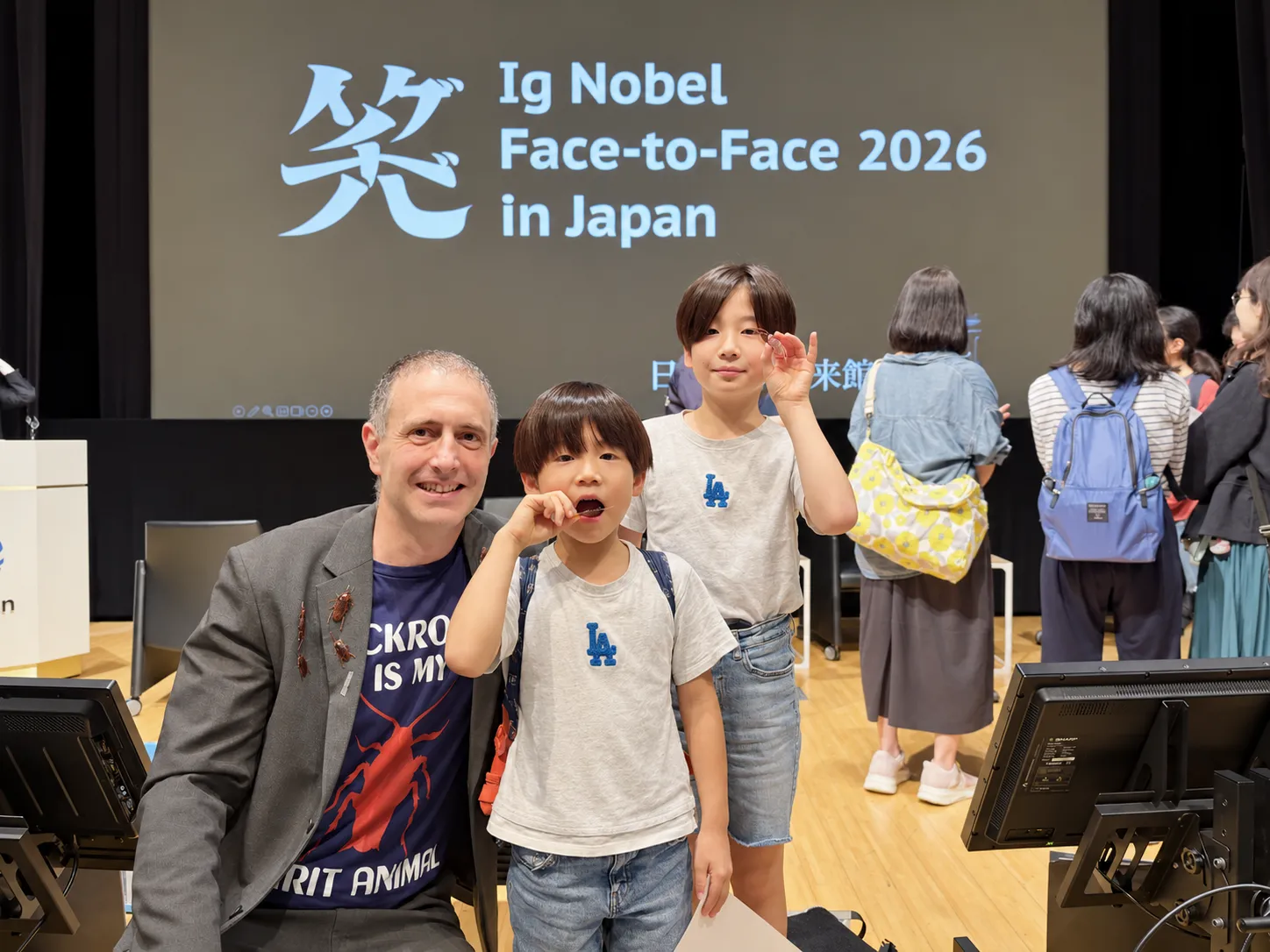
Ig Nobel Face-to-face 2026 in Japan event, sharing our experience with the next generation of scientists.
Ultimately, the 2026 Ig Nobel Prize serves as a reminder that science doesn't always have to be solemn to be significant. Curiosity thrives when we allow ourselves to be fascinated by the oddities of nature. If unravelling the crystal structure of these embryonic protein crystals makes people laugh, cringe, and eventually learn something new about biological crystallography, then our team considers it a resounding success.
We would like to express our gratitude to the Ig Nobel committee, our collaborating institutions, and the broader international crystallography community for supporting unconventional research and providing the tools to peer inside the stomachs of embryonic cockroaches. We look forward to seeing what other wonderfully unexpected structures lie ahead.
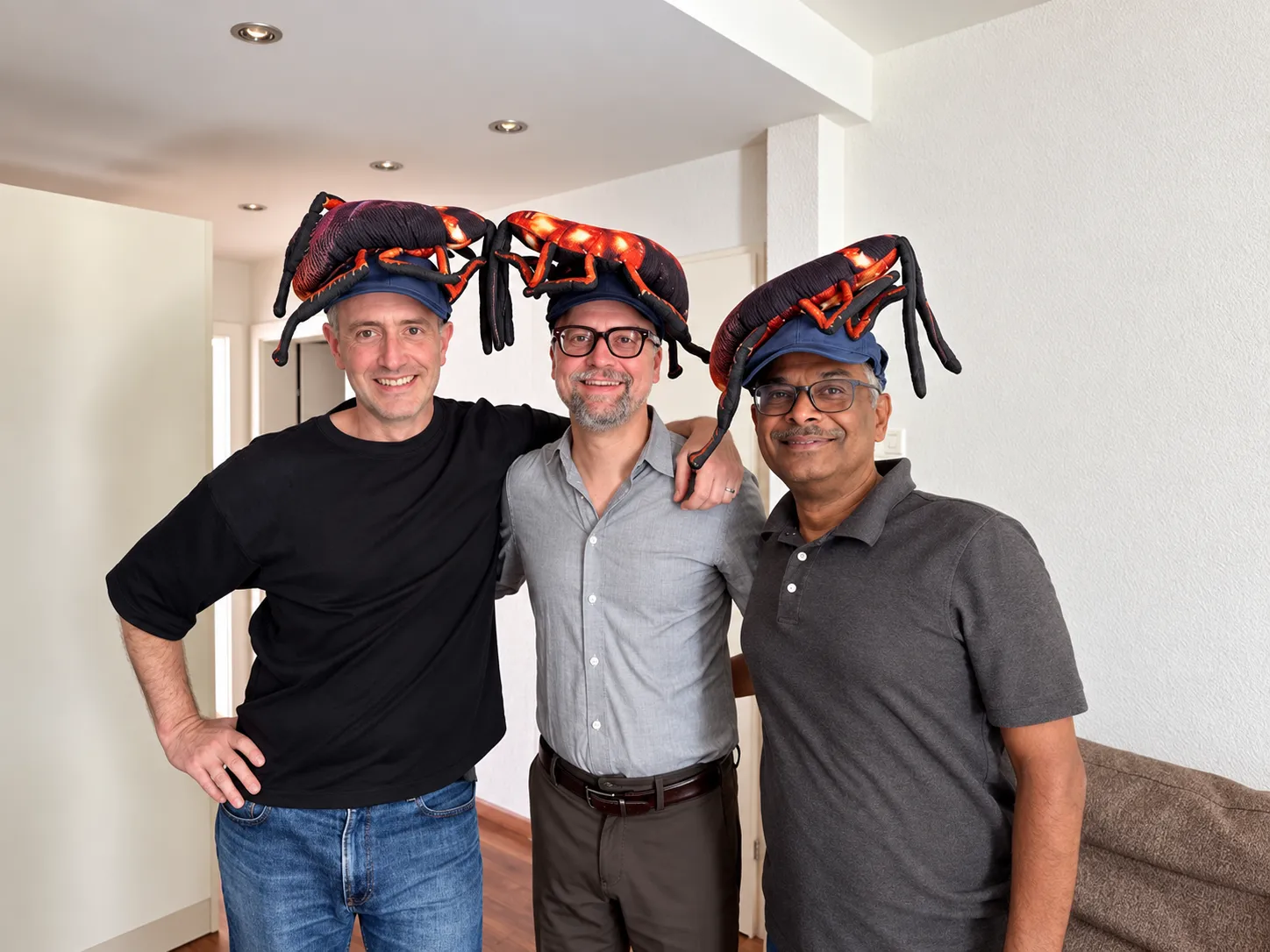
Three of the Ig Nobel in Chemistry 2026 laureates: L. Chavas, N. Coussens, and S. Ramaswamy