


Obituary
Pierre J. Becker (1942–2024)
![[me6349thumbnail]](https://www.iucr.org/__data/assets/image/0016/161530/me6349thumbnail.jpg "me6349thumbnail")
Pierre J. Becker entered the École Normale Supérieure on rue d'Ulm in 1962. He never ceased to express his surprise and pride at joining such an exceptional institution. He vividly recalled the meticulous examiner Alfred Kastler (Nobel laureate in 1966) during his agrégation in physics, and the inspiring tutorials led by Claude Cohen-Tannoudji (Nobel laureate in 1997). At that time, quantum physics came only late in the curriculum, but it quickly became his true passion. Upon first encountering it, he often admitted that he had wondered how anyone could `grasp such a thing'. And, yet, he mastered every corner of it, taught it throughout his career, and introduced generations of students to the subject. With a vivid, often humorous, style, he had a gift for captivating minds, and his impassioned voice carried the message with conviction. More than abstract concepts, the way quantum physics shed light on real experiments – especially those dealing with crystalline matter – fascinated him.
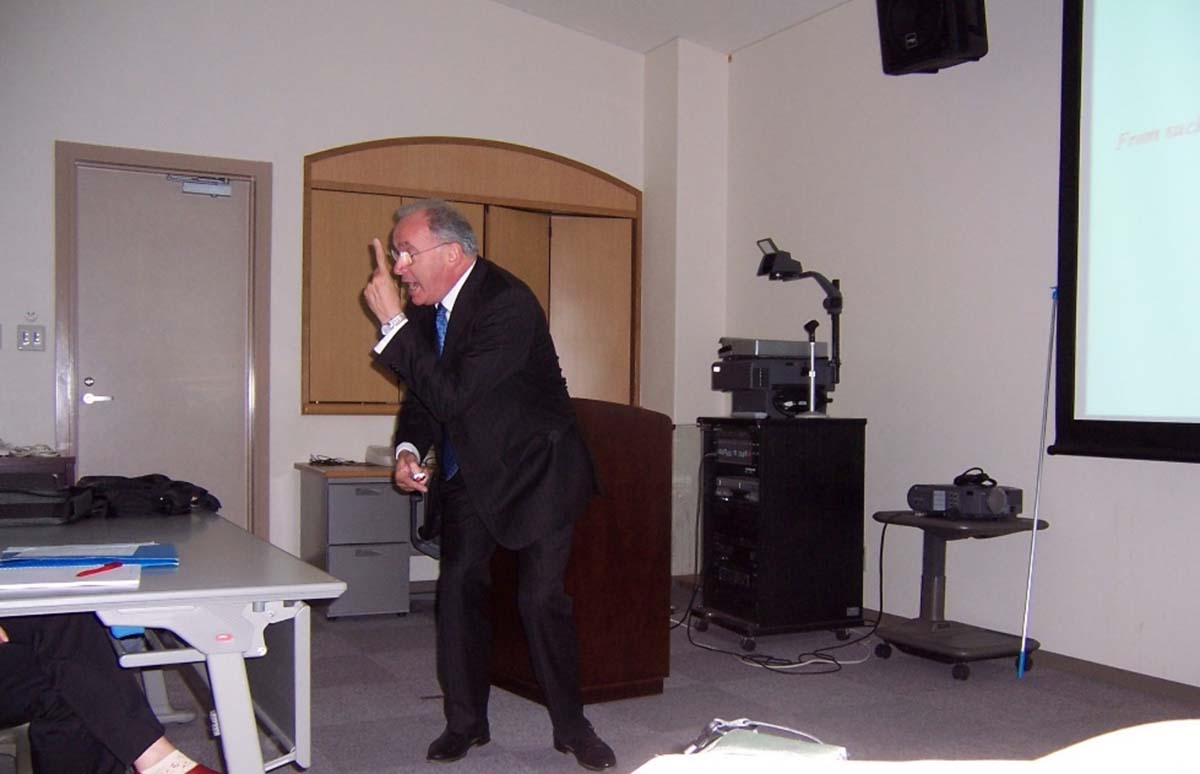
Figure 1. P. J. Becker during a seminar at École Centrale Paris.
His doctoral thesis, initially begun with Henri Brusset, was completed in Buffalo, NY, under the supervision of Philip Coppens. Pierre often shared stories of this unique experience: quickly realizing that his place was at a sheet of paper with a pen – or juggling piles of computer punch cards – rather than working directly around a diffractometer. He often spoke of Coppens' demanding standards, which focused his energy, made him productive, and led to the development of the now-famous extinction correction model that bears both their names. He cherished that period of discovery, the intellectual excitement of the environment, and the lasting friendships he made – stories he loved to tell. Through Coppens and Robert F. Stewart, Pierre entered the `charge, spin and momentum densities' community and soon became a central figure at the Sagamore and Gordon conferences. Anyone who attended one of his talks remembers a mix of exuberance, enthusiasm and depth. He aimed to draw everyone into his search for subtle effects, using `simple models' whose parameters were not arbitrary but grounded in the fundamental principles of physics and chemistry.
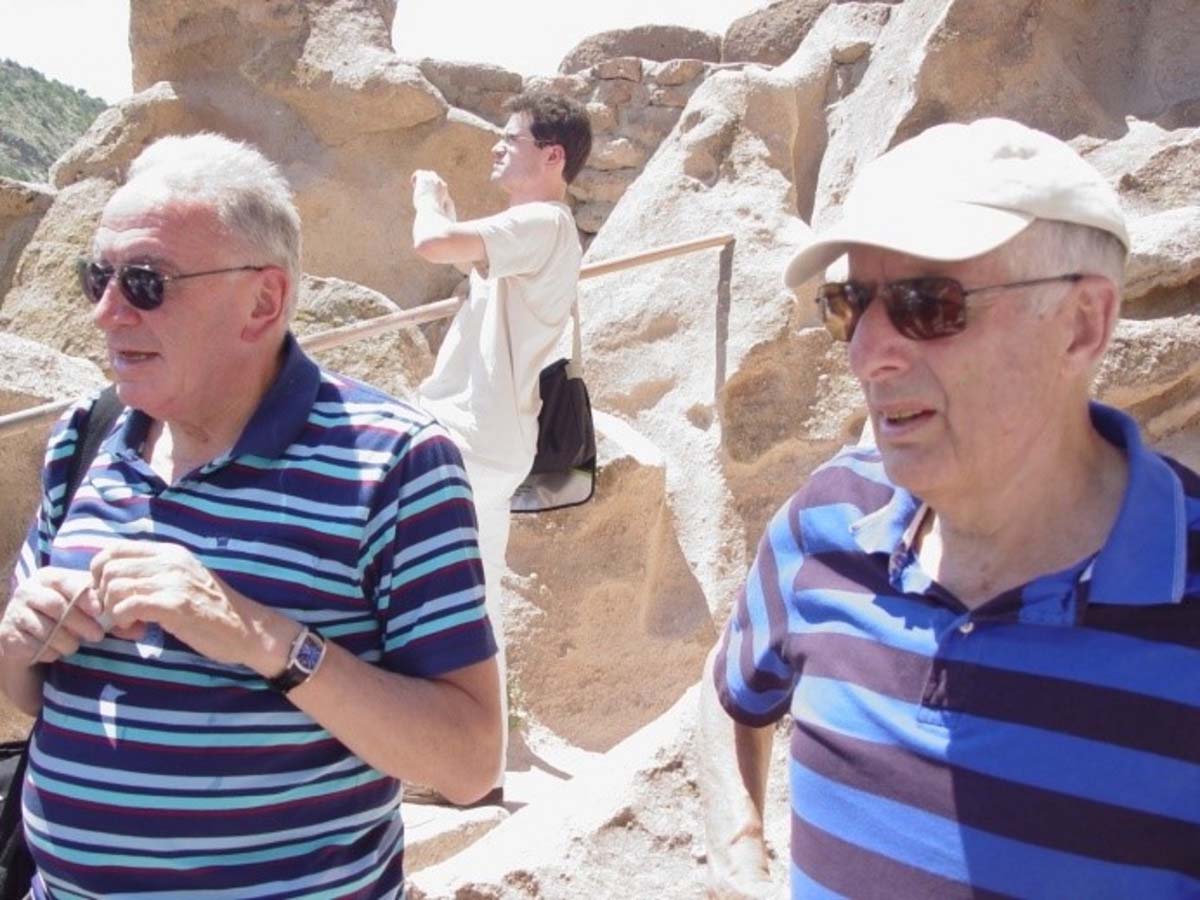
Figure 2. P. J. Becker and Philip Coppens on a tour during the Sagamore conference at Santa Fé.
Pierre began his academic career as a lecturer at the Université Pierre et Marie-Curie (Paris). He further sharpened his skills in quantum chemistry at Raymond Daudel's Institut de Mécanique Ondulatoire before becoming a professor in Nancy. There, he met two young and promising scientists, Claude Lecomte and Niels Hansen, who would follow in his footsteps to Buffalo and become leading figures in the field. Soon, Pierre was invited to join the theory group at the Institut Laue–Langevin in Grenoble, where the remarkable personality of Philippe Nozières profoundly influenced him. He would later succeed Nozières in the Louis Néel Chair at Université Joseph Fourier when the latter left for the Collège de France. Then, Pierre turned to magnetic density studies, supervising Béatrice Gillon's thesis and collaborating with P. J. Brown and B. Forsyth. A transitional period followed. Though Pierre Becker loved Grenoble's intellectual and human atmosphere, family circumstances led him back to Paris. Still, he continued to teach two days a week at Université Joseph Fourier in Grenoble. In Paris, he was welcomed at the Laboratory of Mineralogy and Crystallography (now the Institut de Minéralogie, de Physique des Matériaux et de Cosmochimie at Sorbonne Université), where he shared an office with Jacqueline Petiau, just one door down from Geneviève Loupias. So close to the French hub of Compton scattering, and after exploring electrons and their spins in position space, Pierre could hardly remain indifferent to what was happening in momentum space. In this environment – where he was physically absent two days a week but intensely present the rest of the time – I began a master's internship and then a PhD under his guidance. From Pierre Becker's constant mentorship, I learned nearly everything: electron densities in all their flavours, quantum chemistry (he sent me to Twente in the Netherlands to train with Dirk Feil), and above all, the delicate interplay between position and momentum spaces.
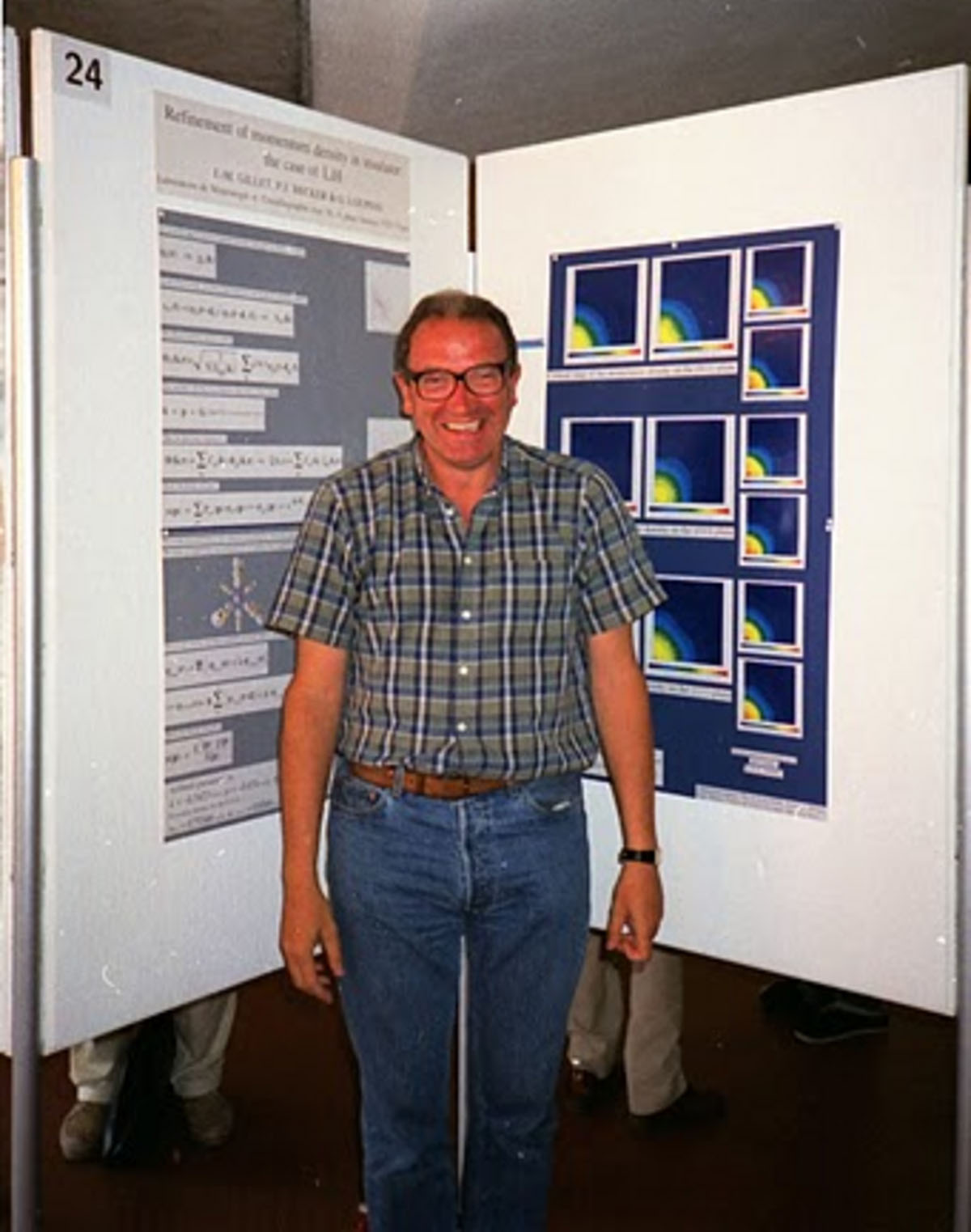
Figure 3. P. J. Becker in front of our poster on wavefunction refinement from Compton data at a Sagamore conference in Konstanz (Germany).
Towards the end of my PhD, I remember him stopping me in the hallway near the library. He asked if I'd be interested in exploring an idea that had progressively matured in his mind: reconstructing a wavefunction from high-quality Compton scattering data, recently measured by Geneviève Loupias and a master's student. I jumped at the opportunity, even though it meant countless hours of coding. He often sat beside me, taking micro-naps and suddenly waking up with a new direction to explore. In many ways, that was the essence of Pierre: an inner fire that would suddenly burst forth – a desire to share everything, from emotions and frustrations to flashes of brilliance. He poured this energy into his collaborators and friends. Everyone who knew him can attest that his family was always in his thoughts, and it was not rare for moments of warmth to bubble up in the middle of deeply scientific discussions. He often spoke of his pride in his children and, later, his grandchildren. But he was equally generous with his affection for students he believed he could help succeed. Seeing him go far beyond the standard academic duties to support students struggling with quantum or statistical physics was not unusual. Even recently, he would invite them to his Paris apartment on Saturday or Sunday mornings – after returning from the market – sacrificing part of his weekend to give them the keys to success, driven by his passion for teaching. That same desire to share, and the challenges it entailed, also led him to create courses in various institutions, including the new university of Marne-la-Vallée (where he welcomed me for my first position), the Université Catholique d'Angers and École Centrale Paris. But what Pierre loved most was participating in conferences, particularly the Sagamore conferences on `Charge, Spin and Momentum Densities', Gordon conferences and IUCr meetings. He cherished the reunions, delighted in discovering young talent, and loved watching them grow and develop new ideas.
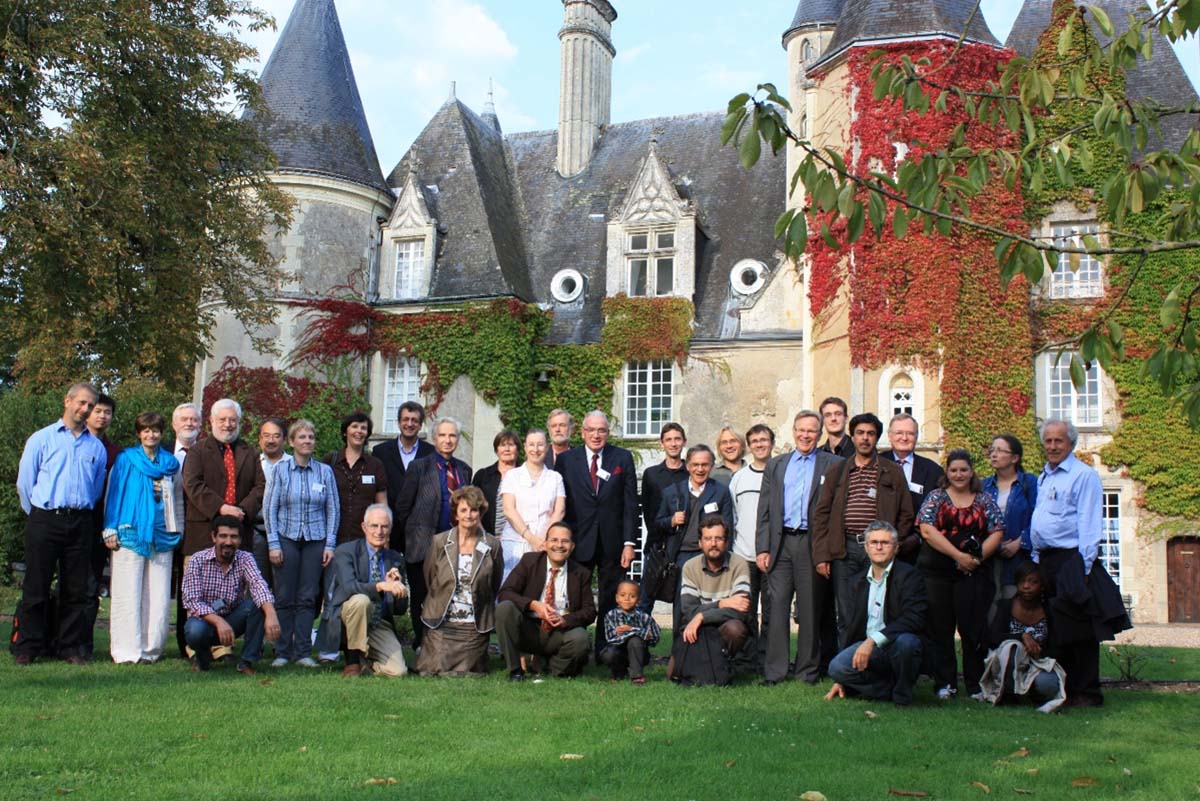
Figure 4. P. J. Becker surrounded by his friends and family at a colloquium in his honour near Tours (France). Standing (from left to right): C. Jelsch, A. Spasojevic, M. Jouan, B. Blessing, Y. Sakurai, F. Porcher, B. Gillon, C. Gatti, L. Dobrzynski, P. Suortti, P. J. Becker, B. Guillot, D. Leveque, N. Claiser, S. Pillet, C. Lecomte, M. Deutsch, N. E. Ghermani, H. Fuess, M. Becker, M. Bonnet. Kneeling (from left to right): M. Souhassou, P. Coppens, M. Becker, M. Al Haddad, P. Cortona, J.-M. Gillet.
He also enjoyed discovering new horizons and engaging with other traditions. Following a collaboration with Guru Row – which led to the refinement of Kappa radial functions in the late 1970s – Pierre developed a curiosity, then a strong interest, and finally a deep passion for India. He took every opportunity, especially academic partnerships, to travel there. He became deeply attached to the country and, above all, to the students he met there.
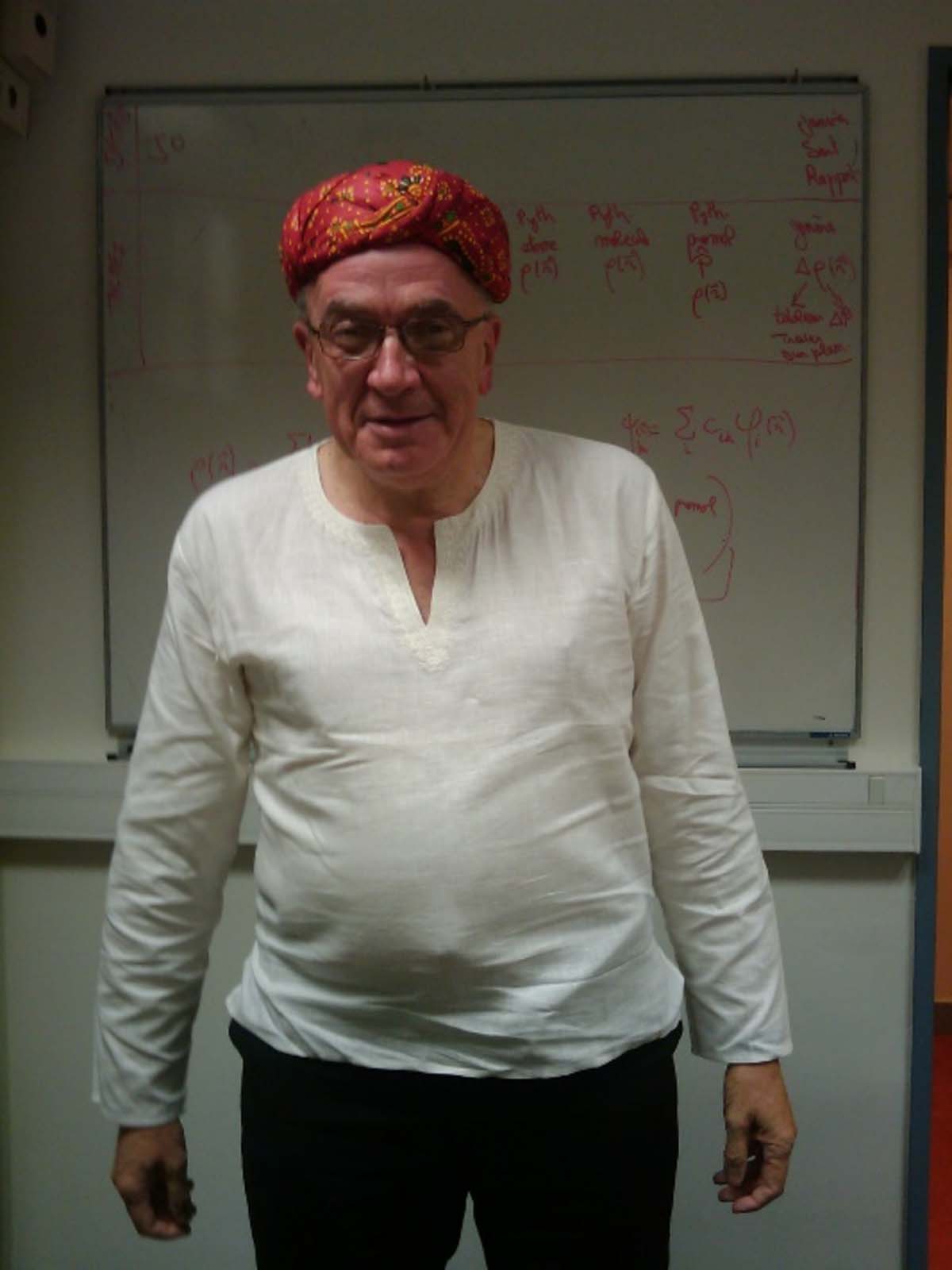
Figure 5. P. J. Becker back from one of his trips to India.
It was thus one of his greatest joys to return to India in November 2024 for the Sagamore Conference on Quantum Crystallography, organized by Parthapratim Munshi. On Friday 15th November, Pierre chaired the final session and led the closing discussions. The next morning, he left the conference with his wife, Monique. Everyone present had seen how happy he was to be among colleagues and friends once more, discussing `chemical bonds and wavefunctions' in the country he so dearly loved. It was then, in Delhi on the 16th November, that his heart failed him. Pierre leaves behind his wife Monique, his children Agnès, Etienne, Marguerite, Anne-Lise and Claire, and his grandchildren. But to all those lucky enough to have known him, colleagues and friends, he leaves the memory of a brilliant scientist, generous with his words, ideas and enthusiasm. Above all, each of us will carry a bit of the warmth he so freely shared.
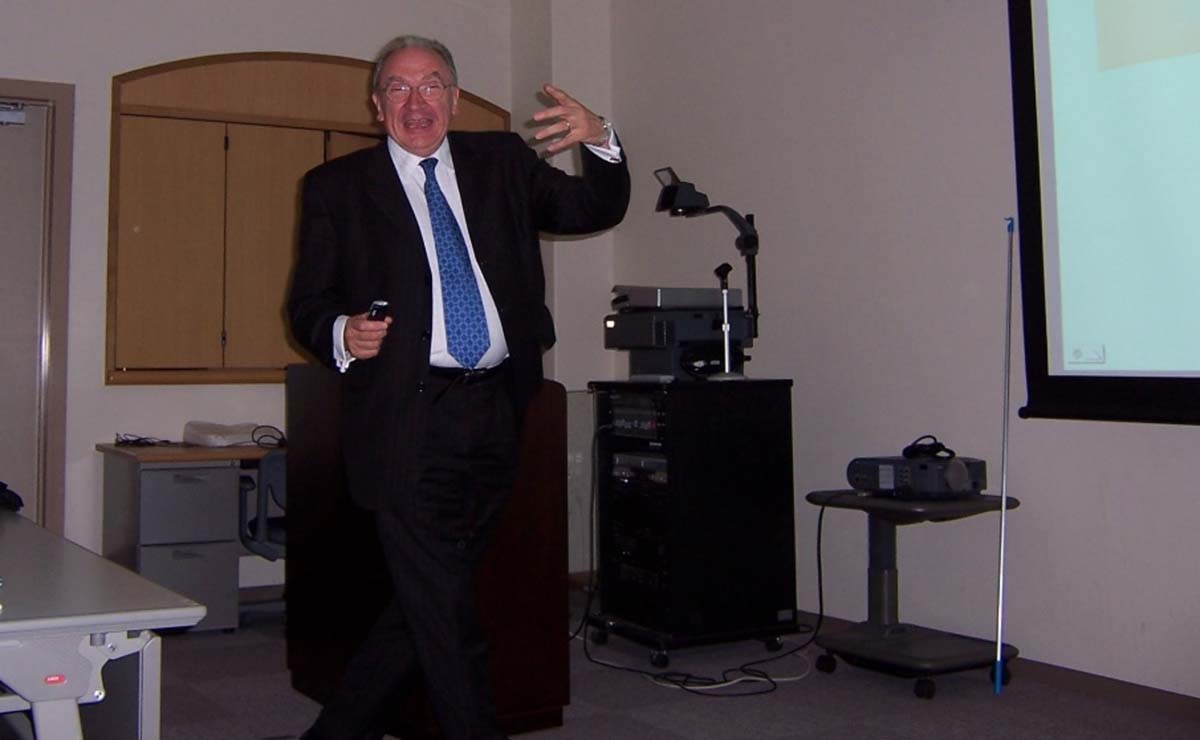
Figure 6. P. J. Becker's joy and enthusiasm at sharing his ideas at École Centrale Paris.
This article was originally published in Acta Cryst. (2025). A81, https://doi.org/10.1107/S2053273325008058.
Copyright © - Prior permission is not required to reproduce short quotations, tables and figures from this article, provided the original authors and source are cited.
The permanent URL for this article is https://www.iucr.org/news/newsletter/volume-33/number-5/pierre-j.-becker-19422024


