Old notices
These pages collect together notices posted on the IUCr web site in past years. They are retained for archival interest, but there is no guarantee (or likelihood) that many of the web links found in these notices will still be active.
IUCr bursary case study: Lanthanoid metal-organic frameworks
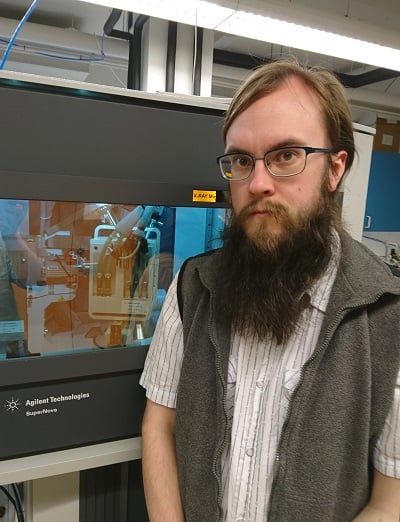 In 2016 alone, the IUCr sponsored 40 international meetings and schools. One recent recipient of an IUCr Young Scientist Award reveals the importance of these travel grants to their research and experience.
Metal-organic frameworks (MOFs) have been extensively studied with small organic molecules and transition metals, and in the past years more and more interest in developing MOFs with lanthanoids has emerged. Lanthanoids are a group of f-block metals with similar chemical behavior, and they tend to have larger coordination numbers and less strict bond directionality compared with d-block transition metals. As hard bases, lanthanoids tend to form coordination compounds with hard acids, and carboxylic acid derivatives are by far the most studied group of ligands. Practical applications for lanthanoid-MOFs (Ln-MOFs) have been studied, and these include, for example, small-molecule capture and storage, gas adsorption, catalysis and metal extraction.In my PhD studies I have been concentrating on multipodal zwitterionic ligands, which possess carboxylate functionality and thus can be used in Ln-MOFs as organic linkers. The backbone of these linkers is an aromatic center joined by two or more methylene bridges to pyridinecarboxylic acids, which in turn have several substituent configurations available, leading to various isomers. Pyridinecarboxylic acid groups can have several different spatial orientations with respect to the aromatic center because of the freely rotating methylene bridges, and if the ligand has been synthesized from, say, nicotinic acid (3-pyridinecarboxylic acid), there are even more directions for the carboxylic acid to coordinate to, than in the case of isonicotinic acid (4-pyridinecarboxylic acid). One problem associated with high degrees of freedom in these Ln-MOF systems is that they tend to crystallize in several different crystal systems and have different types of disorder within the structure.The bursary towards attending the 16th BCA/CCG Intensive Teaching School in X-ray Structure Analysis (Durham, UK; 25 March-2 April 2017; http://community.dur.ac.uk/durham.x-ray-school/index.html) was crucial for me to gain new insights in the fundamentals of X-ray crystallography. As my materials in question are intrinsically crystalline, X-ray crystallography is the most powerful way to gain information from MOFs. The contents of the course helped me to critically assess my own work up to this point in a new way, and I gained many new pieces of information to aid my further studies.
Antti Tiihonen, MSc, Department of Chemistry, U. of Jyväskylä, Finland