



Feature article
Interesting packings of spheres in cubic space groups (2). The symmetry of the loosest Heesch-Laves packing
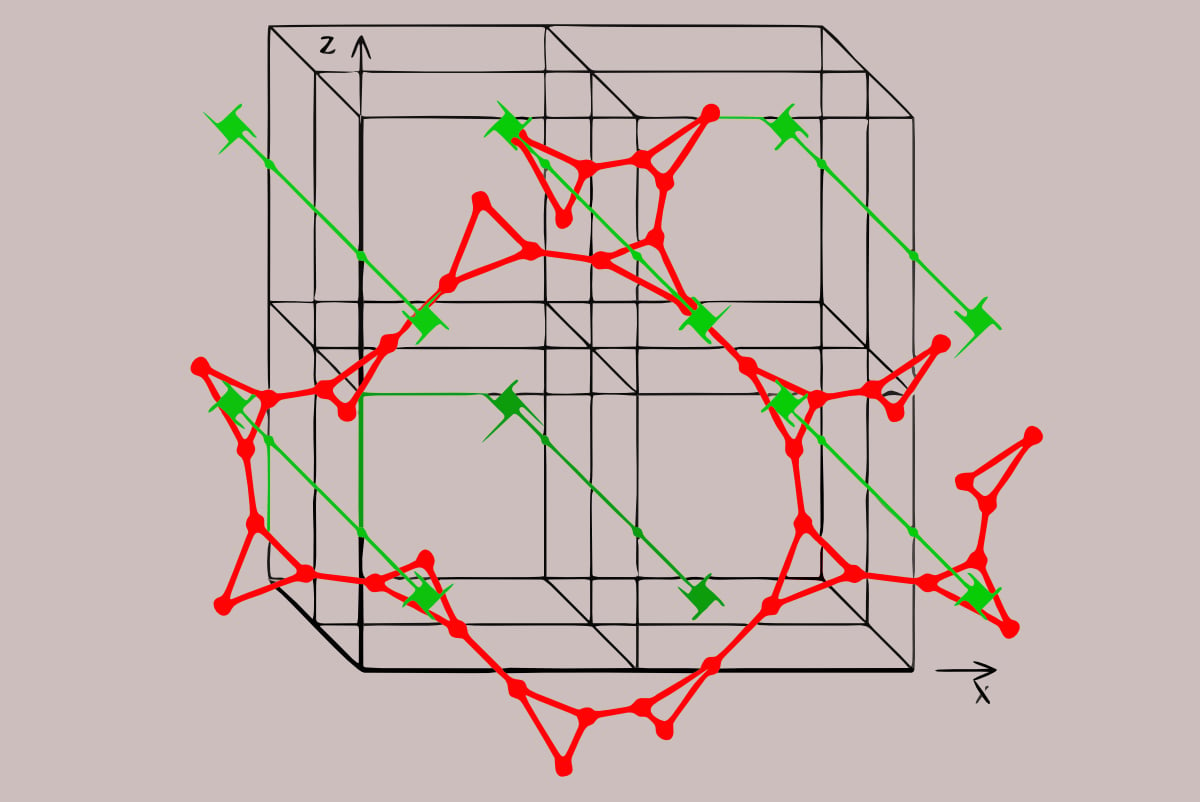
Continuing our mini-series on cubic packings (Dauter & Jaskolski, 2026), we will focus in this note on the symmetry of the regular cubic packing of equal spheres that is the loosest possible (with merely 5.5% of the 3D space filled by the spheres). This loosest regular sphere packing was discovered and described by Heesch & Laves (HL, 1933) almost 100 years ago. It has the cubic I4132 symmetry and consists of eight triangles of touching spheres, positioned around the threefold axes with centres at ⅛,⅛,⅛ and seven other symmetry-equivalent sites in each unit cell. These triangles, also touching each other, are arranged in the unit cell around the 41 and 43 screw axes of this space group (Fig. 1a).
Each sphere of diameter d = (2√6-3√2)/4 ≈ 0.1641 lies at the twofold-symmetric Wyckoff position h (Int. Tables for Crystallography, Vol. A, 2016), with the coordinates ⅛,x,¼-x, where x = (2√3-3)/8 ≈ 0.0580, (and equivalents). Each sphere is in contact with another sphere from a neighbouring triangle; the planes of these neighbouring triangles are twisted by 109.5° (or 70.5°) around the twofold axis that joins them (Fig. 1b). Because of this twist, all triangles are arranged along the 41 and 43 helices extending in three directions: x, y, and z. Since the coordination number of this packing is 3, this is not a stable arrangement. However, with the condition that the spheres must lie at the twofold axes, this packing could be regarded as semi-stable. Despite its wobbliness, the HL arrangement is a sphere packing because it meets the condition of a full connectivity path between any pair of spheres.
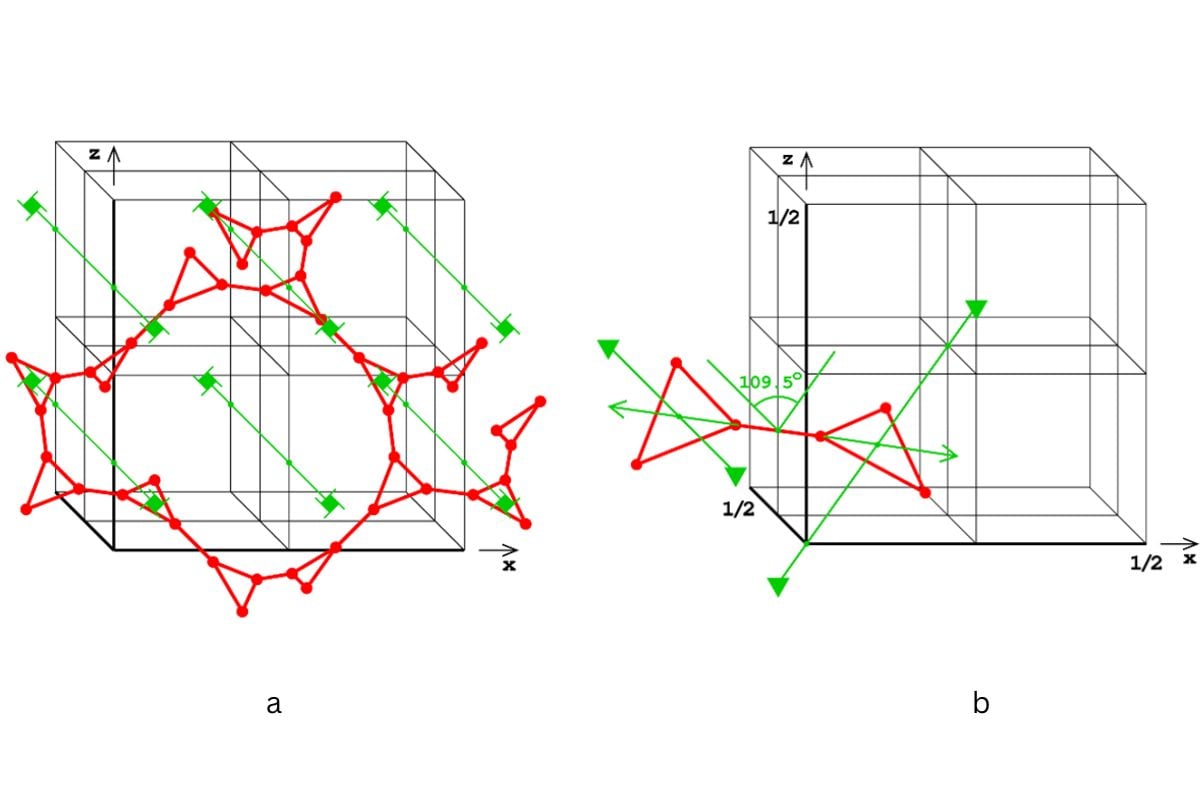
Fig. 1. (a) The arrangement of spheres in the Heesch-Laves loosest packing around the 41 and 43 screw axes in the unit cell of the I4132 space group. The sphere positions are marked by dots and their connections by the line segments joining pairs of kissing spheres. (b) The connection between a pair of neighbouring triangles of spheres, shown in two octants of the unit cell.
The arrangement of packed spheres located at x=0.125, y=0.0580, z=0.1929 and all symmetry-equivalent positions is chiral. From Fig. 1a it is evident that the helical chain of spheres around the 41 axis (along 0,y,¼, etc.) is narrower and the helical chain around the 43 axis (along ½,y,¼, etc.) is wider. A centrosymmetric inversion of the sphere positions to x=0.875, y=0.9420, z=0.8071 results in an arrangement of opposite chirality in the same space group I4132, with the 41 helices being wider and the 43 helices narrower (Fig. 2).
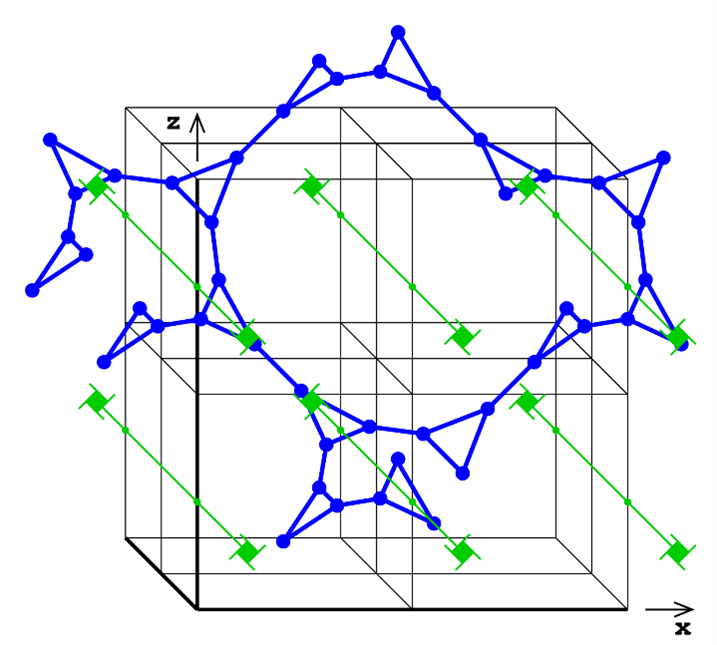
Fig. 2. The Heesch-Laves packing with opposite chirality to that presented in Fig.1a.
When packings of both chiralities are present in one unit cell, the sphere arrangement acquires the centrosymmetric space group Ia3 ̅d as in Fig. 3.
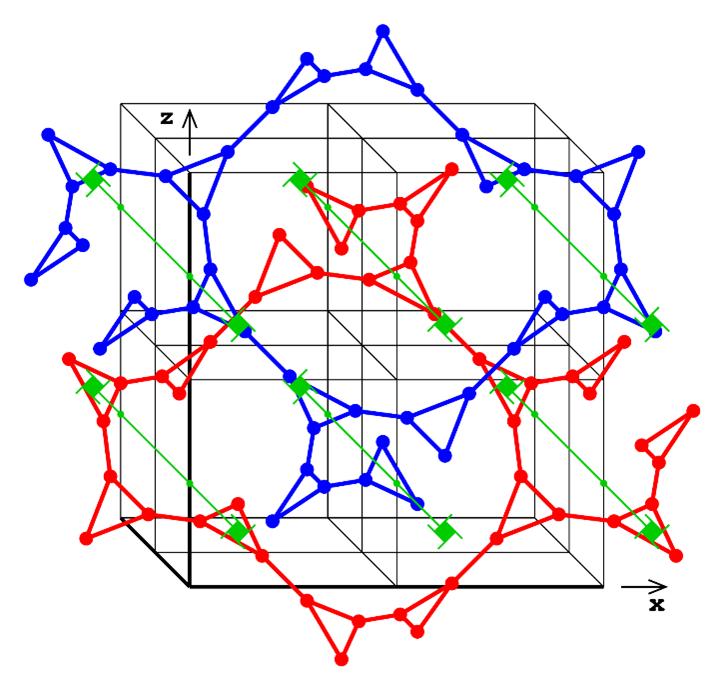
Fig. 3. Two Heesch-Laves packings of opposite chiralities in the space group Ia3̅d.
The two types of sphere chains (red and blue in Fig. 3) interpenetrate but do not collide. Moreover, there are no contacts between spheres belonging to the two chiral systems. Thus the centrosymmetric arrangement in space group Ia3 ̅d presented in Fig. 3 does not constitute a proper packing of spheres. Of course, the space coverage of such a dual Ia3 ̅d arrangement would be 2 * 5.5% = 11%.
In the next essay, we will investigate the relation between the Heesch-Laves packing and polyhedral arrangements of spheres in 3D space.
References
Dauter, Z. & Jaskólski, M. (2026). Interesting packings of spheres in cubic space groups. A case of an unobvious arrangement of space-filling rhombohedra. IUCr Newsletter, 34(2). https://www.iucr.org/news/newsletter/volume-34/number-2/interesting-packings-of-spheres-in-cubic-space-groups.-a-case-of-an-unobvious-arrangement-of-space-filling-rhombohedra
Aroyo, M. I. (ed.) (2016). International Tables for Crystallography, Volume A: Space-group Symmetry, 6th ed. Chichester: Wiley. https://onlinelibrary.wiley.com/iucr/itc/A/
Heesch, H. & Laves, F. (1933). Über dünne Kugelpackungen. Zeitschrift für Kristallographie, 85, 443–453. https://doi.org/10.1524/zkri.1933.85.1.443
Copyright © - Prior permission is not required to reproduce short quotations, tables and figures from this article, provided the original authors and source are cited.
The permanent URL for this article is https://www.iucr.org/news/newsletter/volume-34/number-3/interesting-packings-of-spheres-in-cubic-space-groups-2.-the-symmetry-of-the-loosest-heesch-laves-packing