





The New Products section is designed to provide readers with the latest information about new equipment and software. The descriptions should be no longer than 400 words and should include one image. For more information, please see the submission instructions. There will be a small charge for publication.
New products
CSD Data and Software Update (May 2025)
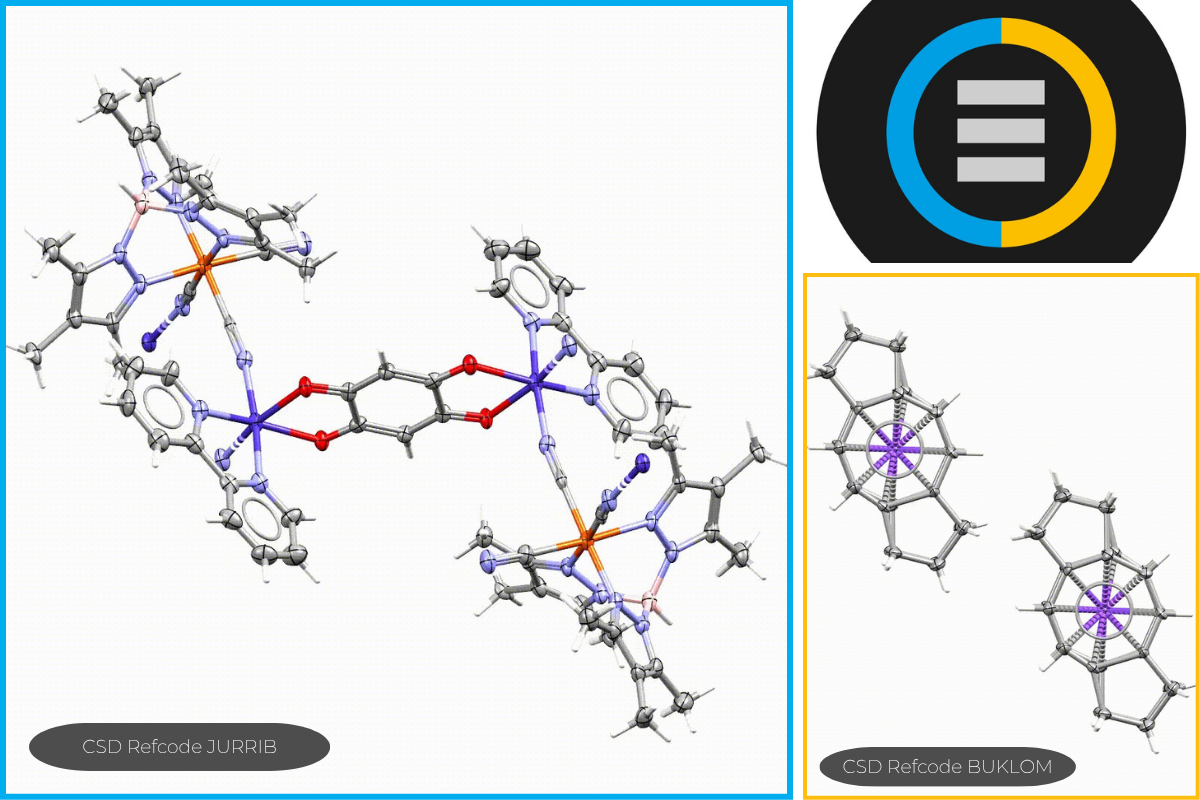
The latest Cambridge Structural Database (CSD) update — CSD 6.00 — brings significant advancements, including a new data format that is extendable, faster to search, contains more data and is smaller to download.
It includes 1,371,757 entries, with 45% organic and 55% metal-organic structures.
Notably, over 165,000 CSD entries now feature fully calculated disorder models, allowing for improved visualization and analysis of disordered structures.
Additionally, existing entries have been enriched with new searchable fields to enhance their scientific value and analytical potential.
This release also includes:
- Covalent docking enhancements in GOLD and ligand overlay in the CSD Python API.
- New powder X-ray diffraction functionality.
- CLP force field added to VisualHabit in CSD-Particle.
- 4 new CSD subsets: Generally Recognised as Safe (GRAS) substances, retracted entries, semiconductors and entries with associated raw data DOIs.
Latest Blogs and Videos
Enriching the CSD: New Data Fields for Deeper Structural Insights
CSD 6.00 features new searchable fields that enhance existing entries, providing greater scientific value. You can now identify relevant structures more easily, with new data integrity fields added for over one million entries from submitted CIFs.
Bringing Order to Disorder: Expanding Structural Detail in the CSD
We are improving how disorder is represented in the CSD. Read on for the enhancements, challenges faced, and the significance of accurately capturing disorder for structural chemistry and data-driven research.
How to: Search Scientific Literature with the CSD
New to the CSD? About to teach students or guide undergraduate research projects? This video introduces the database, its contents, and how to search and download data to help enrich scientific studies and inspire new directions of research.
Upcoming Webinar
Frontiers of Chemistry Education Panel Webinar: Preparing Students for Emerging Career Paths
Technology is evolving faster than ever before, and with it, science career paths change too. How can educators, institutions, and students best prepare for career paths that may not yet exist?
Join our panel to explore key questions for chemistry students and educators to learn how to best prepare for the future of work and careers.
Thursday 4th September 2025
- 3pm BST (London, Dublin, Edinburgh, Lisbon)
- 10am ET (Boston, New York, Ontario)
- 4pm CEST (Berlin, Brussels, Rome, Warsaw)
- 7am PT (San Francisco, Seattle, Vancouver)
Meet the Team - Upcoming Events
- 18–23 July - 75th ACA Annual Meeting 2025
- 25–29 August - European Crystallographic Meeting 2025 (ECM35)
The CSD is celebrating its 60th anniversary. We are hosting numerous events throughout the year to mark this significant occasion. Meet us at the 75th ACA annual meeting and ECM35 as we invite our community to celebrate with us, reflect on our past, and look toward the future.
Established in 1965, the database includes historical structures dating back to the 1920s. Our global community has been vital to the growth of the database, which now contains over 1.3 million accurate 3D structures, derived from X-ray and neutron diffraction analyses, and additional curation by the CCDC.
Check our events page for more updates throughout the year!
Copyright © - Prior permission is not required to reproduce short quotations, tables and figures from this article, provided the original authors and source are cited.
The permanent URL for this article is https://www.iucr.org/news/newsletter/volume-33/number-3/csd-data-and-software-update-may-2025