


Feature article
Advancing African Science: Launch of the African Light Source Strategic Reports
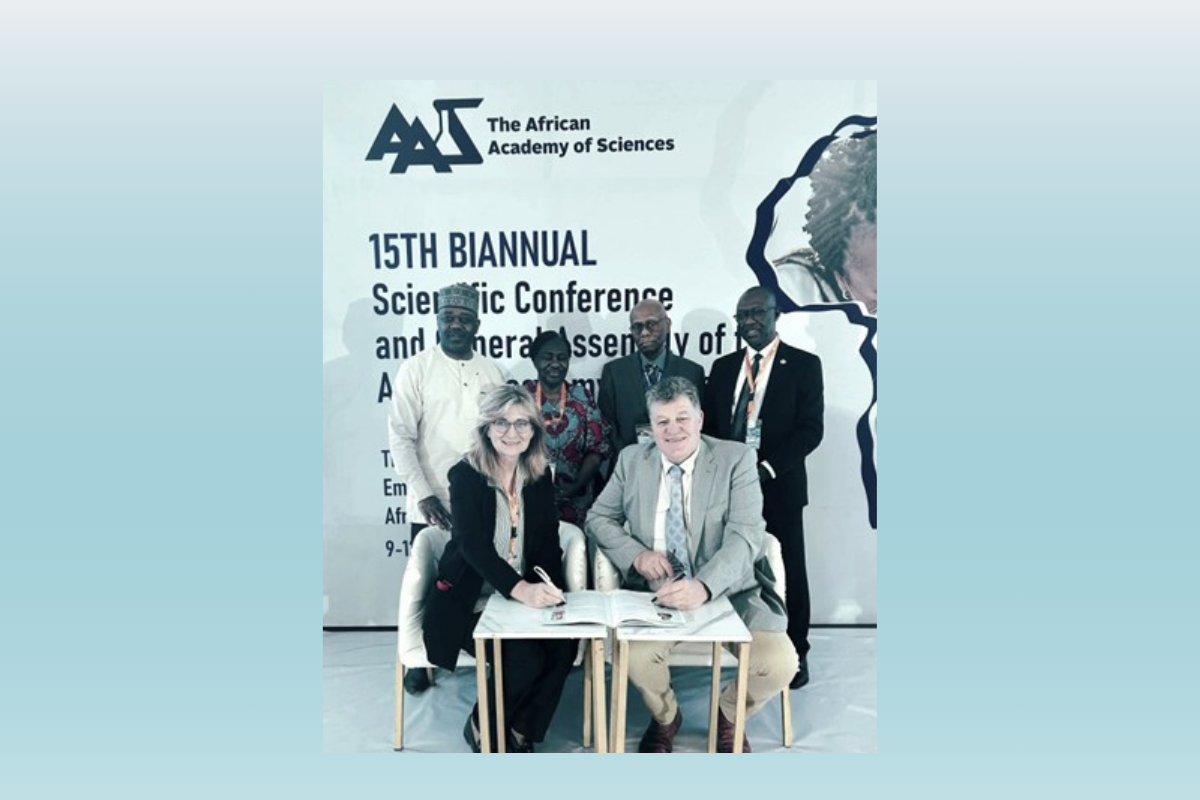
African Academy of Sciences (AAS) and African Light Source (AfLS) Foundation sign a Memorandum of Understanding during the 15th AAS General Assembly and Conference in Abuja, Nigeria, on December 11, 2024. Seated left to right: Lise Korsten, President, AAS; Simon H. Connell, Chair of Executive Committee, AfLS. Standing left to right: Nkem Khumbah, Head of STI Policy Systems, Governance and Partnerships, AAS; Peggy Oti-Boateng, Executive Director, AAS; Sekazi K. Mtingwa, Editor-in-Chief, AfLS Geopolitical Conceptual Design Report; Kenneth Ozoemena, Vice-President for the Southern African Region, AAS (photograph courtesy of AAS).
A major milestone on the road toward constructing a Pan-African synchrotron light source facility, called the African Light Source (AfLS), somewhere in Africa, was reached at the 15th Biennial African Academy of Sciences General Assembly and Conference, which convened in Abuja, Nigeria from 9-12 December 2025. At the meeting, Simon H. Connell from the University of Johannesburg and Chair of the AfLS Foundation Executive Committee launched three Strategic Task Force Reports (STFRs) on (i) an African Beamline at an operating world synchrotron light source, (ii) a Collective African Membership at such an operating facility, and (iii) enhancing Local Research Infrastructures that would serve as feeder facilities for the AfLS once it is constructed. During the same session, Sekazi K. Mtingwa from TriSEED Consultants, LLC in the USA launched the AfLS Geopolitical Conceptual Design Report (G-CDR). All the documents can be found on the AfLS website.
According to the African Beamline Strategic Task Force: "It is a low hanging fruit in the Roadmap towards the African Light Source, in that it is a lower capital and operational spend, but has massive benefits. It will enhance access by Africans to important science techniques that address selected crucial African Challenges and various of the United Nations' Sustainable Development Goals, as well as providing an important training base for researchers, engineers and technicians." The latter point concerning training at such a Pan-African beamline is of crucial importance for guaranteeing a critical number of potential users once the AfLS is constructed.
The Collective African Membership STFR acknowledges that among the over 50 synchrotron facilities around the globe, only two are multinational, namely the European Synchrotron Radiation Facility (ESRF) in Grenoble, France and the Synchrotron-light for Experimental Science and Applications in the Middle East (SESAME) in Allan, Jordan. Given the economic challenges facing Africa, pooling the financial resources from many countries across the continent will be crucial to realizing the AfLS in an expeditious manner. Crucially, by being Member States of existing synchrotrons, African governments will become involved in the governance of these international facilities. This experience, together with similar governance experience in the global Square Kilometer Array project, will position Africa to run effectively its own synchrotron light source facility.
While an African beamline would facilitate hands-on training at a synchrotron facility, the Enhancing Local Infrastructures STFR emphasizes the need to conduct training and research all across the continent in regional and local feeder facilities. An excellent example is the development of crystallography research and training hubs in as many regions as possible. This recognizes that crystallographers comprise a major fraction of synchrotron users. Hence, Lightsources for Africa, the Americas, Asia, Middle East and Pacific (LAAAMP), which is funded by the IUCr, International Union of Pure and Applied Physics (IUPAP), International Union of Pure and Applied Biophysics (IUPAB), and Abdus Salam International Centre for Theoretical Physics (ICTP), has partnered with the government of Benin to establish a crystallography research and training hub in Cotonou called X-TechLab. X-TechLab hosts 2-week training sessions twice per year for graduate students, postdocs and engineers. Fig. 1 depicts one such training session during September 2023, where the lecturer is Marielle Agbahoungbata, the Manager of X-TechLab.
During 2019-2023, it held 8 training sessions for approximately 200 participants from 16 African countries. Moreover, X-TechLab has introduced more than 1000 local undergraduate students to the field of crystallography and the mathematics of symmetry. More than 30 lecturers have provided instruction during the training sessions and have come from Africa, Asia, Europe, and the United States.
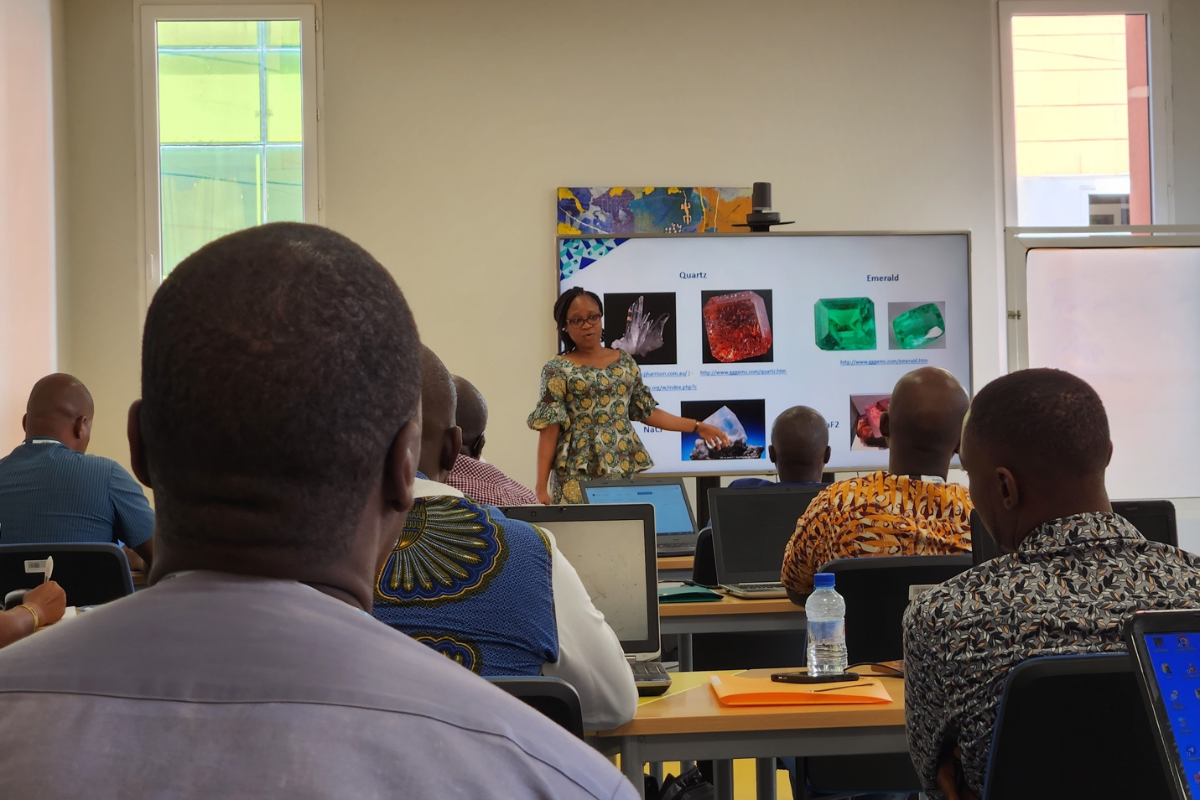
Figure 1. X-TechLab Training Session, Cotonou, Benin, September 2023 (photograph courtesy of LAAAMP).
The G-CDR provides a brief summary of the physics of the AfLS, including descriptions of electromagnetic radiation and the accelerator and ancillary systems that comprise a synchrotron light source, with particular attention paid to the latest Generation IV synchrotron. The emphasis is on the geopolitical aspects of the AfLS and not the machine design, since there is a growing number of Generation IV synchrotron facilities around the globe and the crucial elements of their design are well known. As for its content, more than 100 African and other international scientists and engineers contributed to the G-CDR, resulting in a 300+ page document.
Given the importance of past activities, the G-CDR presents a detailed discussion of the history of the AfLS, covering both human capacity building and the enhancement of local infrastructures, which could serve as feeder facilities for the AfLS. The first call for an African synchrotron light source was contained as a long-term goal in the 2002 Strategy and Business Plan for an African Laser Centre (ALC). However, the idea did not gather momentum until a 2014 article by Sekazi K. Mtingwa and Herman Winick (https://www.africanlightsource.org/documents/), followed by the 1st AfLS Conference during November 2015 at ESRF, following an invitation from the then Director-General Francesco Sette, with Simon H. Connell being the lead organizer. Fig. 2 contains a photo of that historic event.
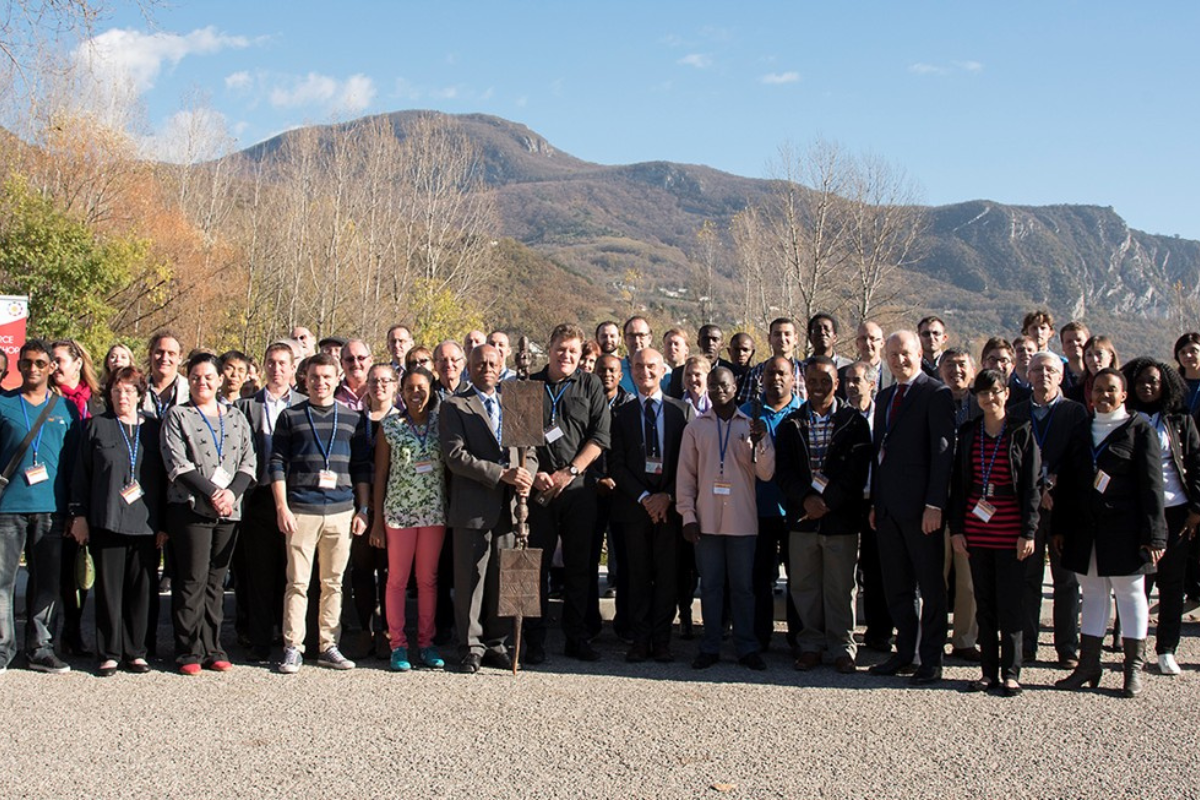
Figure 2. First African Light Source Conference, ESRF, Grenoble, France, November 2015. Sekazi K. Mtingwa, Founding AfLS Deputy Chair, is holding the African Traditional Stick that called the meeting to order. To his left is Simon H. Connell, Founding AfLS Chair. To Connell’s left is Francesco Sette, ESRF Director-General (photograph courtesy of ESRF).
Among the many organizations highlighted in the G-CDR are the following: Atomic, Molecular and Optical Sciences Network (LAM-Network), Abdus Salam ICTP School on Synchrotron Light Sources and their Applications (https://indico.ictp.it/event/10057/), Synchrotron Techniques for African Research and Technology (START), African Crystallographic Association (AfCA), BioStruct Africa (https://www.biostructafrica.org/), LAAAMP, ALC and X-TechLab. In addition, the G-CDR presents several papers based upon research that teams composed of a faculty and graduate student conducted during their 2-month visits to world synchrotron light sources as part of the LAAAMP FAculty-STudent (FAST) Team Program. These include Applications of XAS to Studies of ZnS Sphalerite Material and Cameroon Volcanic Ashes by Bridinette Thiodjio Sendja and student from the University of Yaoundé I in Cameroon, Study of Diagenesis in Ancient Egyptian Bones by Ahmed El-Hussein and student from the National Institute of Laser Enhanced Sciences at Cairo University in Egypt, Study of Materials for Possible Energy Applications by Diouma Kobor and student from the Assane Seck University of Ziguinchor in Senegal, and Study of Nano-Crystalline WC-Co Films by Oluseyi Philip Oladijo and student from Botswana International University of Science and Technology in Botswana.
The G-CDR describes the many scientific benefits of the AfLS, including contributions to structural biology, which is extremely important for understanding the underlying structure of such pathogens as HIV and the Coronavirus. Much of the leading and most critical work in the development of vaccines and treatments for COVID-19 was conducted at various synchrotron light sources around the world. Other scientific benefits include the development of advanced materials for solar energy, fuel cells and rechargeable batteries; understanding geoscience, which is important for underground mining; increasing knowledge in environmental science, which is crucial for confronting the challenges of climate change; gaining new insights into plant and soil science to improve agriculture and better address food shortages; and utilizing techniques for paleontology and archeology to reveal insights into our biological and cultural heritages. All of these benefits will positively impact the socio-economic development of Africa.
As for governance, the G-CDR proposes a set of statutes according to which the AfLS would be governed by its multinational member countries, similar to those that govern ESRF in Europe and SESAME in the Middle East. The latter have proved highly successful for many years since the inauguration of ESRF in 1994 and SESAME in 2017. Thus, their governance structures are highly successful models for the kinds of statutes that should prove successful for the AfLS.
The G-CDR provides an excellent discussion on the kind of high tech campus that usually emerges in the vicinity of a synchrotron light source. It highlights the example of the Diamond Light Source, where many support facilities, laboratories, institutes, and over 100 companies have co-located along with Diamond on the Harwell Science and Innovation Campus in Oxfordshire, UK.
A major highlight of the 15th Biennial African Academy of Sciences General Assembly and Conference was the signing of a Memorandum of Understanding (MoU) between the African Academy of Sciences (AAS) and the AfLS Foundation, which is the legal entity that has promoted the AfLS and sponsored its G-CDR. Lise Korsten from the University of Pretoria in South Africa signed as President of the AAS and Simon Connell signed as Chair of the AfLS Foundation. According to the MoU, the AfLS will establish a home office within the AAS Headquarters in Nairobi, Kenya, and the AAS will partner with the AfLS in securing funding, conducting conversations at the highest governmental levels and progressing the AfLS Roadmap forward on a number of fronts, including local infrastructure development and student and researcher training to increase the AfLS user community.
The road ahead is bright for the African Light Source, and there already have been many achievements along the way.
Simon H. Connell
Chair, AfLS Foundation
Professor, University of Johannesburg, South Africa
Editor-in-Chief, AfLS Geopolitical Conceptual Design Report
Principal Partner, TriSEED Consultants, LLC, USA
Copyright © - Prior permission is not required to reproduce short quotations, tables and figures from this article, provided the original authors and source are cited.