




The Press Release section is designed to provide readers with industry news. The descriptions should be no longer than 400 words and should include one image. For more information, please see the submission instructions. There will be a small charge for publication.
Press release
Updates from the CCDC
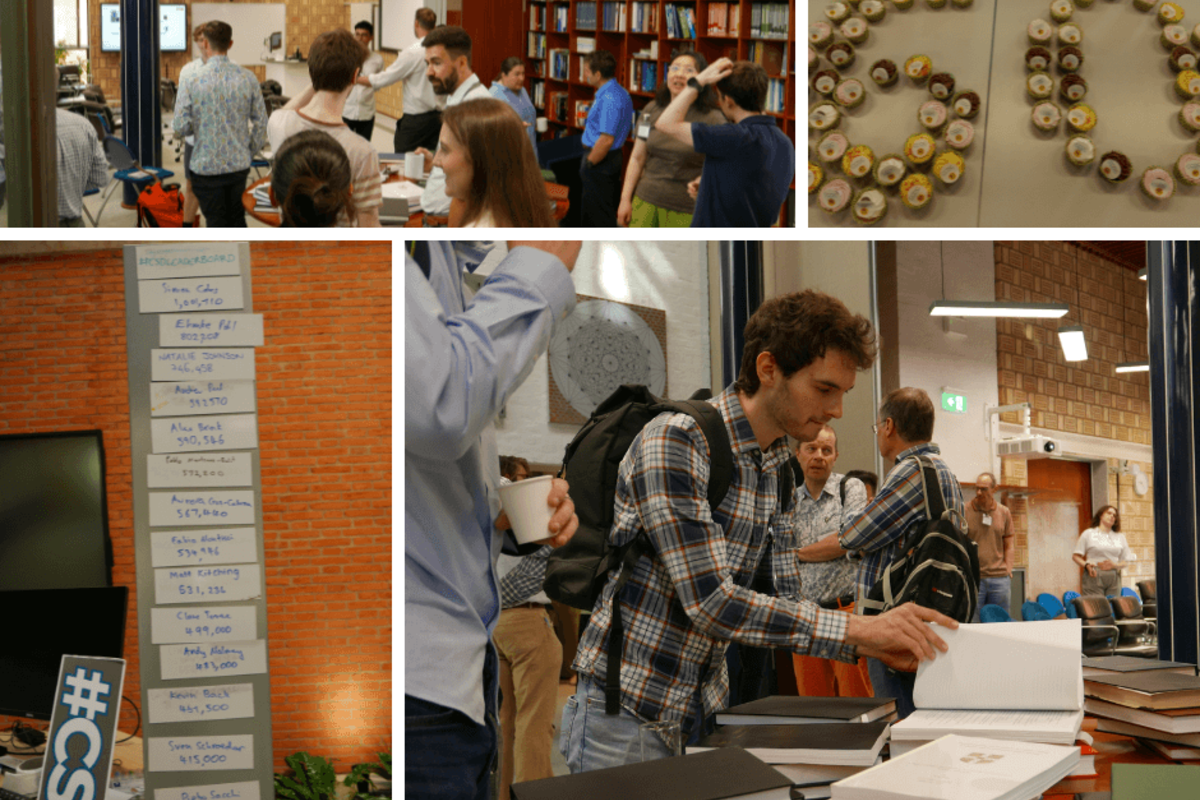
Suzanna Ward appointed as CCDC Executive Director
We are excited to announce that Suzanna Ward has been appointed as Executive Director of the CCDC and has renewed the vision for the centre.
With a strong background in crystallography and a two-decade career at CCDC, Suzanna has played a pivotal role in enhancing data accessibility and fostering collaboration within the structural science community. Known for her leadership as Head of Data and Community, as well as her contributions to initiatives like the FAIRE programme, Suzanna is a well-respected figure in the crystallographic community. Read more here.
The new vision for the centre under Suzanna’s leadership is "To be the catalyst for solving real-world scientific challenges by connecting structural chemistry data, people, and scientific tools", which builds on the original vision, by CCDC Founder Olga Kennard, that the collective use of data would lead to new insights and knowledge.
In a short interview, Suzanna strengthened the importance of the CCDC community for the success of the centre: "Our community has always been central to what we do. We will remain committed to being a research data hub that connects academia, industry, and educators. We will remain guided by our community and responsive to its needs." Read the full interview here.
A new series of Free Virtual Workshops is scheduled for October and November

Join us for a series of interactive virtual workshops to explore how to visualize, analyse, and simulate the behaviour of porous materials and crystal structures. Learn how structural features relate to particle properties and how to apply virtual screening techniques using powerful CCDC tools.
Each session includes live demonstrations using CCDC software such as Hermes, GOLD, the CSD-Particle suite, Mercury, and the CSD Python API. You’ll also have plenty of time for hands-on practice, with our tutors available to guide you and answer your questions.
Save your place:
🗓️ 7th October, 13:30 (BST)
Advanced Structural Visualization and Analysis of Porous Materials Using Mercury
🗓️ 21st October, 9:30 (BST)
How to Use Particle Informatics Tools to Connect Crystal Structure to Particle Behaviour
🗓️ 4th November, 15:30 (GMT)
How to Use the Docking Software GOLD to Perform Virtual Screening Simulations
If you have any questions, get in touch at [email protected]!
CCDC Engagement Grants 2025/2026
We're excited to announce that applications for the CCDC Engagement Grants are now open!
Are you passionate about structural science? Do you have an idea for a video, social media series, poster, or activity to get others excited about the topic? Whether you're planning a workshop, school visit, or creative science communication project, you can apply for funding to make it happen.
This is a great opportunity to share your enthusiasm for chemistry and crystallography with a wider community.
🗓️ Apply by 12th October
Science Day 2025: research highlights from our PhD students
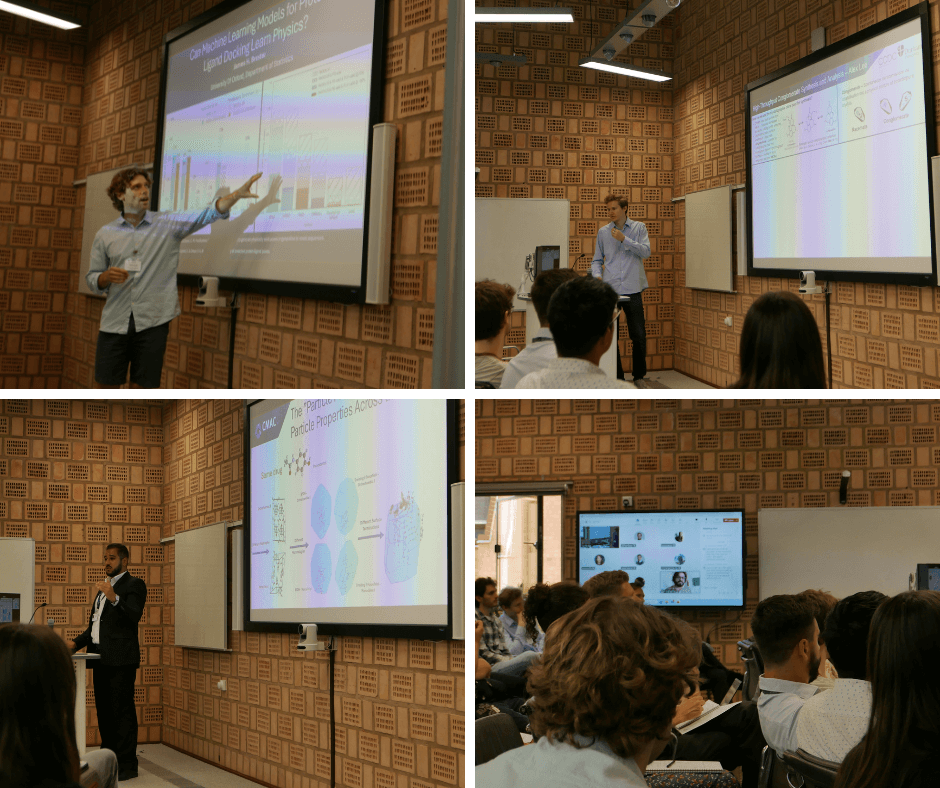
The latest PhD Students Science Day meeting on the 27th of June brought together a dynamic group of early-career researchers, each tackling fascinating challenges in the world of crystallography, nucleation, molecular modelling, and drug design.
Nathan Hennessy, a PhD student from the University of Leeds, has researched how thermodynamic factors shape nucleation and crystallisation: critical processes in pharmaceutical manufacturing. Using histidine as a model compound, Nathan has investigated whether activation barriers during nucleation correlate with key product properties like polymorphism and particle size. By measuring nucleation rates and applying a reversible aggregation model, he has calculated thermodynamic parameters such as entropy and enthalpy of crystallisation.
Nathan has also examined how different co-solvents, including alcohols and glycols, affect solubility and crystallisation. His results show that solvent structure plays an important role; glycerol, for example, promotes higher solubility due to stronger hydrogen bonding. Interestingly, the crystallisation behaviour didn’t directly follow these solubility trends, and the Gibbs free energy remained consistent across solvents. Nathan’s research could open new pathways for fine-tuning crystallisation processes in drug development.
Emilia Prandini, a PhD student from Politecnico di Torino collaborating with the CCDC and Imperial College London, combines Crystal Structure Prediction (CSP) with particle informatics to forecast polymorphism and morphology, two critical aspects of crystal behaviour. Her focus is xanthone, a natural antioxidant with promising medicinal potential.
Emilia used CSP to generate a crystal structure landscape and identified the global minima, which match closely with experimental data. Applying Particle Informatics, she predicted the likely morphologies of these structures, finding strong alignment between CSP lattice energies and morphological predictions. Her research lays the groundwork for better control of crystalline properties in pharmaceutical and materials science. Next, Emilia aims to extend this approach to explore surface properties and packing.
Harry Nash, who recently completed his PhD at the University of Sheffield, collaborated with Lee Brammer and Grant Hill to predict σ-hole interaction energies. His work focuses on halogen bonding and other σ-hole interactions, a growing area in crystal engineering. Using a large dataset from the Cambridge Structural Database (CSD) and machine learning models, Harry built a predictive tool for interaction energies validated against high-level DFT calculations.
By investigating geometric factors like contact distances and angles, Harry uncovered key trends in σ-hole interactions between different donors and acceptors. His consistent large-scale dataset now serves as a valuable resource for computational chemists and experimentalists aiming to understand non-covalent interactions in crystals.
Harry has been honored as a co-recipient of the Turner Prize, recognizing the best PhD thesis in Chemistry at the University of Sheffield.
Aaron Horner tackled a tricky challenge in structural chemistry: assessing the quality of molecular models, particularly crystal sponges. He highlighted the pitfalls of relying solely on traditional descriptors like the R-factor, which can be misleading due to disorder, overlap, or solvent ambiguities.
To address this, Aaron introduced a distortion score that quantifies geometric distortions by measuring changes in bond lengths and angles as restraints are adjusted. He also presented a bond likelihood score tool, which assesses the plausibility of bonds based on probability density functions from crystallographic data. These tools give structural chemists practical real-time feedback to refine complex models, especially valuable for early-career researchers.
William Midgley focuses on PROTACs (proteolysis-targeting chimeras), innovative molecules that harness the body’s natural degradation machinery to eliminate disease-causing proteins. Unlike traditional drugs, PROTACs can target 'undruggable' proteins without clear active sites, but they come with challenges like large size and limited bioavailability.
William’s research uses computational pipelines and molecular dynamics to design and rank PROTACs for challenging targets, including the Epstein-Barr virus protein EBNA. His next steps aim to enhance computational models, optimize PROTAC linkers, and apply advanced techniques like cryo-EM to understand protein structures better.
Our lightning talk session spotlighted the impressive progress of the 1st and 2nd year PhD students, Alex D. Lee, Henry James Broster, Omar El-Habbak, and Henry Holleb, who shared snapshots of their developing research. We also gave a warm welcome to Paulo Nunes de Souza, who joined us from the University of São Paulo, Brazil, this March, to start his PhD journey.
We wrapped up the day with a lively panel discussion featuring former CCDC-sponsored students who shared invaluable advice on navigating career paths, followed by a well-earned CSD60 celebration, complete with cake and good company.
Thank you to everyone who shared their work and joined us for a day of inspiring science and community. We look forward to seeing where your research takes you next!
Find out more about our sponsored PhD programme.
Copyright © - Prior permission is not required to reproduce short quotations, tables and figures from this article, provided the original authors and source are cited.
The permanent URL for this article is https://www.iucr.org/news/newsletter/volume-33/number-4/updates-from-the-ccdc