




History of crystallography
To the origins of the discovery of the Jahn-Teller effect
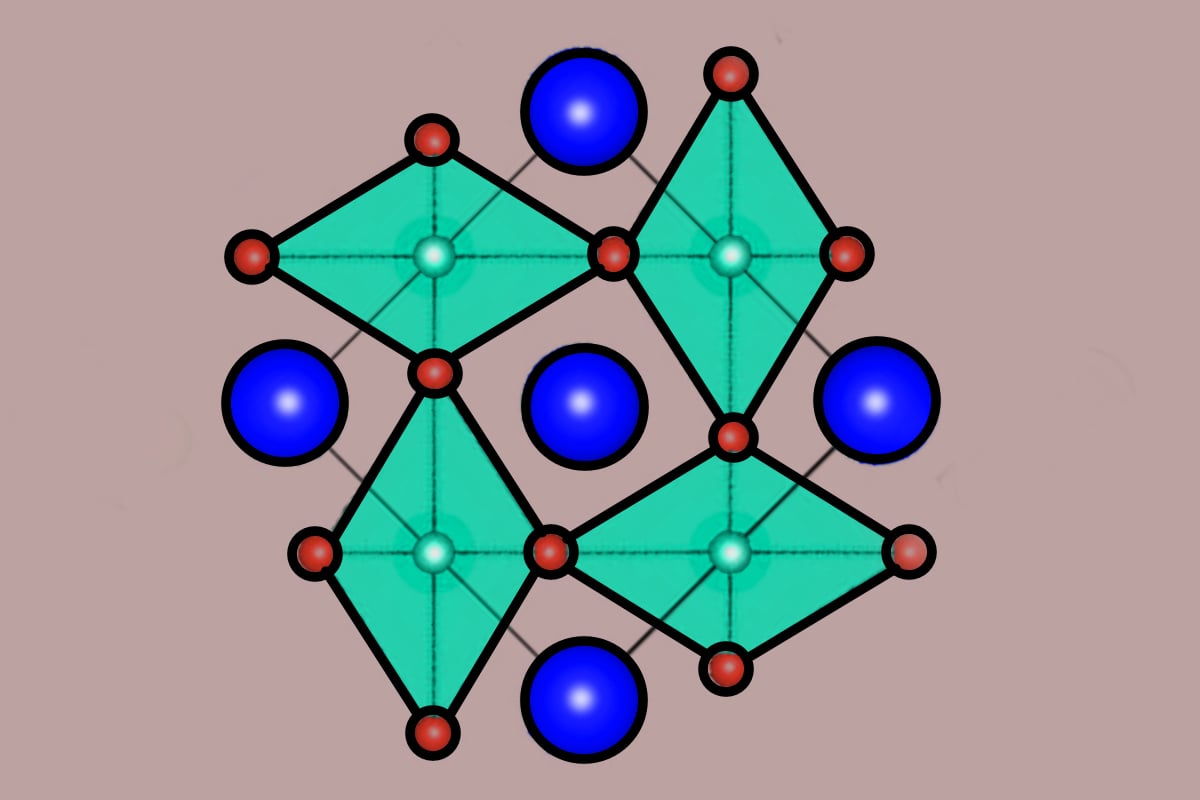
A nonlinear, symmetrical molecule with a partially filled set of degenerate orbitals will be unstable with respect to distortion and thus will distort to a lower symmetry geometry, thereby removing the electronic degeneracy. This is the original formulation of the Jahn‑Teller effect [1]. In solid‑state crystal structures and, even more generally, in the science of structures, the Jahn‑Teller effect occupies a well‑deserved distinguished place. Considering its significance in understanding superconductivity, it is well understood why it has been gaining rather than losing attention in recent times. In their joint Nobel presentation, entitled "Perovskite‑type Oxides ‒ the New Approach to High Tc Superconductivity", J. Georg Bednorz and K. Alex Müller refer to Jahn‑Teller five times, but there is no reference to it in their lists of references [2]. The Jahn‑Teller effect has become part of the folklore in solid‑state science. In this essay, we focus on certain scientific and historical aspects of its discovery, primarily through the scientists involved, namely Edward Teller, Gerhard Herzberg, Rudolf Renner, Lev D. Landau and Hermann A. Jahn.

Illustration of the Jahn-Teller effect: a simple example.
In the figure above, the short vertical bars represent electrons populating energy levels represented by horizontal lines. For zinc dichloride, ZnCl2, there is no effect, resulting from the completely filled energy levels by electrons. The energy levels of copper difluoride, CuF2, on the other hand, are incompletely filled, and the regular octahedral shape of the molecule elongates into a less symmetrical one — a manifestation of the Jahn‑Teller effect.
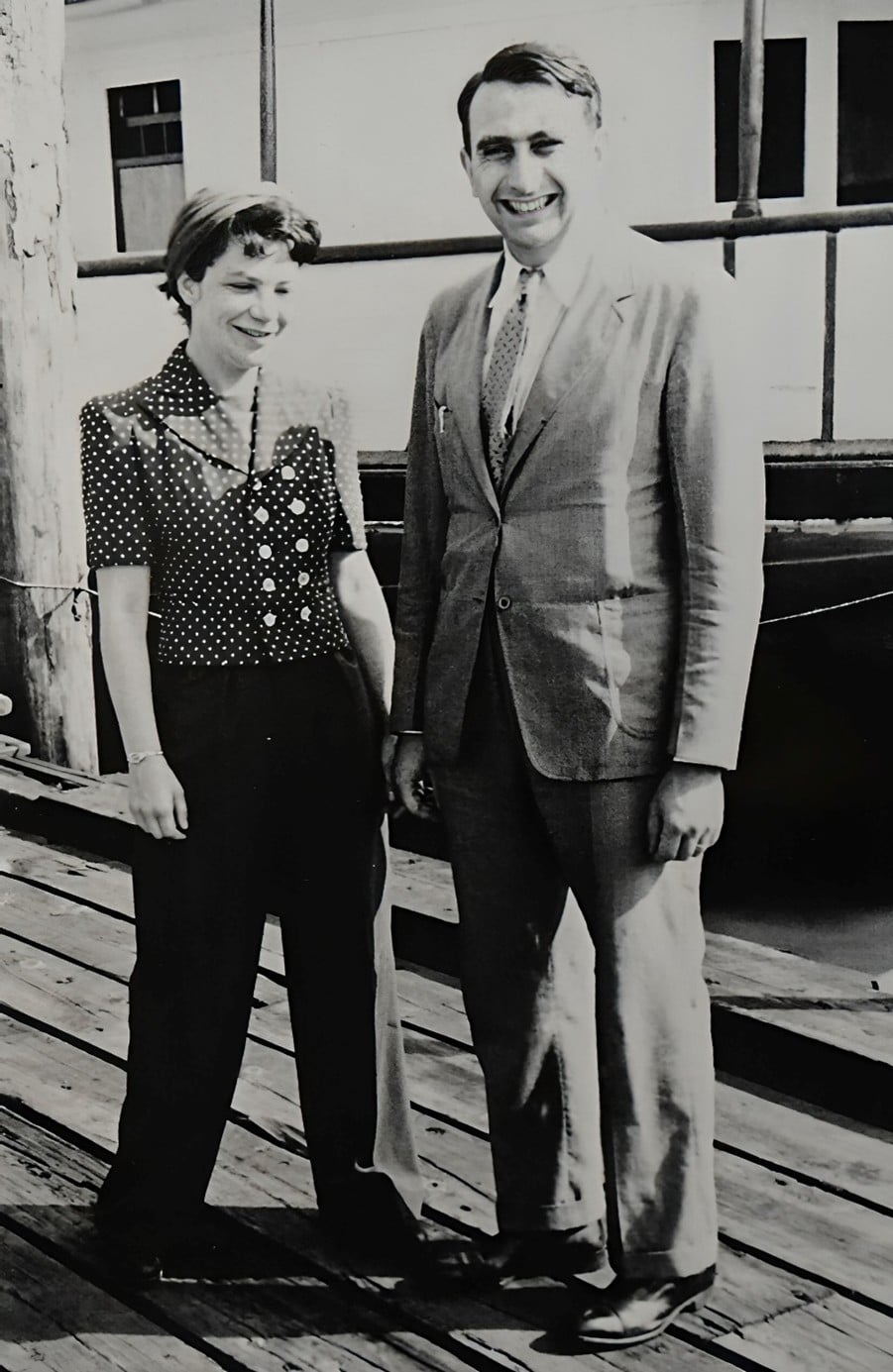
Edward Teller and Mici Teller, 1930s; courtesy of Wendy and Paul Teller.
Edward Teller's (1908‒2003) [3] name appears in many effects in the scientific literature. Had it been only in the Jahn‑Teller effect [1], Teller might have introduced himself as "I'm Edward Teller, and my first name is Jahn". However, this was not the case, as there are many instances where his name follows someone else's. He enjoyed working with others, often coming up with original ideas and refining the details in collaboration with one or two colleagues. When we talked with Teller about his contributions to science [4], he singled out the Brunauer‑Emmett‑Teller (BET) effect of multi‑layered adsorption [5] as the one for which he and his colleagues might have received the Nobel Prize. This was in a recorded interview from which he deleted this statement, when we asked him to check and correct the transcripts of our conversation. This was a unique case because Teller was well known for insisting on his interviews being published without change or not at all. In this case, it was he who made the change.
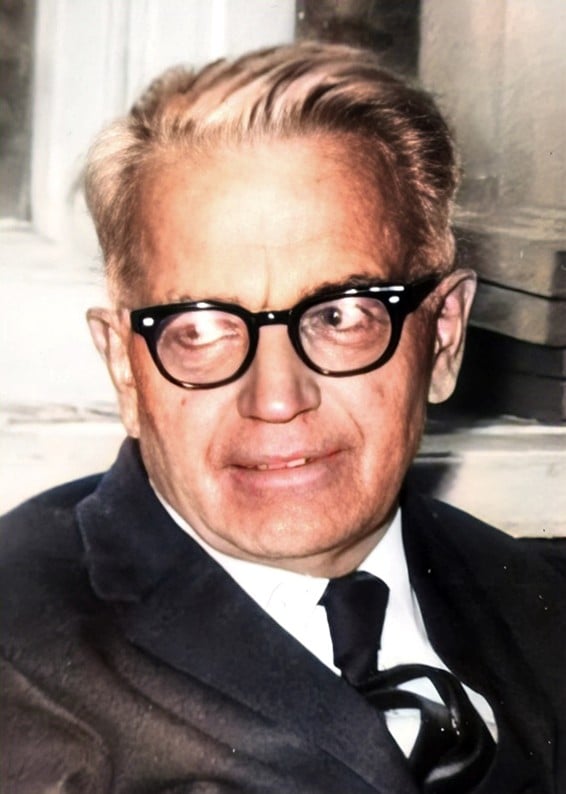
Gerhard Herzberg in 1971 at Lomonosov University, Moscow (by unknown photographer, from the archives and courtesy of the late Lev V. Vilkov). Herzberg learned about his Nobel Prize during his Moscow visit (image colourized).
The discovery of the Jahn‑Teller effect was preceded by the discovery of the Renner‑Teller effect, and both were preceded by the discovery of the Herzberg‑Teller effect. Teller met Gerhard Herzberg (1904‒1999), the future Nobel laureate German Canadian spectroscopist in the early 1930s in Germany. Half a century later, Herzberg remembered their interaction. It was in 1931 in Leipzig, at a meeting on molecular structure, that Herzberg first met Werner Heisenberg and Teller. The latter had just obtained his PhD under the supervision of Heisenberg. In Herzberg's words [6], "Teller was then very much interested in molecules, especially polyatomic molecules. Our discussions at that meeting later led to our collaboration in the paper on the vibrational structure of electronic transitions in polyatomic molecules, which was written during visits of mine to Göttingen and visits by Teller to Darmstadt. My function was that of a midwife: Teller had the ideas, which I tried to get out of him by describing the experimental results to him and by drafting a tentative form of the paper, which he then corrected. Teller had an extraordinary reservoir of ideas in this field (as well as in other fields) and was always ready to share his knowledge. Working with him was an experience that I shall never forget. Although the ideas originated from him, he insisted that we follow the alphabetical order of the authors on the title page. The main result of this work was that in allowed electronic transitions, totally symmetric vibrations are predominantly excited, whereas transitions involving changes in non‑totally symmetric vibrations are generally very weak [7]. Since the publication of this paper 50 years ago, these rules have been confirmed in the analyses of innumerable polyatomic electronic transitions." Herzberg lost his professorial appointment because of the Nazi legislation that people with Jewish wives could not teach at institutions of higher education. The Herzbergs moved to Canada, where he continued his brilliant research career in molecular spectroscopy.
The 1933 Herzberg‑Teller paper, which discusses the coupling of electronic and vibrational motions during electronic transitions in molecules, is generally referred to as the Herzberg‑Teller effect and has been frequently cited. Once the coupling of electronic and vibrational motions and their consequences come under scrutiny, it means questioning the validity of the so‑called Born‑Oppenheimer approximation. Indeed, all the effects, Jahn‑Teller, Herzberg‑Teller and Renner‑Teller, represent exceptions to the Born‑Oppenheimer approximation. Systems displaying such effects are of a fluxional nature, rather than of a dynamic nature.
The next treatise along these lines was Rudolf Renner's work, which described the vibronic interaction in the first excited electronic state of carbon dioxide [8]. Whereas Teller and Herzberg have been well‑known figures in science history (and Teller much beyond that as well), Renner soon disappeared into oblivion following his doctoral work. We have conducted some detective work to learn more about him (as well as Hermann Jahn) [9]. This work has proven to be niche, as evidenced by the fact that it has been visited more than 3,340 times, according to Springer statistics. Our main, though not exclusive, sources for learning about Renner were Edward Teller's papers at the Hoover Institution Archives, Stanford University, and our correspondence with Beate Bauer‑Renner, Renner's daughter‑in‑law.
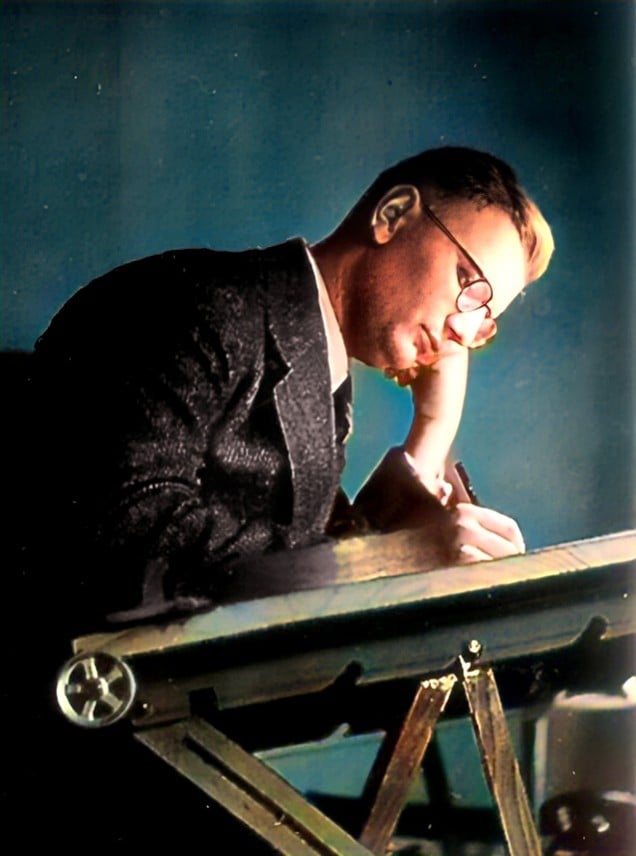
Rudolf Renner (1909‒1991). Courtesy of Beate Bauer-Renner, Rudolf Renner's daughter-in-law, Dorum, Germany (image colourized).
Rudolf Renner was born in Schweidnitz, Silesia, then part of Germany, now part of Poland. He studied in Hannover, then in Göttingen. Max Born (1882‒1970), one of the originators of modern physics and a future Nobel laureate, was his supervisor, and Edward Teller was his consultant. Both Born and Teller left Germany before Renner completed his project because of the anti‑Jewish legislation following the Nazi takeover in 1933, but Arnold Eucken (1884‒1950) made it possible for Renner to have his doctoral exams. Renner thanked Born not only for scientific guidance but also for financial assistance. His thanks went to Teller for his help in molecular spectroscopy [10]. Although Renner's doctorate was saved, his further career in physics did not appear promising, and he entered a two‑year teacher's training program. After its completion, he was unable to find a teaching job. In 1936, he was employed by the German Imperial Weather Service, where he worked as a meteorologist throughout the war. In 1942, he married the daughter of a pharmacist from Dorum, Lower Saxony. Both of his brothers‑in‑law were killed in the war, so Renner inherited the pharmacy and acquired training as a pharmacist. In 1950, he took over the family business. Following the death of his wife, Renner married a pharmacist in Dorum and worked in the pharmacy until his retirement in 1980. According to his daughter‑in‑law, Beate Bauer‑Renner, the former physicist never even mentioned that, in his youth, he had published an influential paper and had world‑renowned mentors in Göttingen.
It was in retirement that he wrote a letter to Teller. He told Teller about his life and that he followed Teller's career in magazines and TV programs. He concludes his two‑page letter, "Sehr geehrter Herr Dr. Teller! Ich danke Ihnen noch einmal ganz, ganz herzlich, daβ Sie damals in Göttingen meiner annahmen. Falls Sie einmal nach Deutschland kommen, sind Sie herzlich bei uns zu einem Besuch eingeladen." [11] translated as "Dear Dr Teller! Thank you once again very, very much for accepting me back in Göttingen. If you ever come to Germany, you are cordially invited to visit us." Renner added that Dorum was one hundred kilometers north of Bremen on the coast of the North Sea. Teller responded kindly, also in German by hand, and, characteristically, undated. He mentioned the work on the linear CO2 molecule. It was a three‑page cordial letter. It must have been written before Christmas, as he sends his best wishes for the coming holidays [12]. More telling is that, in a typed letter dated December 9, 1980, Teller asks his German publisher to send a copy of the forthcoming German edition of his energy book to Renner [13].
Teller was no longer in Germany when Renner defended his dissertation and published his single‑authored paper [8]. Eventually, when Herzberg realized Teller's substantial contribution to Renner's work, he began referring to it as the Renner‑Teller effect, and it has since become known by this name. It took a while before the Renner‑Teller effect was experimentally demonstrated (see e.g. [14]).
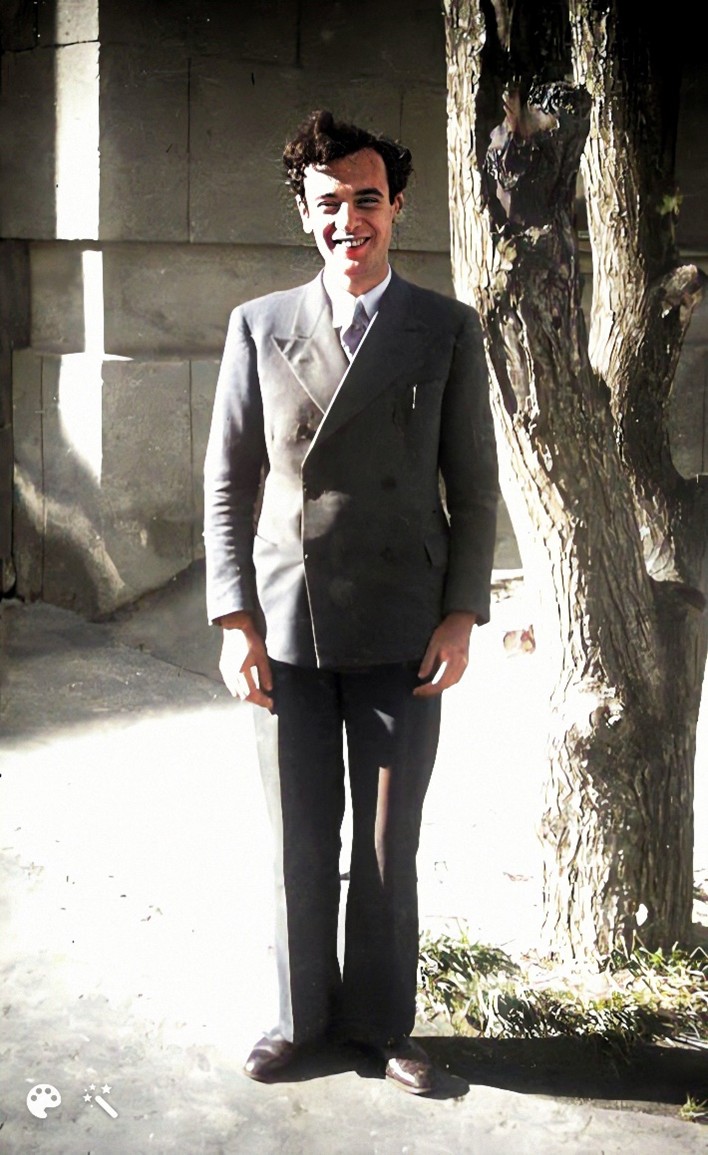
Lev Landau in the mid-1930s in the courtyard of the Institute of Physical Problems in Moscow. Photograph by and courtesy of the late David Shoenberg (image colourized).
Teller left Germany for Copenhagen, where he met several of the leading physicists of the time in Niels Bohr's group. The Soviet physicist Lev D. Landau (1908‒1968) was among them, and the two had extensive discussions about the possible interactions between the electronic and vibrational wave functions of molecules. When, in 1996, we talked with Teller, he remembered Landau's role in the story of the Jahn‑Teller effect ([4], pp. 415‒416). In our encounter, Teller seemed eager to talk about the story of the Jahn‑Teller effect: "Do you want to hear about the Jahn‑Teller effect? Of course, it is not more chemistry than the other research I mentioned before. As you know, I started as a chemist, and that stigma stayed with me. This effect had something to do with Lev Landau. I had a German student, R. Renner, in Göttingen, a very nice man, who wrote a paper on degenerate electronic states in the linear carbon dioxide molecule. … The problem I originally put to him was to take a transition of carbon dioxide where the transition dipole moment is perpendicular to the CO2 axis. He made a good paper out of that, assuming that the excited, degenerate state of carbon dioxide is linear. In 1934, both Landau and I were at Niels Bohr's Institute in Copenhagen, where we had numerous discussions. He disagreed with Renner's paper; he disliked it. He said that if the molecule is in a degenerate electronic state, then its symmetry will be destroyed, and the molecule will no longer be linear. Landau was wrong. I managed to convince him, and he agreed with me. This was probably the only case when I won an argument with Landau. A little later, I went to London and met Jahn. I told him about my discussion with Landau and about the problem in which I was convinced that Landau was wrong. But it bothered me that he was usually not wrong. Perhaps he is always right, with the exception of linear molecules. Jahn was a good group theorist, and we wrote this paper, the content of which you know, that if a molecule has an electronic state that is degenerate, then the symmetry of the molecule will be destroyed. That is the Jahn‑Teller theorem. The Jahn‑Teller theorem has a footnote: this is always true with the only exception of linear molecules. So, the amusing story of the Jahn‑Teller effect is that I first worked via my student, R. Renner, [on a paper] ― my name was not even on that paper, but it was a paper published in 1934 ― that presented the only general exception to the Jahn‑Teller effect." When we asked Teller whether Landau was happy with the footnote, he responded "I hope so, but I never saw Landau again. On some occasions, I have written this down and quoted him. It really should be the Landau‑Jahn‑Teller theorem because Landau was the first one who expressed it, unfortunately using the only exception where it was not valid."
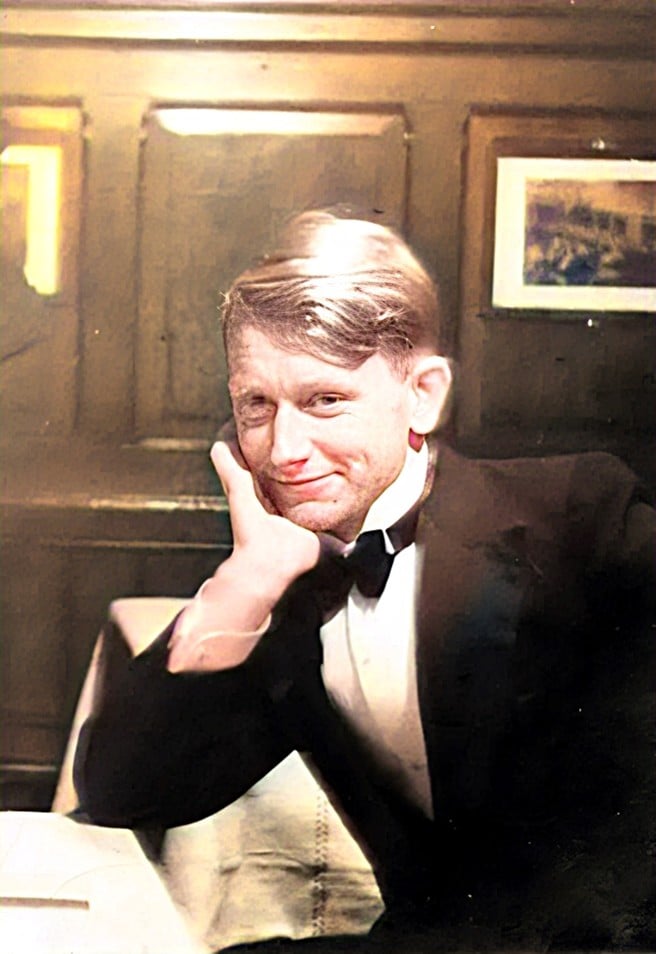
Hermann A. Jahn (1907‒1979) in the early 1930s. Courtesy of Michael Jahn and Margaret May, Jahn's son and daughter, London (image colourized).
Hermann A. Jahn is little known despite the fame of the Jahn‑Teller effect. Jahn and Teller interacted in 1935 when Teller was at University College London and Jahn at the Royal Institution. We found some information about him in an obituary written by one of his former colleagues [15]. According to the obituary, he "was modest to a fault and hence not easy to know". Teller had repeatedly stated, mistakenly, that he was a refugee from Germany. In fact, Jahn's father had come to England from Germany in 1890, and Jahn was born in Colchester. He attended school in Lincoln and received a BSc degree in chemistry in 1928 at University College London. He then continued in Leipzig, where Werner Heisenberg was one of his mentors for his doctorate. Jahn's dissertation was about the vibrations of the methane molecule. Upon his return to England, he worked at the Royal Institution, the Royal Aircraft Establishment and the Department of Mathematical Physics in Birmingham (under Rudolf Peierls), before joining Southampton University College in 1949. He was a highly regarded member of the University, serving as chair of the Applied Mathematics department and later as Dean of Science. Apart from his two papers on the stability of polyatomic molecules in degenerate electronic states (the first described what was to be known as the Jahn‑Teller effect), he had numerous other publications. He excelled in applying mathematics to solve various problems. He worked in X‑ray scattering and applied group theory describing nuclear structures. His main interest remained in the structure of molecules and molecular vibrations. During the war, he studied the vibrations of large structures, such as airplanes, as a war‑related project.
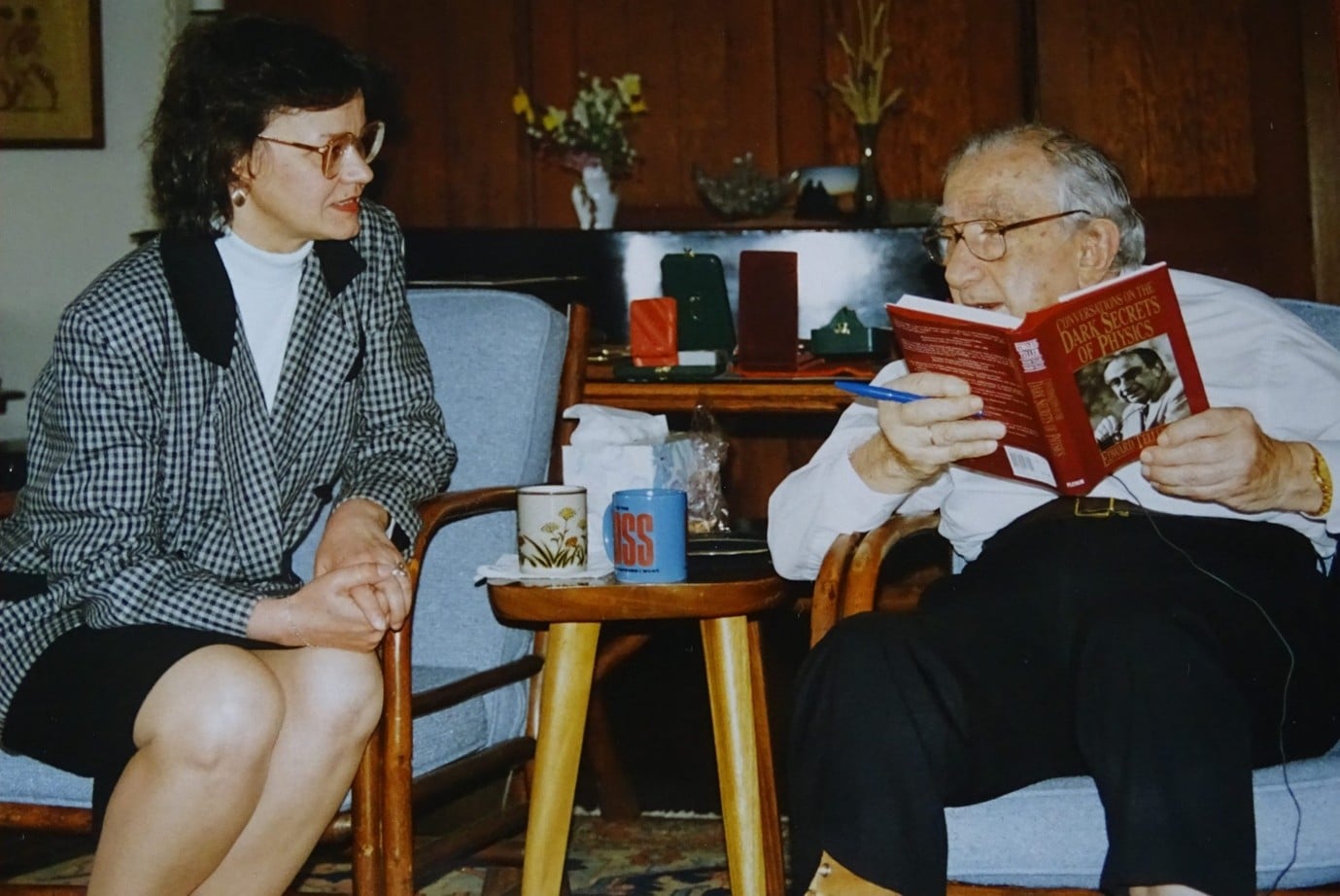
Magdolna Hargittai and Edward Teller, 1996, in the Tellers’ home in Palo Alto. Photograph by Istvan Hargittai. Teller holds the book Conversations on the dark secrets of physics by Edward Teller, Wendy Teller and Wilson Talley, which he is about to autograph for Magdolna Hargittai.
At the time we visited Edward and Mici Teller in 1996, one of us (MH) was working on the structure of the gaseous manganese trifluoride molecule and already suspected that it displayed the Jahn‑Teller effect. We used gas‑phase electron diffraction and quantum chemical calculations. Teller showed keen interest in learning more about it, and when the work was being completed, I kept him informed about our progress. Crystalline manganese trifluoride is a typical example of Jahn‑Teller distortion. In it, the fluoride ions surround the manganese ion in a six‑coordinate arrangement, but they are not equidistant, as they would be in a regular octahedral arrangement. Rather, there are two different manganese‑fluorine distances, and the molecule has an elongated structure of D4h (4/mmm) symmetry. Electron diffraction analysis, combined with quantum chemical calculations, demonstrated Jahn–Teller distortion unambiguously in the gaseous molecule as well [16]. Rather than the highest possible D3h (6m2) symmetry, the molecule has the lower C2v (mm2) symmetry. There are two different bond angles; two are 106 and one is 148 degrees, and one of the bonds is shorter than the other two. The distortion stabilizes the molecule. We provided a detailed discussion of the mechanism of distortion and discussed the prerequisites for its occurrence, invoking group theoretical considerations. The distortion can also be understood by considering the occupancy of the partially filled electron orbitals in the molecule [17]. For further examples of metal halide structures displaying Jahn‑Teller and Renner‑Teller effects, see [18, 19].
References
[2] Bednorz, J. G. & Müller, K. A. (1987). Perovskite-type oxides - the new approach to high-Tc superconductivity, Nobel lecture, https://www.nobelprize.org/uploads/2018/06/bednorz-muller-lecture.pdf.
[6] Herzberg, G. (1985). Molecular spectroscopy: a personal history. Annu. Rev. Phys. Chem. 36, 1‒30 [actual quote, 10‒11].
[10] Renner, R. (1933). Lebenslauf des cand phys, Göttingen, 1. XI. Universitätsarchiv Göttingen.
[15] Landsberg, P. T. (1980). Hermann Arthur Jahn. Bull. Lond. Math. Soc. 12, 383‒386.
[17] Hargittai, M. (2009). Vibronic interactions in metal halide molecules. Struct. Chem. 20, 21–30.
[18] Hargittai, M. (2000). Molecular structure of metal halides. Chem. Rev. 100, 2233–2302.
Copyright © - Prior permission is not required to reproduce short quotations, tables and figures from this article, provided the original authors and source are cited.
The permanent URL for this article is https://www.iucr.org/news/newsletter/volume-33/number-4/to-the-origins-of-the-discovery-of-the-jahn-teller-effect