





The New Products section is designed to provide readers with the latest information about new equipment and software. The descriptions should be no longer than 400 words and should include one image. For more information, please see the submission instructions. There will be a small charge for publication.
New products
Suppressing fluorescence in XRD: Striking the balance between speed and data quality
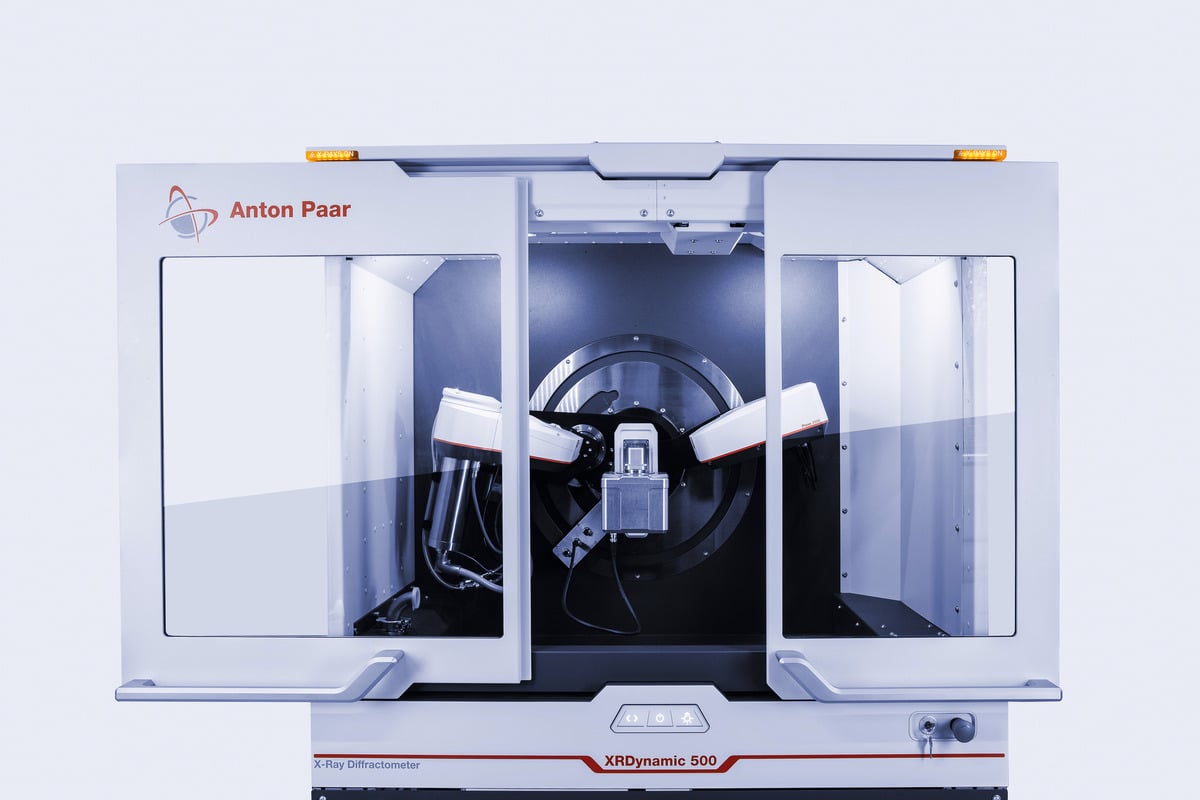
In the world of X-ray diffraction (XRD), precision is everything. From identifying crystal structures in complex minerals to quality control in advanced steel production, the reliability of XRD data directly impacts decisions across scientific and industrial sectors. But for all its strengths, XRD still comes with its share of challenges. One of the most persistent is X-ray fluorescence suppression, particularly when analyzing iron(Fe)-containing samples using copper (Cu) radiation. Fortunately, recent developments in both hardware and software provide multiple pathways to mitigate fluorescence, each with their own advantages and trade-offs.
A recent comparative study using Anton Paar’s XRDynamic 500 diffractometer offers clear insight into two approaches: software-based fluorescence reduction (FR) and the hardware switch to a cobalt (Co) X-ray tube. While both strategies aim to suppress fluorescence, they cater to fundamentally different user priorities: the need for speed versus the pursuit of optimal data quality.
Understanding the fluorescence challenge
X-ray fluorescence occurs when the energy of the incident X-rays excites atoms within the sample, particularly those with atomic numbers close to that of the X-ray source. For Cu radiation, this becomes especially problematic when analyzing samples rich in iron (Fe), cobalt (Co), or nickel (Ni). The result is an elevated background signal that drowns out weaker diffraction peaks, ultimately degrading the signal-to-noise (S/N) ratio and reducing the reliability of phase identification.
To counter this, energy-selective detectors can discriminate between diffracted and fluorescent radiation by filtering the detected photon energies. This approach is now available using Anton Paar’s XRDdrive (v1.4.0), which offers users a fast software-driven solution. But is it enough?
Filtering fluorescence with software
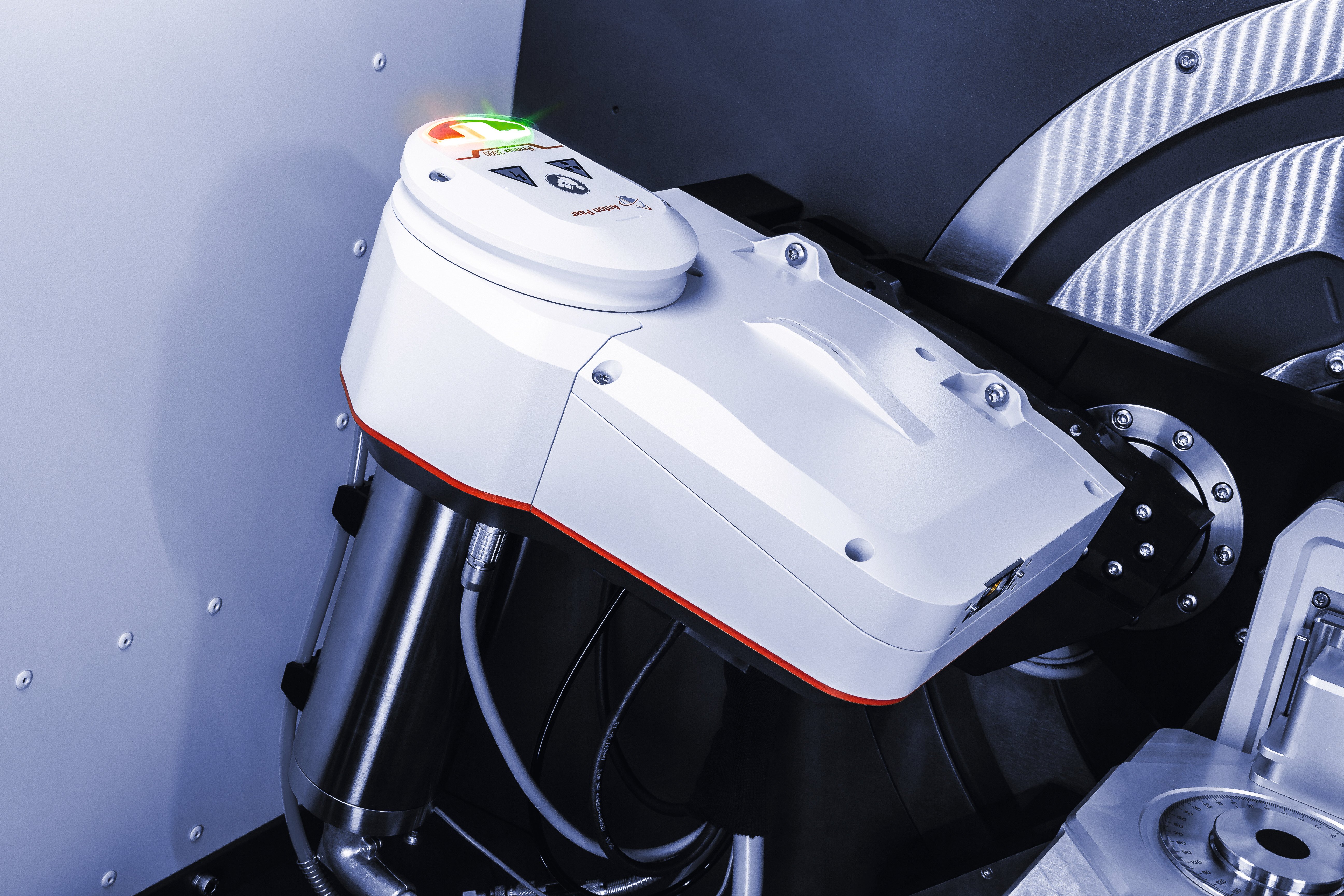
The new energy-filtering functionality of XRDdrive enables users to tune the detection window of the Pixos 2000 silicon solid-state detector. This limits the detection of unwanted fluorescent photons, effectively cleaning up the background without changing hardware or measurement geometry.
When tested on iron oxide using Cu radiation, this method demonstrated a marked improvement in signal-to-noise (S/N) and peak-to-background (P/B) ratios. For instance, in monochromatic beam (MB) configuration, the S/N ratio increased from 510.4 (Cu-MB) to 687.3 (Cu-FR-MB) (see Fig. 1). This is a meaningful gain for users who need faster throughput without compromising too much on data clarity.
However, this method still has limitations. Energy filtering does not eliminate fluorescence at its source; it simply mitigates its impact during detection. As a result, overall intensity is reduced, which can become a bottleneck for detecting low-concentration or trace phases – precisely the kind of information that's often mission-critical in advanced materials research or ore characterization.
Stopping fluorescence at its source
This is where changing the X-ray source comes into play. By replacing the Cu anode with a Co anode, fluorescence can be suppressed before it even begins. Since Co radiation has lower energy and does not excite Fe atoms to the same extent, it drastically reduces generation of the secondary X-rays that form the background noise.
The results speak volumes. Using a Co source in monochromatic mode (Co-MB), the S/N and P/B ratios increased to 1636.0 and 429.7, respectively (see Fig. 1). These numbers far exceed those achieved via software filtering alone, and clearly establish Co as the superior choice for data quality – especially for Fe-rich samples.
However, the Co solution requires a physical change in the diffractometer, including recalibration and potentially longer measurement times due to the lower intensity of Co radiation. While it’s ideal for laboratories focused on high-precision analysis, it may be less attractive for high-throughput environments where speed is paramount.
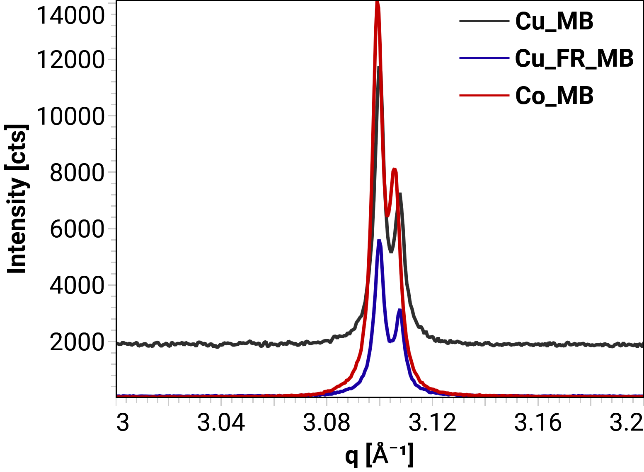
Figure 1. Comparison of reflection at 3.1 Å-1 for monochromatic copper radiation (Cu_MB), monochromatic copper radiation using fluorescence reduction (Cu_FR_MB), and monochromatic cobalt radiation (Co_MB).
Choosing the right tool for the job
Ultimately, the decision between software filtering and source replacement hinges on the user’s analytical priorities. If rapid analysis and ease of use are crucial – such as in industrial process control or routine quality control – the energy filtering functionality introduced in XRDdrive 1.4.0 provides a valuable tool. It offers a quick way to improve data clarity without interrupting workflow or requiring hardware changes.
On the other hand, for researchers or quality engineers who demand the highest possible data integrity, especially when working with complex or Fe-rich samples, switching to a Co source remains the gold standard. It ensures the cleanest possible diffractogram, making subtle structural features easier to identify and quantify.
Conclusion
As the demands on XRD instruments continue to grow – spanning everything from nanomaterials to heavy industry – so too must the tools and techniques evolve. With XRDynamic 500, Anton Paar offers flexibility at both ends of the spectrum: a software-driven method for fluorescence suppression that favors speed and convenience, and a hardware-based solution that prioritizes signal purity.
By empowering users with both options, XRDynamic 500 doesn't force a compromise; it enables an informed choice. Whether you're chasing high throughput or chasing the finest structural details, the right strategy is now just a setting – or a tube – away.
Copyright © - Prior permission is not required to reproduce short quotations, tables and figures from this article, provided the original authors and source are cited.
The permanent URL for this article is https://www.iucr.org/news/newsletter/volume-33/number-4/anton-paar