





The New Products section is designed to provide readers with the latest information about new equipment and software. The descriptions should be no longer than 400 words and should include one image. For more information, please see the submission instructions. There will be a small charge for publication.
New products
Laboratory Rheo-SAXS Enables Insight into Shear-Induced Structural Transitions in Non-Ionic Surfactant Systems
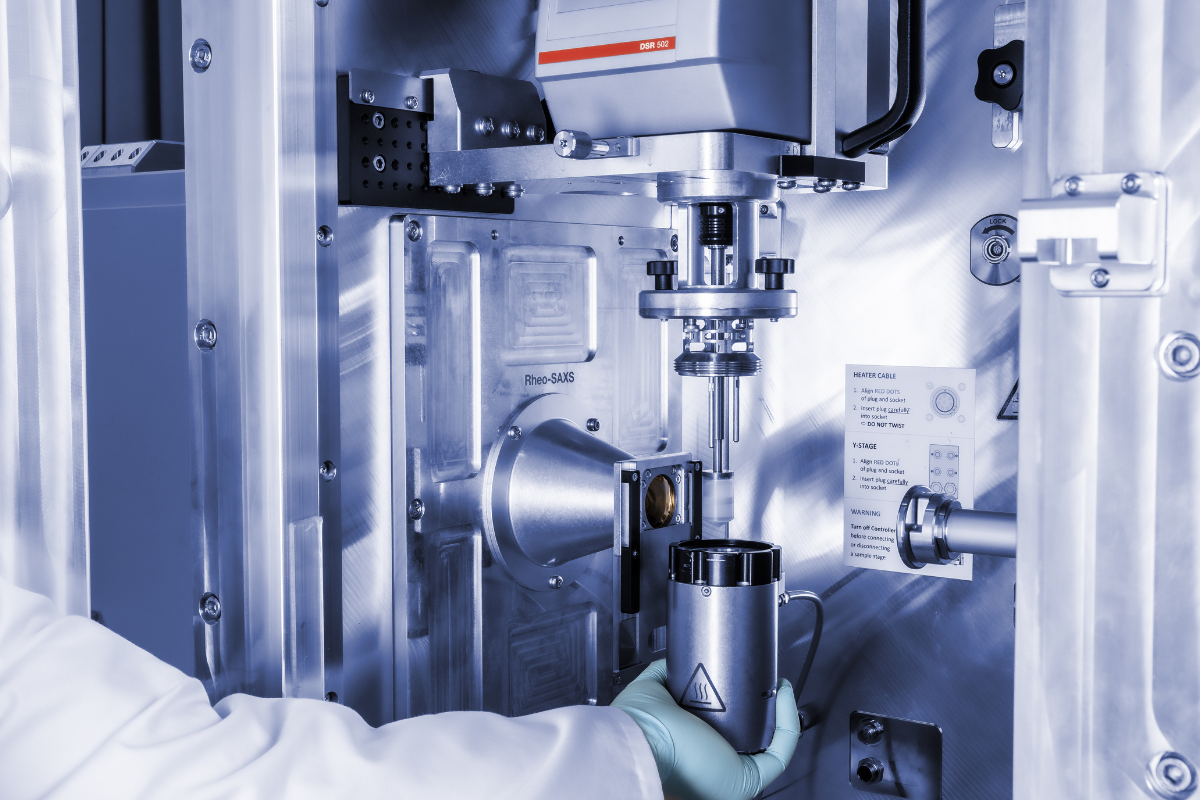
Figure 1. SAXSpoint 700 instrument with mounted Rheo-SAXS module.
Non-ionic surfactants are widely used in industrial and consumer formulations, yet the connection between their nanostructure and rheological behavior under shear remains insufficiently understood. Using the Anton Paar SAXSpoint equipped with a fully integrated Rheo-SAXS module, a polyoxyethylene alkyl ether surfactant system was investigated during controlled shear and temperature variation. Small-angle X-ray scattering revealed a transition from lamellar ordering at low shear to onion-like multilayer vesicles (MLVs) at elevated shear rates and temperatures. Analysis using the Modified Caillé theory demonstrated measurable changes in bilayer flexibility and spacing. These results demonstrate the capability of laboratory Rheo-SAXS to provide structural insight previously accessible only at large-scale neutron or synchrotron facilities.
Non-ionic surfactants are key functional components in detergents, cosmetic formulations, pharmaceutical delivery systems, and other complex fluid applications. Their performance is closely tied to nanostructural organization in solution, which evolves dynamically in response to processing conditions. Understanding how surfactant phases restructure under shear is essential for optimizing formulation stability, flow characteristics, and end-use performance.
Traditionally, rheological experiments and small-angle scattering measurements have been performed separately, making it difficult to correlate nanoscale structure with macroscopic flow properties. Simultaneous rheology and small-angle X-ray scattering (Rheo-SAXS) offers a pathway to addressing this challenge by probing internal structural dynamics in real time. Historically, such combined experiments required access to high-brilliance sources at major research facilities. However, recent advances have enabled Rheo-SAXS experimentation within the laboratory environment.
The Anton Paar SAXSpoint instruments provide high-brilliance microfocus X-ray generation, advanced slit collimation, and hybrid photon counting detector technology, combined with a fully integrated Rheo-SAXS module capable of applying controlled shear using the DSR 502 rheometer head. The specialized sample cell allows temperature control and optimized beam transmission, enabling high-quality measurements even for weakly scattering samples such as surfactants (Fig. 1).
Experimental approach
A 40% w/w aqueous solution of a polyoxyethylene alkyl ether (CmEn) non-ionic surfactant was analyzed under shear rates from 0.1 s⁻¹ to 10 s⁻¹ and temperatures between 25°C and 40°C. The Rheo-SAXS setup was aligned in radial geometry to enable scattering through the center of the rheological shear cell. SAXS data were collected using the Primux 100 microfocus Cu Kα source and an EIGER2 R 1M detector.
Results
At 25°C, the 2D SAXS patterns exhibited distinct lamellar ordering, with increasing shear-promoting anisotropy, indicating strong orientation of bilayers under flow. Structure factor analysis using the Modified Caillé theory revealed decreasing Caillé parameter values with higher shear rates, demonstrating reduced bilayer flexibility and suppressed undulation.
At 30°C, a significant structural transition was observed (Fig. 2). The anisotropic lamellar peak evolved into an isotropic ring pattern, characteristic of MLV (onion) formation. This trend persisted at 35°C and 40°C. Structure factor analysis at 35°C showed a reduction in bilayer number with increasing shear rate, narrowing of lamellar spacing, and reduced Caillé parameter – suggesting mechanical disruption or detachment of external layers within the onion structures.
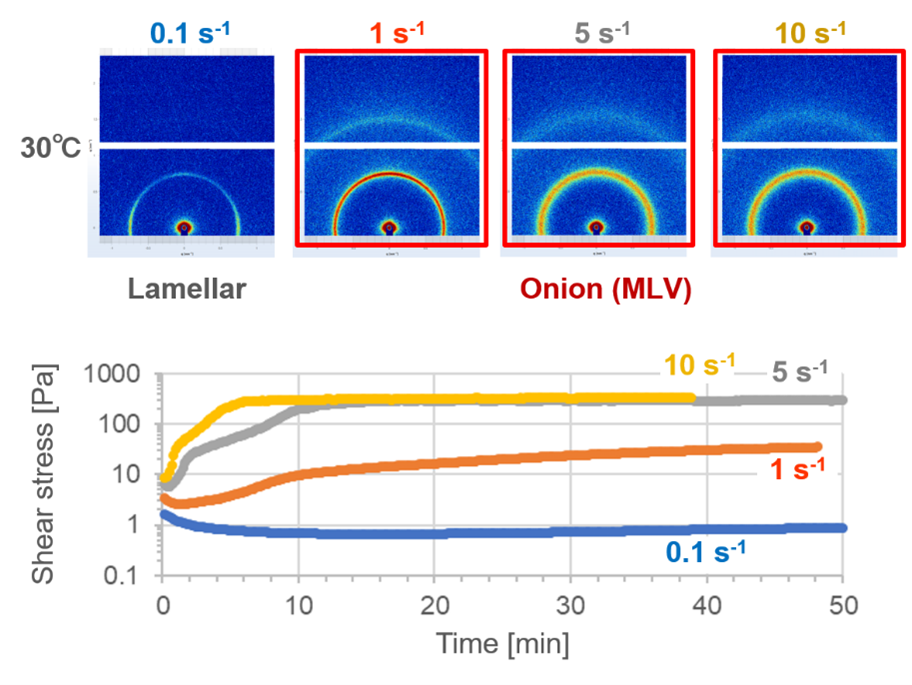
Figure 2. 2D SAXS patterns at 30°C demonstrating onion-like structure formation.
A schematic depiction of lamellar-to-onion transformation is provided for reference (Fig. 3).
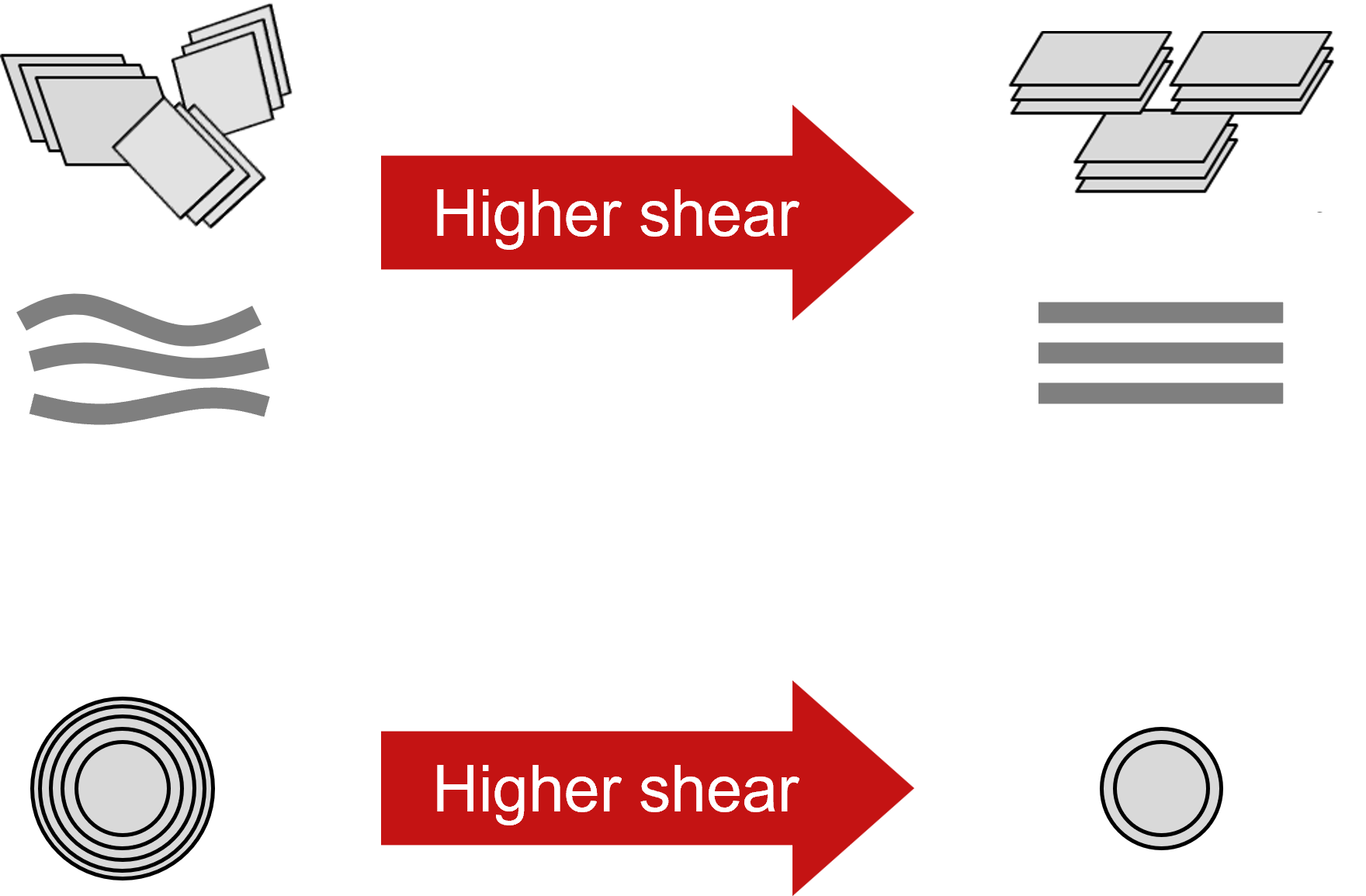
Figure 3. Illustration of surfactant structural evolution from lamellar to onion-like MLV under shear.
Discussion
These results demonstrate that shear-induced transitions in non-ionic surfactants can be directly observed using laboratory Rheo-SAXS, enabling rapid correlation between nanoscale structure and rheological response. Such insight is important for engineering formulations with tailored viscosity, improved encapsulation efficiency, enhanced flow behavior, and controlled structural stability.
Conclusion
This work highlights the value of integrated rheology and SAXS for the investigation of soft matter systems. The ability to monitor shear-induced structural transitions in real time using a benchtop SAXS system represents a significant advancement, eliminating the dependence on large-scale neutron or synchrotron beamlines. The observed transition from lamellar ordering to onion-like MLVs under elevated shear and temperature conditions demonstrates the importance of combined structural and mechanical analysis for understanding functional behavior in surfactant systems.
Anton Paar GmbH, Graz/Austria, https://www.anton-paar.comCopyright © - Prior permission is not required to reproduce short quotations, tables and figures from this article, provided the original authors and source are cited.
The permanent URL for this article is https://www.iucr.org/news/newsletter/volume-33/number-6/laboratory-rheo-saxs-enables-insight-into-shear-induced-structural-transitions-in-non-ionic-surfactant-systems