




The Press Release section is designed to provide readers with industry news. The descriptions should be no longer than 400 words and should include one image. For more information, please see the submission instructions. There will be a small charge for publication.
Press release
SAXSanalysis Pro: Analysis of SAXS Data Made Easy
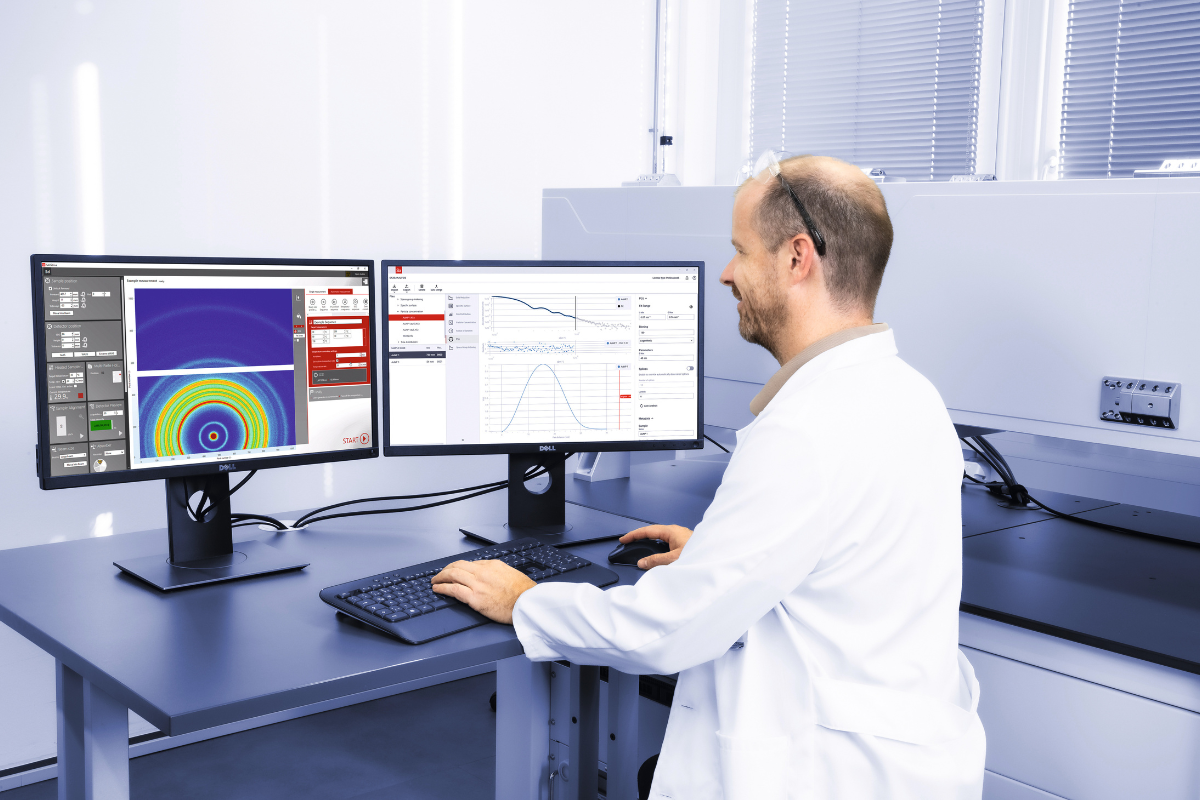
Small-angle X-ray scattering (SAXS) is a key technique for probing nanoscale structures across diverse materials. However, due to its complexity and dependence on user expertise, data analysis is often the primary bottleneck. SAXSanalysis Pro addresses this challenge by integrating robust evaluation algorithms within an intuitive, unified workflow that guides users from raw data processing to advanced structural analysis.
The software combines background correction, calibration, and consistency checks with established methods such as Guinier analysis and pair-distance distribution functions, supported by clear visualization tools. Automated batch processing, comparative evaluation, and flexible export functions ensure efficient, reproducible analysis of large datasets. By uniting scientific rigor with usability, SAXSanalysis Pro makes advanced SAXS data interpretation more accessible, transparent, and efficient.
---
Small-angle X-ray scattering (SAXS) has become an indispensable technique for probing nanoscale structures across a wide range of materials, from soft matter and polymers to biological macromolecules and advanced functional materials. Modern instrumentation delivers high-quality data with remarkable speed, stability, and sensitivity. Yet for many users, the real bottleneck is no longer data acquisition, but data analysis. Transforming scattering curves into reliable structural insight can be complex, time-consuming, and highly dependent on user expertise. Careful background subtraction, validation of data quality, and the selection of appropriate evaluation models are essential steps that often determine the reliability of the final results.
With the introduction of SAXSanalysis Pro, we set out to make advanced SAXS data evaluation both more accessible and more powerful, without compromising scientific rigor. The goal was to combine a clear, intuitive user interface with scientifically robust algorithms that meet the expectations of both newcomers and experienced scattering experts.
At its core, SAXSanalysis Pro is designed to guide users seamlessly from raw data to meaningful structural parameters. The software integrates the full processing workflow within a single, coherent environment: data import, background correction, and absolute intensity calibration. Built-in consistency checks support reliable data treatment and help ensure reproducibility. Once data reduction is complete, a comprehensive range of analysis tools becomes available. Methods such as Guinier extrapolation for determining the radius of gyration, calculation of the pair-distance distribution function, evaluation of size distributions, and determination of the specific surface area can be performed with just a few clicks. Clear graphical representations allow users to immediately assess the validity range of the applied models and the quality of the fits.
Another central focus is efficiency. Automated batch processing enables entire datasets – such as temperature-dependent measurements, concentration series, time-resolved experiments, or kinetic studies – to be analyzed consistently with minimal manual intervention. Parameters can be applied across multiple datasets to ensure comparability, and results can be directly overlaid and statistically evaluated within the same interface. This is particularly valuable in industrial and academic environments where large numbers of samples must be analyzed under standardized conditions.
As SAXS continues to expand into new and interdisciplinary application fields, the demand for reliable, reproducible, and user-friendly analysis tools will only grow. By combining scientific robustness with an intuitive user experience, SAXSanalysis Pro lowers the barrier to advanced data interpretation while maintaining the flexibility required by expert users.
In this way, the analysis of SAXS data becomes not only easier, but also more transparent, efficient, and accessible, helping researchers focus on what truly matters: understanding the structure of their materials.
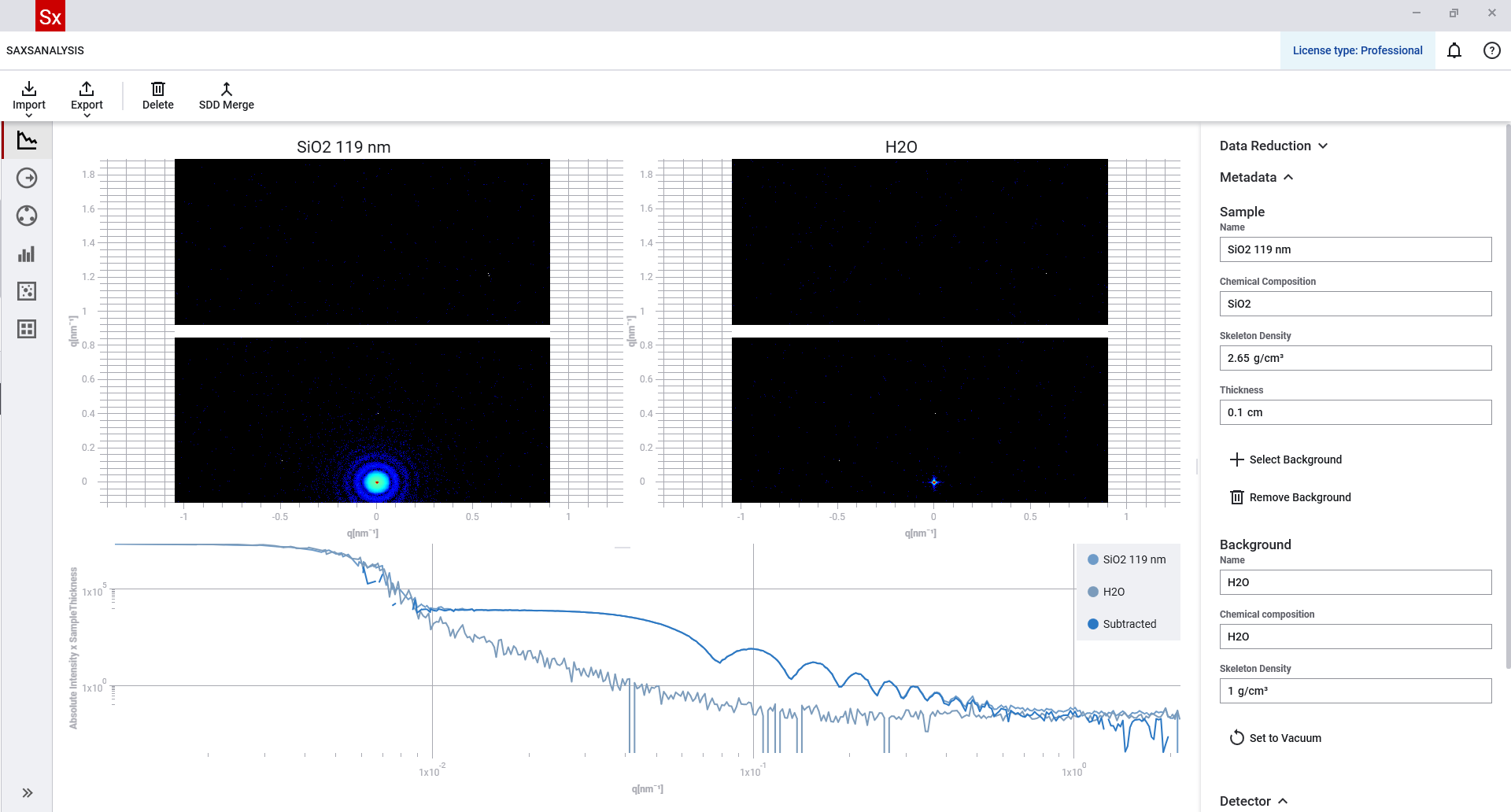
Automatic raw data treatment in SAXSanalysis Pro (q-conversion, absolute intensity conversion, data reduction, and background subtraction).
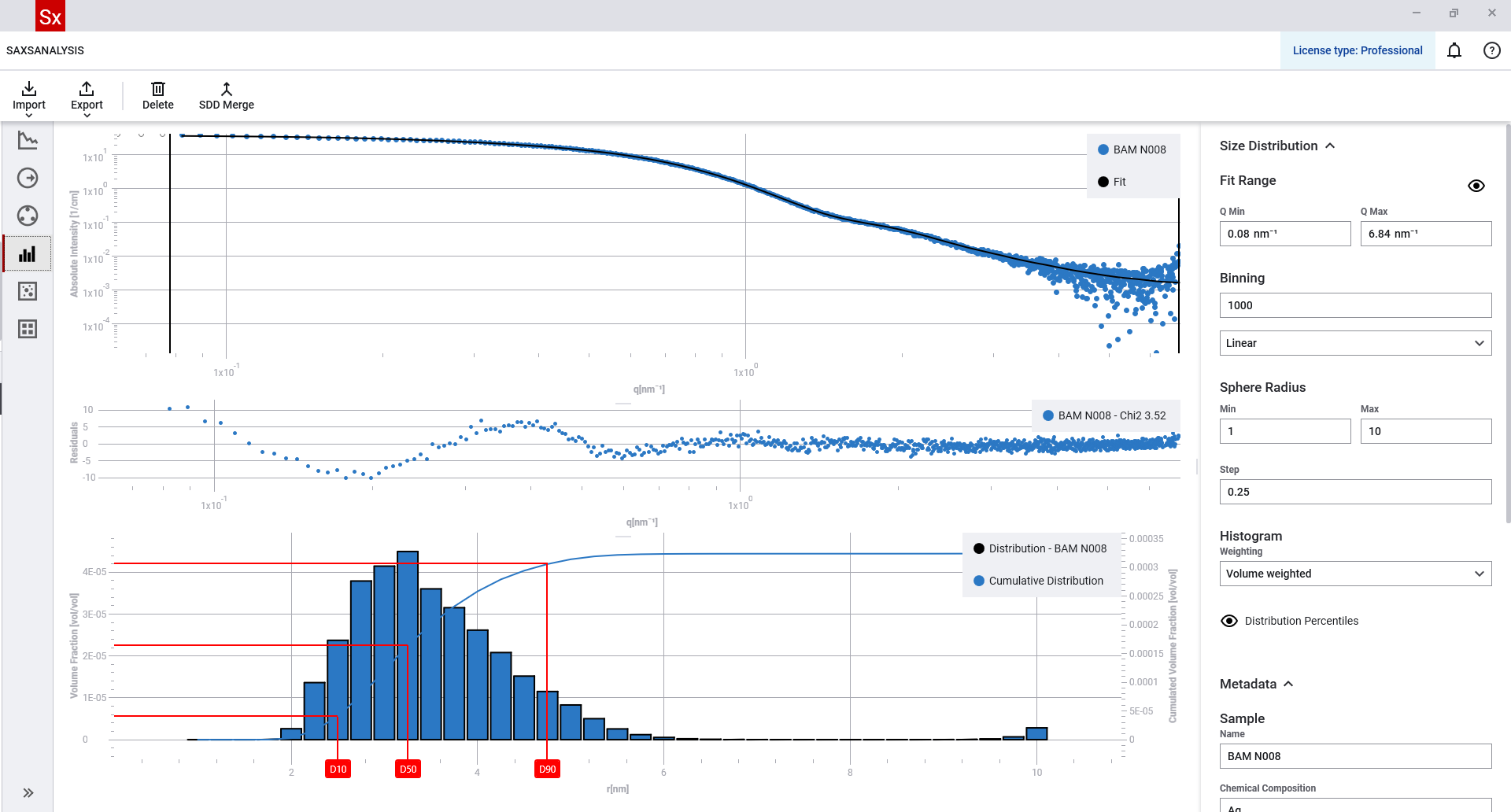
Automatic calculation of the size distribution in SAXSanalysis Pro.
Anton Paar GmbH, Graz/Austria, www.anton-paar.com
Copyright © - Prior permission is not required to reproduce short quotations, tables and figures from this article, provided the original authors and source are cited.
The permanent URL for this article is https://www.iucr.org/news/newsletter/volume-34/number-2/saxsanalysis-pro-analysis-of-saxs-data-made-easy