




Meeting report (IUCr supported)
Inaugural Powder Diffraction Conference in Latin America
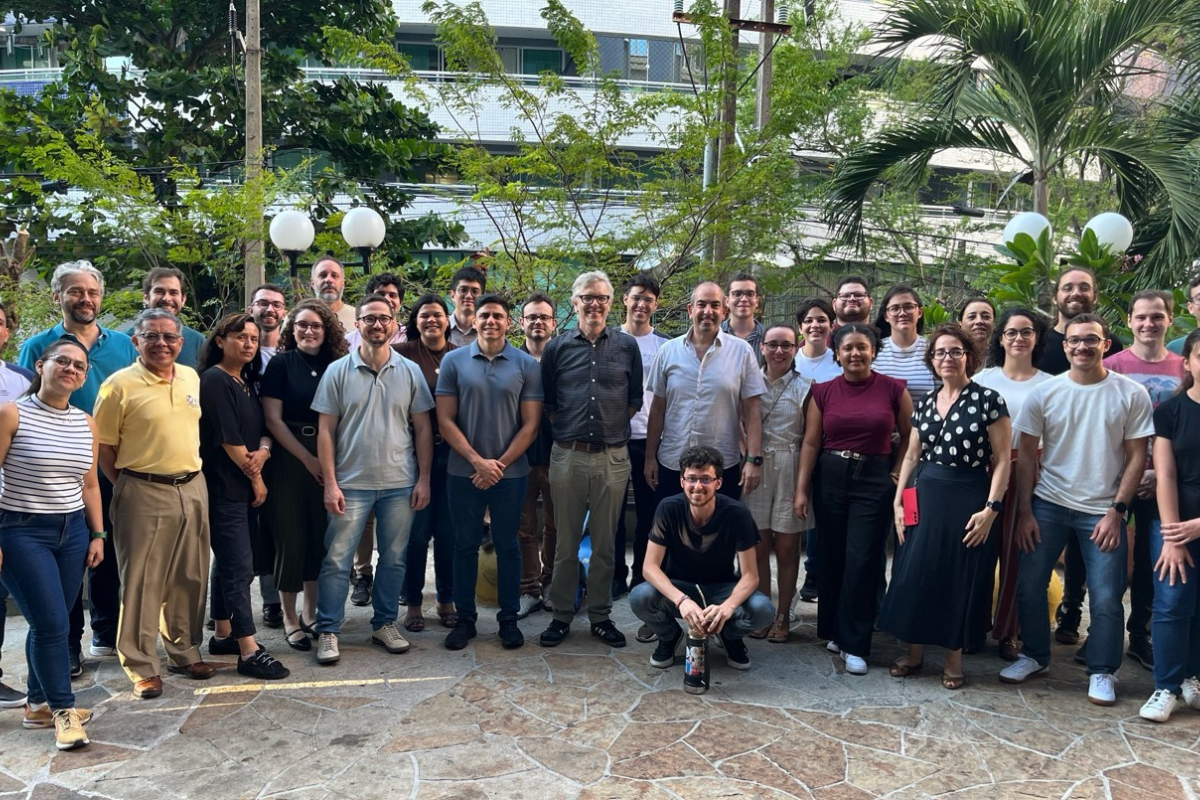
Between October 11 and 14, 2025, in the coastal city of Fortaleza, Brazil, Latin American crystallography reached a historic milestone. The inaugural Latin American Powder Diffraction Conference (LAPDiC) emerged as a specialized, independent forum dedicated to the analysis of polycrystalline materials. Organized as a landmark event for the region, LAPDiC was born with a clear mandate: to establish a permanent and itinerant tradition that will travel across the continent to foster regional expertise and scientific sovereignty.
A cornerstone in education: The PDF School
The conference journey began with an intensive educational prelude that highlighted a deep commitment to the next generation of researchers. The LAPDiC School on Pair Distribution Function (PDF) analysis brought together 34 students for two days of immersive training. Under the mentorship of Prof. Simon Billinge from Columbia University, USA, this group – comprising 30 researchers from Brazil and representatives from Argentina, Bolivia, Colombia, and Uruguay – delved into the complexities of total scattering. The school achieved a notable gender balance of 44% women and 56% men, signaling a commitment to inclusive growth. For these young scientists, the opportunity to bridge the gap between theoretical crystallography and advanced structural modeling was a transformative experience, essential for the development of competitive research within their home institutions.Strategic support and regional integration
A crucial element of the event’s success and scope was the sponsorship from the IUCr, which provided a dedicated travel grant fund. This financial support was strategically distributed among 12 selected students who attended both the PDF School and the main conference, ensuring that geographic distance did not become a barrier to participation. The grants were allocated according to each recipient’s specific travel needs, supporting 5 students from Colombia, 4 from Brazil, and 1 each from Argentina, Bolivia, and Uruguay. The statistical distribution of this group also reflected a diverse reach, with 8 recipients (67%) being male researchers and 4 (33%) female researchers. This initiative was fundamental in fostering a rich cultural and academic exchange, allowing these early-career scientists to contribute actively to the regional community.Scientific excellence and global reach
As the main conference opened on October 13 at the Centro de Convivência of the Federal University of Ceará (UFC), high-level scientific exchange took center stage through four distinct plenary sessions. Prof. Stefan Kycia (University of Guelph, Canada) opened the sessions by discussing advances in X-ray instrumentation at the Canadian Light Source. Prof. Simon Billinge (Columbia University, USA) explored the frontiers of local structure determination and the promising role of AI in pushing these limits. Prof. Yang Ren (City University of Hong Kong) provided deep insights into the structure-property relationships of energy materials using synchrotron and neutron scattering, while Prof. Irene Margiolaki (University of Patras, Greece) demonstrated the power of powder diffraction in solving complex macromolecular structures.The technical depth was further enriched by five Keynote Lectures that covered a broad spectrum of the field. Thomas Blanton (ICDD, USA) discussed the evolution and future of the Powder Diffraction File (PDF®) database, and Fanny Nascimento Costa (University of Leeds, UK) presented advanced methods for characterizing pharmaceutical materials. Viviane Peçanha Antonio (ISIS Neutron and Muon Source, UK) focused on the determination of magnetic ground-states using neutron diffraction, while Verônica de Carvalho Teixeira and Cristiane Barbieri Rodella (both from LNLS/CNPEM, Brazil) highlighted the state-of-the-art capabilities and scientific prospects for powder diffraction at the Sirius synchrotron facility. Their presence turned Fortaleza into a global hub, where 92 confirmed participants interacted directly with experts from Latin America, the USA, Greece, Hong Kong, Spain, and Sweden.
Recognizing the next generation: The Poster Awards
A highlight of the closing ceremony was the recognition of outstanding research through awards sponsored by key industrial partners. The STOE Poster Prize for the best transmission powder XRD poster was awarded to Pedro Luiz Forcellini for his work on organic-inorganic halide perovskites. Santiago Pioli received the Malvern Panalytical Poster Prize for the best reflection powder XRD poster for his study on Lanthanum-doped cerium oxide for solid oxide cells. The Anton Paar Poster Prizes for the best in situ/non-ambient powder XRD posters recognized Brenda Juliana Sampaio Mendes, for her investigations of niobium-based oxides under extreme pressures, and Mariana Oliveira dos Santos, for her research on the thermal stability of novel Li-ion battery cathodes. Finally, the ICDD Poster Prize for the best poster reporting the use of XRPD for phase identification and characterization was awarded to Victória Penna Polonini for her work on crystalline phases in inorganic solids applied to petroleum emulsions.An itinerant future: Toward Buenos Aires 2027
Perhaps the most significant outcome of this inaugural meeting was the collective commitment to its continuity as an independent, traveling conference. LAPDiC is now a moving force; it was officially announced that the 2nd LAPDiC will take place in 2027 in Buenos Aires, Argentina, under the coordination of Prof. Diego Lamas. As the community looks toward the Southern Cone, the memory of Fortaleza stands as a reminder that powder diffraction in Latin America has found its independent voice, its leaders, and a promising, itinerant future.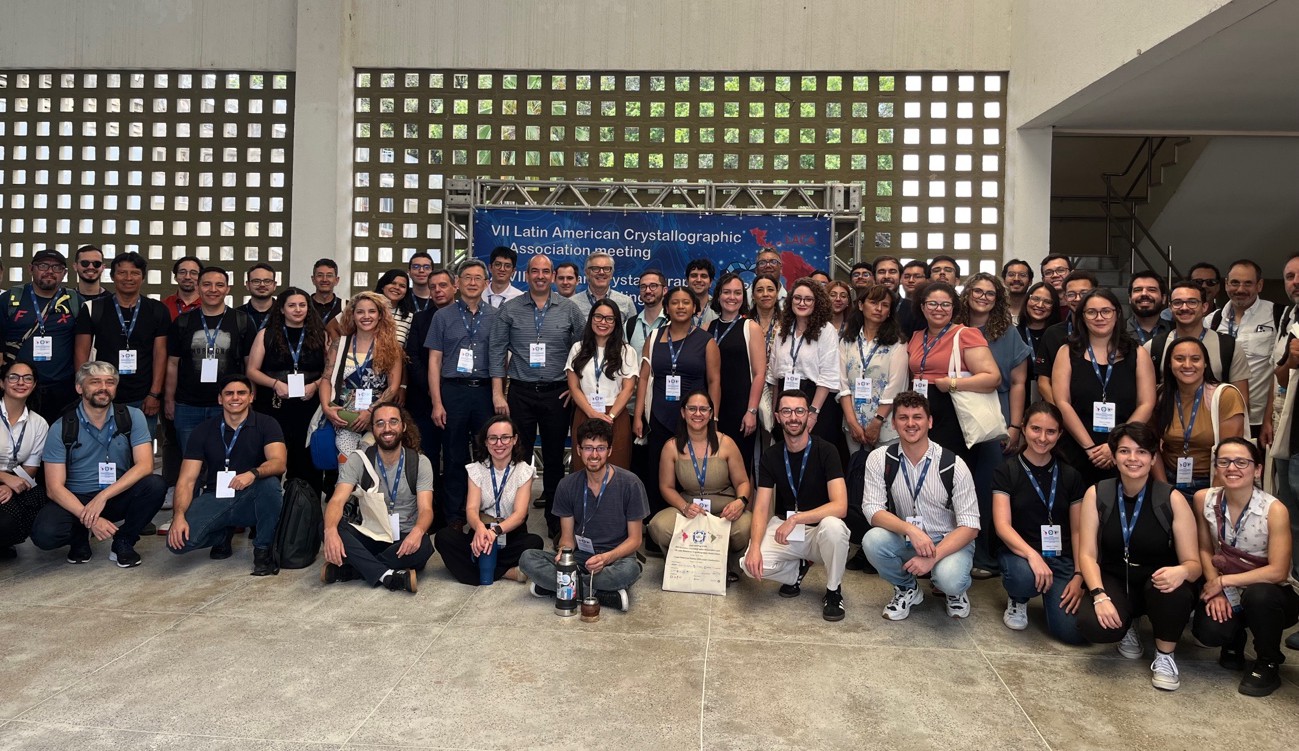
Copyright © - Prior permission is not required to reproduce short quotations, tables and figures from this article, provided the original authors and source are cited.
The permanent URL for this article is https://www.iucr.org/news/newsletter/volume-34/number-2/lapdic