




Commentary
Enzyme therapy in a structural light
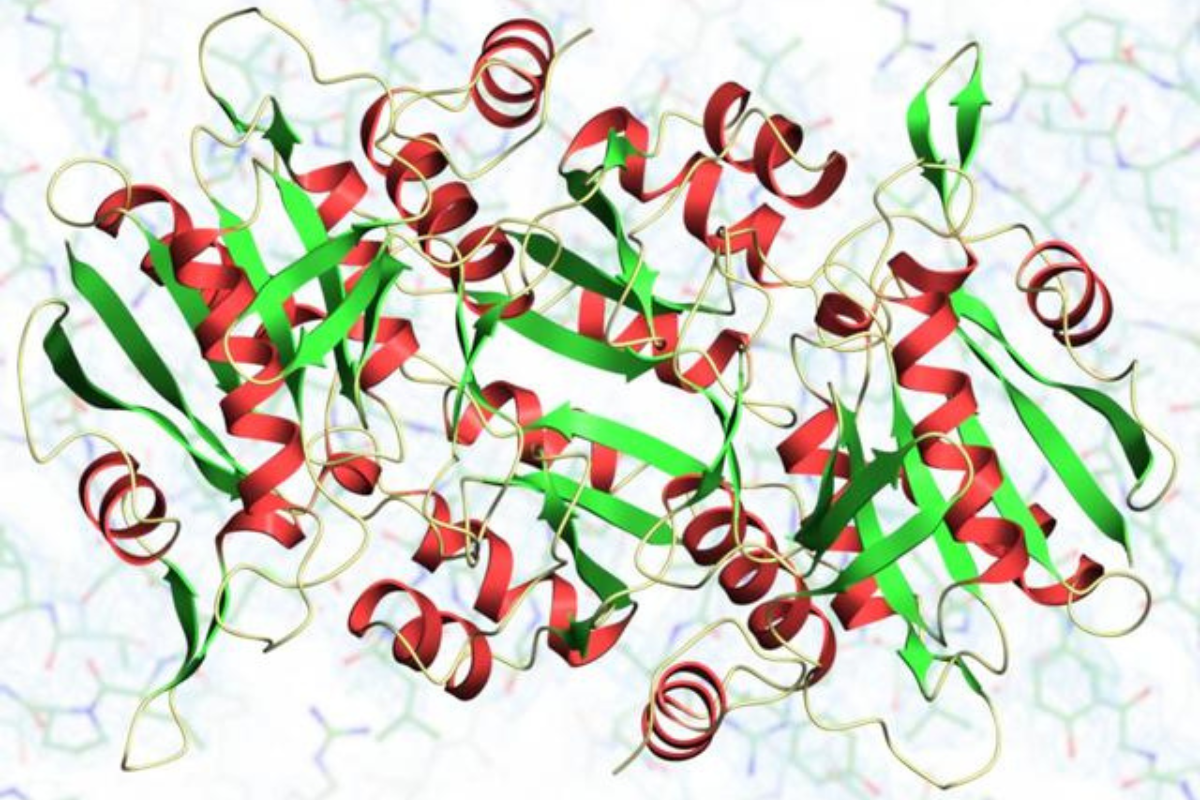
A dimer of the thermostable L-asparaginase from Thermococcus kodakarensis (RCSB extended ID: pdb_00005ot0; Guo et al., 2017).
The enzyme L-asparaginase catalyses the conversion of asparagine into aspartic acid and ammonia, with many variants also acting on glutamine. These enzymes are classified into three groups, with bacterial forms divided into type I and type II: type I enzymes are cytosolic with low substrate affinity, while type II enzymes are typically periplasmic with higher affinity and broader activity. Despite functional similarities, the two types show low sequence similarity and commonly assemble as dimers or tetramers.
Read the full commentary in IUCrJ.
Copyright © - Prior permission is not required to reproduce short quotations, tables and figures from this article, provided the original authors and source are cited.
The permanent URL for this article is https://www.iucr.org/news/newsletter/volume-34/number-2/enzyme-therapy-in-a-structural-light